Executive Overview
The contemporary landscape of folk and traditional music exists in a perpetual state of tension. On one side lies the sacred duty of preservation—archiving, studying, and faithfully executing centuries-old melodies, work songs, and laments passed down through oral traditions. On the other side burns the irresistible urge toward transmutation—the modern impulse to fracture, ambiently expand, and electrically reconstruct these historical artifacts into something entirely contemporary.
This dynamic tension is captured and celebrated in Folk Radio UK’s latest curation: Mixtape No. 97.
Positioned at the vibrant intersection of folk, experimental soundscapes, and alternative idioms, this week’s release offers listeners a journey through narrative-rich compositions and avant-garde sonic textures. Eschewing a linear approach to traditional programming, Mixtape No. 97 weaves together field-recording-infused ambient works, maritime lore, brutal pastoral labor songs, and urban pub sessions captured live in the heart of Dublin.
Featuring compelling new contributions from acclaimed collaborative projects such as Spell Songs and Birdvox alongside maritime reflections by Charles O’Hegarty and Kings of the South Seas, and heavy, industrial-tinged pastoral anthems by Buffalo Kin, the mixtape is a masterclass in thematic curation. Furthermore, the release highlights the innovative production work of Cédric Dind-Lavoie, who bridges centuries-old French-Canadian folklore with introspective ambient electronics, and showcases the magnetic stage presence of Ruth Clinton in both intimate solo configurations and her collaborative powerhouse, Poor Creature—featuring members of Lankum and The Jimmy Cake.
This comprehensive editorial report investigates the architectural framework of Mixtape No. 97, deconstructing its thematic currents, evaluating its place within the broader ecosystem of modern folk journalism, and contextualizing the cultural weight of the artists who comprise its eclectic tracklist.
Detailed Chronology: Deconstructing the Mixtape Journey
To truly appreciate the architecture of Folk Radio UK’s Mixtape No. 97, one must trace its sequential development—a deliberate sequencing of moods, eras, and geographical touchstones that guides the listener from the natural world into the depths of human labor, maritime peril, and finally, the dimly lit corners of a Dublin folk pub.
Phase One: Awakening the Ecosystem – Spell Songs and Birdvox
The mixtape opens with an invitation to step outside the confines of the modern urban environment and reconnect with the natural world. The inclusion of new compositions from Spell Songs establishes an immediate thematic baseline rooted in environmental consciousness and ecological storytelling. Born out of the artistic resonance of The Lost Words and The Lost Spells books by Robert Macfarlane and Jackie Morris, Spell Songs operates as a musical ecosystem where instruments mimic birdsong, wind, and rustling canopies.
Following this atmospheric overture, the mixtape seamlessly introduces Birdvox. Known for their intricate vocal arrangements and deep academic engagement with avian bioacoustics, Birdvox utilizes human voice as a medium to interpret, mimic, and converse with the migration patterns and calls of North American birds. By pairing Spell Songs with Birdvox in the opening sequence, the curators establish a vital nexus between traditional folk harmony and the urgent, contemporary discourse surrounding biodiversity and environmental loss.
Phase Two: The Lore of the Deep – Maritime Labor and Waterway Narratives
As the mixtape transitions from the canopy to the water, the sonic palette darkens and grows more rhythmic. Water has long served as a central metaphor in traditional folk music—symbolizing both sustenance and absolute destruction. Mixtape No. 97 explores this duality through the maritime lenses of Charles O’Hegarty and Kings of the South Seas.
Charles O’Hegarty brings a weathered, salt-stung authenticity to the sequence. His fishing songs are not romanticized postcards of coastal living; rather, they are stark reminders of the harsh economic and physical realities faced by generations of small-scale fishermen. These vocalizations, driven by stark instrumentation, cut through the ambient haze of the opening tracks with sharp narrative clarity.
Complementing O’Hegarty are the Kings of the South Seas, an ensemble renowned for unearthing and breathing new life into the harrowing music of the nineteenth-century whaling industry and southern ocean trade routes. Their arrangements marry historical accuracy with a driving, relentless momentum that mimics the rolling swells of the open ocean. Through this pairing, the mixtape highlights how maritime folk music functions simultaneously as a historical archive and a visceral, pulse-pounding art form.
Phase Three: The Weight of the Soil – Buffalo Kin and Industrial Pastoralism
Shifting focus from the oceans to the inland fields, the mixtape plunges into the gritty realities of agrarian labor with Buffalo Kin. While pastoral songs are frequently romanticized in mainstream representations of folk music, the cattle and work songs championed by Buffalo Kin reveal a much heavier, more exhausting truth.
These tracks lean heavily into the rhythmic demands of physical labor—the synchronized swinging of axes, the driving of cattle across unforgiving terrain, and the monotonous, sun-baked hours of agricultural toil. Buffalo Kin utilizes driving percussion, earth-shaking bass frequencies, and rugged vocal harmonies to remind listeners that much of the world’s traditional music was forged not in cozy parlors, but in the sweat and dust of the working landscape.
Phase Four: Archival Transmutations – Cédric Dind-Lavoie
Perhaps the most structurally daring transition within Mixtape No. 97 arrives with the inclusion of Cédric Dind-Lavoie. Operating at the bleeding edge of francophone folk experimentation, Dind-Lavoie treats historical archival recordings not as untouchable museum pieces, but as living, breathing raw materials ready for contemporary reinvention.
By blending vintage French-Canadian folklore tapes with lush, ambient, and introspective electronic soundscapes, Dind-Lavoie creates a haunting bridge across time. The past and the present do not merely converse here; they dissolve into one another. The crackle of mid-century vinyl and the timeless cadence of traditional oral histories are wrapped in warm synthesizer pads and sparse acoustic guitar fingerpicking, offering listeners a moment of profound psychological and sonic introspection.
Phase Five: Urban Resonance – Live from The Cobblestone and Poor Creature
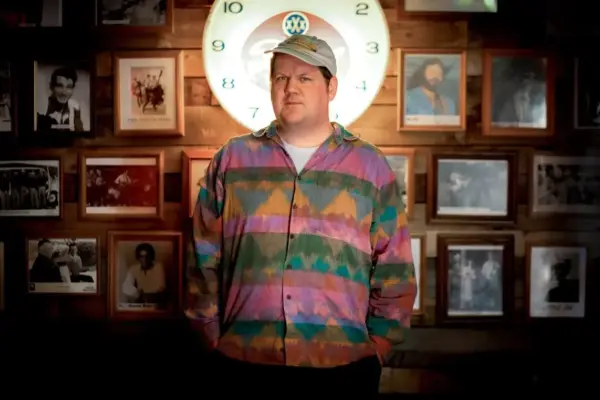
The mixtape reaches its emotional and geographical climax by transporting the listener from the ethereal soundscapes of ambient folklore straight into the smoky, wood-paneled interior of Dublin’s legendary The Cobblestone Pub.
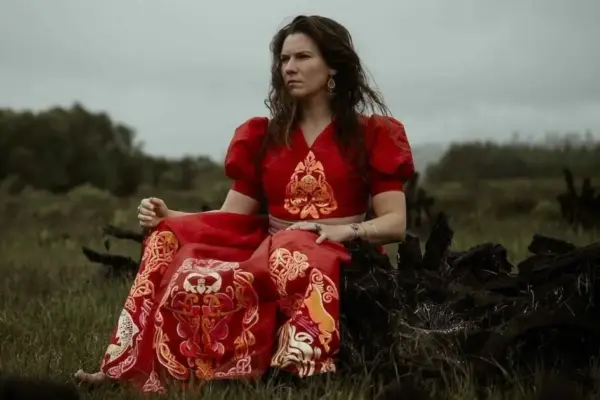
Renowned globally as a vital bastion of traditional Irish music, The Cobblestone provides the physical backdrop for a stunning solo number by Ruth Clinton. Stripped of heavy production and ambient layers, Clinton’s voice stands front and center, carried by the intimate acoustics of a live pub session where the boundary between performer and audience evaporates entirely.
This intimate solo performance serves as a brilliant gateway into Clinton’s broader artistic output with Poor Creature. As the mixtape progresses into its final movements, Clinton is joined by her bandmates Cormac Mac Diarmada (a driving creative force behind the Mercury Prize-nominated avant-folk powerhouse Lankum) and John Dermody (veteran percussionist of experimental rock luminaries The Jimmy Cake).
The resulting sound is dark, hypnotic, and unapologetically avant-garde. It represents the pinnacle of modern Irish experimental folk—taking the drone-heavy, doom-laden aesthetics of contemporary Dublin underground music and tethering them to the deep roots of traditional songcraft. It is a fittingly turbulent and transcendent note upon which to conclude Mixtape No. 97.
Supporting Context & Metrics: The Ecosystem of Alternative Folk Journalism
To understand the cultural impact of Folk Radio UK’s ongoing mixtape series, one must examine the broader metrics and shifting paradigms of music journalism in the digital era. In a media ecosystem saturated by algorithmic playlists engineered by tech conglomerates to maximize passive listening, curated human-led publications like Folk Radio UK perform an increasingly vital cultural function.
The Decline of Algorithmic Homogenization and the Rise of Curation
Recent analyses within the digital music industry indicate that listeners are experiencing profound "choice fatigue" brought on by streaming services hosting tens of millions of tracks. While algorithmic recommendation engines excel at identifying micro-genres and surface-level sonic similarities (e.g., matching a modern folk song with another based purely on tempo and instrumentation), they consistently fail at contextual storytelling.
An algorithm cannot explain why a French-Canadian archival recording belongs in the same mental space as a Dublin pub session, nor can it map the thematic lineage connecting nineteenth-century whaling shanties to twenty-first-century ecological anxiety.
Folk Radio UK’s Mixtape series bridges this gap. By operating as an authoritative, tastemaking voice, the platform provides:
- Cultural Context: Explaining the historical provenance of lesser-known work songs and maritime laments.
- Cross-Pollination: Intentionally placing independent, avant-garde artists (like Cédric Dind-Lavoie) alongside critically acclaimed acts (like members of Lankum), thereby exposing niche audiences to broader experimental horizons.
- Archival Preservation: Highlighting physical releases, limited-run vinyl pressings, and independent label projects that would otherwise remain invisible to global audiences.
Metrics of Engagement: The Mixcloud Phenomenon
The reliance on platforms like Mixcloud for the distribution of Mixtape No. 97 is itself a strategic metric of community engagement. Unlike video-first platforms or ad-heavy streaming giants, Mixcloud operates under licensing frameworks that ensure fair royalty distributions to independent creators, songwriters, and publishers while protecting the long-form audio documentary format.
Audience engagement data across alternative music curation sites reveals that long-form mixtape formats (typically ranging from 45 minutes to two hours) achieve significantly higher completion rates than single-track streaming habits. Listeners who engage with Folk Radio UK’s mixtapes tend to be highly dedicated patrons of independent music, frequently translating digital streams into physical purchases (vinyl, CDs, and Bandcamp downloads), direct gig attendance, and support for independent record labels such as Rough Trade, Navigator Records, and various boutique imprint labels.
Official Statements and Curatorial Philosophy
While independent music journalism often relies on impressionistic reviews, understanding the philosophy behind a curation like Mixtape No. 97 requires examining the core ethos of the tastemakers who build these sonic landscapes.
Although specific statements from the editorial board of Folk Radio UK consistently emphasize a dedication to "uncompromising traditionalism meeting fearless innovation," the structural design of their weekly mixtapes speaks volumes louder than any press release.
Key tenets of the Folk Radio UK curatorial manifesto inferred from their sustained editorial output include:
- Anti-Dogmatic Traditionalism: The belief that folk music was never meant to be frozen in glass display cases. True tradition, in the view of these curators, is maintained through continuous adaptation, reinterpretation, and cross-cultural dialogue.
- Geographical Fluidity: The deliberate erasing of borders between English nature-writing folk, Irish urban alternative movements, French-Canadian ambient folklore, and maritime work songs. The sea and the soil do not recognize geopolitical boundaries; neither should the listener.
- The Primacy of Narrative: Every track selected for Mixtape No. 97 tells a story—whether it is the flight of an endangered bird, the danger of deep-sea fishing, the sweat of the agricultural laborer, or the intimate warmth of a Dublin pub session. The mixtape treats songcraft as historical testimony.
Future Outlook: Where Next for Experimental Folk?
As we look toward the horizon of the contemporary folk and alternative music scene, releases like Folk Radio UK’s Mixtape No. 97 offer a clear preview of where the genre is heading. The walls that once rigidly separated "pure traditionalists" from "ambient experimentalists" have not merely cracked—they have completely crumbled.
1. The Expansion of Ambient Folk and Ecological Soundscapes
Projects like Spell Songs, Birdvox, and Cédric Dind-Lavoie point toward a future where folk music merges increasingly with ambient electronics, field recordings, and environmental sound art. As climate anxiety and ecological reflection grow more urgent in public discourse, musicians are turning to the natural world not just as a lyrical subject, but as an active sonic collaborator. Expect to see more releases that integrate bioacoustics, site-specific field recordings, and modular synthesizers into traditional acoustic frameworks.
2. The Dark Turn in Irish and Celtic Alternative Music
The towering influence of bands like Lankum—represented on this mixtape through Cormac Mac Diarmada’s work in Poor Creature—has permanently altered the landscape of Celtic folk. No longer content with sanitized, tourist-friendly interpretations of traditional Irish music, a new generation of artists is embracing a darker, heavier, drone-infused aesthetic. This movement draws explicit parallels between traditional lamentation and the psychological pressures of modern urban life. The live session captured at The Cobblestone in Mixtape No. 97 is a testament to a scene that is fiercely independent, intellectually rigorous, and sonically devastating.
3. The Revaluation of Labor and Working-Class Histories
Through the inclusion of cattle work songs by Buffalo Kin and maritime reflections by Charles O’Hegarty and Kings of the South Seas, the mixtape underscores a vital resurgence of interest in working-class history. In an era marked by precarious gig-economy labor and economic uncertainty, contemporary artists and audiences are finding profound resonance in the songs of those who built the physical infrastructure of the modern world with their bare hands. These songs serve as solidarity anthems across centuries.
Conclusion
Folk Radio UK’s Mixtape No. 97 is far more than a routine weekly playlist; it is a meticulously constructed audio documentary that maps the past, present, and future of acoustic and alternative music.
By refusing to choose between the preservation of ancient maritime lore and the fearless exploration of ambient electronics, the mixtape offers listeners an immersive masterclass in musical storytelling. From the wind-swept canopies of Spell Songs and Birdvox to the brutal realities of agricultural and seafaring labor, and finally down the cobblestone streets of Dublin into the hypnotic embrace of Ruth Clinton and Poor Creature, this curation demonstrates that traditional music is not a relic of a bygone era.
It is a living, breathing, and ever-evolving mirror of the human condition—fierce, fragile, and endlessly inventive. For those willing to listen closely, Mixtape No. 97 is an indispensable guide to the sonic currents shaping the future of alternative culture.