Executive Overview
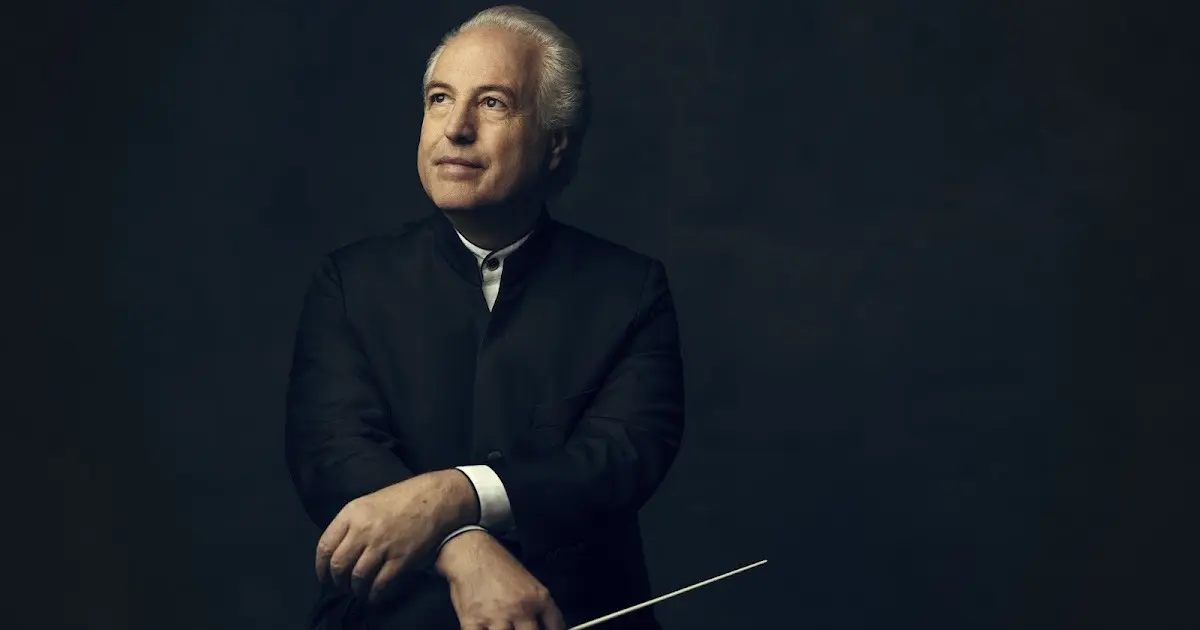
In a major development for the international classical music landscape, the Philharmonia Orchestra has announced that acclaimed Austrian maestro Manfred Honeck will assume the role of its next Principal Conductor. Set to officially take up the post in September 2028, Honeck will succeed current Principal Conductor Santtu-Matias Rouvali, who has held the position since 2021.
This prestigious appointment establishes the Philharmonia as Honeck’s primary artistic anchor in Europe, signaling a new chapter for the venerable London-based ensemble. Simultaneously, Honeck will maintain his long-standing leadership in the United States as the Music Director of the Pittsburgh Symphony Orchestra, where he is currently navigating his 19th season following a recent contract extension that secures his tenure through the 2032–2033 season.
Honeck’s arrival in London marks a deliberate stylistic evolution for the Philharmonia. Coming on the heels of successive tenures led by Finnish conductors Esa-Pekka Salonen and Santtu-Matias Rouvali, Honeck’s appointment heralds a distinct pivot back toward the rich, idiomatic Austro-German traditions historically championed by figures such as Christoph von Dohnányi. Furthermore, Honeck’s tenure beginning in 2028 coincides with a broader generational and stylistic shift across London’s cultural institutions. Most notably, Paavo Järvi is slated to take over from Edward Gardner as Chief Conductor and Artistic Advisor of the London Philharmonic Orchestra, setting the stage for a transformative era of leadership at the Southbank Centre.
Before formally stepping into the principal conductor role in 2028, Honeck will return to the Royal Festival Hall podium this November. He will collaborate with his longtime musical partner, renowned pianist Emanuel Ax, for a compelling program featuring Mozart’s Piano Concerto No. 25, Johann Strauss’s Die Fledermaus Overture, and Honeck’s own distinctive symphonic suite arrangement of Richard Strauss’s Elektra.
Detailed Chronology: From Vienna’s Conservatories to Global Podiums
To understand the artistic weight Manfred Honeck brings to the Philharmonia Orchestra, one must trace a career forged in the crucible of Vienna’s rich musical heritage. Born in Austria in 1958, Honeck’s foundational musical training took place at the prestigious Academy of Music in Vienna. Immersed from an early age in the city’s incomparable sonic ecosystem, he spent formative years as a violist performing within the ranks of both the Vienna Philharmonic and the Vienna State Opera Orchestra. This deep, internal immersion in the Austro-German symphonic and operatic tradition left an indelible mark on his interpretive style, instilling a profound understanding of phrasing, warmth of string tone, and structural architecture that continues to define his conducting today.
Honeck’s transition from orchestral player to maestro began under the mentorship of legendary Italian conductor Claudio Abbado, whom Honeck served as an assistant. This apprenticeship provided him with invaluable insights into large-scale orchestral management and interpretative nuance. Following his time with Abbado, Honeck secured prestigious engagements across Europe, most notably serving as a resident conductor at the Zurich Opera House.
Throughout his career, Honeck has maintained a distinguished parallel profile as an operatic conductor, commanding critical acclaim in major European houses. A testament to his enduring operatic prowess occurred recently at the Salzburg Festival, where he conducted Ersan Mondtag’s high-profile, futuristic new production of Richard Strauss’s Ariadne auf Naxos with the Vienna Philharmonic. Critics widely lauded Honeck’s musical direction as the crowning achievement of the evening, proving his rare ability to marry theatrical urgency with supreme orchestral transparency.
His transatlantic career achieved legendary status in Pittsburgh. Having taken the helm of the Pittsburgh Symphony Orchestra (PSO) in 2008, Honeck has transformed the ensemble into one of the most critically praised and dynamically responsive orchestras in North America. Under his leadership, the PSO has toured extensively, garnered multiple Grammy Awards and nominations, and fostered a reputation for thrilling, high-definition performances of Bruckner, Mahler, Beethoven, and Richard Strauss. With his contract recently extended through the 2032–2033 season, Honeck’s partnership with Pittsburgh stands as one of the most enduring and successful music director tenures of the 21st century.
Supporting Context & Metrics: A Changing Landscape at the Southbank Centre
The appointment of Manfred Honeck to the Philharmonia Orchestra is far more than a routine personnel announcement; it represents a strategic realignment within the upper echelons of British classical music.
The Lineage of the Philharmonia’s Principal Conductors
Founded in 1945 by Walter Legge, the Philharmonia has cultivated a tradition of visionary, intellectually rigorous leadership. Honeck will step in as only the seventh Principal Conductor in the orchestra’s storied history. The lineage of this role reads as a pantheon of conducting royalty:
- Herbert von Karajan (De facto leader in the early years)
- Otto Klemperer (Principal Conductor 1959–1973)
- Riccardo Muti (Principal Conductor 1973–1982)
- Giuseppe Sinopoli (Principal Conductor 1984–1994)
- Christoph von Dohnányi (Principal Conductor 1997–2008)
- Esa-Pekka Salonen (Principal Conductor 2008–2021)
- Santtu-Matias Rouvali (Principal Conductor 2021–2028)
- Manfred Honeck (Designate, taking over September 2028)
By appointing Honeck, the Philharmonia consciously steps away from the recent Nordic wave led by Esa-Pekka Salonen and Santtu-Matias Rouvali. While Salonen pioneered technological integration and forward-thinking structural programming, and Rouvali brought visceral energy and kinetic physicality to the podium, Honeck promises a return to the profound structural weight, rhetorical depth, and emotional gravity historically associated with Dohnányi and Klemperer.
The Southbank Centre Power Shift
Honeck’s arrival in London coincides with a broader generational turnover at the Southbank Centre. As Honeck establishes his European artistic anchor at the Royal Festival Hall in 2028, Paavo Järvi will simultaneously assume the role of Chief Conductor and Artistic Advisor of the London Philharmonic Orchestra (LPO), succeeding Edward Gardner.

This synchronized leadership transition at the Philharmonia and the LPO guarantees a dynamic revitalization of London’s orchestral scene. Music critics and arts administrators anticipate heightened artistic collaboration, adventurous programming initiatives, and an intensified dialogue between two of the capital’s premier resident orchestras.
Meanwhile, outgoing Principal Conductor Santtu-Matias Rouvali will maintain a robust presence on the podium for the next two seasons. The Philharmonia has confirmed that Rouvali will execute a substantial, high-profile touring and recording schedule in London and internationally before his formal departure, ensuring artistic continuity and a celebratory conclusion to his impactful tenure.
Official Statements and Artistic Vision
The announcement of Honeck’s appointment has elicited widespread enthusiasm from both the maestro himself and the leadership of the Philharmonia Orchestra, reflecting a shared vision for global engagement and community enrichment.
Articulating his ambitions for the role, Manfred Honeck remarked:
"It is an honour for me to contribute to shaping the Philharmonia’s unique sound identity and to share it with audiences globally at major international venues, as well as in local communities. London is a capital of classical music and a melting pot of cultures. I look forward to playing my part in enticing audiences to experience the full spectrum of traditional and innovative orchestral music we can offer."
Honeck’s emphasis on balancing traditional masterworks with innovative contemporary programming aligns seamlessly with the Philharmonia’s historical ethos. Known for his meticulous preparation, deep intellectual engagement with scores, and penchant for crafting bespoke symphonic suites—such as his celebrated arrangements of Strauss and Tchaikovsky—Honeck is uniquely positioned to stretch the technical boundaries of the Philharmonia while honoring its rich heritage.
Management and board representatives at the Philharmonia have similarly underscored the significance of securing a maestro of Honeck’s caliber. By establishing London as his European operational base, Honeck guarantees the orchestra sustained, high-level artistic leadership that can navigate the complexities of international touring, digital media distribution, and community-focused educational outreach.
Future Outlook: The Road to 2028 and Beyond
As the classical music world looks ahead to September 2028, the intervening years serve as an anticipatory bridge for the Philharmonia Orchestra.
First, the immediate horizon holds much promise. Audiences will not have to wait until 2028 to experience the chemistry between Honeck and the Philharmonia musicians. This coming November, Honeck returns to the Royal Festival Hall podium for a highly anticipated program. His reunion with pianist Emanuel Ax for Mozart’s luminous Piano Concerto No. 25—paired with the effervescent charm of Johann Strauss’s Die Fledermaus Overture and the psychological intensity of Honeck’s own Elektra suite—will offer a tantalizing preview of the stylistic rigor and expressive depth he will bring to his permanent tenure.
Second, the orchestral administration faces a period of dual-track planning. Santtu-Matias Rouvali will continue to drive the ensemble forward over the next two seasons with demanding, imaginative programs designed to cement his legacy with the orchestra. Simultaneously, artistic planners will collaborate closely with Honeck to design his inaugural season as Principal Conductor designate, mapping out multi-year recording projects, international tours, and community residencies that reflect his distinct artistic signature.
Ultimately, Manfred Honeck’s appointment signals a vote of confidence in the enduring power of live orchestral music in London. By bridging the traditions of the Viennese school with the vibrant, cosmopolitan energy of the UK capital, Honeck and the Philharmonia Orchestra are poised to embark on an inspiring new era—one that promises to captivate audiences across the globe and redefine the benchmarks of orchestral excellence for years to come.