Executive Overview
For nearly a decade, the cultural phenomenon known in France as Dix pour cent—and globally as Call My Agent!—has occupied a unique space in contemporary television. Originating from the lived experiences of former agent-turned-producer Dominique Besnehard, the series captured the frenetic, ego-driven, and deeply human underbelly of the Parisian cinematic ecosystem. Following a critically acclaimed four-season run on French television, a global explosion on Netflix, and a prestigious International Emmy win, the format spawned numerous international remakes across the United Kingdom, Germany, Italy, and Spain.
Now, the intellectual property has made the perilous leap from the small screen to feature-length cinema. Written by master showrunner Fanny Herrero, Call My Agent! The Movie reunites audiences with the fractured staff of the defunct Agence Samuel Kerr (ASK) as they attempt to mount a chaotic feature film production in the south of France.
However, translating a sprawling, deeply layered ensemble television format into a compressed cinematic narrative fraught with "one-star" limitations proves to be a formidable hurdle. While the movie retains the sharp comedic banter, beloved character dynamics, and affectionate satire that fans adore, it struggles to replicate the rich tapestry of French cinematic culture that defined the original series. Featuring glamorous cameos by Hollywood royalty alongside a turbulent production plagued by unruly wildlife and coastal storms, the cinematic adaptation is a deeply nostalgic, albeit uneven, excursion that leaves dedicated aficionados longing for a true television revival.
Detailed Chronology
The Genesis: From Brides-les-Bains to Global Acclaim (2015–2021)
The journey of Call My Agent! began long before its international streaming dominance. In 2015, at a modest festival tucked away in the spa town of Brides-les-Bains in the French Alps, the first two episodes were screened for a select audience. Organized by Dominique Besnehard—who spent eight arduous years maneuvering the semi-autobiographical project through development hell—the screening aimed to gauge whether French viewers would embrace a comedy centered on the unsung heroes of the entertainment industry: talent agents.
Modelled loosely on Artmedia, the legendary agency where Besnehard once worked, the fictional ASK agency balanced delicate negotiations with frantic crisis management. Agents paired high-profile talent with ambitious film projects while managing volatile actorly meltdowns, clandestine affairs, and professional betrayals.
Initially, major French cinema icons were hesitant to participate. Superstars like Catherine Deneuve and Gérard Depardieu were notably absent from the inaugural season (Depardieu’s legacy is now met with a stony silence in the cinematic spin-off). However, as the show’s reputation for witty, self-deprecating humor spread, A-listers rushed to join the ranks. Seasons two and three welcomed heavyweights such as Juliette Binoche, Isabelle Huppert, and Jean Dujardin. By season four, international icons like Sigourney Weaver appeared alongside French legends Charlotte Gainsbourg and Jean Reno. The series not only celebrated French cinematic prestige but also catapulted its core cast into international stardom, transforming actors like Camille Cottin (Andréa Martel) and Laure Calamy (Noémie Leclerc) into household names.
The Premise of the Feature Film: Five Years Later
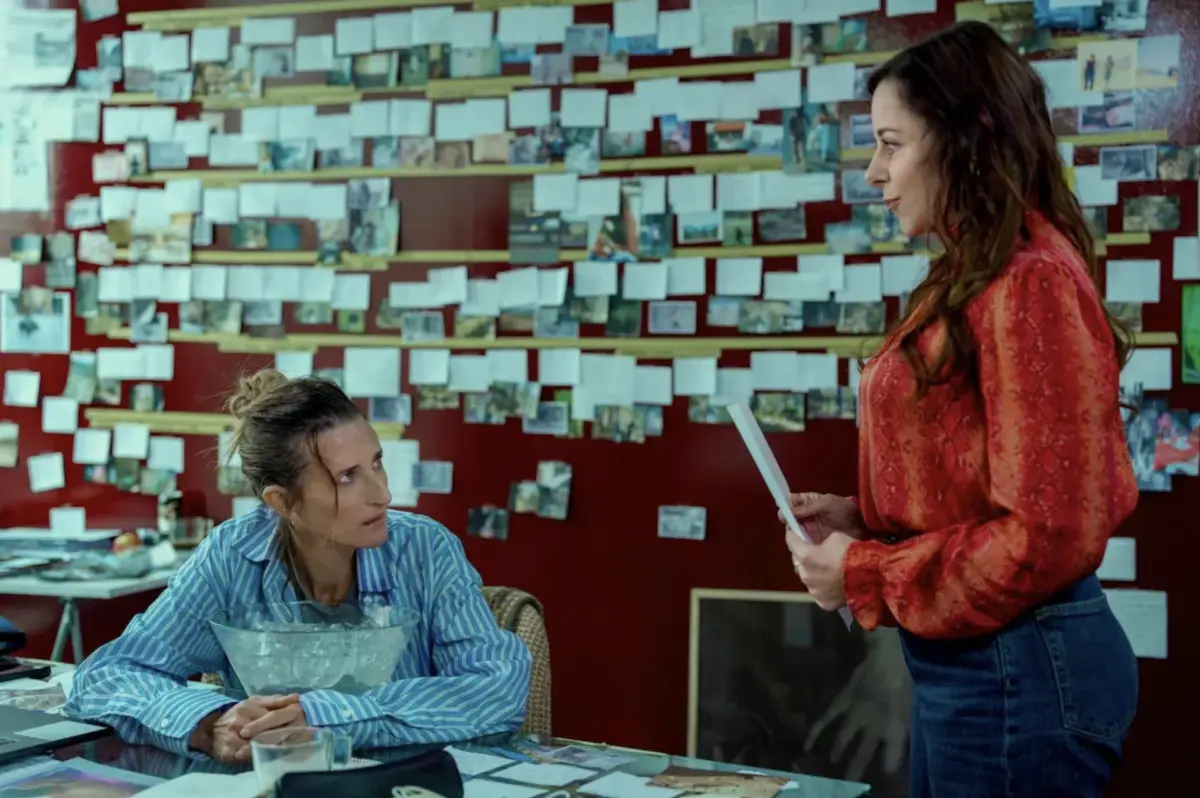
Picking up half a decade after the devastating collapse of ASK at the conclusion of season four, the film catches up with its central characters navigating new professional realities. Andréa is on the cusp of directing her debut feature-length film, while Noémie has transitioned into television production. Both work alongside their former boss and Noémie’s romantic partner, Mathias (Thibault de Montalembert).
Predictably, disaster strikes early and often. Andréa’s handpicked leading man, Laurent Lafitte, abruptly abandons the project, forcing her to sack her original producer. Noémie steps in to save the production, only to catastrophically alienate Hollywood titan George Clooney with a string of cringeworthy, tone-deaf remarks. Desperate for a replacement, the team recruits Vincent Macaigne to play a fragile, highly neurotic version of himself.
Production Meltdown in the South of France
The narrative shifts gears as the production relocates to the picturesque yet punishing landscape of the south of France. What begins as an ambitious artistic endeavor quickly devolves into total farce. The shoot is plagued by escalating friction: lead actors resort to physical altercations, an unruly wild boar disrupts crucial scenes, and a violent coastal storm ravages the technical equipment.
For loyal followers of the franchise, these sequences provide an undeniable comfort. The beloved ensemble slips effortlessly back into their established comedic identities. Mathias remains an unrepentant cad; Andréa bullies everyone in sight while fighting a bitter custody battle over her daughter with her lesbian ex-partner; Noémie’s frantic, chaotic energy masks her sharp professional acumen; straight-laced Gabriel (Grégory Montel) and openly gay Hervé (Nicolas Maury) channel their distinct brands of vulnerable masculinity; and veteran matriarch Arlette (Liliane Rovère) uncovers yet more chapters from her improbably eventful past.
Supporting Context & Metrics
| Metric / Attribute | Original Television Series (Dix pour cent) | Feature Film Adaptation (Call My Agent! The Movie) |
|---|---|---|
| Format | Episodic ensemble television (24 episodes across 4 seasons) | Standalone feature-length cinematic narrative |
| Primary Creator / Writer | Fanny Herrero | Fanny Herrero |
| Key Distribution | France Télévisions, Netflix (Global) | Theatrical release (with subsequent streaming pending) |
| Accolades & Recognition | Multiple French TV awards, International Emmy Award | High fan anticipation, mixed-to-positive critical reception |
| Cameo Strategy | Diverse roster of A-listers (Binoche, Huppert, Weaver, Dujardin) | Hollywood cameos (Clooney, Longoria) paired with singular lead casting |
The "One-Star" Dilemma
The structural flaw of the cinematic adaptation lies in its narrative concentration. The triumph of the original television series was never solely about the gossipy machinations of a Parisian casting office; rather, it was deeply anchored in the rich, multi-generational tapestry of French film culture. Over its 24-episode run, the show embraced a vast spectrum of talent—from internet sensations like Norman Thavaud to international laureates like Juliette Binoche, from auteur cinema icons like Isabelle Adjani to popular television stars, comedians, veterans, and rising musicians.
Attempting to distill this sprawling, polyphonic universe into a single narrative anchored by one primary guest star creates a severe creative bottleneck. Vincent Macaigne, despite his considerable talents, is ill-equipped to shoulder this burden within the film’s parameters. Forced into playing a trademark depressive persona, Macaigne is given virtually no room to showcase his actual dramatic craft, frequently finding himself upstaged by both an unruly wild boar and CGI-enhanced meteorological phenomena.
Similarly, his co-lead, former supermodel Laetitia Casta, is relegated to a physical punching bag—literally taking a blow to the nose. A running gag involving police officers failing to arrest or recognize the couple during a political demonstration lands with uncomfortable irony, grazing too close to social reality without generating genuine comedic payoff.
Official Statements & Industry Perspectives
Reflecting on the challenges of transitioning a beloved television property to the big screen, creator Dominique Besnehard and showrunner Fanny Herrero have frequently emphasized the delicate balance required to respect fan expectations while constructing a viable cinematic arc.
In previous interviews surrounding the global success of the television series, Besnehard noted:
"The magic of ASK was never just the actors who walked through the door; it was the sacred, fragile ecosystem between the artist and the person paid to protect them from themselves. When you move that dynamic to a cinema screen, you lose the breathing room of episodic television. You have to condense years of emotional baggage into ninety minutes."
Critical reception to the film has underscored the inherent difficulties of cinematic adaptations of television shows—a historical graveyard populated by troubled transitions such as The Avengers (1998), Miami Vice (2006), and Sex and the City (2008). While Call My Agent! The Movie avoids total disaster thanks to the undeniable chemistry of its core cast, industry analysts point out that it struggles to attract uninitiated audiences.
The absence of an actor of Laurent Lafitte’s caliber—who in real life is a distinguished alumnus of the prestigious Comédie-Française, capable of effortlessly bridging the gap between rarefied auteur cinema and blockbuster popular comedy—deprived the film of its ideal anchor. Instead, despite sparkling, high-gloss cameos from George Clooney and Eva Longoria, the production remains an affectionate curio designed strictly for the faithful.
Future Outlook
As Call My Agent! The Movie makes its way through international theatrical windows and prepares for streaming distribution, the future of the franchise remains a subject of intense speculation among fans and industry insiders alike.
While the feature film successfully proves that the beloved agents of ASK have lost none of their verbal sparring skills, it simultaneously highlights the limitations of the cinematic format for this specific intellectual property. The sprawling, interconnected lives of Andréa, Mathias, Noémie, Gabriel, Hervé, and Arlette fundamentally demand the novelistic pacing, character arcs, and multi-episode breathing room that only television can provide.
Talks regarding potential further television iterations, international crossovers, or localized adaptations continue to circulate within European production circles, driven by the enduring global appetite for premium French-language content. For now, die-hard fans of the series will undoubtedly flock to cinemas and streaming platforms to relish one more visit with their favorite Parisian agents. Yet, as the credits roll on this latest cinematic chapter, the overarching sentiment among the audience remains clear: while this polished, entertaining feature film provides a welcome reunion, the true home of Call My Agent! will always be the small screen, leaving viewers hungering for a proper, full-scale fifth television season.