Executive Overview
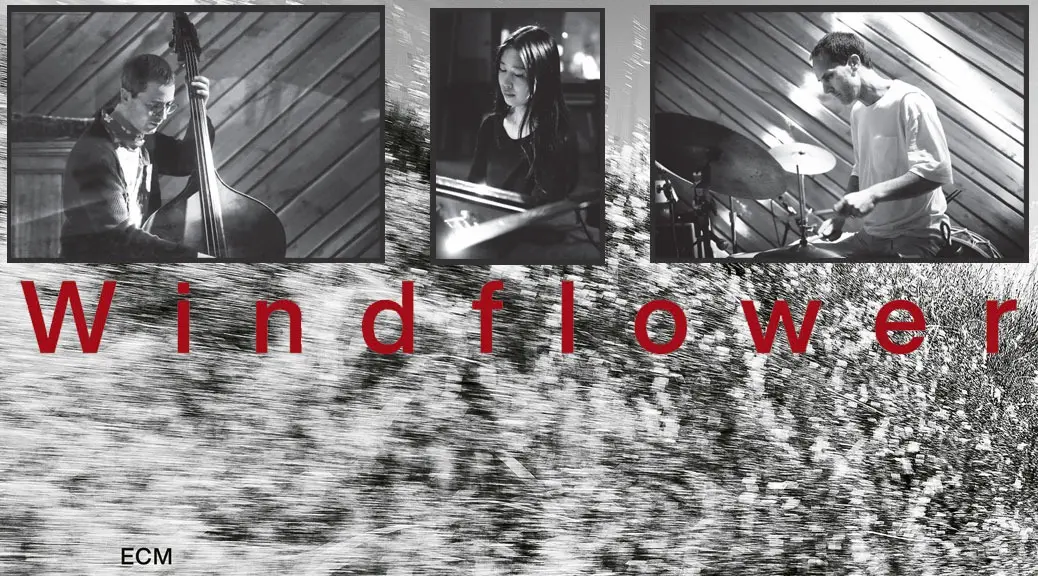
In the upper echelons of contemporary improvised music, few labels carry the curatorial weight or sonic identity of ECM Records. Founded by Manfred Eicher in Munich in 1969, the label has long championed a minimalist, highly acoustic, and spacious aesthetic where silence is treated as a compositional equal to sound. It is within this rarefied ecosystem that Japanese pianist and composer Ayumi Tanaka has carved out a unique, deeply resonant artistic space. Her latest masterwork, Windflower, recorded at the legendary Studios La Buissonne in southern France, represents a watershed moment not only in her personal discography but in the ongoing evolution of modern acoustic jazz trio interplay.
Brought together by a rare alchemy of shared sensibilities, Tanaka is joined on this project by American bassist Thomas Morgan and Norwegian drummer Thomas Strønen—two virtuosos intimately familiar with the demands and nuances of the ECM idiom. The album comprises nine intensely conversational, largely collectively improvised pieces, including standout tracks such as "Windflower," "From Us," "To You," "Tree of Stars," and "Driftwood." Named after the anemone—a classical botanical symbol of transience, fragility, and fleeting beauty—the album serves as an auditory meditation on impermanence.
Rather than relying on grandiose technical displays or predictable harmonic resolutions, Windflower thrives on the liminal space between composition and improvisation. Tanaka famously articulates her artistic mandate as an aspiration to compose music that sounds entirely improvised, while improvising music that feels impeccably structured. Supported by Morgan’s telepathic harmonic counterpoint and Strønen’s painterly, texturizing percussion, the trio has delivered a quietly luminous album that challenges listeners to embrace the present moment, letting beauty exist without attempting to possess or preserve it.
Detailed Chronology: From Wakayama to Oslo and the South of France
Formative Foundations and the Nordic Awakening
Ayumi Tanaka’s musical journey began far from the hallowed halls of European jazz conservatories. Born and raised in Wakayama, Japan, she demonstrated an early and voracious appetite for music, beginning formal studies at the tender age of three. Her initial introduction to performance came via the electone at the prestigious Yamaha Music School, a rigorous training ground that eventually transitioned into dedicated classical and contemporary piano training. Immersed in Japan’s vibrant music culture, she developed a formidable technical foundation, yet she increasingly found herself drawn toward the uncharted territories of open-ended improvisation and the European avant-garde.
This fascination culminated in a life-altering relocation in 2011, when Tanaka packed her bags for Oslo, Norway, to enroll in the jazz and improvised music program at the Norwegian Academy of Music. The transition from the structured rigors of her early Japanese training to the windswept, spacious ethos of Scandinavian jazz proved transformative.
It was in Oslo that she crossed paths with the late, legendary Ukrainian-born Norwegian pianist and composer Misha Alperin. Alperin, a towering figure in contemporary improvised music, recognized Tanaka’s raw talent and steered her away from the trap of stylistic imitation. Instead, Alperin served as a crucial catalyst, urging her to strip away external influences and unearth her authentic, unadorned musical voice. This mentorship planted the seeds for Tanaka’s signature methodology: a fluid, seamless continuum where the barriers between pre-arranged composition and spontaneous invention dissolve entirely.
The Genesis of a Trio: From Oslo 2024 to Studios La Buissonne 2025
The conceptual framework for Windflower began to take tangible shape in September 2024 during an initial, exploratory playing session in Oslo. Tanaka was already well-acquainted with Norwegian drummer Thomas Strønen, with whom she had cultivated a rich, decade-long musical partnership through notable collaborative projects such as Time Is A Blind Guide and Bayou. Their established rapport provided a sturdy yet flexible rhythmic anchor.
The missing piece of the puzzle arrived in the form of American bassist Thomas Morgan. Renowned for his work with legendary bandleaders like Bill Frisell, Paul Motian, and Jakob Bro, Morgan possesses an almost supernatural capacity for active listening. His playing does not merely support the soloist; it subtly reshapes, challenges, and mirrors the harmonic landscape in real-time.
When Tanaka, Strønen, and Morgan first convened in the studio environment in Oslo, the musical chemistry was immediate and undeniable. The telepathic dialogue and shared aesthetic understanding were so compelling that ECM founder Manfred Eicher stepped in directly, suggesting that the newly formed trio travel to the acoustically pristine Studios La Buissonne in the south of France. Recorded under Eicher’s watchful eye in May 2025, the sessions captured a rare lightning-in-a-bottle energy—a collection of pieces forged collectively in the heat of the moment, yet imbued with the timeless, architectural grace characteristic of the ECM catalog.
Supporting Context & Metrics: The Anatomy of a Masterwork
To fully appreciate the artistic weight of Windflower, it is necessary to examine the broader trajectory of Tanaka’s recording career and the specific aesthetic metrics that define her sound. Her previous critically acclaimed release, Subaqueous Silence, firmly established her as a master of spatial awareness and dynamic restraint. While Subaqueous Silence showcased a pianist unafraid of vast expanses of silence, Windflower takes that foundational sensibility and translates it into a deeply conversational, highly democratic trio format.

| Album Metric / Detail | Description & Context |
|---|---|
| Artist / Leader | Ayumi Tanaka (Piano) |
| Supporting Trio Members | Thomas Morgan (Double Bass), Thomas Strønen (Drums) |
| Key Collaborators & Mentors | Misha Alperin (Late compositional mentor), Manfred Eicher (Producer) |
| Recording Location | Studios La Buissonne, Pernes-les-Fontaines, France |
| Recording Date | May 2025 |
| Label | ECM Records |
| Core Repertoire | "Windflower", "From Us", "To You", "Tree of Stars", "Driftwood" (9 tracks total) |
| Primary Aesthetic Focus | Blurring lines between composition/improvisation; minimalist spatial awareness; transient beauty |
The Sonic Architecture of the Tracks
Across the album’s nine tracks—operating largely as free ballads—the listener is immersed in an acoustic environment where every micro-nuance is amplified. Tanaka’s touch on the piano keyboard is frequently described as fragile, almost hesitant, as if she is audibly testing the structural integrity of a musical thought before granting it permission to blossom into full melody.
On tracks like "Tree of Stars," this fragility is countered and elevated by Thomas Morgan’s magnificent melodic counterpoint. Morgan treats the double bass not as a mere time-keeping device or low-end anchor, but as an equal vocal partner. His lines converse directly with Tanaka’s upper-register motifs, creating an intricate web of dialogue. Meanwhile, Thomas Strønen demonstrates a masterclass in dynamic restraint. Strønen intuitively understands when to deploy rich textural coloration—using brushes, cymbal scrapes, and subtle tonal shifts—and, equally importantly, when to drop out entirely, leaving vast swaths of open air for the piano and bass to inhabit.
Official Statements & Critical Insights
Reflecting on her creative philosophy and the collaborative ethos behind Windflower, Ayumi Tanaka has frequently emphasized the psychological and philosophical dimensions of her music-making. In interviews leading up to the album’s release, she noted:
"I want to compose music that sounds like it is being discovered in the very second it is played, and conversely, I want my improvisations to carry the structural weight and architectural integrity of a finished composition. The space between the notes is never empty; it is filled with intention, history, and listening."
Music critic and jazz journalist Mike Gates, writing for UK Vibe, offered profound insights into the emotional resonance of the project:
"The title refers to the windflower or anemone, a symbol of transience and fleeting beauty. It is an apt metaphor. This is music that makes me feel involved, creating a sense of love and reverence. It’s about moments rather than statements, and about allowing something beautiful to exist without trying to hold onto it."
Furthermore, industry observers have noted the profound continuity of the Misha Alperin lineage within this project. Alperin’s teaching philosophy—which rejected formulaic bebop clichés and academic dryness in favor of deeply personal, culturally fluid expression—serves as the invisible glue holding Windflower together. Tanaka’s synthesis of Japanese classical discipline, Nordic improvisational space, and American harmonic depth represents a triumph of cross-cultural artistic synthesis.
Future Outlook: The Horizon for Ayumi Tanaka’s Trio
As Windflower makes its way into the global consciousness, its release marks a pivotal turning point in Ayumi Tanaka’s career. Moving from a promising solo and small-ensemble artist to the leader of one of the most compelling piano trios in contemporary improvised music, Tanaka has firmly cemented her status as a vital voice on the international stage.
Looking ahead, the critical acclaim and immediate rapport generated by the Tanaka-Morgan-Strønen lineup open up vast new horizons for live performance and future studio recordings. The inherent flexibility of their collective improvisational framework ensures that their live shows will be living, breathing organisms, shifting shape with every venue, audience, and acoustic environment they encounter.
For the jazz world at large, Windflower serves as a timely reminder of the power of listening over speaking, of minimalism over maximalism, and of the profound beauty found in things that cannot be permanently grasped. As Tanaka continues to explore the boundaries where composition meets spontaneity, her trajectory proves that the most enduring music is often born not from a desire to make a permanent statement, but from the courage to embrace the fleeting, beautiful now.