Executive Overview
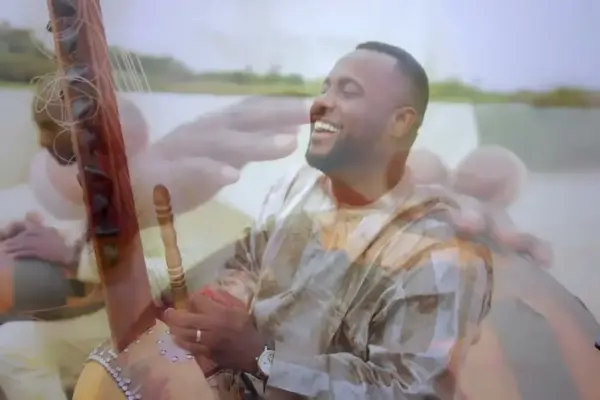
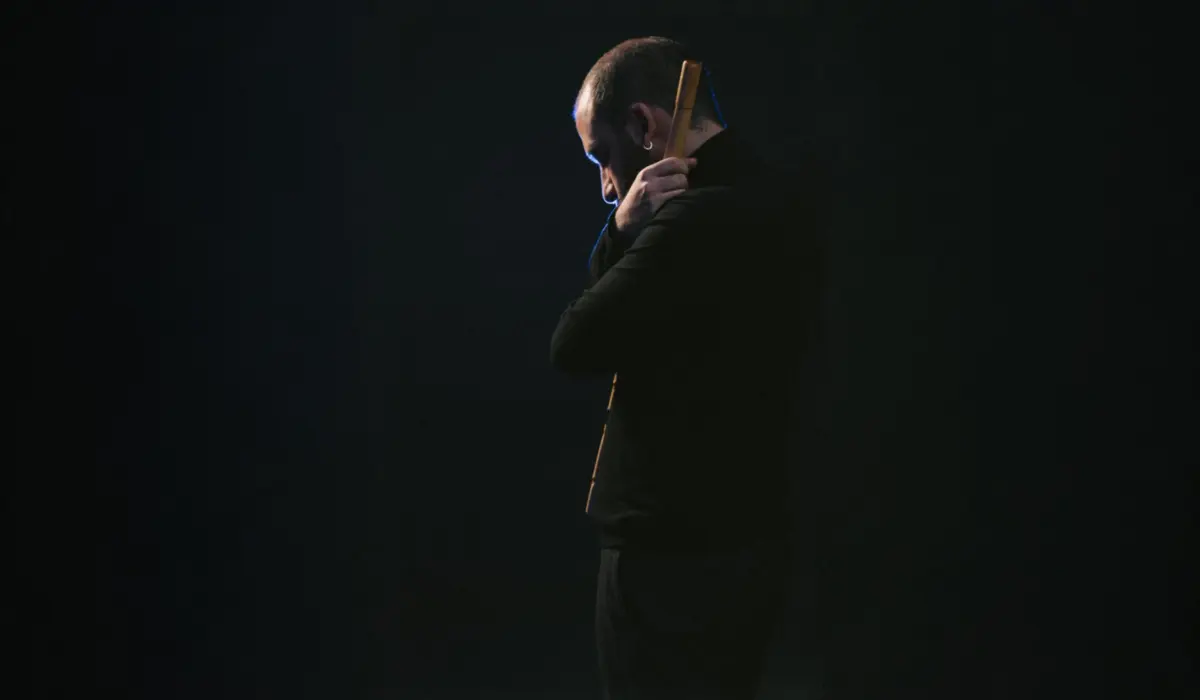
In the contemporary landscape of global music, few artists manage to bridge antiquity and the avant-garde with the seamless grace of Palestinian flutist and composer Faris Ishaq. Armed with little more than a piece of hollow reed and a leg-mounted frame drum, Ishaq conjures soundscapes that are at once deeply rooted in the soil of the Middle East and expansive enough to dialogue with the complex harmonies of American jazz.
As the subject of the fifth installment of the Musical Road to WOMEX series, Ishaq represents a rare breed of instrumentalist: a virtuoso who treats a 5,000-year-old traditional instrument—the nay—not as a museum artifact, but as a living, breathing, and infinitely malleable vehicle for modern expression. His latest project, the critically acclaimed album JASAD (Arabic for "body"), strips his art down to its barest essentials. Recorded entirely live in his Bethlehem studio with zero overdubs, the album merges the microtonal intricacies of Arabic maqam with the kinetic momentum of Coltrane-esque improvisations and the earthy, stomping polyrhythms of traditional Palestinian dabke footwork.
Ishaq’s trajectory—from a teenager captivated by a makeshift reed flute in the West Bank to a Berklee Global Jazz scholar, BAFTA-nominated soundtrack contributor, and international touring artist—is a testament to the power of breath and intention. As he prepares to take his immersive solo performance to the WOMEX showcase in Las Palmas de Gran Canaria, followed by major festival appearances across the globe, Ishaq is redefining what it means to carry a ancestral sonic heritage into the twenty-first century. This feature examines his remarkable journey, his unique musical philosophy, the therapeutic underpinnings of his craft, and the global resonance of a sound driven entirely by cane, air, and soul.
Detailed Chronology: From a Bethlehem Parlor to the Berklee Stage
The story of Faris Ishaq begins not in a pristine, climate-controlled conservatory, but in the domestic intimacy of Bethlehem, through an accidental discovery that would alter the course of his artistic life. At the age of twelve, Ishaq had already embarked on four years of formal training on the euphonium at the Edward Said National Conservatory of Music. He was learning Western classical brass, navigating valves, spit valves, and the rigid structures of European orchestral arrangements.
However, a pivotal moment arrived when he was sixteen. His uncle managed to acquire some raw reed cane from the historic agricultural oasis of Jericho. Intrigued, the uncle handed the cane to Faris’s older brother, instructing him to carve a few holes into it so he could attempt to play it. The brother obliged, crafting a crude, functional flute. But before the uncle could claim his newly minted instrument, young Faris picked it up. He never let it go, and the uncle never saw the flute again.
This homemade reed instrument was a nay—an end-blown flute whose lineage stretches back five millennia across the Middle East. Unlike the euphonium, the nay offered no mechanical crutches. There were no keys, no valves, and no standardized mouthpiece. It was simply a hollow stalk of cane governed entirely by the player’s lips, breath, the precise angle of attack, and trial-and-error experimentation.
"When I was 16, my uncle had recently got some reed cane from Jericho and asked my older brother to make some holes in it so he could play. My brother made that flute, and my uncle never saw it again! This is how it started and I became obsessed with its sound," Ishaq recalls.
For a self-taught teenager, the nay presented an infinite frontier. Yet, the catalyst that revealed the instrument’s true contemporary potential was witnessing Tunisian oud master and vocal innovator Dhafer Youssef perform live. Youssef’s commanding stage presence and fearless exploration of modal improvisation showed Ishaq that Middle Eastern musical traditions could transcend regional boundaries and converse directly with global avant-garde idioms.
This epiphany ultimately led Ishaq across the Atlantic to the prestigious Berklee Global Jazz Institute in Boston, supported by a full scholarship. At Berklee, he made waves by executing a feat few classical Arabic musicians had attempted: running complex Arabic maqam (modal systems) through the sophisticated, shifting frameworks of jazz harmony. His academic excellence earned him top-student accolades, setting the stage for a diverse professional career.
Since his time at Berklee, Ishaq’s discography and collaborative footprint have expanded dramatically. He has released three solo albums, recorded alongside Grammy-winning bassist John Patitucci, contributed haunting nay textures to the BAFTA-nominated soundtrack of video game blockbuster Assassin’s Creed Mirage, and premiered his original concerto for nay and orchestra, A Wildscape, at London’s historic Southwark Cathedral.
Supporting Context & Metrics: The Mechanics of JASAD and the Tashbib Tradition
To fully appreciate Ishaq’s artistry, one must understand the physical and acoustic architecture of his performances. Operating as a one-man ensemble, Ishaq performs standing or seated while playing the nay with his hands and simultaneously triggering driving, syncopated rhythms on a leg-mounted frame drum.
This setup is not merely a logistical choice; it is an organic translation of his cultural and physical upbringing. Long before he was an internationally touring jazz fusion artist, Ishaq was a professional dabke dancer during his school years. Dabke, the traditional Levantine folk dance, is characterized by synchronized leaping, stomping, and heavy footwork designed to bind the dancers to the earth and to one another. Ishaq translates these rhythmic floor stomps directly onto his leg-mounted frame drum, allowing his lower body to maintain a relentless percussive pulse while his upper body spins modal melodies through the wooden tube of the nay.
Furthermore, Ishaq draws deeply from tashbib, a traditional melodic-percussive woodwind style deeply embedded in Palestinian rural heritage.
- "In Palestine, we call it Tashbib, which literally means ‘to become young,’ and it’s full of joy, rhythm and earthiness," Ishaq explains.
Rather than viewing his work as a historical "revival," Ishaq rejects the terminology entirely, asserting that the heritage never vanished; it merely evolved. Tashbib inherently leaves vast windows for spontaneous improvisation, encouraging a playful, conversational friction between the soloist and the underlying rhythmic cycle—a structural trait that shares a profound spiritual kinship with American jazz improvisation.
Key Career Milestones & Metrics
- Instruments Mastered: Euphonium, Nay (Middle Eastern reed flute), leg-mounted frame drum.
- Academic Achievement: Top student at Berklee Global Jazz Institute (Full Scholarship recipient).
- Major Collaborations: John Patitucci (Grammy-winning bassist), Dhafer Youssef (musical inspiration).
- Media & Compositions:
- 3 independent solo albums (JASAD being the latest).
- Assassin’s Creed Mirage (BAFTA-nominated video game soundtrack contributor).
- A Wildscape (Original concerto for nay and orchestra, premiered at Southwark Cathedral, London).
- Therapeutic Background: Formally trained music therapist, influencing his structural approach to healing and audience grounding.
Official Statements: In Conversation with Faris Ishaq
During a wide-ranging interview surrounding his inclusion in the Musical Road to WOMEX documentary and podcast series, Ishaq elaborated on the philosophy that guides his breath, his instrument, and his relationship with audiences worldwide.
On Defining His Unique Sonic Setup
When asked how he describes his music to a first-time listener encountering his simultaneous nay-and-percussion setup, Ishaq draws a surprising parallel to modern electronic production:
"I sometimes describe what I do as similar to what an electronic music producer does, except my only playground is the Nay and the frame drum. I use them to build a live, layered and immersive sound, combining melodies, rhythms and acoustic effects in real time."
He emphasizes that the frame drum is not an afterthought accompaniment, but a natural physical extension of his woodwind phrasing:
"The frame drum is a natural extension of how I play the Nay, which involves a lot of percussive tonguing and playing with and around the rhythm… It’s my own way of connecting movement to music."
On the Intersect of Tradition, Jazz, and Healing
Ishaq is careful to clarify that his music is not an intellectual exercise in genre-crossing, but an emotional and sensory sanctuary, particularly in the wake of global turmoil:
"My album is not only about bringing Tashbib and jazz together. It’s about creating an immersive experience with the Nay that honours its roots and expansive musical potential, while also offering a grounding and healing space after the madness humanity has experienced in the past years."
This commitment to psychological grounding is no accident. Ishaq is a formally trained music therapist, a discipline that underpins every compositional choice he makes. He does not view music merely as entertainment for passive consumption, but as a relational container designed to hold, soothe, and transform the listener.
On Performing Live and Responding to the Room
Unlike musicians locked into rigid backing tracks or pre-programmed setlists, Ishaq’s performances are deeply responsive organisms shaped entirely by the acoustic environment and the collective energy of the room:
"The very first thing the audience hears is how I feel in that moment, rather than a planned musical sentence. I shape my repertoire, improvisations, and textures according to how I feel at the start of the show and throughout the performance. For example, playing in a cathedral is very different from playing in a seated concert hall or to a standing audience. I enjoy resonating with the type of venue, atmosphere, and, most importantly, the audience, who mostly shape the musical journey."
Future Outlook: The International Tour and Orchestral Horizons
As Faris Ishaq steps onto the grand stage at WOMEX in Las Palmas de Gran Canaria on October 24, he does so at the crest of a massive international wave. The showcase marks a critical node in an extensive autumn tour schedule that spans continents and major cultural institutions.
His itinerary reads like a map of global jazz and world music prestige:
- September 13: Arter, Istanbul (Turkey)
- October 18: Melbourne International Jazz Festival (Australia)
- October 24: WOMEX Official Showcase, Las Palmas de Gran Canaria (Spain)
- November 14: EFG London Jazz Festival (United Kingdom)
Beyond the current touring cycle for JASAD, Ishaq’s creative horizon is expanding into larger symphonic and ensemble formats. He is actively working to scale up and tour his orchestral nay concerto, A Wildscape, building upon its triumphant premiere at Southwark Cathedral. Simultaneously, he is deep in the writing and recording process for a brand-new studio album centered around a jazz quartet configuration, further blurring the lines between modal Middle Eastern expression and contemporary Western improvisation.
Ultimately, Faris Ishaq’s journey from a stolen piece of Jericho reed to the world’s most prestigious festival stages proves that the most powerful musical technologies require no electricity, no software, and no mass production. Powered entirely by lung capacity, ancestral memory, and an unyielding commitment to dignity and grace, Ishaq’s nay continues to sing—reminding listeners that within a single, carefully directed breath lies an entire universe of sound, resilience, and healing.