Executive Overview
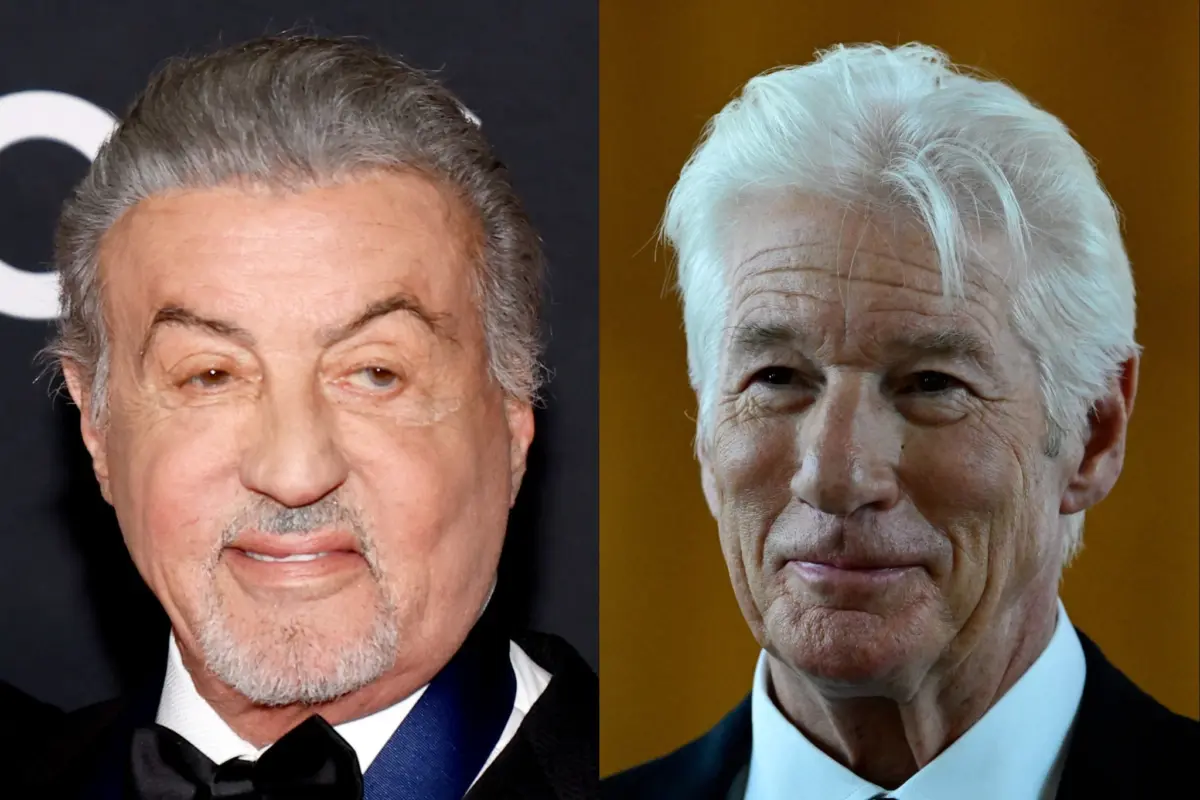
The complex landscape of Hollywood history is frequently punctuated by legendary cinematic achievements, career-defining performances, and, occasionally, monumental behind-the-scenes conflicts. Few rivalries, however, have endured with the tenacity, cultural resonance, and sheer theatricality of the long-standing animosity between iconic action star Sylvester Stallone and celebrated romantic lead Richard Gere. Decades after the initial sparks of discord flew across soundstages and trailers, the definitive narrative behind their famous rift has finally come to light.
In his candid and reflective new memoir, The Steps, the 80-year-old Rocky and Rambo franchise creator delves deeply into his formative years in the film industry. Among the most anticipated revelations in the book is a thorough, unfiltered account of the volatile on-set dynamics of The Lords of Flatbush, a 1974 coming-of-age drama directed by Stephen Verona. The film, which was intended to showcase a collective of rising young talent in the New York borough, ultimately served as the crucible for an intense personality clash that would alter the trajectory of the cast and ignite a feud spanning multiple generations, notable pop-culture milestones, and high-society encounters.
This comprehensive report examines the genesis of the Stallone-Gere rivalry, tracking its development from the claustrophobic confines of a 1970s film set to its bizarre, royal-adjacent continuation years later. Drawing on Stallone’s newly published recollections, historical industry accounts, and subsequent corroborating testimonies—including anecdotes from legendary pop icon Sir Elton John—this analysis provides an authoritative examination of how a single drop of chicken grease and an aggressive improvisation exercise catalyzed one of cinema’s most famous personal disputes.
Detailed Chronology: From the Streets of Brooklyn to the Breaking Point
To fully understand the depth of the animosity between Stallone and Gere, one must rewind to the pre-fame era of American cinema. In 1974, a low-budget independent production titled The Lords of Flatbush was assembling an ensemble cast of fresh-faced, hungry actors. Set in 1950s Brooklyn, the gritty narrative focused on a tight-knit gang of Italian-American youths navigating the trials of working-class adolescence, leather jackets, and street-corner socialization.
The project had initially attracted an extraordinary constellation of raw, unpolished talent that would soon dominate global cinema screens, including Sylvester Stallone, Robert De Niro, and Richard Gere. However, the blending of such intense, burgeoning egos in a high-pressure creative environment proved disastrous.
The Improvisation Flashpoint
According to Stallone’s memoir, The Steps, the friction began almost immediately during early pre-production workshops and collaborative acting exercises. The director, Stephen Verona, encouraged his young stars to improvise scenes to build authentic chemistry and physical familiarity among the group.
Stallone recalls that his initial improvisation session with Robert De Niro proceeded smoothly, characterized by a mutual, albeit competitive, professional respect. However, when the pairing shifted to an exercise with Richard Gere, the atmosphere deteriorated instantly.
Stallone writes that during a physical acting drill, Gere grabbed his T-shirt with such force that his fingernails dug painfully into Stallone’s skin. Reacting to the unprompted aggression, Stallone issued a verbal warning, instructing Gere to back off. Instead of de-escalating, Gere repeated the physical maneuver on the second take.
"He couldn’t have known, but Gere had begun to stir the emotional cauldron inside me," Stallone reflects in The Steps.
Driven to his breaking point, Stallone turned directly to director Stephen Verona. Breaking character, the young actor asked a pointed question: "Is it okay if I ad-lib here and react the way I would actually react if someone did that to me in real life?"
When Verona inquired what his alternative course of action would be, Stallone did not hesitate: "Do? I’d knock his teeth out."
Sensing an imminent physical altercation, Verona offered a swift and cautious plea: "Please don’t."
The Chicken Grease Incident on the Coney Island Boardwalk
Despite the director’s intervention and a brief cooling-off period, the underlying hostility between the two actors remained entirely unresolved. The breaking point arrived only a couple of days later during outdoor location rehearsals along the freezing Coney Island boardwalk.
Seeking shelter from the bitter winter weather, Stallone retreated into a production vehicle during a lunch break, climbing into one side of the car with a straightforward hot dog. Moments later, Gere entered through the opposite door, carrying a large, greasy piece of fried chicken slathered in mustard and resting precariously on a sheet of aluminum foil.
Stallone immediately recognized the hazard, warning his co-star: "That thing is going to drip on me."
Gere, displaying a dismissive attitude that further inflamed the situation, brushed off the warning with a casual, "Don’t worry about it."
Seconds later, as Stallone recalled, "a stream of chicken grease" poured directly down onto his leg. The violation of personal space, combined with the lingering resentment from their earlier confrontation, proved too much to bear. Stallone responded physically, delivering a sharp elbow across Gere’s chest before exiting the vehicle, reaching into the back seat, and physically pulling Gere out onto the pavement.
As Gere tumbled out, he reportedly attempted to de-escalate the situation, saying, "Hey, man, I don’t want to get physical."
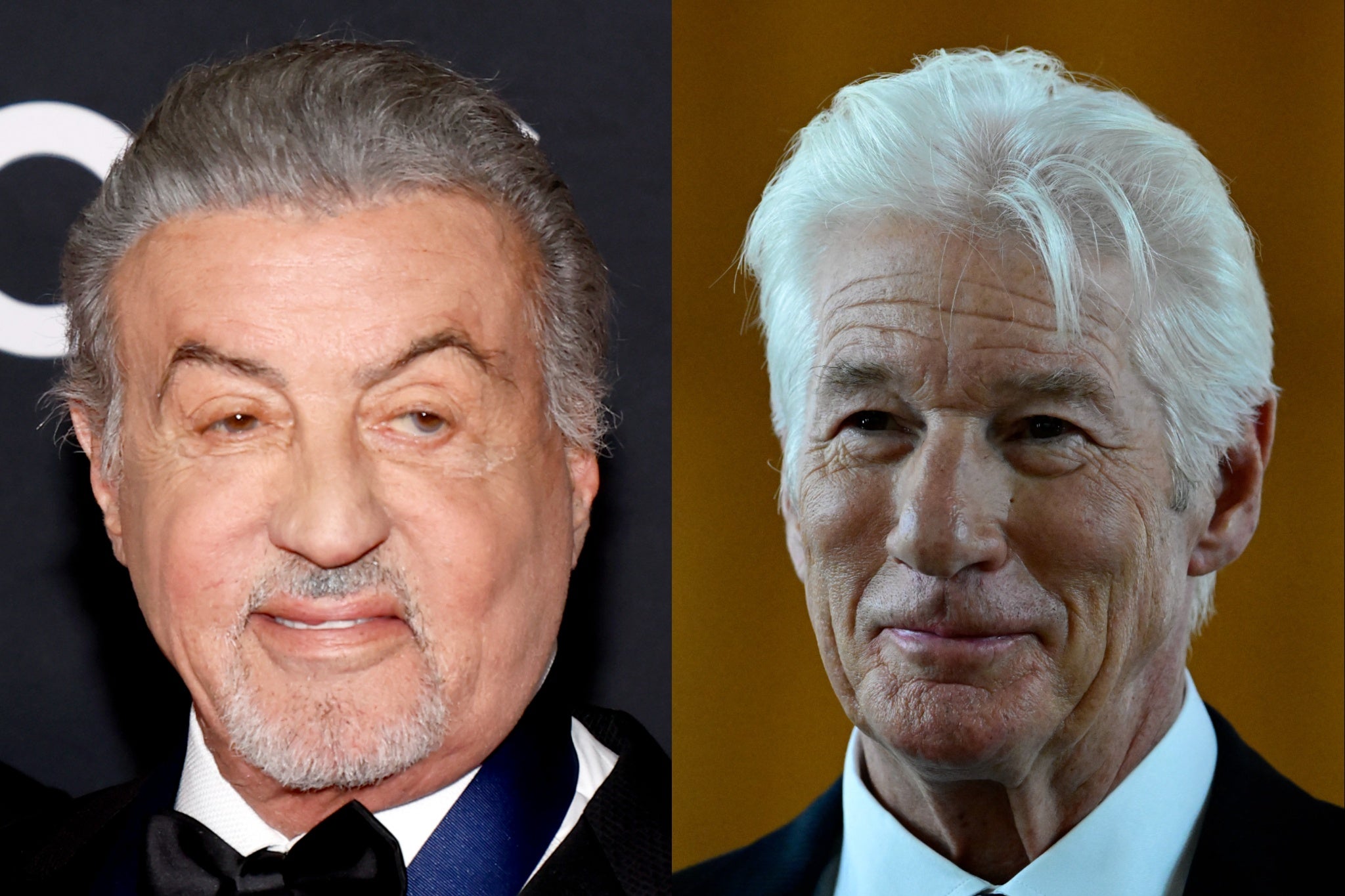
Stallone’s cold retort brought the confrontation to a definitive close: "Too late…"
The Casting Fallout and Production Adjustments
With the physical altercation drawing the attention of the crew, director Stephen Verona was forced to intervene definitively. Recognizing that the professional relationship between Stallone and Gere was entirely untenable and that filming could not proceed safely with both men on the set, the director made a decisive casting cut.
Gere was dismissed from the production, leaving Stallone to continue his work on the film. Concurrently, Robert De Niro also departed the project to pursue a separate, career-altering film opportunity (ultimately starring in Francis Ford Coppola’s The Godfather Part II).
To salvage the production, the vacant roles were filled by actors Perry King and Henry Winkler—the latter of whom would soon achieve international superstardom as "The Fonz" on the landmark television sitcom Happy Days. Meanwhile, The Lords of Flatbush was completed and released in 1974, earning modest critical attention but remaining forever cemented in industry lore as the battleground for one of Hollywood’s most legendary feuds.
Supporting Context and Metrics: The Anatomy of Hollywood Feuds
While on-set personality clashes are a standard byproduct of the collaborative and high-stress entertainment industry, the longevity of the Stallone-Gere rivalry places it in a rare tier of cinematic history. Industry analysts and entertainment historians often study such conflicts to understand the psychological pressures placed on young, ambitious performers competing for limited resources, breakthrough roles, and cultural dominance.
Comparative Longevity of Famous On-Set Rivalries
| Actors Involved | Film / Project | Year | Nature of Conflict | Resolution Status |
|---|---|---|---|---|
| Sylvester Stallone & Richard Gere | The Lords of Flatbush | 1974 | Physical altercation, space invasion, creative friction | Unresolved (Decades-long cold war, nearly fought over Princess Diana) |
| Bill Murray & Lucy Liu | Charlie’s Angels | 2000 | Creative disagreements, verbal clashes on set | Unresolved publicly; Murray later downplayed the severity |
| Tom Hardy & Charlize Theron | Mad Max: Fury Road | 2015 | Exhaustion, contrasting work styles, tension in extreme heat | Post-production reconciliation; both acknowledged mutual respect |
| Bette Davis & Joan Crawford | What Ever Happened to Baby Jane? | 1962 | Intense professional rivalry, lifelong status competition | Permanent rivalry maintained for publicity and personal animosity |
The metrics of Hollywood casting decisions in the 1970s underscore how high the stakes were for Stallone and Gere. Both actors were operating on strict independent budgets, where a single breakout performance could mean the transition from working-class obscurity to global wealth and fame. For Stallone, who would write and star in Rocky just two years later in 1976, maintaining boundaries and projecting strength were essential survival mechanisms in a cutthroat industry. For Gere, the dismissal from The Lords of Flatbush proved merely a temporary setback, as his magnetic screen presence soon propelled him to leading-man status in films like American Gigolo (1980) and An Officer and a Gentleman (1982).
Official Statements and Memoir Revelations
The publication of The Steps has reintroduced the decades-old conflict into contemporary cultural discourse, prompting renewed interest from media outlets, film historians, and fans worldwide. Sylvester Stallone, now 80 years old, approaches the retrospective examination of his career with a mix of philosophical detachment and characteristic candor.
In promotional interviews surrounding the book’s release, Stallone has emphasized that The Steps is designed to offer an unvarnished, authentic look at the grueling realities of breaking into the film industry during an era when studios and independent producers offered little psychological support or conflict resolution training for young, testosterone-fueled casts.
While Gere has historically maintained a more reticent public stance regarding the 1974 incident—often choosing to ignore or downplay the media’s persistent inquiries into the decades-old firing—the weight of Stallone’s detailed testimony in The Steps provides the most definitive and comprehensive account of the physical altercation to date.
The Royal Escalation: The Princess Diana Incident
Adding an extraordinary postscript to their 1974 studio parking lot clash, the animosity between Stallone and Gere flared up decades later in an entirely different social sphere—involving British royalty and international pop music royalty.
According to memoirs published by Sir Elton John, the long-standing tension between the two actors nearly erupted into a full-scale physical brawl at a private dinner party hosted by the musician in the 1990s. The event, which was attended by Diana, Princess of Wales, featured a guest list populated by global luminaries and Hollywood elite.
As Sir Elton John detailed, Sylvester Stallone arrived at the gathering and quickly grew visibly agitated upon observing that Richard Gere and Princess Diana appeared to be locked in deep, flirtatious, and amicable conversation. The sight of his historical nemesis engaging smoothly with the beloved royal proved to be an unexpected psychological trigger for the action star.
The situation escalated behind closed doors when Sir Elton John’s partner, David Furnish, discovered the two actors standing face-to-face in a private corridor. According to eyewitness accounts, Stallone and Gere were actively squaring up to each other, poised to finally settle their decades-long grievances through a physical fist-fight over the Princess of Wales.
Swift intervention by party organizers and concerned friends once again prevented the altercation from turning violent, preserving the decorum of the royal-adjacent event. Nevertheless, the incident confirmed that the psychic scars of The Lords of Flatbush remained unhealed more than twenty years after the initial chicken grease dispute.
Future Outlook: Legacy, Reconciliation, and Cultural Impact
As Sylvester Stallone continues to celebrate the literary success of The Steps and receives critical acclaim for his ongoing contributions to cinema and television, the historical footprint of his feud with Richard Gere remains a fascinating study in cinematic mythology.
Industry observers frequently debate whether the two octogenarian stars will ever achieve a public reconciliation. Given the passage of more than half a century since their initial confrontation on the Brooklyn-set indie film, an official handshake or public display of forgiveness seems unlikely, yet it remains a tantalizing prospect for pop-culture historians. Both men have successfully carved out monumental, distinct legacies in American film history—Stallone as the quintessential, muscle-bound working-class hero who embodied the American dream through Rocky, Rambo, and Creed, and Gere as the sophisticated, suave romantic lead who defined an era of prestige drama and box-office romance.
Ultimately, the enduring fascination with the Stallone-Gere feud lies not in the petty nature of its origins—a dropped piece of chicken grease and a rough improvisation exercise—but in what it reveals about the raw, unfiltered humanity of Hollywood’s biggest icons. Long before they were multi-million-dollar brands, franchise architects, and international sex symbols, they were simply two ambitious, fiercely proud young actors fighting for space on a freezing boardwalk, unwilling to yield an inch to anyone.
Sylvester Stallone’s memoir, The Steps, is available now through major booksellers and online retailers.