Executive Overview
As the United Kingdom marks its 2026 National Year of Reading, the cultural diagnosis feels entirely contemporary. Headlines broadcast dire warnings about a society in cognitive peril—exemplified by The Times cautioning that "If humans stop reading, barbarians will live among us again." In the crosshairs of cultural critics are smartphones, algorithmic social media feeds, TikTok, and generative artificial intelligence, which are routinely blamed for fracturing public attention spans, eroding deep literacy, and replacing sustained reflection with endless, frictionless scrolling.
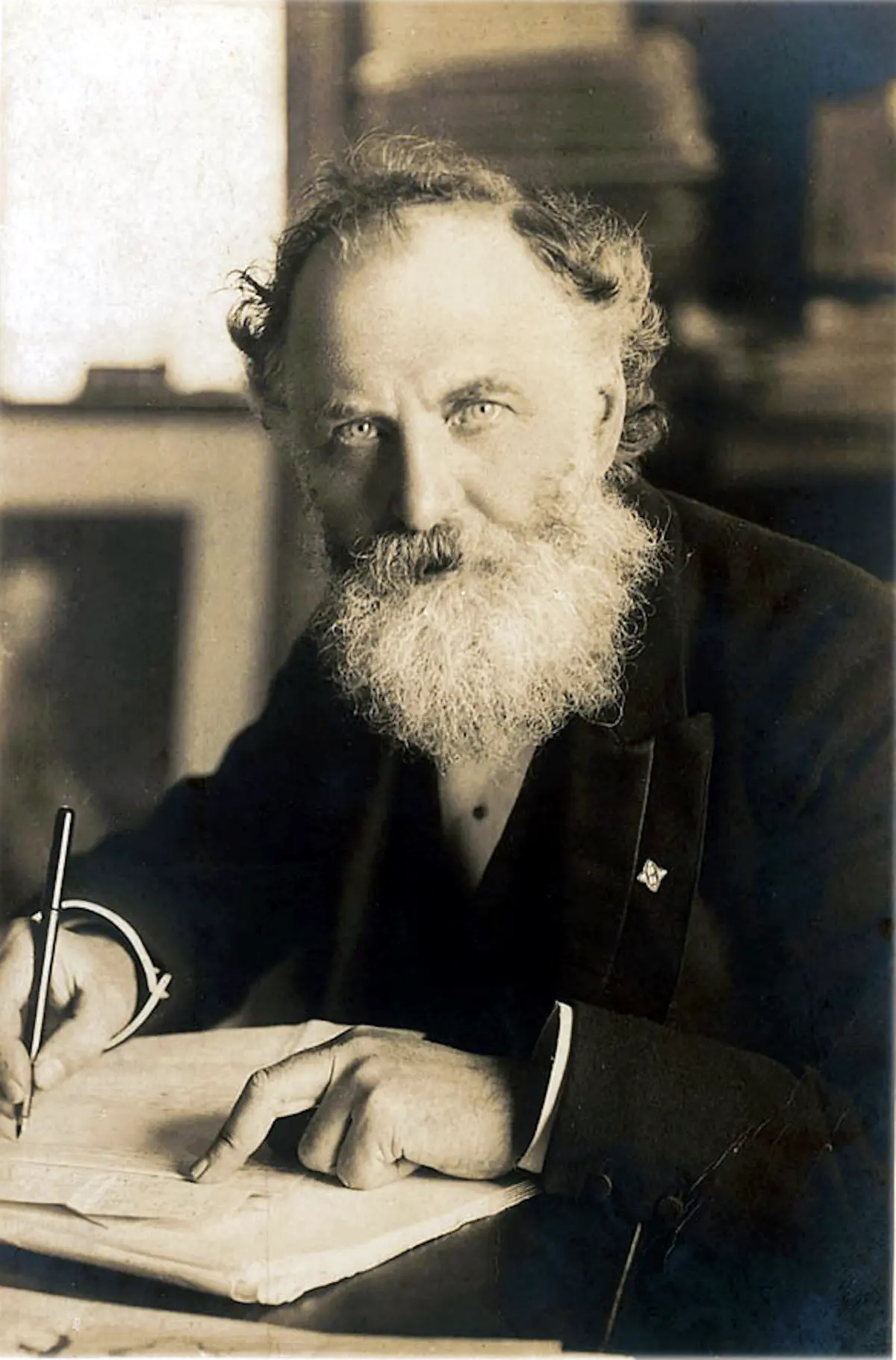
Yet, a dive into the historical archives reveals an uncanny echo. More than a century ago, in 1906, pioneering investigative journalist and editor W.T. Stead published a passionate manifesto titled A Plea for the Revival of Reading. Surveying Victorian and Edwardian Britain, Stead lamented that the nation was facing an acute reading crisis. People, he complained, no longer engaged with books; instead, they skimmed newspapers on trains, forgot what they had read by lunchtime, and overwhelmingly preferred superficial distraction to sustained intellectual attention.
Stead’s century-old diagnostic exposes a profound historical continuity: the anxieties we currently project onto digital screens and algorithmic platforms are virtually identical to those sparked by the mass media revolutions of the late 19th and early 20th centuries. While technology evolves at an exponential rate, human anxieties concerning attention, literacy, cognitive health, and media consumption remain remarkably fixed.
Detailed Chronology: From Victorian Rail Lines to the Digital Age
To understand why contemporary panic over reading habits feels so familiar, it is necessary to trace the historical lineage of media disruption. The friction between deep, contemplative reading and fast-paced, fragmented media is not a product of the silicon chip; it is a byproduct of industrialization and modern mass communication.
1906: W.T. Stead and the First "Information Overload"
When W.T. Stead published A Plea for the Revival of Reading in 1906, the British media landscape was undergoing a seismic shift. The rise of cheap, mass-market newspapers, railway libraries, and sensationalist periodicals had transformed how the working and middle classes consumed text. Stead observed that millions of people possessed the technical capacity to read—a byproduct of sweeping 19th-century educational reforms—yet entirely lacked a "reading identity."
Stead drew a sharp, foundational distinction that remains central to literacy debates today:

"Millions have never yet found out that books were interesting," Stead wrote. "They can read, but they do not care for reading."
Stead argued against the authoritarian imposition of literature, noting that the love of reading was an acquired taste that required "coaxing" rather than coercion. Furthermore, he diagnosed the newly minted newspaper format as a cognitive hazard. He complained that newspapers had devolved into "mere rag bags of shreds and patches," scanned by readers "as we look into kaleidoscopes," producing only "an evanescent effect upon our minds."
The 20th-Century Intermediaries: Paperbacks, Television, and the Internet
Stead’s fears set off a recurring cultural cycle. Every time a new medium emerged, critics predicted the death of serious reading:
- The Paperback Revolution (Mid-20th Century): The democratization of publishing through cheap paperbacks caused anxiety among traditionalists who feared that portable, mass-market literature would cheapen intellectual standards.
- The Rise of Television (1950s–1980s): The advent of the household TV screen led cultural critics to warn that moving images would completely replace the written word, stunting children’s imaginations and killing the habit of reading for pleasure.
- The Internet and Early Web (1990s–2000s): The transition from print to hypertext prompted early digital Cassandras to warn that hyperlinks and search engines would destroy linear reading comprehension, paving the way for the modern attention economy.
2026: The AI and Short-Form Video Era
Today, in 2026, the anxieties voiced by Stead have been supercharged by digital ecosystems. Modern critics point to short-form video algorithms, endless social media feeds, and generative artificial intelligence tools as terminal threats to human cognition. Where Stead worried about the railway commuter skimming a daily broadsheet, modern educators worry about the smartphone user scrolling through TikTok feeds—platforms explicitly engineered to trigger rapid emotional responses and fragment sustained attention. Yet, the underlying lament remains unchanged: the belief that the contemporary medium of information consumption is actively rewiring human memory, judgment, and critical faculties for the worse.
Supporting Context & Metrics: The Science and Sociology of Reading
While cultural anxieties have remained remarkably consistent, the tools we use to study reading habits have grown increasingly sophisticated. Modern educational research and cognitive science provide empirical frameworks that validate some of Stead’s intuitive insights while pushing past others.
Literacy vs. Reading Identity
Contemporary literacy research mirrors Stead’s 1906 distinction between decoding words and cultivating a reading identity. According to recent educational studies, declining rates of reading for pleasure among youth are rarely driven by absolute illiteracy. Instead, they stem from a lack of motivation, confidence, and relevance. Developing lifelong readers requires child-led book choices, peer recommendation ecosystems (such as BookTok), and shared reading initiatives that emphasize encouragement over standardized testing mandates.
Cognitive and Health Impacts of Immersive Reading
Unlike Stead’s era, which relied purely on cultural observation and rhetorical persuasion, modern science has quantified the neurological and psychological benefits of deep, long-form reading.
- Cognitive Longevity: Empirical studies published in neurological and public health journals demonstrate that sustained, immersive reading supports concentration, sharpens critical reflection, and is strongly associated with healthier cognitive aging.
- Stress Reduction: Regular engagement with books has been empirically linked to lowered cortisol (stress) levels. A landmark study cited in public health research indicates that even short periods of uninterrupted reading can significantly reduce physiological markers of stress.
- Emotional Resilience: Echoing Victorian Liberal MP John Morley—who advocated for "good and disinterested reading" to cultivate "happiness, fortitude, wisdom and calm"—modern psychological research affirms that literature fosters empathy, emotional regulation, and social-cognitive processing.
| Media Era | Primary Catalyst of Panic | Perceived Cognitive Threat | Proposed Solution |
|---|---|---|---|
| 1906 (Edwardian) | Railway newspapers, cheap periodicals | Skimming, loss of memory, "kaleidoscopic" distraction | Oral reading, coaxing children, adapting books to be accessible |
| Late 20th Century | Television, mass paperbacks | Visual dominance, erosion of imagination, anti-intellectualism | National literacy campaigns, library funding, structured school reading |
| 2026 (Digital) | Smartphones, TikTok, Generative AI | Fragmented attention, endless scrolling, reliance on AI assistants | Oracy frameworks, BookTok integration, audiobooks, hybrid media |
Official Statements & Institutional Responses
Governments, cultural institutions, and educational bodies are actively responding to the perceived contemporary reading crisis with structural policy shifts.
The UK’s National Year of Reading (2026)
The launch of the UK’s 2026 National Year of Reading has brought the debate from academic seminar rooms into the national spotlight. Sparked by alarming drops in child and adult recreational reading statistics, policymakers are grappling with how to arrest the decline. Major broadsheets have rallied behind national campaigns, with cultural figures warning that a retreat from long-form text threatens the foundations of democratic discourse and critical thinking.
Educational Reform and the Oracy Framework
In a striking parallel to Stead’s advocacy for oral reading as "the surest, simplest, and speediest way of awakening a love of reading," educational authorities are placing renewed emphasis on spoken language. The UK government’s proposed oracy framework, slated for rollout by 2028, reflects a growing institutional consensus that speaking, listening, and reading are fundamentally interdependent. By integrating structured verbal communication into the curriculum, educational strategists aim to build stronger linguistic foundations that naturally feed into written literacy.
The Return of Censorship and Book Bans
Interestingly, modern debates over reading are not only focused on how much people read, but what they are allowed to read. Recent reports from library associations highlight an increasing number of requests to remove or restrict specific books—a trend amplified by transnational cultural pressure groups. Historians point out that every generation attempts to police popular reading materials under the guise of protecting public morality or child welfare. In 1906, Stead noted American proposals to regulate children’s access to popular novels in the exact same manner as tobacco sales. Today’s book challenges demonstrate that society’s anxiety over texts frequently masks deeper anxieties about social change, authority, and cultural values.
Future Outlook: Adapting the Book for the 21st Century
Perhaps the most prescient and surprising takeaway from W.T. Stead’s century-old pamphlet is his prescription for how books should survive in a fast-paced media ecosystem.

Rather than adopting a defensive posture—screaming into the void against the encroachment of modern newspapers—Stead argued that books needed to adapt. He wrote:
"Books must struggle for existence by the use of the same weapons as those which have secured the ascendency of the newspaper."
Stead believed that traditional publishing should borrow the strengths of modern media: books needed to be cheaper, shorter, more accessible, and distributed through dynamic channels. Far from resisting new communication technologies, he insisted that reading would flourish only by bending to meet audiences where they already were.
Meeting Modern Readers Where They Are
Stead’s philosophy provides a blueprint for the modern publishing and educational landscape of 2026. Rather than treating digital tools as existential enemies, forward-thinking publishers, libraries, and educators are co-opting digital platforms:
- Audiobooks and Podcasts: Transforming linear text into auditory experiences that fit into modern commuting and lifestyle habits.
- BookTok and Reader Communities: Harnessing short-form video platforms not as distractions, but as vibrant, peer-to-peer marketing hubs that drive millions of young people back to physical bookstores.
- Reading Apps and Gamified Literacy: Utilizing digital interfaces to lower the barrier to entry for hesitant readers, gradually scaffolding them toward deeper, long-form engagement.
Conclusion: The Enduring Quest for "Care"
As we navigate the complexities of the 2026 information landscape—balancing the conveniences of generative AI with the cognitive costs of endless digital scrolling—we would do well to heed Stead’s ultimate conclusion.
The perpetual panic over reading is cyclical, driven by older generations fearing the intellectual habits of the young. Yet, beneath the panic lies a timeless truth. The ultimate educational and cultural challenge has never been merely teaching a population how to decode letters on a page. The true, enduring mission—whether articulated by a Victorian journalist in 1906 or a digital-age educator in 2026—is helping people who can read transform into people who genuinely care for reading.