Executive Overview
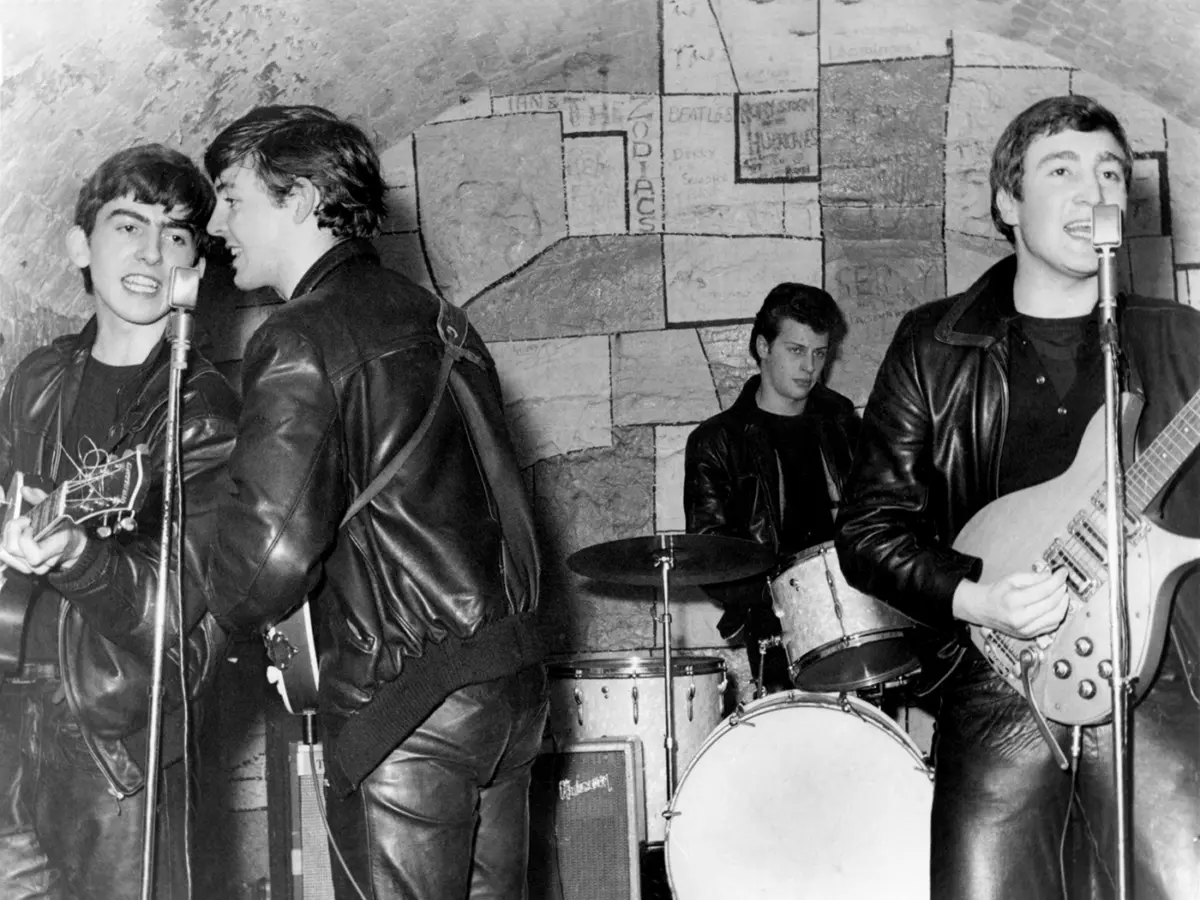
Long before the world succumbed to Beatlemania, before the screaming crowds at Shea Stadium, and before John Lennon, Paul McCartney, George Harrison, and Ringo Starr cemented themselves as the greatest songwriters of the 20th century, they were simply music-hungry teenagers growing up in post-war Liverpool. In the mid-to-late 1950s, the Atlantic Ocean was a formidable cultural barrier, yet the ground-shaking sounds of American rhythm and blues, rock ’n’ roll, and doo-wop managed to breach the docks of Merseyside.
The records brought over by American merchant seamen acted as sacred artifacts for aspiring musicians across Britain. For the young Beatles, these tracks were not merely entertainment; they were a masterclass in composition, performance, and attitude. The group meticulously studied, rehearsed, and performed a sizeable clutch of these American songs, building a foundational repertoire that would fuel their marathon, sweat-drenched sets in the grimy clubs along Hamburg’s Reeperbahn and the intimate confines of Liverpool’s Cavern Club.
The magnitude of this influence cannot be overstated. Barring A Hard Day’s Night—which famously stands as the only Beatles LP entirely composed of Lennon/McCartney originals—their first five studio albums were heavily bolstered by covers of tracks previously recorded by their American heroes. Furthermore, both John Lennon and Paul McCartney would return to these foundational standards decades later during their solo careers, recording entire tribute albums dedicated to the rock ’n’ roll blueprints of their youth.
This piece explores 15 non-Lennon/McCartney compositions—presented in their original, raw recorded versions—that soundtracked the birth of The Beatles more than six decades ago, tracing the direct line from 1950s American pioneers to the greatest band in rock history.
Detailed Chronology: The 15 Tracks That Built The Beatles
1. Larry Williams – "Dizzy Miss Lizzy" (Specialty, 1958)
Written and recorded in New Orleans by Larry Williams in 1958, this high-energy burner was a staple of The Beatles’ live setlists during their grueling Hamburg residencies. The group eventually captured their own raucous studio version for their 1965 album Help!. Their affinity for Williams didn’t stop there; they also famously covered his tracks "Bad Boy" and "Slow Down." The song’s legacy within the broader Beatles family endured when John Lennon performed a blistering version with the Plastic Ono Band, captured live on the album Live Peace In Toronto 1969.
2. Eddie Cochran – "C’mon Everybody" (Liberty, 1958)
Eddie Cochran recorded this definitive teenage anthem in 1958, just two years before his tragic death in a car crash. The Beatles covered several Cochran numbers in their formative years, absorbing his rebellious swagger and distinct guitar tone. George Harrison was such a fervent devotee that he later acquired and treasured one of the late singer’s actual stage shirts, treating it as a holy relic of rock history.
3. Wilbert Harrison – "Kansas City" (1959)
The trajectory of "Kansas City" reads like a roadmap of rock history. Originally written by the legendary team of Jerry Leiber and Mike Stoller in 1952, it first found life as a blues hit for Little Willie Littlefield. However, it was Wilbert Harrison’s chart-topping 1958 version—coupled with a subsequent explosive cover by Little Richard—that persuaded The Beatles to add it to their live rotation in Hamburg. They finally cut their own version, complete with adapted lyrics, for their 1964 LP Beatles For Sale.
4. Chuck Berry – "You Can’t Catch Me" (Chess, 1956)
Chuck Berry was the undisputed patron saint of rock ’n’ roll guitarists, and his 1956 Chess release was a perennial favourite among the members of The Beatles. John Lennon famously borrowed the iconic lyrical couplet "Here come old flat top" to launch the opening line of his masterpiece, "Come Together." This lyrical lift did not go unnoticed by Berry’s publisher, Morris Levy. The ensuing legal dispute and subsequent settlement indirectly led to Lennon recording a full-throated cover of Berry’s original on his 1975 covers album, Rock ’n’ Roll.
5. Buddy Holly – "Words Of Love" (Coral, 1957)
Buddy Holly’s influence on the vocal harmonies and twin-guitar interplay of Lennon and McCartney is immeasurable (indeed, "The Beatles" was chosen as an insect-themed moniker explicitly as a nod to Holly’s backing band, The Crickets). Recorded by Holly in 1957, "Words Of Love" was a fixture of the Fabs’ early live sets. Famously, before Ringo Starr joined the fold, temporary drummer Tommy Moore or Pete Best had to make do, while in the very earliest days, Ringo (then with Rory Storm) and others utilized unorthodox percussion—such as beating on a packing case—to replicate the unique percussive snap of the original record. A faithful cover eventually graced Beatles For Sale in 1964.
6. The Everly Brothers – "Wake Up Little Susie" (Cadence, 1957)
Penned by the powerhouse songwriting duo Felice and Boudleaux Bryant, this track became a massive Billboard number one for Don and Phil Everly in 1957. When the early Beatles played the track during their foundational days at the Cavern Club, Paul McCartney loved to playfully misdirect blues purists in the audience by deadpan-announcing the teenage pop-country tune as a work by delta blues legend Big Bill Broonzy.
7. Elvis Presley – "Baby Let’s Play House" (Sun, 1955)
Recorded in Memphis at Sam Phillips’ legendary Sun Studio in 1955, this track provided Elvis Presley with his very first entry on the US national charts. The cultural seismic shift caused by Presley was felt acutely on Mendips Street in Liverpool. John Lennon later borrowed a famously visceral lyric—"I’d rather see you dead, little girl, than to be with another man"—to serve as the chilling opening line for "Run For Your Life" on the 1965 album Rubber Soul.
8. Little Richard – "Long Tall Sally" (Specialty, 1956)
Little Richard was Paul McCartney’s vocal idol, and "Long Tall Sally" was the ultimate test of endurance and showmanship. Written alongside producer Robert "Bumps" Blackwell as a follow-up to "Tutti Frutti," Richard’s explicit intention was to craft a song so blindingly fast and vocally demanding that white teen idol Pat Boone wouldn’t dare attempt to cover it. Boone covered it anyway. Undeterred, The Beatles made it the centerpiece of their explosive live shows, eventually committing it to vinyl on a dedicated 1964 UK EP.
9. The Del-Vikings – "Come Go With Me" (Fee Bee, 1956)
This shimmering doo-wop hit from 1957 holds a mythical status in Beatles lore. It was precisely this song that a teenage John Lennon was singing on stage with his skiffle group, The Quarrymen, at the Woolton parish church fête on July 6, 1957—the exact afternoon that a mutual friend introduced him to a guitar-playing local boy named Paul McCartney.
10. Big Joe Turner – "Shake, Rattle & Roll" (Atlantic, 1954)
Big Joe Turner topped the R&B charts in 1954 with this driving Jesse Stone composition. The track sparked an immediate white-market crossover cover by Bill Haley & His Comets, followed by Elvis Presley’s rockabilly rendition two years later. The Beatles naturally absorbed the song into their musical DNA, famously revisiting it during an extended, nostalgic jam session at Twickenham Studios during the Get Back / Let It Be sessions in January 1969. That spontaneous performance was later preserved for posterity on Anthology 3.
11. The Coasters – "Searchin’" (Atco, 1957)
Another masterpiece penned by the legendary Leiber and Stoller partnership, "Searchin’" was recorded by vocal group The Coasters in 1957. This was not merely a casual cover choice; it was the song selected by Brian Epstein and the band to perform during their ill-fated audition for Decca Records on January 1, 1962—where executive Dick Rowe infamously rejected them under the flawed premise that "guitar groups are on the way out."
12. Ricky Nelson – "Lonesome Town" (Imperial, 1958)
While many of the band’s covered tracks were frantic rock ’n’ roll burners, late-50s teen idol Ricky Nelson introduced them to a darker, more melancholic brand of American pop. "Lonesome Town" was a major 1958 hit that deeply resonated with Paul McCartney, who recorded his own version for his 1999 rockabilly covers album, Run Devil Run. Furthermore, it was deeply personal to McCartney’s late wife, Linda; Paul touchingly performed the song at her memorial service at the Royal Albert Hall.
13. Lloyd Price – "Just Because" (ABC-Paramount, 1957)
New Orleans R&B stalwart Lloyd Price cut this infectious track in 1957. Featuring a rolling piano rhythm and a loose, celebratory vocal delivery, it left a lasting impression on John Lennon. When Lennon finally recorded his retrospective covers album Rock ’n’ Roll in 1975, he deliberately chose "Just Because" to close out the record, offering a final, loving nod to the music of his Liverpool youth.
14. Bobby Freeman – "Do You Wanna Dance?" (Josie, 1958)
Written and originally recorded by Bobby Freeman in 1958, "Do You Wanna Dance?" became a quintessential pop-rock standard, subsequently interpreted by everyone from The Beach Boys to Bette Midler. True to form, John Lennon added his name to the ledger when he recorded a blistering rendition for his 1975 Rock ’n’ Roll LP. (Musicologists and rock lore have long whispered that a pre-fame Jerry Garcia may have contributed uncredited guitar work to Freeman’s original recording sessions).
15. Carl Perkins – "Everybody’s Trying To Be My Baby" (Sun, 1957)
Carl Perkins was revered by The Beatles more almost than any other contemporary; indeed, George Harrison once stated, "If you were a guitar player in 1956, Carl Perkins was the man." While The Beatles recorded several Perkins compositions throughout their career, they held a particular, enduring affection for this 1957 Sun hit. It became a permanent fixture in George Harrison’s vocal repertoire, famously recorded for the Beatles For Sale album and performed live until the band stopped touring in 1966.
Supporting Context & Metrics
To truly grasp the impact of these American recordings on The Beatles’ career, one must look at the quantitative footprint covers held in their early discography:
- Album Composition: Out of the 14 tracks featured on their 1963 debut album Please Please Me, a staggering 8 were covers of outside writers. Their second album, With The Beatles (1963), similarly featured 8 covers out of 14 tracks.
- The Exception: A Hard Day’s Night (1964) remains a monumental watershed moment as the first album in pop history to consist entirely of original compositions written by the Lennon/McCartney partnership.
- Geographic Reach: Of the 15 foundational tracks detailed above, origins trace directly to musical hubs like New Orleans, Memphis, Chicago, and New York—demonstrating the vast geographical scope of the American cultural export that filtered through the port of Liverpool.
Official Statements and Archival Reflections
The members of The Beatles were remarkably candid throughout their lives regarding their debt to the American artists who came before them.
Reflecting on the pre-fame era in Liverpool and Hamburg, Paul McCartney noted in archival interviews:
"We didn’t think about writing our own songs at the very beginning; there was too much good stuff already out there. When we heard Little Richard, Chuck Berry, Buddy Holly, and Elvis, it was like a lightning bolt. We just wanted to learn how to play those records as close to the originals as we possibly could. That execution taught us structural mechanics that we used when we finally started writing our own material."
John Lennon, speaking in his legendary 1970 Rolling Stone interview with Jann Wenner, encapsulated the reverence the band held for their American influences:
"Before Elvis, there was nothing. It wasn’t that we copied them blindly; we absorbed them. You can’t write a rock ‘n’ roll song without acknowledging the guys who invented the language. We were just four kids trying to speak that language with a Liverpool accent."
Future Outlook: Preserving the Blueprint
As decades pass and the 20th-century golden age of rock ’n’ roll recedes further into history, the legacy of these 15 foundational tracks continues to be reassessed by music historians and modern artists alike. Audio restoration projects, streaming anthologies, and archival releases ensure that the original recordings by Larry Williams, Chuck Berry, Carl Perkins, and their peers remain accessible to generations born long after the amplifier hummed its last note at Candlestick Park.
Ultimately, these 15 songs serve as an enduring testament to the power of cross-cultural musical exchange. They prove that the greatest band in human history was, at its core, the world’s most talented and dedicated covers band—one that studied the past so thoroughly that they were able to completely reinvent the future of modern music.