Executive Overview
The contemporary Nigerian music landscape is dominated by the global commercial explosion of Afrobeats—a streamlined, digital-first pop sound that routinely conquers international charts. Yet, parallel to this mainstream phenomenon exists a vibrant, fiercely independent ecosystem of musicians who are returning to the genre’s foundational roots: live instrumentation, complex polyrhythms, socio-political commentary, and deep-seated cultural heritage. At the vanguard of this movement stands Michael Oloyede, a virtuoso drummer, composer, and bandleader whose work bridges the gap between traditional Yoruba folklore, jazz improvisation, and the driving syncopations of Afrobeat and funk.
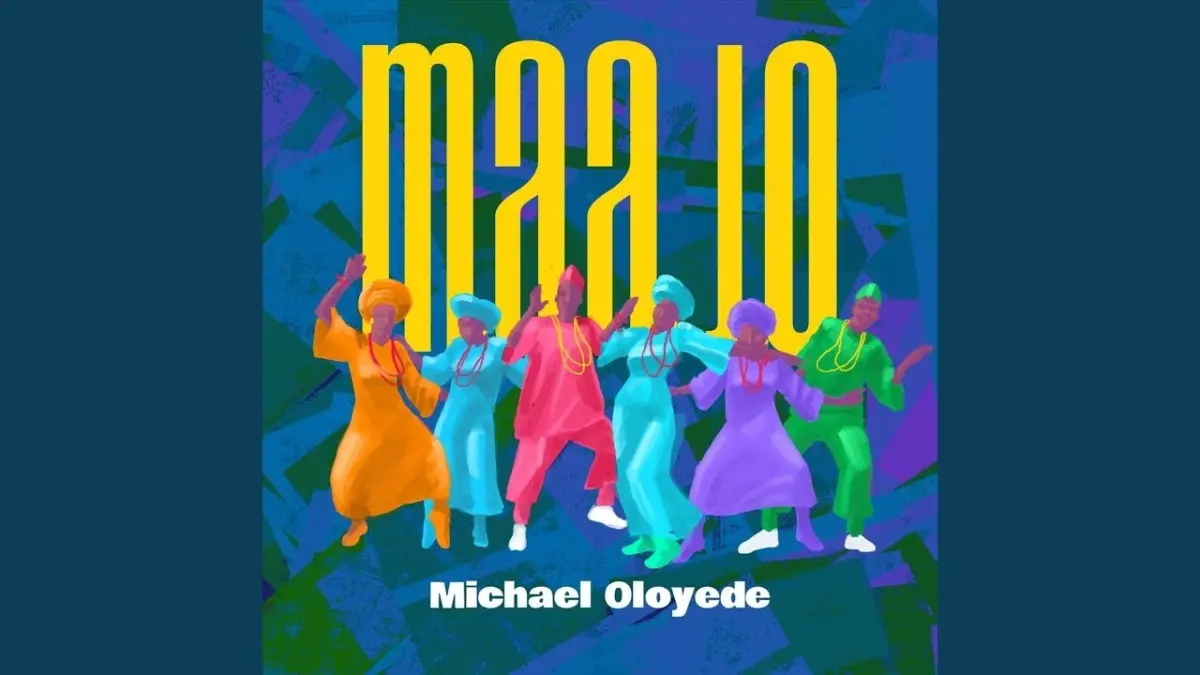
On October 23, 2025, Oloyede shattered a period of relative quiet with the release of his latest single, “Maa Jo.” Marking his first new musical offering since February 2025’s “Otooro Koro,” the track reasserts his unique dual role as the architect and driving pulse of Native Brains, the Lagos-based collective he commands simultaneously from behind the drum kit and in front of the microphone. More than just a welcome return for fans of progressive African groove, “Maa Jo” represents a vital continuation of Oloyede’s artistic mission: to use rhythm as a vehicle for cultural preservation, social critique, and international sonic diplomacy.
This comprehensive report explores the genesis of “Maa Jo,” traces Michael Oloyede’s extraordinary evolution from a musically curious child in Nigeria to a globally trained session elite, examines the socio-political underpinnings of Native Brains, and assesses the future trajectory of an artist determined to take traditional Yoruba-infused funk to the global stage.
Detailed Chronology: From “Otooro Koro” to the Arrival of “Maa Jo”
The Quiet Before the Storm
Following the release of his acclaimed self-titled debut album Native Brains in 2023—followed by steady artistic exploration that led to the February 2025 single “Otooro Koro”—Michael Oloyede entered a deliberate, if unannounced, period of compositional introspection. In an industry where artists often feel compelled to feed the streaming algorithms with relentless monthly releases, Oloyede’s measured cadence speaks to a commitment to craftsmanship over commercial churn.
During the months leading up to October 2025, whispers within the Lagos live music circuit suggested that Oloyede was back in the studio, experimenting with harder-hitting percussion ensembles and refining the conversational interplay between the horns and the rhythm section that has become a hallmark of Native Brains.
The October 23 Drop
Released globally on October 23, 2025, “Maa Jo” instantly signaled a maturation of the Native Brains sound. Driven by a relentless, hypnotic bassline and intricate polyrhythms that demand physical movement while rewarding deep listening, the track immediately caught the attention of connoisseurs of contemporary African jazz and afro-funk.
Operating as both a composer and a lyricist, Oloyede utilizes his distinctive vocal delivery to cut through the dense instrumentation. The single bridges the gap between the hypnotic, extended-jam ethos of 1970s Afrobeat pioneers and modern, high-definition production techniques. By positioning himself both at the back of the stage—anchoring the ensemble with the infallible timing of a master percussionist—and at the front as the vocal narrator, Oloyede defies conventional bandleader paradigms, offering a masterclass in musical multitasking.
Supporting Context & Metrics: The Making of a Master Percussionist
The Yoruba Roots and Apala Education
To understand Michael Oloyede’s musical DNA, one must look far beyond the modern recording studios of Lagos and examine his formative years. Oloyede’s relationship with rhythm is deeply ancestral. His foundational grounding in Yoruba musical traditions dates back to childhood Decembers spent in his family’s ancestral hometown.
During these annual gatherings—specifically coinciding with yearly church thanksgivings—an uncle would play the visceral, high-energy apala records of the legendary Ayinla Omowura all night long. These all-night listening sessions soaked Oloyede’s young mind in the complex timing of native percussion, call-and-response vocal structures, and the raw, unpolished storytelling inherent to indigenous Yoruba music. This early exposure planted the seeds for a lifelong fascination with how rhythm communicates emotion and history.
Academic Rigor and Global Exposure
As his passion evolved into a professional calling, Oloyede sought formal institutional training to match his innate talent. He enrolled at the prestigious MUSON School of Music (Musical Society of Nigeria) in Lagos, where he honed his technical proficiency, sight-reading, and theoretical understanding of music.
Eager to expand his palette further, he crossed continents to participate in the prestigious summer jazz program at the Berklee College of Music in Boston, Massachusetts. This international academic immersion exposed him to global jazz idioms, advanced harmonic structures, and the cross-pollination of African-American jazz traditions with African rhythms—a synthesis that would later define his solo output.
The Lagos Session Circuit: Playing with Legends
Before establishing Native Brains as a vehicle for his own creative vision, Oloyede earned his stripes in the trenches of the notoriously demanding Lagos live music scene. He quickly transformed into one of the most sought-after and busiest session and touring drummers in the country.
His resume reads like a masterclass in modern African music history:
- Lagbaja: Keeping time for the iconic, masked afro-funk innovator, Oloyede mastered the intricate, high-energy demands of blending traditional Yoruba bata drums with Western jazz and funk arrangements.
- Asa: Collaborating with the internationally celebrated neo-soul and pop singer-songwriter allowed Oloyede to explore dynamics, restraint, and emotional depth, proving that his percussion could whisper just as effectively as it could roar.
- Marcus Miller: Sharing stages and collaborative spaces with the legendary American jazz bassist, composer, and producer cemented Oloyede’s status as a world-class musician capable of holding his own alongside global jazz royalty.
The Birth of Native Brains (2017–2023)
By 2017, after years of servicing other artists’ visions, Oloyede reached a turning point. He redirected his immense technical capacity toward the specific drum patterns, idioms, and linguistic nuances of his own Yoruba people. This pivot birthed Native Brains, a collective designed to explore afrobeat and funk filtered directly through the perspective of a master drummer.
When his debut full-length album, Native Brains, dropped in 2023, critics and fans alike noted the heavy ancestral footprints of two towering Nigerian icons: Fela Kuti (the undisputed king of Afrobeat) and King Sunny Ade (the master of Juju music). However, Oloyede was careful not to merely imitate his predecessors. Instead, as he frequently noted, his identity as a drummer fundamentally shapes how the band’s rhythm section "talks to itself"—creating a conversational, polyrhythmic dialogue where bass, keys, guitars, and horns respond dynamically to every strike of the snare and rim.
Official Statements & Artistic Philosophy: Music as a Catalyst for Change
The Urgency of Socio-Political Commentary
Michael Oloyede’s artistic vision extends far beyond technical mastery or aesthetic pleasure. Like the Afrobeat progenitors before him, he views music as an essential tool for social awakening. The majority of his songwriting is driven by the pressing socio-political problems plaguing contemporary Nigeria—corruption, economic hardship, infrastructural decay, and the struggles of the working class.
In various interviews surrounding his creative process, Oloyede has articulated a firm belief that art must bear witness to the realities of its creators. By embedding potent messages within infectious, danceable grooves, he hopes to bypass intellectual resistance and strike directly at the consciousness of listeners, using the Trojan horse of rhythm to push for institutional and cultural change.
The Drummer as Bandleader
Discussing the unique mechanics of Native Brains, Oloyede has frequently emphasized how his primary instrument dictates the band’s democratic yet tightly controlled structure. In most musical configurations, the drummer supports the frontman. In Native Brains, the drummer is the narrative center.
"Being a drummer shapes the way the rhythm section talks to itself," Oloyede has observed. This internal dialogue creates an elastic, breathing groove that can stretch, contract, and pivot on a dime, allowing the ensemble to shift seamlessly from ferocious funk breakdowns to soaring, horn-driven jazz-fusion passages without ever losing the foundational pulse of the motherland.
Future Outlook: The Global Crusade
The Quest for International Stages
With the successful release of “Maa Jo” in late 2025, Michael Oloyede has firmly established his immediate and long-term objectives. The single is not an isolated creative endeavor; rather, it is a strategic stepping stone toward a grander ambition: taking Native Brains on an extensive international tour.
The global appetite for authentic, live-instrumentation African music has never been higher. While mainstream Afrobeats dominates stadium tours with vocal-led, track-backed performances, a distinct gap exists in the international market for the raw, visceral energy of a world-class African live band playing roots-infused funk and afro-jazz. Oloyede and Native Brains are uniquely positioned to fill this void.
What Lies Ahead for Native Brains
Industry insiders anticipate that “Maa Jo” will serve as the opening salvo for a forthcoming sophomore studio album from Native Brains, slated for late 2026. As Oloyede continues to refine his compositional voice—blending the heavy lessons learned from his time with Lagbaja and Asa with the sacred rhythms of his childhood in southwestern Nigeria—the future of the band looks uncommonly bright.
For listeners weary of manufactured pop and eager for music with intellectual depth, cultural weight, and undeniable physical propulsion, Michael Oloyede and Native Brains offer a vital sanctuary. Through “Maa Jo,” Oloyede proves that when tradition meets modern mastery, the resulting sound is not merely heard—it is felt in the bones, carrying forward the unbroken lineage of African musical resistance and joy.
To experience "Maa Jo" and explore Michael Oloyede’s complete sonic catalog, stream his music across all major digital platforms and visit his official Bandcamp page.