Content note: This article discusses suicide, suicidal ideation, and mental health challenges.
Executive Overview
Every year on September 10th, World Suicide Prevention Day unites global communities, advocates, and institutions in a singular mission: to raise awareness, dismantle deep-seated social stigmas, and reinforce the fundamental truth that suicide is preventable. The 2026 global theme—Changing the Narrative on Suicide—issues a clarion call to society. It urges individuals, organizations, and cultural institutions to transition away from whispered anxieties and hushed taboos, replacing them with open, compassionate conversations. The goal is to build environments where seeking help is viewed not as a failure, but as a courageous step toward survival.
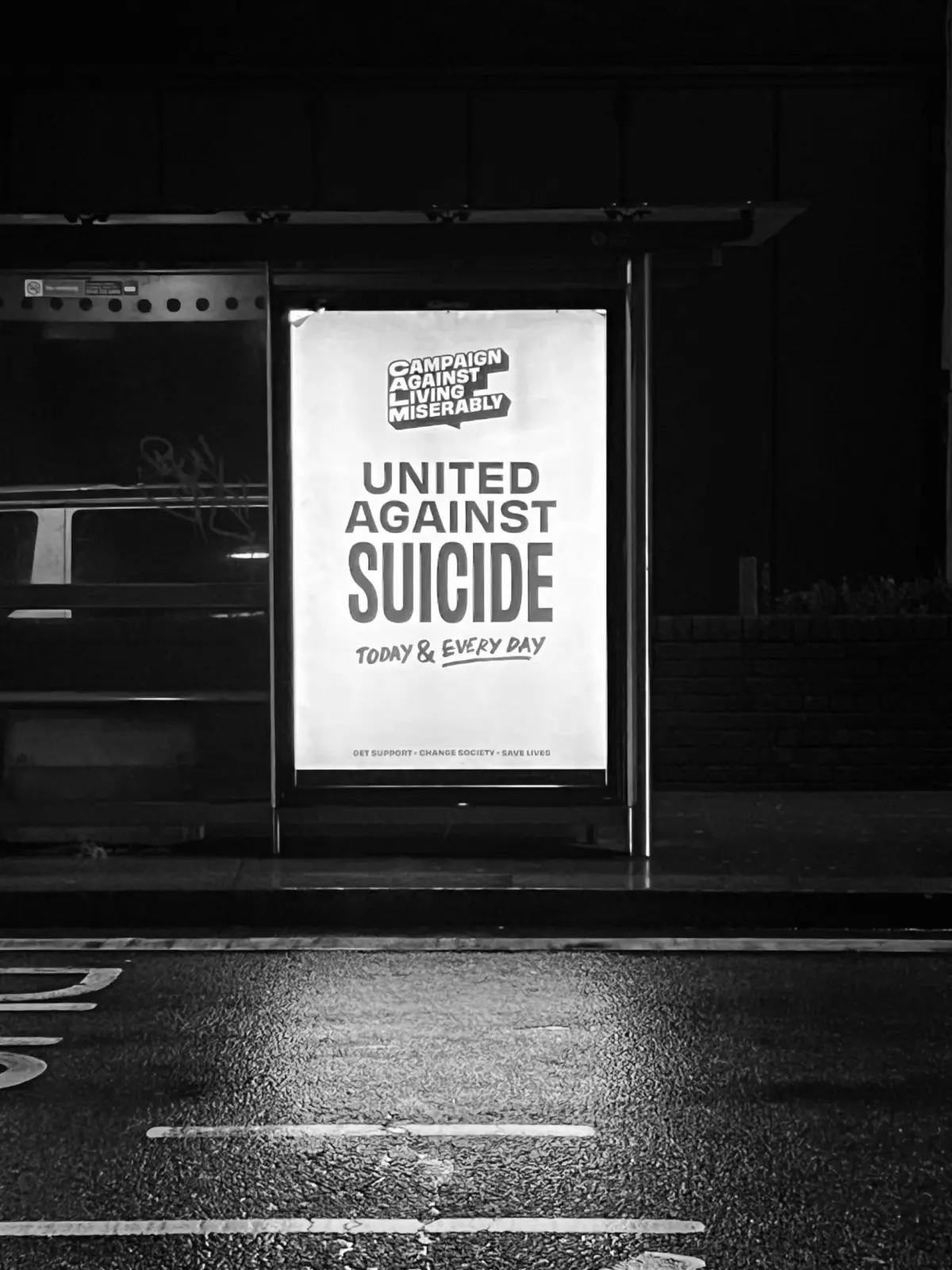
In alignment with this mission, iconic independent music retailer Rough Trade has deepened its partnership with the Campaign Against Living Miserably (CALM). Rooted in the belief that music offers connection, catharsis, community, and—for many—a literal lifeline, this collaboration leverages Rough Trade’s physical stores, digital platforms, and expansive music community to normalize mental health dialogues. By platforming CALM’s life-saving interventions, the partnership aims to remind fans, artists, and industry professionals alike that nobody should have to endure their darkest moments in isolation.
To mark World Suicide Prevention Day, we sat down with CALM Chief Executive Officer Simon Gunning to examine the complex landscape of modern mental health. From the crushing pressures facing the creative industries and the hidden stressors of the digital age to the vital, often unrecognized role that music plays in keeping people alive, Gunning offers an unvarnished look at where society is failing vulnerable individuals—and how a profound cultural shift can save thousands of lives each year.
Detailed Chronology: The Evolution of CALM and the Rough Trade Partnership
Breaking the Silence: The Genesis of CALM
Founded in the UK to combat the staggering rates of male suicide, CALM (Campaign Against Living Miserably) has spent decades operating on the front lines of mental health crisis support. What began as a targeted initiative to address the silent epidemic affecting young men has progressively evolved into a nationwide movement encompassing people of all genders, backgrounds, and walks of life. Through a dedicated helpline, webchat services, educational programming, and public awareness campaigns, CALM has steadily chipped away at the cultural barriers that prevent people from speaking about distress.
Yet, despite widespread institutional acknowledgement of mental health over the past decade, suicide rates have stubbornly resisted downward trends. While society has grown more comfortable discussing generalized anxiety or low mood, the specific topic of suicide remains shrouded in fear, shame, and archaic misconceptions.
The Cultural Convergence: Music Meets Mental Health
Recognizing that traditional public health messaging often fails to reach marginalized or insular communities, CALM has increasingly turned to cultural touchstones to bridge the gap. Music—a medium capable of articulating the deepest agonies and highest ecstasies of the human condition—has emerged as a natural ally.
Rough Trade’s partnership with CALM represents a watershed moment for music retail and advocacy. By integrating mental health resources into record stores, curating collaborative merchandise (such as the Lola Young Lifelines tee), and partnering with artists like Tom Walker, Nadine Shah, and The Snuts, the initiative meets people where they already find solace: in the record racks, at live gigs, and through shared sonic experiences. This chronology of cultural collaboration demonstrates a growing industry-wide realization that creative spaces bear both the vulnerabilities and the remedies associated with modern psychological distress.
Supporting Context & Metrics: The Scale of the Crisis
The urgency driving the Rough Trade and CALM partnership is underscored by stark, sobering statistics that reveal the true magnitude of the UK’s mental health emergency.
The Daily Toll: According to CALM’s empirical data, 125 people die by suicide every week in the UK. This translates to roughly 6,500 preventable deaths annually—a figure that represents an ongoing public health catastrophe.
Demographic Impact: Suicide remains the single biggest killer of men under the age of 50 in the UK. Simultaneously, recent public health metrics highlight an alarming, steep rise in suicide rates and ideation among young women under the age of 24.
The Prevalence of Ideation: Research indicates that approximately one in four people will experience suicidal thoughts during their lifetime, while roughly one in 13 UK adults will attempt to take their own life.
The Ripple Effect: Behind every statistical data point is an individual—a mother, father, brother, sister, colleague, or close friend—whose sudden loss alters families and communities forever, leaving an indelible trauma.
These metrics clarify that suicide is not a distant, abstract tragedy occurring exclusively to "others"; it affects our immediate circles. It is a societal wound that demands collective, systemic intervention.
Official Statements & Expert Insights: In Conversation with Simon Gunning
To understand the mechanics of this crisis and the pathways toward recovery, we turn directly to the insights of CALM CEO Simon Gunning.
Deconstructing the Stigma of Suicide
Reflecting on the progress made over the past decade regarding general mental health awareness, Gunning offers a nuanced critique of societal advancement:
"It’s true we’ve made progress on mental health. It really is much more acceptable across large parts of society for people to speak openly about their mental health, seek help and be taken seriously in doing so. Sadly, this isn’t always the case and there still is a deep underlying trend towards trivialisation and scapegoating. Where we haven’t seen progress, however, is in suicide prevention."
Gunning emphasizes that while talking about feeling "stressed" or "down" has been normalized, the specific conversation around suicide remains trapped behind walls of shame. To alter this trajectory, society must fundamentally redefine how it views the act and its prevention:
"Suicide is horrible… These aren’t other people; they’re our mums, our dads, our brothers, our sisters, our loved ones, our colleagues and our mates. We need to profoundly change attitudes towards suicide prevention. We need to make it a social behaviour that we voluntarily adopt for ourselves and for the people that we care about. Suicide prevention is about life and hope, and we need to make sure that people embrace it."
Challenging Seasonal and Linear Misconceptions
A common cultural assumption dictates that winter—with its long, dark nights and cold temperatures—is the peak season for psychological distress and suicide. However, empirical data points in the opposite direction, with rates frequently spiking during the summer months. Gunning explains this counterintuitive phenomenon through the lens of social comparison:
"The most likely explanation centres on comparison. We’re expected to embrace warm weather, go on picnics, and host lavish barbecues. This isn’t the case for many, or even most, people. Comparisons can be very hard to take when we don’t appear to measure up."
Furthermore, Gunning dismantles the dangerous myth that suicidal ideation follows a neat, predictable trajectory:
"The glaring misconception around suicide is that it’s a linear process. We feel great, then a bit rubbish, then totally shit, then we attempt suicide. It’s not like that. It can come out of nowhere or fester for years. And it’s not one-and-done. Someone may attempt or ideate in early life, recover and then do it again in later life."
The Digital Panopticon: Screen Time and Self-Worth
Addressing the digital habits that exacerbate isolation, Gunning points out that screen time volume is less concerning than the psychological toll exacted by online environments:
"What concerns us most is not digital life in itself, but the point at which it starts to make people feel worse about themselves, more isolated or more trapped. Comparison culture, online abuse and the pressure to be constantly available can all chip away at self-worth and belonging."
He highlights the modern absence of an "off switch"—late-night scrolling, the compulsion for immediate responses, and algorithmic echo chambers that reinforce existing despair—as key drivers of modern hopelessness.
The Creative Vulnerability: Mental Health in the Music Industry
Musicians, comedians, and artists face unique vocational hazards. By laying their emotional lives bare for public consumption and critique, creative professionals navigate levels of exposure that few traditional office environments replicate.
"Yes. Making music, like comedy and art, is massively exposing. The artist is baring all for a critical audience. That’s hard and self-belief can only get you so far. Being a musician is a profession that carries one of the highest suicide rates, and I know this is something the industry is keenly aware of and looking to change with organisations like Help Musicians UK."
Yet, Gunning is quick to champion the redemptive, life-saving properties of music itself. He positions artists not merely as potential victims of industry pressures, but as active participants in healing:
"Where we step in as CALM is the power of music as a tool for suicide prevention. So many people will tell you that a song or an artist saved their life, and there’s evidence out there that suggests that might actually be the case. Having a tangible ticket to a gig can be the reason a person decides to stay… artists are already playing a huge part in suicide prevention for their fans that they might not be aware of, but we’re looking to work with the industry to bring this superpower out into the open."
Future Outlook: Reaching In and Changing the Narrative
As we look toward the future of suicide prevention in the UK and beyond, the blueprint laid out by CALM and Rough Trade centers on a pivotal cultural migration: shifting the burden from "reaching out" to "reaching in."
Expecting someone in the depths of a suicidal crisis to find the energy, clarity, and courage to ask for help is often an impossible demand. Society must therefore cultivate proactive empathy. Friends, family members, and colleagues must learn to initiate difficult conversations, cast aside polite hesitations, and utter the word "suicide" directly rather than talking around it.
Tools like CALM’s Conversation Coach, the C.A.R.E. Kit, and ongoing educational resources empower everyday citizens to bridge the gap. By dismantling stigma, embracing music as a communal sanctuary, and committing to active, fearless inquiry into the well-being of those we love, we can collectively change the narrative—turning despair into dialogue, and isolation into survival.
If You Need Support
If you are struggling, worried about someone you know, or grieving the loss of someone to suicide, you do not have to carry the weight alone. Confidential, expert support is available:
CALM Helpline: Call 0800 58 58 58 (available daily from 5 PM to midnight), or use their anonymous webchat service at thecalmzone.net.
Samaritans: Call free on 116 123 (available 24 hours a day, 365 days a year).
Emergency Services: If you or someone else is in immediate physical danger, call 999 or go to your nearest A&E department.