Executive Overview
In an era defined by dating app fatigue, cultural exhaustion with traditional dating dynamics, and a growing skepticism toward patriarchal relationship structures, popular culture is undergoing a radical shift. The boundaries of romance are expanding far beyond the conventional human-to-human dynamic, ushering in a mainstream golden age for non-human, monstrous, and artificially crafted romantic partners.
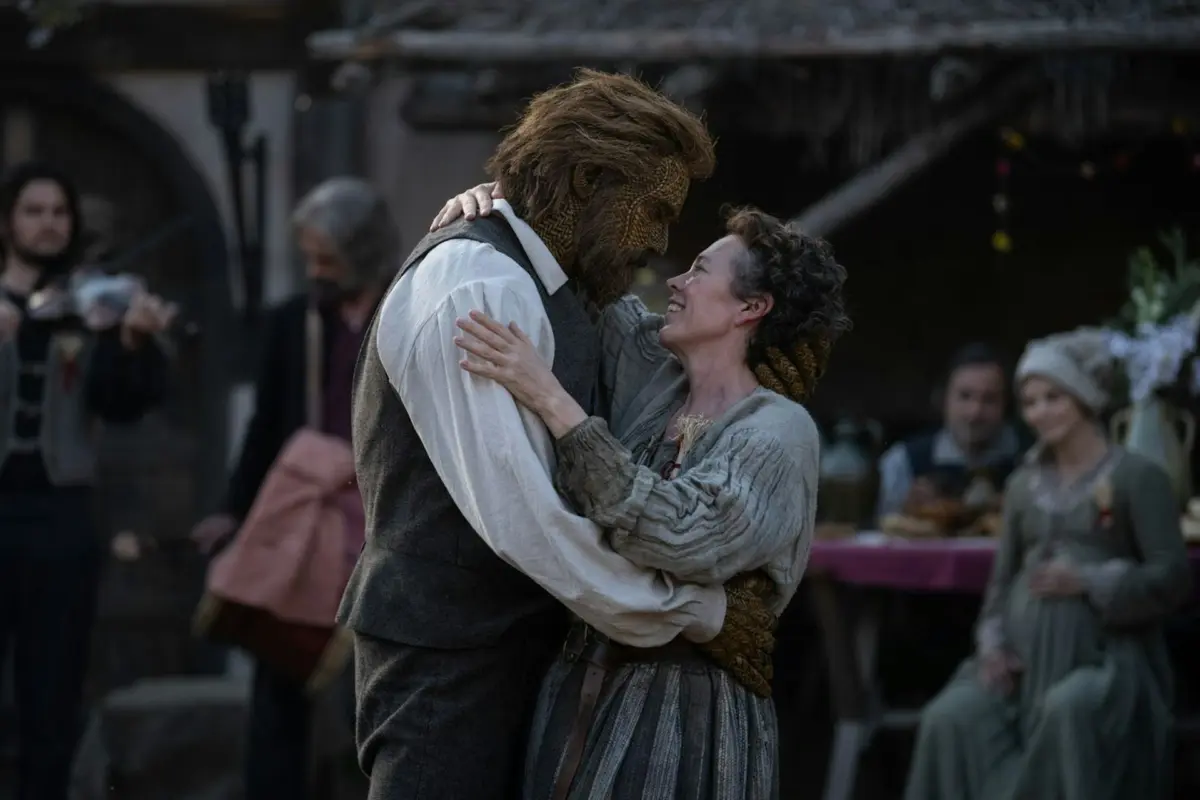
At the forefront of this movement is Wicker, an unorthodox new satirical folk-romance film directed by the husband-and-wife filmmaking team Alex Huston Fischer and Eleanor Wilson. Based on Ursula Wills-Jones’s acclaimed short story The Wicker Husband, the film stars Olivia Colman as a lonely fisherwoman in a vaguely medieval village who commissions a husband crafted entirely out of wicker—played by Alexander Skarsgård—ultimately falling deeply in love with her handmade companion.
While Wicker plays with the absurdity of its premise, it taps into a much larger, highly lucrative cultural phenomenon. From the booming "monster romance" subgenre on TikTok’s "BookTok" to globally celebrated cinematic works like Guillermo del Toro’s The Shape of Water, modern audiences are increasingly captivated by stories where love defies species, reality, and traditional human anatomy.
This comprehensive report investigates the cultural, psychological, and literary factors driving this trend. By analyzing the structural breakdown of modern intimacy, the historical lineage of artificial partners, and the intersection of digital-age isolation with contemporary storytelling, we examine why today’s audiences are increasingly turning away from conventional romantic paradigms in search of alternate blueprints for affection, devotion, and emotional fulfillment.
Detailed Chronology: From Ancient Myth to the Modern Romantasy Boom
The impulse to explore romantic connections with beings outside the standard human baseline is hardly a modern invention; rather, it represents the continuation of a narrative tradition as old as storytelling itself.
The Classical and Mythological Foundation
Throughout global mythology and folklore, stories of humans forming profound attachments to crafted, transformed, or supernatural beings have served as vehicles for exploring the boundaries of humanity and desire.
- The Pygmalion Archetype: Originating in Greek mythology, the story of Pygmalion—a sculptor who falls so deeply in love with his ivory statue, Galatea, that the goddess Aphrodite brings her to life—established a foundational template for the "made partner" narrative that persists into contemporary cinema.
- Folklore and Metamorphosis: Jewish mystical traditions introduced the golem, an animate being fashioned entirely from inanimate clay. Meanwhile, Northern European folklore populated coastal communities with selkies—creatures capable of shifting between seal and human forms—spurring poignant tales of cross-world romance, incompatibility, and longing.
For centuries, these narratives asked probing philosophical questions: What constitutes a soul? Can true love bridge radical physical and metaphysical differences?
The Cinematic Evolution of Unconventional Love
As cinema matured, filmmakers frequently experimented with marginalizing or softening the boundaries of the "monster" to make room for emotional resonance.
- Late 20th Century Pioneers: Tim Burton’s Edward Scissorhands (1990) presented a protagonist crafted from artificial components with shears for hands, yet imbued with a profound, aching vulnerability that easily eclipsed the superficial cruelty of his suburban human neighbors.
- Critical Breakthroughs: Jonathan Levine’s Warm Bodies (2013) injected humor and heart into the zombie genre by tracking a reanimated corpse whose heart literally begins to beat again through love. Guillermo del Toro’s Academy Award-winning The Shape of Water (2017) proved that mainstream audiences would whole-heartedly embrace an interspecies romance between a mute cleaning woman and an amphibious river god, validating the emotional legitimacy of non-human narratives on the highest global stage.
The Rise of BookTok and the Modern "Romantasy" Explosion
While film laid the groundwork, the contemporary publishing landscape—specifically the multi-billion-dollar "romantasy" and fantasy romance sectors—catapulted non-human romance from a fringe subgenre into an economic powerhouse.
Fueled by algorithmic discovery on social media platforms like Instagram and TikTok (specifically within the hyper-engaged "BookTok" community), readers have enthusiastically championed books that aggressively push past species boundaries. Authors operating outside traditional publishing pipelines leveraged direct-to-reader digital ecosystems to build massive, loyal audiences.
- Katee Robert’s The Dragon’s Bride: Explores the intense, negotiated intimacy between a human woman and a dragon-like being, subverting traditional power dynamics in romance.
- Ruby Dixon’s Ice Planet Barbarians series: Has captivated millions of readers with sweeping narratives centered on human women finding profound emotional and physical compatibility with blue-skinned, horned extraterrestrials on a frozen alien world.
By the time films like Lisa Frankenstein (2024), the Cannes-recognized A Useful Ghost, and now Wicker arrived in theaters, the cultural landscape was thoroughly primed to accept—and celebrate—relationships that defy orthodox social rules.
Supporting Context & Metrics: Decoding Heteropessimism and Digital Isolation
To understand why audiences are flocking to tales of wicker men, monsters, and aliens, cultural critics point to a shifting psychological landscape marked by widespread disillusionment with modern dating.
The Spectre of Heteropessimism
Sociologists and cultural commentators have increasingly utilized the term "heteropessimism"—a cultural phenomenon defined by a pervasive, lingering suspicion that conventional heterosexual relationships are inherently disappointing, emotionally exhausting, and structurally unequal.
In Wicker, this dynamic is vividly dramatized through Olivia Colman’s character. The village fisherwoman is relentlessly ridiculed for her unmarried status, a social stigma exacerbated by her perpetual, fishy aroma. Yet, when the film pans outward to examine the comically disastrous, oppressive, and emotionally bankrupt marriages of the villagers who mock her, her solitary existence suddenly looks remarkably enviable. The narrative exposes a grim patriarchal trap: women are routinely damned if they enter traditional unions, and damned if they remain outside them.
When the preternaturally devoted wicker husband enters the village, he shatters the local equilibrium. He establishes a radical new benchmark for marital behavior—one that is attentive, unfailingly loyal, and entirely devoid of patriarchal entitlement. This development deeply unnerves the village men while intoxicatingly intriguing the women.
Dating App Fatigue and Algorithmic Exhaustion
This fictional critique mirrors real-world frustrations. Modern romance is increasingly mediated by digital technologies:
- Dating Apps: Platforms designed to maximize user engagement encourage individuals to treat potential partners as interchangeable commodities on an endless digital conveyor belt, transforming romance into a gamified consumer experience.
- Artificial Intelligence: The rapid proliferation of AI chatbots and companions has introduced entirely new frontiers—and profound ethical debates—concerning human loneliness, synthetic empathy, and the willingness of vulnerable individuals to substitute digital facsimiles for messy human compromise.
Against this backdrop, stories about manufacturing an ideal partner—or falling in love with a being constructed entirely to your specifications—strike an immediate, resonant chord. The non-human or man-made romantic partner functions as a safe narrative laboratory. Because the monster or artifact is inherently free from human baggage, systemic biases, and ego, stories can bypass the exhausting friction of real-world dating to focus entirely on unconditional devotion and emotional availability.
Official Insights & Critical Commentary
Industry analysts, filmmakers, and literary critics have offered vital perspectives on how these unconventional narratives are reshaping our collective understanding of love and art.
- On the Thematic Intent of Wicker: Filmmakers Alex Huston Fischer and Eleanor Wilson have emphasized that adapting Ursula Wills-Jones’s source material required balancing biting folk satire with genuine emotional stakes. Rather than treating the wicker husband as a mere visual gag, the production leaned heavily into the psychological necessity of the protagonist’s choice, viewing the creation as an indictment of the hollow social contracts governing traditional village life.
- On the Psychology of Monster Romance: Literary critics studying the BookTok phenomenon note that the appeal of non-human partners lies in the removal of recognizable social hierarchies. By stripping away human markers of class, race, and conventional attractiveness, authors can isolate the core dynamics of power, trust, and vulnerability. As cultural critics observe, the central tension in a monster romance is rarely whether the non-human entity is worthy of love; instead, it is the human protagonist learning to accept a level of care and attentiveness that society has conditioned them not to expect.
- On Commercial Viability: Publishing executives have noted that the democratization of literature via digital recommendation algorithms has permanently rewritten the rules of what can succeed commercially. Stories once dismissed by traditional gatekeepers as "too bizarre" are now driving print sales globally, proving that contemporary readers possess an insatiable appetite for imaginative escapism that challenges standard genre boundaries.
Future Outlook: Where Do We Go From Here?
As Wicker makes its mark on the cinematic landscape and the romantasy market continues to break publishing records, the trajectory of popular culture points toward an even deeper integration of the strange, the artificial, and the non-human into mainstream storytelling.
- Mainstreaming the Bizarre: The historical division between "high art" and "genre fiction" is continuing to dissolve. Themes of artificial creation, hybridity, and cosmic romance are increasingly being utilized by auteur filmmakers to explore urgent contemporary anxieties surrounding isolation, technology, and autonomy.
- The Evolution of the Digital Companion: As AI-driven companions and parasocial technologies advance in the real world, narrative art will likely accelerate its exploration of synthetic intimacy. Stories will continue to interrogate the thin line between authentic human connection and carefully curated projection.
- Redefining "Happily Ever After": The enduring popularity of monster romance and folk-fable adaptations signals that audiences are actively rewriting the happy-ever-after blueprint. No longer restricted to the traditional nuclear family model, the modern romantic narrative is expanding to embrace any configuration—human, animal, monster, or wicker—that offers genuine emotional sanctuary in an increasingly complex world.
Ultimately, Wicker and its literary contemporaries remind us that our desire for love remains undiminished, even as our faith in traditional structures wavers. Whether fashioned from clay, silver screen code, or woven strips of dried willow, the partners we imagine on the page and screen reflect our deepest vulnerabilities—and our enduring, radical hope for unconditional devotion.