Executive Overview
To reduce Marsha Hunt to a footnote in the grand, mythologized chronicles of 1960s and 1970s rock-and-roll lore is to profoundly misunderstand a life lived on radical, uncompromising terms. Born in Philadelphia in 1946, Hunt’s trajectory took her from the intellectual and artistic epicenters of America to the swinging, kaleidoscopic underground of London in February 1966. Over the next two decades, she would carve out a space as an actress, singer, novelist, memoirist, model, and civil rights-adjacent iconoclast.
Yet, cultural history is frequently reductionist. Hunt was routinely framed by the music industry and mainstream media as a "muse," a romantic partner to titans like Mick Jagger and John Mayall, or a glamorous visual fixture. Beneath these limiting tropes lay a razor-sharp intellect, fierce artistic autonomy, and a creative output that spanned psychedelic soul, disco, West End theater, major cinematic features, and acclaimed literature.
This retrospective examines the extraordinary arc of Marsha Hunt’s career—dissecting her musical collaborations with Tony Visconti and Marc Bolan, her trailblazing role in the London cast of Hair, her empowerment through high-fashion modeling, and her seamless, courageous transition into celebrated authorship and survival advocacy.
Detailed Chronology: From Philadelphia to London’s Cultural Vanguard
Arrival and the Early Blues Scene (1966–1967)
Upon arriving in London in the winter of 1966, Hunt immediately plugged into the city’s burgeoning countercultural veins. Following a minor cinematic appearance as an extra in Michelangelo Antonioni’s landmark mod-classic Blow-Up, she stepped behind the microphone as a backing vocalist in Alexis Korner’s ensemble, Free At Last.
Her striking presence and artistic sensibilities quickly caught the attention of blues stalwart John Mayall. During a brief relationship, Hunt served as the direct inspiration for tracks like "Marsha’s Mood" and "Brown Sugar," recorded for his 1967 album The Blues Alone. Far from remaining a stationary muse, however, Hunt was already moving through the ranks, subsequently joining Bluesology—a group featuring Long John Baldry and a young, hirsute keyboardist named Reg Dwight (who would famously rebrand himself as Elton John).
The Cultural Earthquake of Hair and High-Fashion Frontiers
After a brief, unfulfilling stint with the soul outfit Ferris Wheel, Hunt hit national prominence when she secured a role in the original London cast of the rock musical Hair. As the first bona fide theatrical production centered around hippie culture, Hair championed peace, love, and the controversial celebration of the naked body as an act of political liberation.
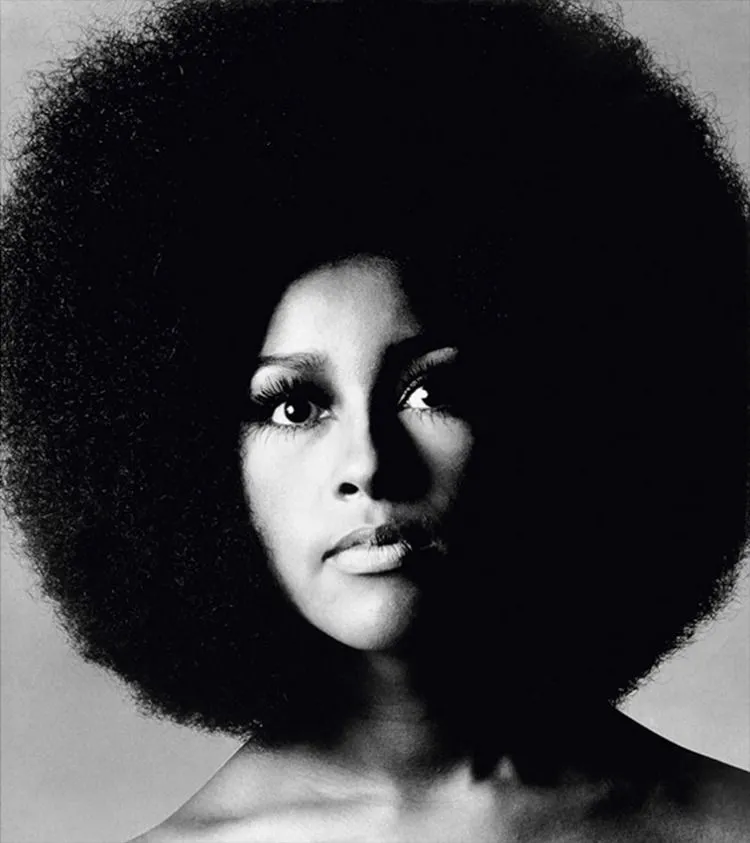
Playing a vital role in the ensemble, Hunt sang lead on "White Boys," a biting satirical send-up of the Motown sound written from the perspective of white suburban fandom. Her arresting face graced the promotional posters plastered across the UK, drawing the attention of Patrick Anson, the Earl of Lichfield. Litchfield commissioned a nude portrait of Hunt for American Vogue—a radical statement at a time when Black models rarely graced the glossy pages of high-fashion bibles. Hunt accepted the assignment deliberately, viewing her unclad presence not as exploitation, but as an act of absolute physical and racial empowerment.
The Track Records Era and Tony Visconti’s Vision
Capitalizing on her mounting notoriety, Hunt signed a recording contract with Track Records, the powerhouse label housing The Who and The Jimi Hendrix Experience. Hendrix, whom she deeply admired, represented the pinnacle of artistic expression—an artist capable of translating complex internal politics and cosmic visions directly through his instrument.
Teaming up with visionary producer Tony Visconti, Hunt recorded a searing, swamp-funk cover of Dr. John’s "Walk On Gilded Splisters" in 1969. The single achieved minor chart success, acting as a critical stepping stone for both Hunt and Dr. John. Visconti later recalled her rigorous work ethic and conceptual brilliance:
"Marsha was very smart. She approached her music very intellectually. She was totally confident in her innate beauty, but she was also into how we could interpret the material for her album in a very hip, almost psychedelic way. She wanted to make a credible ‘guy’ record, and not come off as a Black Marilyn Monroe, which is how the record company saw her."
Marc Bolan, Mick Jagger, and Woman Child
Hunt’s creative synergy with Visconti also introduced her to Marc Bolan. Their passionate liaison yielded recordings of two Tyrannosaurus Rex songs and a striking cover of Bolan’s "Desdemona" (originally a hit for John’s Children) during sessions for her debut solo album.
Concurrently, Hunt was locked in an intense, highly publicized relationship with Rolling Stone Mick Jagger. The union resulted in the planned birth of their daughter, Karis. Though Jagger initially agreed to function as an "absent father," a hard-fought paternity suit eventually cemented his legal and personal relationship with both mother and child. Notably, Jagger’s own songwriting project, the Rolling Stones’ anthem "Brown Sugar," was written with Hunt specifically in mind—a direct nod to her fierce, unapologetic independence.
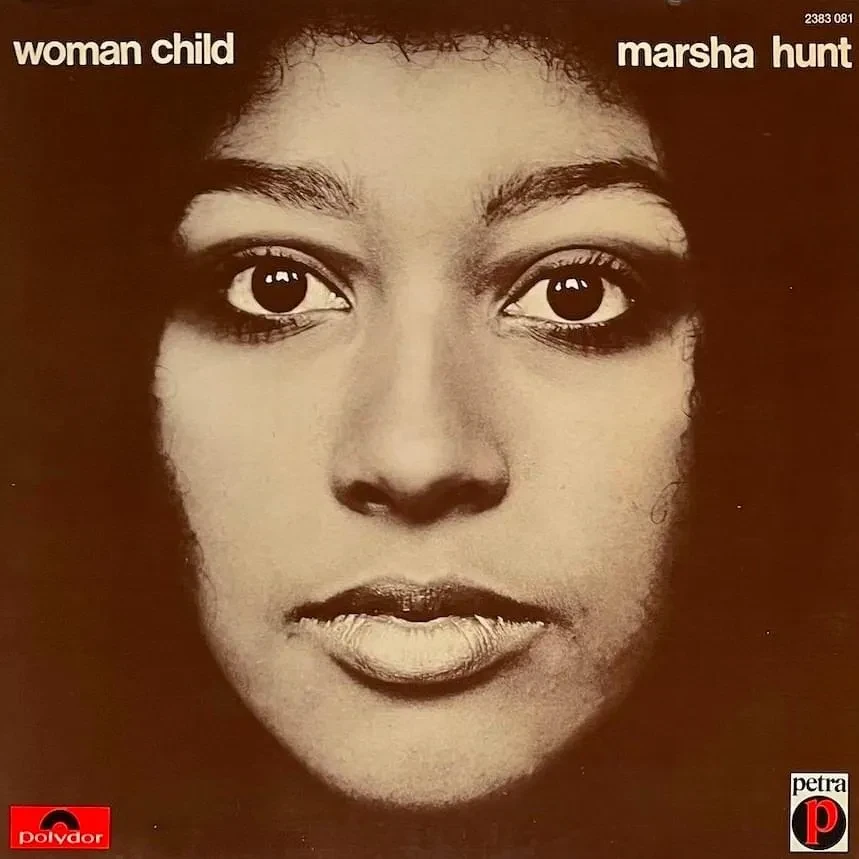
Her debut solo album, Woman Child, was finally released by Track in 1971. Produced by Visconti, the record showcased her staggering vocal range and interpretive fearlessness. It featured remarkable covers, including Traffic’s "No Face, No Name, No Number," Bessie Smith’s "Moan You Moaners," and the contentious, emotionally charged title track originally penned by Bobby Goldsboro and Kenny O’Dell. Despite critical praise, the record suffered from sluggish commercial sales—an early indicator of the headwinds Hunt would face in an industry hostile to multifaceted Black female artists.
Supporting Context & Metrics: Navigating Genres and Industry Missteps
The Phonogram Years and Genre-Hopping
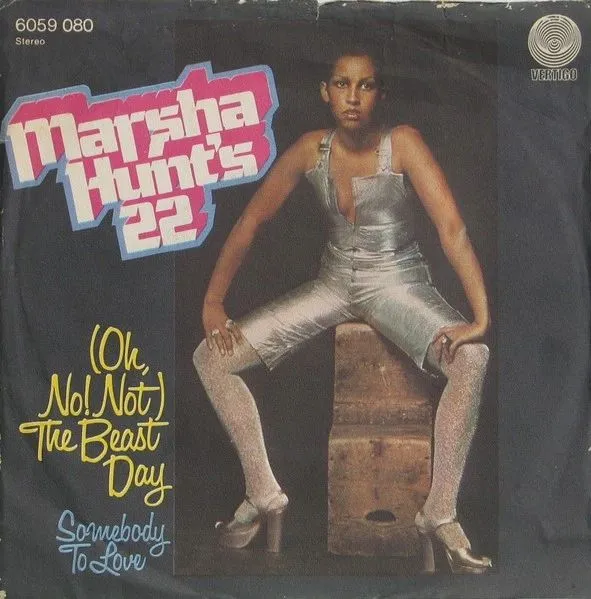
Undeterred by commercial indifference, Hunt pivoted toward heavier, swamp-rock and funk textures. She signed with Phonogram and fronted Marsha Hunt’s 22, a four-piece ensemble that leaned heavily into dark, hypnotic grooves.
- (Oh, No! Not) The Beast Day (1972): Produced by Steve Rowland, this single was a masterclass in Louisiana swampland hoodoo, coupled with an unruly, blistering deconstruction of Grace Slick’s "Somebody to Love."
- Medusa / Bop City: A psych-funk hybrid co-written by Hunt and guitarist Hugh Burns. Like its predecessor, it suffered from a chronic lack of label promotion.
- Attention! Marsha Hunt! (1973): A hastily assembled collection of demos pulled from her time with the 22, released quietly in European territories without Hunt’s knowledge—a project that remained off her radar for over forty years.
The Cinematic and Theatrical Transition
Faced with the shifting paradigms of the music industry throughout the mid-1970s, Hunt leaned into her formidable acting chops. She transitioned effortlessly to the stage and screen:
- Theater: She starred alongside PJ Proby and Dana Gillespie in Jack Good’s rock-operatic Catch My Soul (an adaptation of Othello), spent six months in Melvyn Bragg’s West End musical Mardi Gras, and in 1976 played Sabina in Thornton Wilder’s The Skin of Our Teeth at the Royal Exchange Theatre (stepping into a role famously originated by Vivien Leigh).
- Film: Her screen credits expanded to include cult horror Dracula AD 1972 (alongside horror legends Christopher Lee and Peter Cushing), Lindsay Anderson’s satirical Britannia Hospital (1982), the James Bond film Never Say Never Again (1983), and Beyond Soho (1989) opposite Ray Winstone.
Disco Immersion and Literary Ascent
In 1977, Hunt traveled to Munich to record Marsha 77, a disco-oriented record helmed by Pete Belotte—the close creative associate of Giorgio Moroder who co-wrote floor-fillers like Donna Summer’s "I Feel Love" and "Hot Stuff."
By the early 1980s, after staging her self-penned musical Man To Woman at London’s Zig Zag Club, Hunt made the definitive choice to step away from the music business entirely. She turned her focus toward literature—a pivot that yielded some of her most enduring cultural contributions.
Her transition into prose proved to be a masterstroke:
- Real Life (1986): A brutally honest, critically lauded autobiography.
- Repossessing Ernestine (1996): An investigative memoir tracking her fifty-year search for her paternal grandmother who had been institutionalized in an asylum.
- Undefeated (2005): A powerful chronicle detailing her successful battle against breast cancer.
- Novels: She published three well-received works of fiction—Joy (1990), Free (1992), and Like Venus Fading (1998)—the latter heavily influenced by the historical struggles and triumphs of pioneering Black entertainers Josephine Baker and Adelaide Hall.
Official Statements and Critical Retrospectives
Industry insiders and cultural critics have long grappled with the paradox of Marsha Hunt’s career: an artist of immense, limitless talent whose broad spectrum of interests ultimately confounded the marketing departments of mid-century entertainment conglomerates.
Reflecting on her career path, producer Tony Visconti encapsulated the industry’s failure to properly contextualize her talents:
"She wanted to make a credible ‘guy’ record, and not come off as a Black Marilyn Monroe, which is how the record company saw her."
Hunt herself has spoken candidly about the occupational hazards of being a pioneer who refused to stay inside a designated box. In interviews looking back at her multi-hyphenate career, she noted that refusing to conform to a single medium or public persona meant perpetually fighting uphill battles against institutional pigeonholing.
Cultural historian Lin Bensley aptly summarized her impact on the era:
"No one could ever pigeonhole Marsha Hunt—she was as much an accomplished actress and singer as she was an author. But in some respects, her versatility was her undoing, and she acknowledged that her lack of continuity confused many people. A wild child, a wilful rebel, a principled woman of unconditional integrity, beautiful and black, she did as much to define her era as her hero, Hendrix."
Future Outlook: Preserving a Legacy of Defiant Independence
As popular culture continues to re-evaluate the unsung architects of the 1960s and 1970s countercultures, Marsha Hunt’s legacy stands ripe for rediscovery. Long past the era of sensationalized headlines, tabloid gossip, and brief-lived romance tags, her true body of work—spanning boundary-pushing soul recordings, radical theatrical performances, unflinching memoirs, and powerful novels—demands serious academic and critical preservation.
Reissues of her early catalog, such as Polydor’s availability of the Hair original London cast recording and retrospective deep-dives into her Track and Phonogram singles, point toward a gradual reappraisal. Marsha Hunt was never merely a muse, a model, or a footnote in someone else’s biography. She was the author of her own complex, trailblazing existence—a testament to what happens when an artist refuses to be defined by anyone other than herself.