Executive Overview
As millions of Americans tuned in late Tuesday night to watch the high-stakes returns of the midterm elections, the competitive landscape of broadcast journalism revealed a stark and humiliating reality for one of America’s legacy institutions. CBS News stumbled into a distant last place among major television networks, capturing a meager 2.6 million viewers during primetime. This latest humiliation is not merely an isolated programming misstep; rather, it serves as a glaring indictment of the turbulent, controversial leadership overhaul that has taken place at Paramount and CBS News under the stewardship of David Ellison and Editor-in-Chief Bari Weiss.
For decades, CBS News stood shoulder-to-shoulder with ABC and NBC as a titan of American broadcast journalism, a trusted source for millions during pivotal civic moments. Yet, Tuesday’s Nielsen data exposed a brand in freefall—beaten not only by its traditional broadcast rivals, but trailing significantly behind cable news networks like CNN, Fox News, and MS NOW.
The plummeting viewership highlights the deepening chasm between the network’s current leadership and its audience. Since Ellison assumed control of Paramount and installed Weiss at the helm of the news division, CBS has experienced an aggressive editorial pivot, severe internal purges, and a cascading loss of viewer trust. As critics and insiders point fingers at a perceived shift toward partisan alignment and tone-deaf management, the network’s future hangs in a precarious balance. This in-depth report examines the chronology of the collapse, the catastrophic metrics from election night, the structural and personnel turmoil behind the scenes, and what this means for the future of broadcast news.
Detailed Chronology: The Anatomy of a Corporate and Editorial Overhaul
To understand how a foundational pillar of American journalism found itself trailing far behind the competition on election night, one must trace the timeline of decisions that reshaped CBS News over the past year.
The transformation began when David Ellison took over Paramount. From the outset, Ellison’s tenure was marked by shifting corporate alliances and a rumored desire to recalibrate the network’s political posture. Central to this strategy was the appointment of Bari Weiss as editor-in-chief of CBS News—a choice that sent immediate shockwaves through the industry and deeply demoralized the newsroom. Weiss, a polarizing media figure known for her contrarian cultural and political commentary, was brought in to shake up what leadership perceived as an insular and stale newsroom culture. Instead, her appointment ignited a chain reaction of internal dissent, high-profile departures, and public controversies.
The Spring Shaking: "Black Thursday"
The friction between Weiss’s editorial vision and the traditional CBS newsroom reached a boiling point last May during an industry event now grimly dubbed "Black Thursday." In a sweeping and aggressive leadership shakeup, long-standing institutional knowledge was unceremoniously discarded.
Executive Producer Tanya Simon was ousted from her post at 60 Minutes, alongside her deputy, Draggan Mihailovich. Renowned correspondents Cecilia Vega and Sharyn Alfonsi were similarly shown the door. For the staff, these sweeping dismissals felt less like a strategic restructuring and more like an ideological purge designed to silence veteran journalists who did not fit the new corporate aesthetic. Insiders complained that dissenting voices were completely ignored; as one source lamented to Page Six, "She doesn’t hear anybody. If you don’t agree with what she’s saying or doing, it doesn’t matter. She pretends to hear ideas, but she really doesn’t listen to anyone."
Editorial Censorship Controversies
The leadership crisis was further compounded by high-profile editorial conflicts. Early in her tenure, Weiss faced fierce backlash when she chose to pull a planned 60 Minutes segment investigating Venezuelan migrants transferred by the Trump administration to CECOT, a notorious Salvadoran prison plagued by accusations of severe human rights abuses and inhumane conditions.
Although the segment eventually cleared editorial hurdles and aired nearly a month later, the initial delay damaged the program’s reputation for fearless investigative journalism. Critics within and outside the network argued that the delay smacked of self-censorship and an undue sensitivity toward political pressures, particularly given Ellison’s reported efforts to court Donald Trump.
The Anchor Shakeup and "State TV"
Simultaneously, the flagship evening broadcast underwent its own disruptive transformation. Tony Dokoupil transitioned from CBS Mornings to take the reins at the CBS Evening News last January. The move was met with immediate hostility from inside the newsroom. A staffer famously remarked to The Independent that Dokoupil had effectively transformed the venerable evening broadcast into "state TV," stripping it of its objective journalistic edge and alienating a core demographic of loyal viewers who expected straight news reporting rather than ideologically driven commentary.
Supporting Context & Metrics: The Numbers Don’t Lie
Election night provided the ultimate stress test for America’s news networks—a high-stakes arena where viewers vote with their remote controls. The data compiled from early Nielsen reports and shared widely by media analysts paints a devastating picture for CBS News.
Primetime Midterm Metrics
According to figures highlighted by media analyst Brian Stelter and verified by Variety senior TV editor Brian Steinberg, CBS News brought in roughly 2.63 million total viewers during primetime on Tuesday night. This included a dismal 715,000 viewers in the coveted 25-to-54-year-old demographic—the key bracket targeted by advertisers.
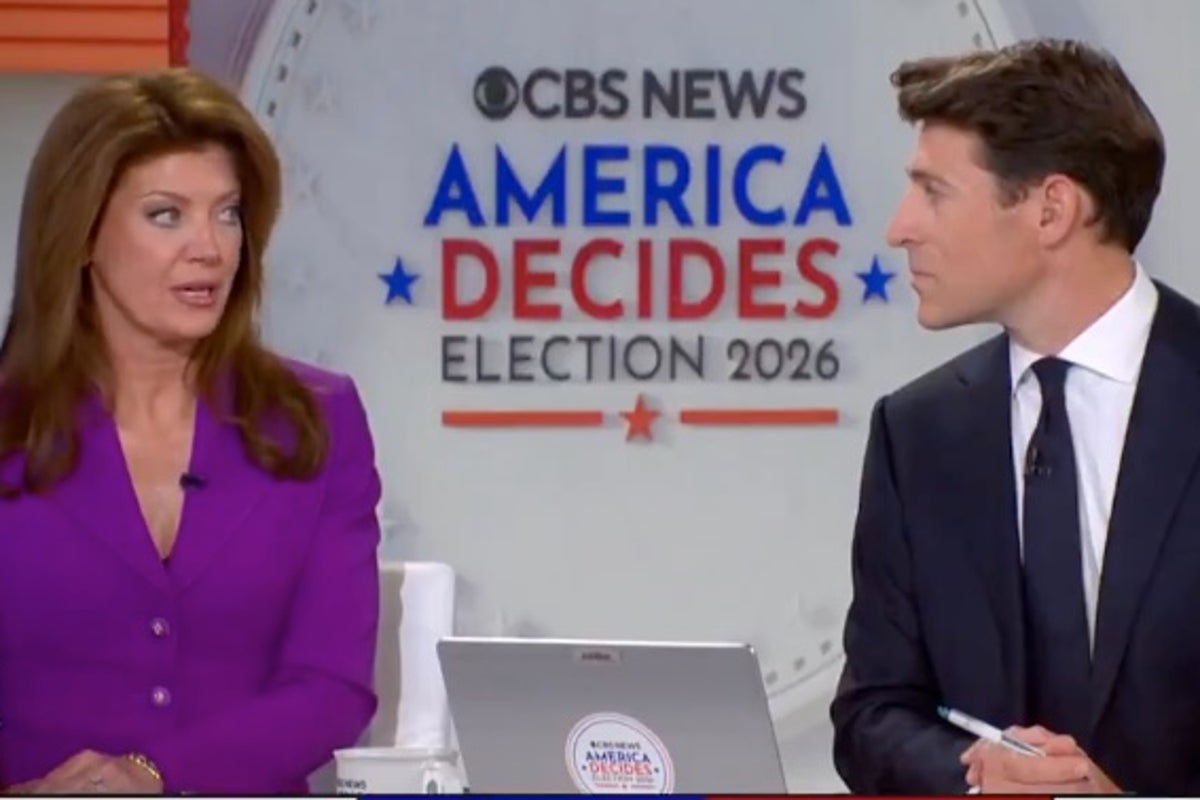
To contextualize CBS’s failure, consider how the rest of the media landscape performed:
- NBC News: Captured the top spot with an impressive 6.52 million viewers.
- ABC News: Followed closely behind in second place with 4.91 million viewers.
- CNN: Led the cable networks with 3.93 million viewers.
- MS NOW: Garnered 3.92 million viewers.
- Fox News: Secured 3.88 million viewers.
- CBS News: Brought up the rear with a paltry 2.63 million viewers.
Put simply, NBC drew nearly two and a half times the audience that CBS managed to attract. Even cable networks, which historically split the audience across multiple fragmented channels, easily outpaced the historic broadcast network.
Social Media Dominance vs. Broadcast Irrelevance
While CBS struggled to retain traditional television audiences, its competitors innovated and captured massive multi-platform engagement. NBC News, for instance, capitalized on the immense popularity of its chief data analyst, Steve Kornacki. Known for his frantic, high-energy breakdowns of complex electoral maps using his interactive touchscreen board, the "Kornacki Cam" livestream on YouTube drew a record-breaking 29 million views across all digital platforms. Kornacki spent ten and a half hours on the air, pulling in twice as many live digital viewers as CBS’s entire traditional broadcast coverage.
The Chronic Decline of the CBS Evening News
Tuesday’s disaster is merely the continuation of a long-term ratings downward spiral. According to Nielsen data reported by Adweek in September, the CBS Evening News averaged just 4.04 million total viewers during the previous television season—a 3 percent drop year-over-year.
While the program occasionally experienced minor, temporary bumps—such as the week of October 19, when viewership rose 10 percent to 4.63 million—it perpetually lagged far behind its competitors. During that same October week, NBC’s Nightly News with Tom Llamas brought in 6.72 million viewers, while ABC’s World News Tonight with David Muir dominated with an astounding 8.84 million viewers. CBS is not just losing the ratings war; it is playing an entirely different, losing game.
Official Statements and Industry Reactions
The cascading failures at CBS News have triggered intense scrutiny from media critics, industry observers, and media executives alike. Publicly, network leadership has attempted to project an image of steady handiwork and strategic modernization, but privately, insiders describe an atmosphere of profound despair and mutinous frustration.
Media analysts on social media platforms did not pull their punches following the release of the election night data. Brian Steinberg of Variety pointed out the sheer anomaly of a major broadcast network trailing behind cable news operations during a national election. Meanwhile, Brian Stelter’s breakdown of the primetime numbers underscored just how wide the performance gap has become between CBS and its historical peers at NBC and ABC.
Inside the building, however, the narrative is vastly different. Anonymous leaks to entertainment publications like Page Six and Adweek reveal a newsroom in open rebellion against Bari Weiss’s autocratic management style. Staff members who spoke on the condition of anonymity expressed disbelief that management remains oblivious to the mounting viewer attrition. "She pretends to hear ideas, but she really doesn’t listen to anyone," reiterated one insider, summarizing the overarching sentiment of a demoralized workforce.
Furthermore, the controversial editorial decisions—such as the initial suppression of the 60 Minutes CECOT prison segment—have invited external criticism from journalism watchdogs who worry about the creeping influence of corporate self-censorship under Ellison’s watch. The perception that leadership is attempting to curry favor with the incoming political administration has severely damaged the brand’s hard-earned reputation for fearless, independent reporting.
Future Outlook: Can CBS News Recover Its Lost Stature?
As the dust settles on the midterms, the leadership team at Paramount and CBS News faces an existential reckoning. The traditional advantages of a major broadcast network—widespread accessibility, historical brand loyalty, and institutional prestige—are rapidly eroding under the weight of mismanaged leadership, internal purges, and alienating editorial shifts.
The road to recovery for CBS News appears steep, narrow, and fraught with peril. Rebuilding audience trust cannot be achieved through corporate restructuring alone; it requires a fundamental re-engagement with journalistic integrity, transparency, and a willingness to listen to both the newsroom staff and the viewing public. If David Ellison and Bari Weiss refuse to course-correct, Tuesday night’s abysmal ratings performance may no longer be an outlier, but rather the new, bleak normal for a once-proud broadcasting institution.
Without a decisive shift in strategy, CBS News risks sliding from a distant last place into permanent irrelevance, ceding its historic legacy to competitors who understand that in journalism, credibility is the ultimate currency—and once lost, it is nearly impossible to win back.