In the grand tradition of operatic oral history, few figures command the reverence, emotional magnitude, and historic lineage of the legendary spinto soprano Aprile Millo. Recently profiled in a sweeping, soul-searching dialogue with writer Robert J. Carreras for the All-IN4Art series, Millo opened up about a life consecrated entirely to the high-stakes, unamplified world of classical opera. Often dubbed the "Divine Miss M of opera," Millo stands as a towering bridge between the golden age of 20th-century vocal performance and the uncertain, fast-paced digital future of the 21st century.
Referred to by critics as "the high priestess of that old-time operatic religion," Millo’s pedigree is virtually unmatched. She was mentored by and formed a deeply personal, artistic alliance with the iconic Renata Tebaldi—who saw her own formidable artistic reflection in the young American soprano. In 2018, Millo’s lifelong devotion to the music of Giuseppe Verdi was cemented when she received the prestigious Amici di Verdi – Verdi d’Oro Award, placing her among an elite pantheon of only fourteen global artists recognized for lifetime service to the Italian master’s oeuvre.
Today, Millo channels her monumental experience not only into upcoming masterclasses and concert appearances, but also into OperaVision D’Oro, an ambitious educational initiative and accademia based in Busseto, Italy. In her sprawling, deeply philosophical conversation with Carreras, Millo reflects on the sacred nature of vocal art, the alchemical magic of live performance, her profound memories of foundational giants like Maria Callas and Vladimir Horowitz, and an impassioned plea for the future of humanity powered by music.
Detailed Chronology: From Carnegie Hall Studios to Global Stardom
To understand Aprile Millo’s unique authority on the operatic stage, one must trace a trajectory forged not merely in conservatories, but within the very crucible of domestic artistic devotion.
The Foundational Spark: A Studio in Carnegie Hall
While the classical music world knows Millo for her triumphant turns on the stages of the Metropolitan Opera, La Scala, and Vienna State Opera, her most formative memory occurred in a modest studio space inside Carnegie Hall. It was there that her mother and father—both accomplished singers—performed the intense, heart-wrenching duet from Pietro Mascagni’s Cavalleria Rusticana.
For the young Millo, watching her parents rehearse was an out-of-body, life-altering experience. As they launched into the score, their faces underwent a physical and spiritual transfiguration. They ceased to be her parents; they dissolved completely into their characters, their magnificent voices and magnetic personalities channeling raw, unadulterated human emotion. That afternoon, witnessing the sublime alchemy of the human voice transforming flesh and experience into divine sound, Millo’s life path was permanently set. She wanted to follow them into that transcendent world.
The Tebaldi Connection and Late 20th-Century Ascendancy
As Millo rose through the ranks of the international opera scene in the late 20th century, her powerful, soaring spinto soprano voice drew the attention of the legendary Renata Tebaldi. Recognizing a kindred spirit endowed with the rare combination of vocal warmth, dramatic integrity, and unwavering dedication to traditional Italian bel canto, Tebaldi took Millo under her wing. Serving as both a mentor and a close personal friend, Tebaldi helped pass the torch of old-school operatic majesty to a new generation.
Millo’s career soon took off, defined by iconic portrayals of Verdi and Puccini heroines—most notably Aida, a role with which she became globally synonymous. Her commitment to the composer’s dramatic intent was absolute; as she famously notes, "If the Puccini work calls for two candles, there will be two candles." This uncompromising artistic integrity earned her the adoration of hard-core opera fans who gathered around what affectionately became known as the "Millo Pole," swapping stories of her transcendent high notes and deeply felt dramatic interpretations.
The Verdi d’Oro and Modern Pedagogical Mission
In 2018, Millo’s historic contributions to the classical music canon were formally acknowledged when she was awarded the Amici di Verdi – Verdi d’Oro Award. Honoring a lifetime of profound service to Giuseppe Verdi’s music, the accolade placed her in a remarkably exclusive club of only fourteen artists worldwide.
Rather than resting on her considerable laurels, Millo has turned her immense energy toward preserving and transmitting the traditions of the past to ambitious youth. Through OperaVision D’Oro, her Busseto-based educational initiative and accademia, she works tirelessly to ensure that the stylistic nuances, linguistic precision, and emotional depth of traditional opera are not lost in an era of rapid technological modernization.
Supporting Context & Metrics: The Architecture of Unamplified Art
In an age dominated by autotune, digital mixing boards, and amplified stadium concerts, Millo’s persistent defense of acoustic purity serves as both a manifesto and a cultural metric.
The Acoustic Miracle of Operatic Performance
During her conversation with All-IN4Art, Millo highlighted the staggering physical reality of the operatic art form—a reality that separates it from virtually every other modern entertainment medium:
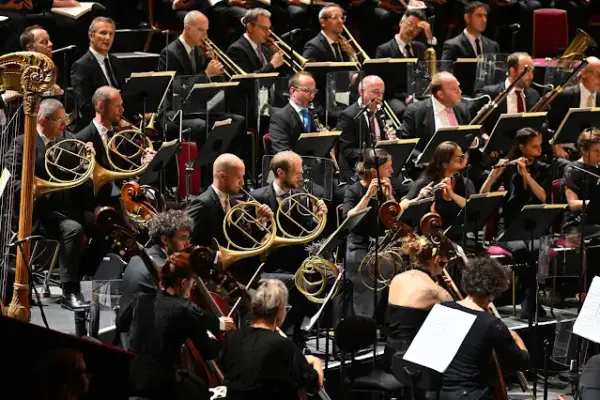
"The triumph of the human body communicating emotion, in front of sometimes 4,000 people… over an orchestra of 75 to 100 people — all without a microphone. The last bastion of human communication without a plug. Could anything be more beautiful?"
Consider the mathematical and physical parameters of a standard opera house:
Audience Capacity: Frequently ranging from 2,000 to 4,000 patrons.
Orchestral Volume: A standard pit orchestra of 75 to 100 musicians producing upwards of 90–100 decibels of rich, complex acoustic sound.
The Vocalist’s Challenge: A single human soprano, utilizing only her diaphragm, vocal cords, and the resonance of her cranial cavities, must cut cleanly through that orchestral wall to fill every corner of a sprawling auditorium—completely unaided by electronic enhancement.
This acoustic feat requires an extraordinary synthesis of physical stamina, muscular control, and psychological focus. It is precisely this physical vulnerability and raw power that creates what Millo calls "magic"—the unmediated exchange of breath, sound, and truth between the stage and the dark hall.
Official Statements & Philosophy: Voices from the Interview
Millo’s philosophy on art, humanity, and the divine purpose of music bridges the gap between technical mastery and spiritual vocation. Below are core insights drawn directly from her dialogue with Robert J. Carreras:
On Music as a Vocation, Not a Profession
"I think all musicians and dancers — to some degree — have to be touched by something magical, to connect themselves and their life to the sacrifice, and to the polishing of their knowledge for their talent… For me, it was never a profession. It was a vocation."
On Collective Surrender and Healing
"By the very nature of a performance, we are forced to surrender collectively in order to enjoy a combined effort by a group of people, to give and to receive… We are almost like children asked to suspend our disbelief, and there, in the dark, we listen and those of us on stage — we give generously."
On the Ultimate Wish for Humanity
When asked what life-changing wish she would grant the world through music, Millo did not hesitate to address the fractures of modern society:
"I would find — in some way — a message that would inspire everyone to see each other as family. To welcome each other and their differences as gifts. And to ignite in every heart, the death of racism and bigotry. Replacing it with curiosity and inclusion. All of God’s children are created equal."
On Tradition as a Living Bridge
Addressing modern skepticism toward historical practices, Millo firmly defended the lineage of her art:
"Tradition isn’t a bad word… it is a bridge that binds all the generations of servants to the towering world of music."
Future Outlook: Passing the Torch to Life-Warriors
As Millo surveys the cultural landscape from her vantage point in New York City—prepping for upcoming concert series and intensive masterclasses amidst the "incandescent" autumn skies—her gaze remains firmly fixed on the horizon of the art form.
The challenges facing classical music in the 21st century are well-documented: declining institutional funding, aging audiences, and a digital culture that prioritizes instant gratification over the patient, contemplative demands of a three-hour opera. Yet, Millo remains profoundly optimistic, viewing young artists not as inheritors of a dying museum culture, but as active "life-warriors" and "gladiators for the arts."
Through initiatives like OperaVision D’Oro, Millo is actively building the infrastructure needed to connect the wisdom of aging masters with the vibrant ambition of the new generation. Her overarching message to young performers is to treat every lived experience—every color splashed across the canvas of life—as essential fuel for creating sounds that transport audiences far beyond their daily worries, offering them a fleeting, transcendent glimpse of eternity.
In a world increasingly mediated by screens and artificial intelligence, Aprile Millo stands as an unyielding monument to the power of the unamplified human voice—reminding us that true communication requires no plugs, only an open heart, a courageous spirit, and the willingness to surrender to the sublime magic of music.