Executive Overview
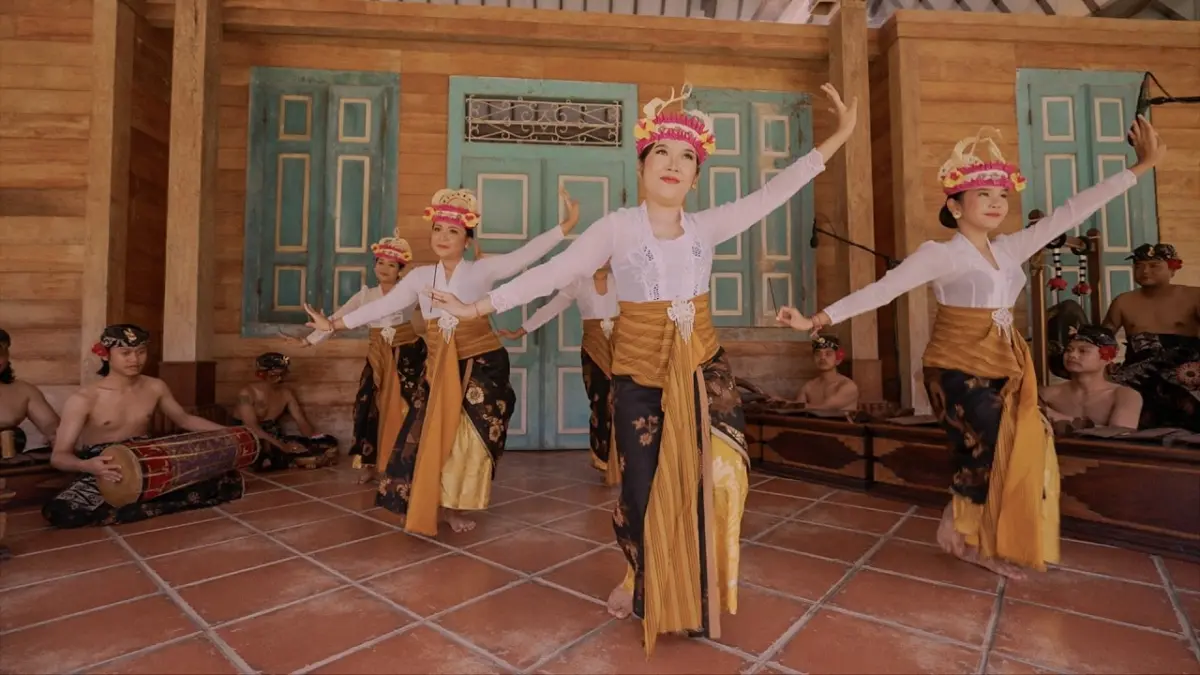
In a breathtaking collision of ancient spiritual heritage and contemporary global media, the renowned Balinese music and dance troupe Çudamani recently brought the sacred arts of Indonesia to the international stage. Filmed against the dramatic, ocean-facing backdrop of a clifftop in Jimbaran, five young dancers from the village of Pengosekan performed "Rerejangan"—a piece historically reserved for the inner sanctums of temple anniversary celebrations.
This stunning performance formed the grand finale of Çudamani’s session for Live on KEXP, the celebrated, filmed in-studio session series hosted by the Seattle-based public radio station KEXP. Recorded on August 29 at the picturesque Puri Bhagawan venue and released globally on November 3, the session marked a monumental milestone in public broadcasting: KEXP’s very first live sessions ever produced on the Asian continent.
The cross-continental cultural exchange was made possible through a strategic partnership with the AXEAN Festival, Southeast Asia’s premier music conference and showcase. By capturing twelve diverse acts across two distinct Balinese venues, KEXP and AXEAN opened a window for millions of international listeners into the beating heart of Southeast Asia’s contemporary and traditional music ecosystems.
For Çudamani—founded in 1997 by visionary composer Dewa Ketut Alit and his brother, artistic director Dewa Putu Berata—this performance represents a delicate balancing act. It bridges the gap between deep-seated ritual preservation and boundary-pushing global arts dissemination. Accompanied by eight musicians wielding the rich, resonant tones of a gamelan semaradana orchestra, dancers Pande Putu Silviari Dewi, Dewa Ayu Oktaviana Dewi, Kadek Tania Aryaswari, Desak Ketut Safitri Dewi, and Ni Made Raisa Cening Kirana transformed a seaside vista into a sacred temple courtyard, broadcasting the ethereal elegance of Balinese culture to screens and stereos worldwide.
Detailed Chronology: From Pengosekan to Seattle and Back
The Genesis of a Modern Classic
To understand the gravity of Çudamani’s KEXP performance, one must trace the lineage of "Rerejangan" back nearly two decades. The piece was composed by Dewa Ketut Alit, a towering figure in contemporary gamelan composition whose innovative works have graced prestigious international festivals, including Norway’s Borealis festival. Alit co-founded Çudamani in 1997 in the artistic enclave of Pengosekan, near Ubud, alongside his brother, Dewa Putu Berata.
Alit originally penned "Rerejangan" as a contemporary exploration of the rejang—a sacred dance traditionally performed exclusively by young women inside the inner courtyards of Balinese temples (pura). Dressed immaculately in pristine white and gold, adorned with soaring headdresses composed of fresh, fragrant flowers, these young women dance as a devotional offering to welcome visiting deities during an odalan, the sacred festival held on a temple’s founding anniversary.
Recognizing the piece’s profound emotional resonance and structural brilliance, Çudamani first recorded "Rerejangan" in 2007 for their landmark album, Odalan Bali. Named after the foundational temple festivals, the album served as an early blueprint for how Çudamani would continually honor traditional Balinese aesthetics while pushing the envelope of musical arrangement.
The Historic Partnership: KEXP Meets AXEAN
Fast forward to late August 2023. Seattle’s KEXP—globally revered by music enthusiasts for its intimate, high-definition live studio sessions featuring indie icons, legendary legacy acts, and international visionaries—embarked on its most ambitious geographic expansion to date. In collaboration with the AXEAN Festival, KEXP producers traveled to Bali to execute the station’s inaugural production sessions in Asia.
The logistical undertaking was immense. Over the course of the multi-day partnership, production crews filmed twelve distinct musical acts across two breathtaking Balinese venues. The goal was simple yet profound: to bypass traditional Western-centric gatekeeping in global music discovery and spotlight the staggering sonic diversity of Southeast Asia directly from its source.
On August 29, the production settled at Puri Bhagawan, a sprawling clifftop venue overlooking the azure expanse of Jimbaran Bay. Here, amidst the salt-kissed breeze and panoramic ocean views, Çudamani prepared to tape their historic set.
The Clifftop Incarnation
As the sun began its descent toward the Indian Ocean, the eight-member ensemble took their positions behind the bronze metallophones, gongs, and drums of the gamelan semaradana. Serving as the on-site coordinator and anchoring the musical synergy was I Putu Swaryandana Ichi Oka, ensuring every interlocking rhythm (kotekan) resonated with precision.
As the music swelled, the five young dancers—Pande Putu Silviari Dewi, Dewa Ayu Oktaviana Dewi, Kadek Tania Aryaswari, Desak Ketut Safitri Dewi, and Ni Made Raisa Cening Kirana—stepped forward. Stripped of the physical walls of a temple but enveloped by the raw grandeur of the Balinese coastline, the dancers executed the precise, stately, and spiritually charged movements of the rejang.
"Rerejangan" was deliberately chosen to close Çudamani’s KEXP set. As the final notes faded over the Jimbaran cliffs, the performance encapsulated a rare convergence: an ancient ritual transposed onto a modern digital canvas without losing an ounce of its transcendent spiritual weight. When the performance officially dropped on KEXP’s digital channels on November 3, it instantly generated international acclaim, bridging local devotion with global digital consumption.
Supporting Context & Metrics: The Anatomy of the Music
The Orchestra: Unpacking the Gamelan Semaradana
To appreciate the sonic depth of "Rerejangan," one must understand the evolution of Balinese instrumentation. The musicians accompanying Çudamani perform on a gamelan semaradana, a specialized and relatively modern incarnation of Bali’s famous bronze percussion orchestra.
Developed in the 1980s, the semaradana represents a brilliant musicological synthesis. It retains the dynamic, explosive performance characteristics of kebyar—the dominant style of Balinese music characterized by sudden, dramatic shifts between deafening louds (pengandak) and whispered softs, breakneck speeds and lingering lulls, which swept across the island starting around 1915.
However, unlike the standard five-note (slendro or pelog) scales typical of many modern village gamelans, the semaradana is tuned to a comprehensive seven-note scale. This crucial adjustment bridges the gap between contemporary dynamism and the older, more complex heptatonic scales traditionally reserved for ancient court music and high-temple rituals. This expanded tonal palette grants composers like Dewa Ketut Alit unprecedented harmonic freedom, allowing them to weave intricate emotional narratives that sound simultaneously ancient and startlingly avant-garde.
The Dancers: Guardians of Living Tradition
While international audiences often focus heavily on the hypnotic rhythms of the gamelan, the heartbeat of Çudamani lies in its corporeal expression. The five dancers featured in the KEXP session—Pande Putu Silviari Dewi, Dewa Ayu Oktaviana Dewi, Kadek Tania Aryaswari, Desak Ketut Safitri Dewi, and Ni Made Raisa Cening Kirana—represent the vanguard of a new generation of Balinese cultural custodians.
In Balinese performing arts, training begins at an extraordinarily young age. Dance is not merely an extracurricular hobby or a performance art for entertainment; it is an embodied spiritual discipline, a form of active meditation, and an offering (yadnya) to the divine. By stepping out of the temple’s inner courtyard and onto a clifftop for a global broadcast, these young women performed a vital cultural translation. They demonstrated that sacred Balinese arts are not museum artifacts trapped behind glass, but a living, breathing, and infinitely adaptable language capable of speaking to human souls anywhere on Earth.
Media Metrics and Digital Reach
The collaboration between KEXP and the AXEAN Festival marks a watershed moment in digital music curation. Historically, independent music discovery platforms based in North America and Europe have struggled to capture authentic, high-production-value sessions outside Western music hubs due to prohibitive logistical costs and a lack of regional partnerships.
By leveraging AXEAN’s deep network within Southeast Asia’s burgeoning music industry, KEXP successfully bypassed these traditional bottlenecks. The resulting twelve-part series—anchored by Çudamani’s breathtaking session—has already introduced millions of international public radio subscribers to the rich auditory tapestries of Indonesia. The November 3 digital release of the Çudamani segment triggered a wave of cross-platform engagement, driving unprecedented traffic to both KEXP’s YouTube channel and Çudamani’s institutional archives, including their foundational 2007 release, Odalan Bali.
Official Statements & Cultural Perspectives
While specific press soundbites from the August 29 taping emphasize the fluid cooperation between the Seattle production crew and local Balinese stakeholders, the broader philosophical framework of Çudamani speaks volumes about their mission.
Artistic Director Dewa Putu Berata and composer Dewa Ketut Alit have long championed an ethos that honors traditional roots while fearlessly engaging with the modern world. In past institutional statements, the founders of Çudamani have emphasized that Balinese arts have never been static; rather, they have historically evolved through dialogue, trade, and internal creative reinvention.
Speaking on the partnership with KEXP and the AXEAN Festival, regional cultural analysts have noted that bringing traditional ensembles into digital indie-rock spheres elevates indigenous art forms without sanitizing them. By presenting "Rerejangan" in its unedited, uncompromised ritual beauty against the raw backdrop of Jimbaran, the production team resisted the common Western media temptation to exoticize or "remix" traditional world music for Western palates. Instead, they simply pointed high-definition cameras and pristine microphones at masters of their craft, allowing the inherent power of the art to command global attention.
Future Outlook: The Globalized Future of Balinese Arts
The success of Çudamani’s Live on KEXP session signals a promising horizon for traditional and contemporary Southeast Asian performing arts on the global stage. As digital infrastructure improves and cross-border partnerships like the one between KEXP and the AXEAN Festival proliferate, regional artists no longer need to compromise their cultural integrity to find international audiences.
1. Decentralization of Global Music Media
For decades, global indie and alternative music scenes were dictated almost exclusively by tastemakers in New York, London, Seattle, and Los Angeles. The KEXP-AXEAN initiative shatters this paradigm. By proving that world-class, critically demanded live sessions can be captured seamlessly in Bali, the venture paves the way for deeper media investments across Indonesia, the Philippines, Vietnam, Thailand, and beyond. We can anticipate more international broadcasting networks looking to Southeast Asia not just as a touring market, but as a primary source of high-caliber cultural content.
2. Educational and Archival Impact
Performances like "Rerejangan" being archived on globally accessible platforms like YouTube and Spotify fundamentally changes how traditional arts are taught and preserved. Young Balinese artists can now see their local traditions validated and celebrated on an international scale, fostering a renewed sense of pride and ownership over their heritage. Simultaneously, ethnomusicologists, dancers, and composers worldwide gain unprecedented access to masterclass-level demonstrations of gamelan semaradana technique and sacred choreography.
3. The Evolution of Çudamani
As Çudamani continues to tour internationally and collaborate with contemporary multimedia platforms, the group remains firmly anchored in Pengosekan. Their ability to move fluidly between local temple ceremonies—where their art fulfills its primary spiritual function—and global digital broadcasts ensures that their tradition will neither wither in isolation nor dilute its essence for commercial gain.
Ultimately, the clifftop performance of "Rerejangan" at Puri Bhagawan serves as a powerful reminder: culture is not a fragile relic to be locked away, but a living fire. When fed by the dedication of artists like Dewa Ketut Alit, Dewa Putu Berata, and their brilliant young ensemble, that fire can illuminate the entire world.
To experience the magic firsthand, watch Çudamani’s complete performance of "Rerejangan" on YouTube, and explore the studio original on their 2007 album Odalan Bali via Spotify.