Executive Overview
UK Garage (UKG) has experienced a remarkable, culture-shifting resurgence in contemporary electronic music. Driven by trailblazing contemporary selectors and producers like Sammy Virji taking main stages at premier global destinations such as Coachella, the genre has transitioned from its underground origins in pirate radio stations and cramped home studios into a dominant international force. Yet, UK Garage is not a monolith; it is a sprawling, diverse umbrella term that encompasses distinct sub-genres, cross-cultural imports, and regional innovations.
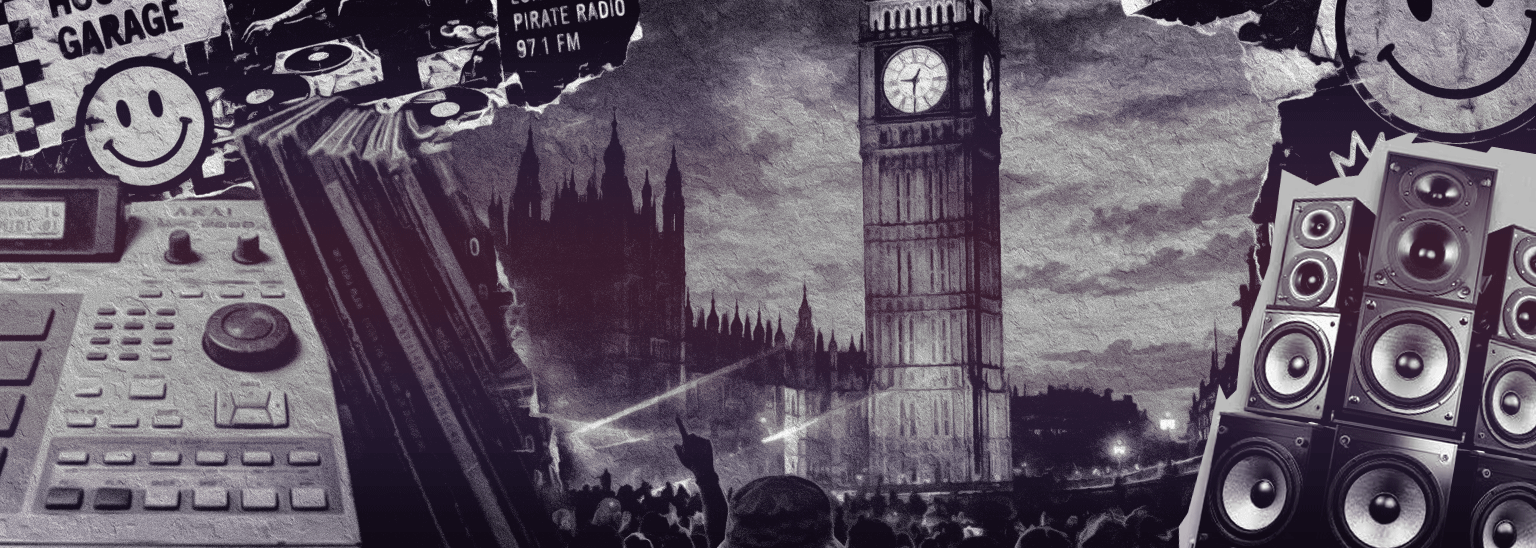
From the swinging, sample-heavy divinity of Todd Edwards’ productions and the heavy, four-to-the-floor bassline bombs of the early 2000s, to the soulful, emotional urgency of anthems like Movin’ Too Fast and the wobbly, heavy-hitting Teutonic remixes of Timo Maas, UKG has always championed a restless sonic palette.

Among these rich variants, 2-step remains UKG’s most undeniably homegrown and structurally distinctive style. Much like jungle, drum and bass, and dubstep, 2-step serves as a testament to the profound innovation born when British music draws deeply from its multicultural domestic heritage rather than passively mirroring American models.

This comprehensive technical walkthrough explores the anatomy of 2-step percussion. Utilizing modern production strategies—grounded in foundational principles inspired by rolling cuts like Rose Holland’s Solid On The Ground—producers can learn to craft tight, enduring, and hypnotically bouncy 2-step beats that demand movement.

Detailed Chronology: The Evolution and Anatomy of 2-Step
The Cultural Roots of a British Phenomenon
To understand how to program a compelling 2-step beat, one must first comprehend the socio-musical landscape from which it emerged in the late 1990s. Born out of the broader UK garage continuum, 2-step stripped away the standard four-on-the-floor kick pattern of traditional house music, replacing it with a syncopated, off-kilter rhythm defined by the omission of the kick drum on the second and fourth beats. This rhythmic breathing room allowed producers to introduce complex swing, shuffling hi-hats, and intricate percussive ghost notes that interacted seamlessly with heavy sub-basslines and emotive R&B vocal chops.

Step-by-Step Production Walkthrough
[ 2-Step Drum Architecture ]
├── Step 1: The Kick     -> Punchy lower-mids, short tails, off-grid rhythmic skips
├── Step 2: The Rim      -> Layered dry wood-knocks, tonal call-and-response patterns
├── Step 3: Hats & Tops  -> Short open hats, reversed shakers, non-competing transients
└── Step 4: The Edits    -> Dropouts, rapid pitch-matched rolls, crash accentuation
Step 1: The Kick
Unlike techno or commercial house, UKG kicks do not rely on massive, booming sub-frequencies that swallow up the mix. Instead, authentic UK Garage kicks feature short release tails and punch heavily in the lower midrange. This deliberate frequency carving leaves ample spatial headroom for deep, rolling basslines while providing the necessary clearance for the natural swing and syncopation of the rhythmic elements to breathe.

- Foundation Sample: Begin by loading a clean, punchy sample such as Ableton Live’s Kick 70s 1.
- The Core Pattern: Construct a fundamental two-bar loop featuring two main kicks per bar (hitting on beats 1 and 1.3.3). To emphasize the characteristic rhythmic skip, program an additional kick on beat 4.4.3 of every fourth bar, applying a slightly higher velocity to accent the momentum.
- EQ and Filtering: Deploy a high-pass filter (low-cut) around 100Hz–140Hz to cleanly trim away conflicting sub-frequencies.
- Adding Bounce: Introduce a secondary, more synthetic percussion element—such as Live’s Club Kick—to inject classic 2-step flavor. Place these auxiliary kick skips entirely by ear and off the strict grid to capture a loose, humanized timing feel. Lower the volume of the Club Kick by approximately 10dB so that the primary acoustic kick provides the core weight, while the synthetic kick supplies the atmospheric bounce.
Step 2: The Rim
The rhythmic engine of any 2-step beat relies heavily on the symbiotic relationship between the kick drum and the rimshot. Crucially, the rim sound does not require an authentic acoustic rimshot sample; any concise, wooden knocking noise functions effectively as long as it remains dry, tight, and devoid of excessive high-frequency harshness.
- Layering for Tone: Because rimshots carry a surprising amount of tonal character, layering two distinct samples—such as Rim 3k Sharp and Rim 90s MPC—creates a richer composite sound. Maintain a standard placement on every second beat, but introduce subtle variation by deleting every fourth instance of the Rim 90s MPC across a two-bar phrase.
- Skippy Rhythms: Program fast, intricate rim patterns using a sample like Rim DMX Fasto 2, pitched down by three semitones. Pair this with a secondary pattern utilizing Rim LDre 2 (also pitched down three semitones), arranged in a conversational call-and-response dynamic that stretches across one- and two-bar loops.
- Pro-Tip (Melodic Rims): Skippy rim rhythms are frequently played melodically at shifting pitches. Duplicate your skippy rim samples to new dedicated drum lanes, transpose the copies up or down by a single semitone, and selectively relocate specific hits to these new lanes for added harmonic texture.
Step 3: The Hats and Rattles
The distinct top-end sparkle of a 2-step groove is generated through a careful fusion of closed and open hi-hats, tambourines, shakers, and auxiliary metallic textures. Historically, producers scavenged these elements directly from vinyl breaks or competing tracks; today, comprehensive software libraries offer pristine raw materials.
- Pattern Design: While some 2-step productions utilize straight or swung 16th-note closed hats, others favor off-beat configurations, or a hybrid of both. However, the golden rule of 2-step hi-hat programming is sample length: keep them short and aggressive. Even open hats are edited down to be punchy and concise.
- Constructing the Top End: Start with two short open hat samples (Hihat Open Ironman and High Open Machine Hard) hitting consistently on the off-beats. Introduce a longer sustained note and a rapid skip note to the High Open Machine Hard lane to reinforce the two-bar cyclical loop.
- Percussive Shakes: Add a tambourine sample (such as Tambourine Sampled at 86 bpm), tuned up by 8.44 semitones to match the track’s tempo, programmed to anchor the second half of each bar with increasing intensity every second bar.
- Pro-Tip (Managing Transients): The secret to packing a beat full of shakers and auxiliary hats without muddying the mix is avoiding sharp initial attacks. Sharp transients will clash directly with the percussive, skippy rims and kicks. Utilize short, reversed hat or shaker samples, shifting them forward on the timeline so that their natural swell hits precisely on the downbeat.
Step 4: The Edits
To prevent listener fatigue and maintain high engagement throughout a club track, dynamic arrangement edits are mandatory. 2-step edits rely heavily on strategic dropouts—removing kicks, snares, or hats at the conclusion of four- or eight-bar phrases—coupled with rapid, pitch-modulated kick rolls.
- Rolls and Fills: Construct acceleration rolls utilizing the Club Kick sample, escalating in speed across a single bar. Leave micro-moments of silence right at the conclusion of the phrase to build palpable tension before dropping cleanly into the next eight-bar section.
- Cymbal Accents: Short, high-tuned 909-style crash cymbals work exceptionally well. Drop a clean crash at the very start of every eight-bar block, and pepper in extra skippy mini-crashes at the phrase endings to accentuate your rhythmic fills.
Supporting Context & Metrics: Cultural Impact and Production Ergonomics
The Golden Era of 2-Step (Selected 90s Classics)
UK Garage was famously permissive both in underground dancefloors and across the airwaves of pirate radio stations throughout the late 1990s and early 2000s. This broad church welcomed disparate aesthetics under a unified banner:
- Chunky Club Favorites: Tracks like Real Loving (Dub) (which cleverly interpolated rave touchstones like Right Before My Eyes).
- Syncopation Workouts: Anthems defined by intricate top-end programming, such as With a Little Bit of Luck.
- R&B Garage Crossovers: Smooth, vocal-driven masterpieces including B With Me and Got Myself Together.
- Minimalist & Forward-Thinking B-Line Records: Stripped-back, sub-heavy masterclasses like Battle, alongside eclectic pirate radio mash-ups that blurred the lines with breakbeat culture.
Ergonomic Production Tip: Combating Listener Fatigue
Long hours spent meticulously editing transient-heavy drum patterns can quickly degrade critical listening faculties. Producers are strongly advised to implement strict break timers during session work. If percussive frequencies begin blurring together or the rhythmic swing loses its objective clarity, step away from the monitors. Utilizing the classic approach of "sleeping on the mix" allows the auditory cortex to reset, ensuring that subsequent arrangement decisions are made with fresh, objective ears.
Future Outlook: The Enduring Legacy of UKG
As electronic music continues to cycle through historical touchstones at an unprecedented velocity, the enduring viability of UK Garage and 2-step proves that the genre’s foundational design principles are timeless. Far from being a nostalgic novelty act limited to late-90s pirate radio lore, 2-step rhythm architecture offers modern producers a masterclass in dynamic space, rhythmic psychology, and percussive economy.
With new generations of producers dissecting the classic idioms of swung grooves, off-grid kick programming, and dynamic arrangement edits, the future of UKG remains exceptionally bright. Whether deployed as a subtle percussive texture in experimental club tracks or as the driving rhythmic engine of main-stage festival bangers, the disciplined art of the 2-step beat ensures that British dance music will continue to innovate from within its own rich cultural heritage for decades to come.