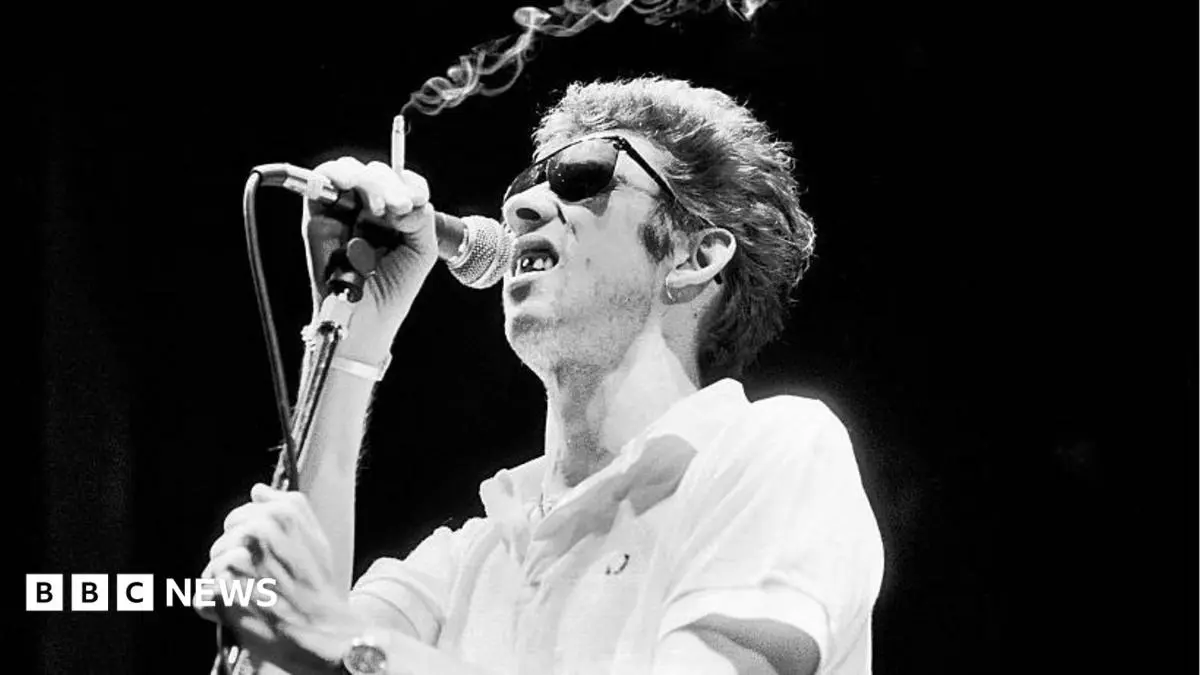
Three years after the passing of Shane MacGowan—the visionary, gravel-throated poet of the Irish diaspora and the unmistakable frontman of The Pogues—his enduring cultural footprint has expanded once more. On a crisp Friday, the musical world welcomed 20th Century Paddy, a sprawling, 36-track tribute album featuring interpretations by 40 distinct bands and solo artists. Conceived during the grief-stricken hours of MacGowan’s County Tipperary funeral in December 2023, the project was steered into reality by his widow, journalist and author Victoria Mary Clarke.
The genesis of the album traces back to a parish church in Nenagh, where mourners found themselves collectively mesmerized by an impromptu, deeply moving wake. As artists like Mundy, Camille O’Sullivan, Nick Cave, Glen Hansard, and Lisa O’Neil performed stirring renditions of MacGowan classics—ranging from the haunting "A Rainy Night in Soho" to the universally beloved festive staple "Fairytale of New York"—Clarke experienced a moment of profound clarity. She imagined capturing that raw, communal electricity on record, a vision that has now materialized into a massive, multi-artist testament to MacGowan’s peerless songwriting canon.
20th Century Paddy is far more than a standard covers album; it is a vital, intergenerational dialogue between MacGowan’s timeless lyricism and the contemporary artists who inherited his artistic DNA. Featuring contributions from figures as diverse as the late Moya Brennan and acclaimed singer-songwriter David Keenan, the record celebrates a writer who permanently altered the landscape of Celtic punk, traditional folk, and rock poetry. This comprehensive report explores the origins of the project, the profound personal connections woven into its creation, the mechanics of its assembly, and its lasting significance for the future of Irish music.
Detailed Chronology: From the Parish Church to the Recording Studio
The Genesis: December 2023 in Nenagh
To understand 20th Century Paddy, one must return to the emotional epicenter of Shane MacGowan’s farewell. Following his death at the age of 65 at his Dublin home in November 2023—after a prolonged battle with encephalitis—the nation of Ireland, alongside fans across the globe, entered a collective period of mourning.
The funeral service in Nenagh, County Tipperary, defied traditional solemnity, transforming instead into a living celebration of MacGowan’s art. Music did not merely accompany the service; it anchored it. Mundy and Camille O’Sullivan delivered a tender, spine-tingling reading of "Haunted." Later, Nick Cave’s delivery of "A Rainy Night in Soho" brought a hushed, reverent stillness to the pews. The ceremony reached its emotional crescendo when Glen Hansard and Lisa O’Neil led the congregation in a defiant, roof-raising send-off of "Fairytale of New York."
Sitting amidst the grief and the glory of the music, Victoria Mary Clarke experienced a creative epiphany. "I thought, well, if we just got all the people who were at the funeral on a record, that’d be something pretty special," Clarke later shared with BBC News NI. That single fleeting thought in a parish church laid the psychological groundwork for an ambitious, multi-year production effort that would ultimately pull together dozens of disparate musicians, studios, and emotional interpretations.
The Incubation and Realization
Over the subsequent thirty-six months, Clarke’s nascent idea evolved from an emotional daydream into an intricate logistical and artistic undertaking. Assembling a 36-track double-album tribute to a songwriter of MacGowan’s caliber required navigating the schedules of 40 different musical acts, clearing publishing rights, and maintaining a high standard of sonic integrity across a broad spectrum of genres.
The project quietly gathered momentum behind the scenes, drawing on artists who felt a direct, personal lineage to MacGowan’s work. For many of the participants, recording a MacGowan track was treated less as a commercial obligation and more as a pilgrimage. The album was meticulously sequenced to trace the various emotional registers of MacGowan’s catalog—moving effortlessly from boisterous, rebellious anthems to devastating ballads of heartbreak and displacement.
When 20th Century Paddy finally hit shelves and streaming platforms on a Friday three years after MacGowan’s passing, it arrived as a fully realized monument. Reflecting on the completed work, Clarke expressed a comforting spiritual certainty: "It must be wonderful for Shane… I think up in heaven, he’s very aware of what’s going on." She noted that the record acts as a conduit for ongoing affection, remarking, "I feel love and connection between the artists and Shane. And also, you know, for me personally, it feels like a lot of love because when somebody sends something nice to Shane, they’re sending it to me."
Supporting Context & Metrics: Deconstructing 20th Century Paddy
Album Architecture and Composition
20th Century Paddy is an exhaustive survey of Shane MacGowan’s genius as a lyricist. Every single one of the 36 tracks was penned exclusively by MacGowan, underscoring a reality that music critics have long championed: beneath the anarchic persona of The Pogues frontman lay one of the 20th century’s most disciplined, literary, and evocative poets.
The album boasts an impressive roster of 40 distinct musical entities, ranging from established Irish heritage acts to contemporary torchbearers of the folk tradition. This cross-pollination of generations ensures that MacGowan’s songs do not gather dust as museum pieces, but rather function as living, breathing folk standards capable of infinite reinvention.
Poignant Posthumous Contributions
The emotional weight of the album is significantly heightened by the inclusion of contributions from acclaimed Irish artists who passed away in the window between recording their covers and the album’s eventual release. These tracks have inadvertently transformed into poignant swan songs, bridging the gap between past legends and current mourners.
Among these is the late, legendary Moya Brennan—often referred to as the First Lady of Celtic Music—whose breathtaking, ethereal vocals provide a stunning interpretation of "Mother Mo Chroi." Similarly, the celebrated singer-songwriter Glen Hansard, whose ties to MacGowan ran deep both personally and professionally, is featured delivering a blistering, high-octane rendition of "Bottle of Smoke." These performances lend 20th Century Paddy an archival gravity, preserving the voices of contemporary icons as they pay homage to the ultimate architect of modern Irish folk-punk.
David Keenan and the Mythological Awakening
To grasp how deeply MacGowan’s work penetrated the psychological landscape of younger Irish artists, one need look no further than Dundalk singer-songwriter David Keenan. Asked to contribute to 20th Century Paddy, Keenan jumped at the opportunity, selecting the breakneck Celtic punk ballad "Sick Bed of Cúchulainn" from The Pogues’ seminal 1985 sophomore record, Rum Sodomy and the Lash.
For Keenan, MacGowan’s influence began not in adulthood, but during a formative childhood in County Louth. "Fairytale of New York is as old as Christmas for me," Keenan explained. However, his true artistic awakening occurred at age 11 when an uncle handed him The Pogues’ third album, If I Should Fall from Grace with God.
"Up ’til that point it was just chart music," Keenan recalled to BBC News NI. "That [album] was the first time I heard all these references to mythology and drink and rebellion and, you know, heartache. And poetry, proper poetry."
The discovery acted as a lightning rod for the young musician, offering him artistic validation. "It gave me permission as a kid to get stuck into real lyric writing. And to do it in the traditional and folk form."
The recording process for his contribution to 20th Century Paddy was heavy with eerie, poetic coincidences. Keenan chose to record his version of "Sick Bed of Cúchulainn"—a song whose central allusion is the mythical, doomed Irish warrior Cúchulainn—in Drumlish, County Longford. "Shane used to record there too," Keenan noted. "It was just surreal and at the same time perfect, you know."
This circularity extended back to his childhood: growing up in Louth, Keenan used to play near Clochafarmore, the very standing stone where Cúchulainn was historically said to have met his end. Through Keenan’s eyes, the album acts as a continuous thread connecting ancient Irish myth, MacGowan’s urban-exile poetry, and the modern troubadours keeping the flame alive.
Official Statements and Industry Reception
The rollout of 20th Century Paddy has been accompanied by a wave of critical acclaim and deeply personal reflections from the music community. Industry insiders have praised the project for avoiding the standard pitfalls of tribute albums—namely, a lack of cohesion or cynical cash-grabbing—and instead presenting a unified, reverent exploration of the MacGowan songbook.
Victoria Mary Clarke’s public statements regarding the album have consistently emphasized healing and spiritual continuity. By framing the project as an extension of the communal mourning witnessed in Nenagh, Clarke has successfully positioned the record not as a commercial product, but as an ongoing conversation between Shane and the world he left behind.
Participating artists have similarly used their platforms to articulate the seismic impact MacGowan had on their respective trajectories. In interviews surrounding the album’s release, musicians have repeatedly pointed to MacGowan’s unique ability to merge the brutal realities of emigration, alcoholism, and heartbreak with high-romantic lyricism. He wrote about the marginalized, the drunk, and the dispossessed with a dignity and literary grace usually reserved for classical literature, making him, in the eyes of his peers, the undisputed poet laureate of the Irish diaspora.
Future Outlook: The Immortal Legacy of Shane MacGowan
As 20th Century Paddy settles into the public consciousness, its broader implications for the preservation of Irish musical heritage are becoming increasingly clear. Shane MacGowan’s passing marked the end of an era for The Pogues, but the immense outpouring of creativity seen on this 36-track tribute demonstrates that his artistic lineage is healthier and more robust than ever.
The album ensures that MacGowan’s catalog will continue to be interpreted by new generations of artists who view him not as a tragic caricature of rock-and-roll excess, but as a towering literary giant who rescued traditional Irish music from the confines of sanitized pub singalongs and thrust it into the gritty, neon-lit reality of modern urban life.
Looking forward, projects like 20th Century Paddy lay down a blueprint for how cultural icons should be remembered: not through silent bronze statues or dusty archives, but through the vibrant, living medium of song. As David Keenan, Moya Brennan, Glen Hansard, and 37 other acts have proven on this landmark release, Shane MacGowan’s songs remain a loaded weapon and a comforting embrace alike—ready to be picked up, dusted off, and sung with full-throated passion by anyone willing to listen to the poetry of the streets.