Executive Overview
For two-time Academy Award winner Mahershala Ali, the machinery of modern Hollywood press tours has long been a double-edged sword. As one of the most discerning and critically lauded actors of his generation, Ali is no stranger to the cognitive dissonance of championing projects caught in the crossfire of cultural controversy (Green Book) or corporate misfires (Blade). However, stepping into a London hotel room alongside director Bassam Tariq, Ali radiates an entirely different energy. The occasion is their collaborative tour de force, Your Mother Your Mother Your Mother—a sui generis religious satire-thriller that merges the sacred with the profane, pitting a Muslim ex-military hitman against a gaudy modern backdrop of sinister Christian militias and sleazy porn empires.
In this deep-dive profile, Ali and Tariq lay bare the harrowing gestation period of their new film, reflecting on the lessons learned from the ashes of Marvel’s aborted Blade reboot, the existential dread of the Covid-19 pandemic, and what it truly means to make art anchored in spiritual sincerity. Blending sharp directorial vision with uncompromising cinematic ambition, Your Mother Your Mother Your Mother stands as proof that when visionary filmmakers align, even the most grueling industry roadblocks can yield miraculous results.
Detailed Chronology: From Pandemic Despair to Cinematic Creation
The Genesis in Isolation
The roots of Your Mother Your Mother Your Mother trace back to the early, disorienting months of the Covid-19 pandemic. Fresh off the release of his acclaimed directorial debut, Mogul Mowgli—starring Riz Ahmed—Pakistani-American filmmaker Bassam Tariq found himself in a state of professional and personal limbo.
"The world just stopped," Tariq recalls, sitting next to Ali. "I thought I was going to be this big director and all this stuff, and nothing was going the way I wanted it to."
This sudden stagnation triggered memories of another paralyzing chapter in Tariq’s life: 2014, following the birth of his first child. With his wife hospitalized due to a severe postpartum infection and his newborn infant unable to digest standard formula, Tariq found himself frantically searching hospitals and pharmacies for breast milk. That desperate, unmooring scramble not only tested his faith but ultimately birthed the foundational narrative engine that drives the frantic action of Your Mother.
Layering personal anxieties over mortality, the stagnation of his career, and the universal dread of a locked-down world, Tariq began writing a screenplay that refused to conform to conventional Hollywood formulas.
The Blade Collateral and Creative Realignment
Months later, Tariq’s professional trajectory intersected closely with Mahershala Ali. The two artists were deep into development on Marvel Studios’ much-anticipated Blade reboot, a high-profile blockbuster that Ali had aggressively championed—even uprooting his family and relocating to Atlanta.
Behind the scenes, however, the production was plagued by endless delays, shifting creative visions, and insurmountable studio gridlock. The project eventually collapsed under the weight of creative rifts, resulting in a public fallout where Ali did not mince words regarding Marvel leadership and studio bottlenecks.
Yet, out of the wreckage of Blade, a creative brotherhood was forged. Tariq eventually handed Ali the script for Your Mother Your Mother Your Mother.
"The feeling was essentially like, finally," Ali reflects. "To get a script of this ilk. It’s not easily definable, or something you come by very often, or at all."
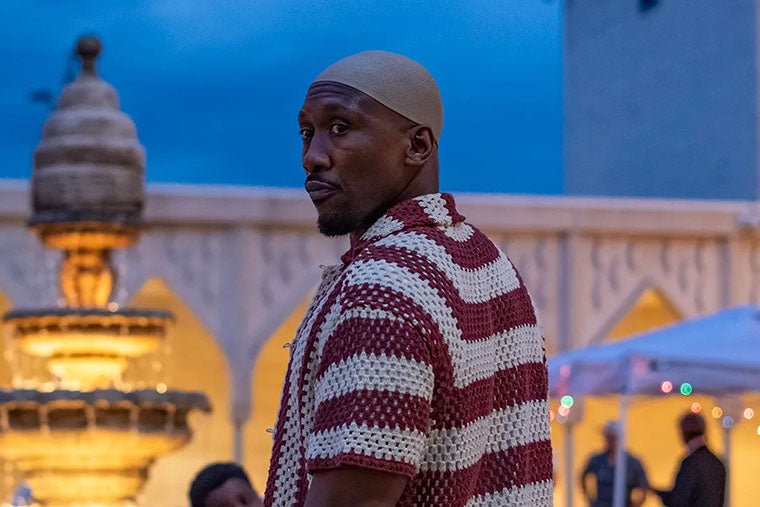
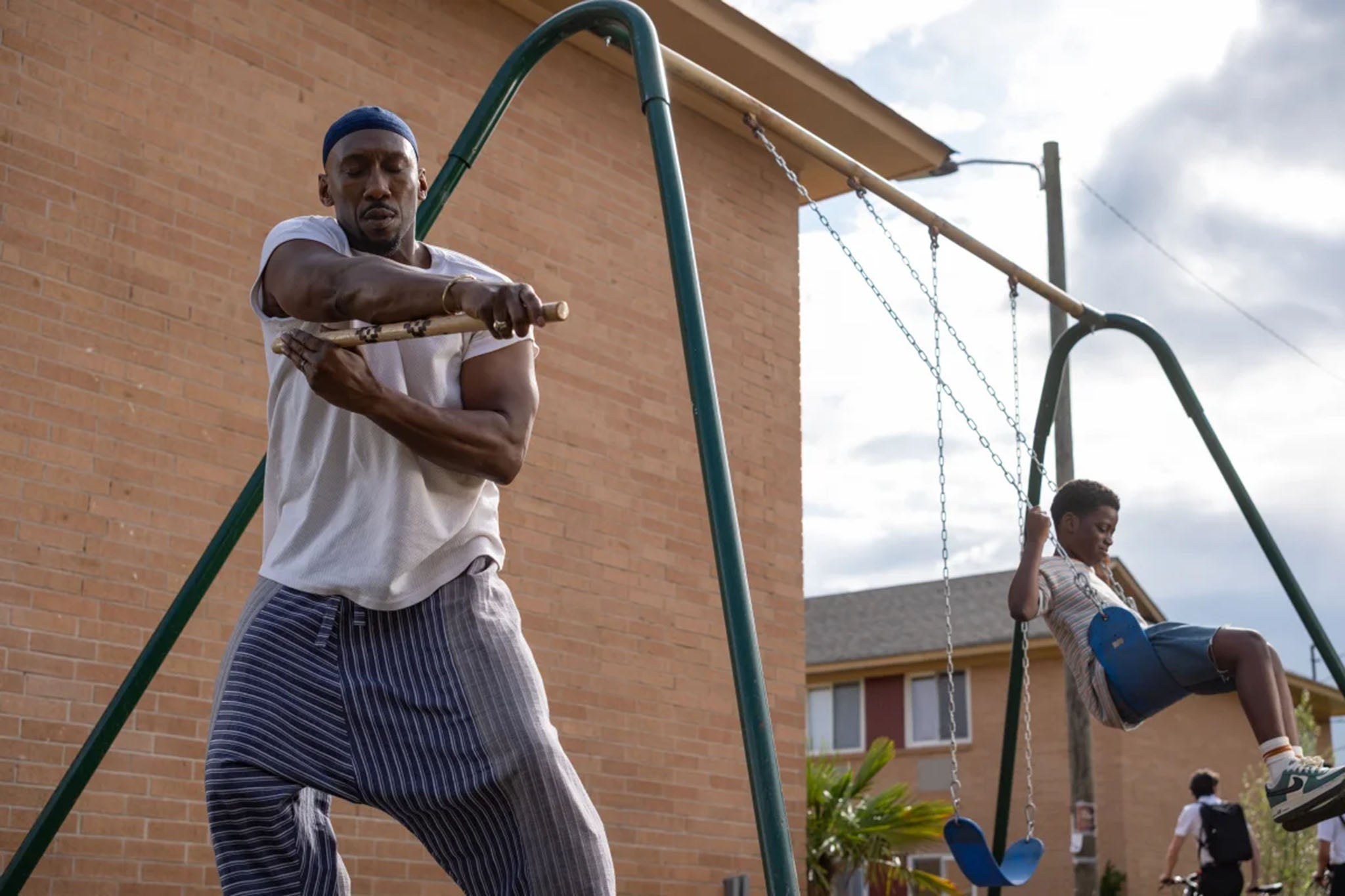
Moreover, the physical toll of preparing for Blade—specifically the rigorous, grueling martial arts and sword-training regimens Ali underwent for the Marvel vampire hunter—did not go to waste. Those exact physical skills were repurposed for the elaborate, high-octane combat sequences in Your Mother, allowing stunt coordinator Adam Hart to execute jaw-dropping action beats under tight production windows.
Supporting Context & Metrics: Deconstructing a Masterclass in Genre-Bending
The Ghost Dog Blueprint
Classifying Your Mother Your Mother Your Mother within a single genre is an exercise in futility. The film operates as a religious satire, an urban thriller, and a gritty family drama all at once. When searching for a cinematic touchstone, Tariq points directly to Jim Jarmusch’s 1999 cult classic Ghost Dog: The Way of the Samurai, which starred Forest Whitaker as a modern-day hitman governed by an ancient code of honor.
"There’s a man in an urban environment, and he’s trying to follow these ancient sets of ways," Tariq explains. "I was like, that’s being Muslim in America, right? That’s who we are—we’re kind of like Ghost Dog."
Scale, Stunts, and Production Metrics
- Lead Performance: Mahershala Ali as a grief-stricken, faith-driven ex-military hitman.
- Director: Bassam Tariq (Mogul Mowgli).
- Stunt Coordination: Directed by Adam Hart, executing complex sword-play and close-quarters combat sequences on compressed schedules.
- Thematic Scope: Navigating intersections of contemporary Islamic faith, institutional corruption, predatory corporate porn enterprises, and radicalized Christian militias.
- Theatrical Release Date: November 20 (Distributed by Amazon MGM Studios).
Official Statements & Insights
The dynamic between Ali and Tariq during interviews reveals a profound mutual respect wrapped in affectionate banter. Ali, 52, commands the room with the calm, dignified authority that defined his breakout performances in Moonlight (which earned him his first Academy Award) and HBO’s True Detective. Tariq, by contrast, brings an energetic, loose candor to the table.
Recalling their time on set, Tariq jokes, "Every day on set, Mahershala would put one Oscar down on a table, then put another Oscar down. Then he goes, ‘All right, tell me again, what was your note?’"
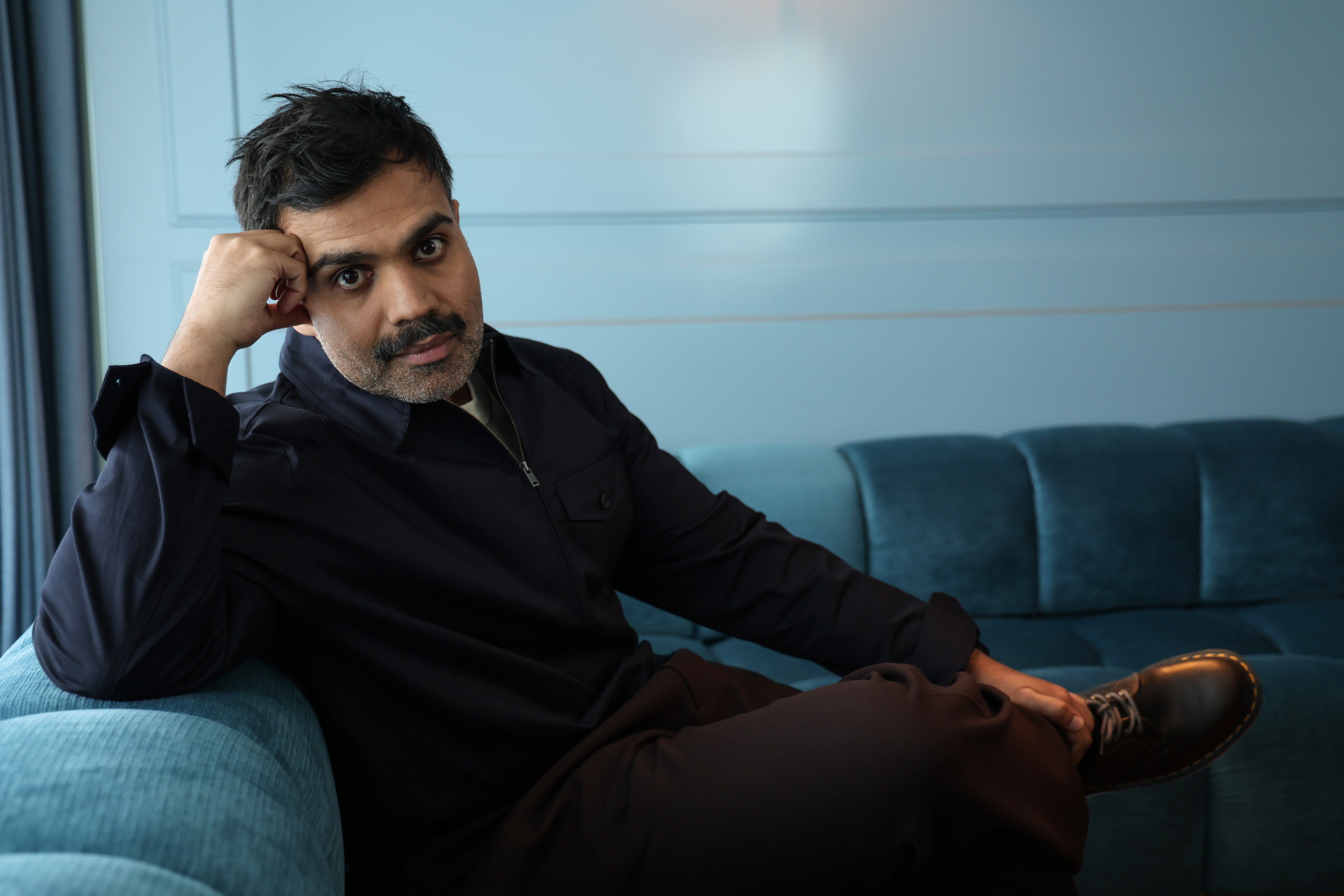
When the conversation pivots to the unusual nature of centering a high-profile Hollywood project around earnest expressions of Islamic faith—a stark contrast to the historical saturation of evangelical Christian blockbusters—Ali articulates his philosophy with statesmanlike precision:
"I feel like my responsibility is to tell great stories. My responsibility is to make good choices and do the best absolute work I can do to humanise the men that I play. Because it’s all I can do, you know? To spiritualise each character."
Reflecting on the sheer improbability of bringing such a chaotic, visionary script to life without compromising its artistic integrity, Ali adds: "The fact that we pulled it off, the way we did, feels sort of miraculous."
Future Outlook: Beyond Arthouse Expectations
Toward the end of their interview, Tariq poses an unexpected question to Ali, musing on the psychological weight of their artistic success:
"The response to [Your Mother] has been so enormous for me, and this thing feels so profound, that I now just want to write something stupid," Tariq confesses. "Do you ever feel that way? Like, do you want to go do a romcom, or… something like an Adam Sandler Happy Madison thing?"
Ali’s response strips away standard industry PR clichés, pivoting instead into a profound meditation on creative fear and ambition:
"I know I have an answer to that on some level, and part of me knows what you need to hear. Because part of that is that the question comes from fear, and it comes from a fear associated with success—and having accomplished something that you’re not necessarily even conscious you’re trying to achieve… I think it’s hard to admit to ourselves that we want to climb a higher mountain. And so I think the thing is to be honest with yourself about that and to be open to failure."
Ali emphasizes that whether an artist tackles high-concept arthouse drama, gritty action, or broad comedy, the underlying mandate remains identical: finding the absolute truth within the narrative. "Because even in comedy, you better find the truth or it won’t be funny," Ali notes. "And it’s an act of faith. It’s an act of faith knowing that what showed up for you last time will show up for you again."
While audiences should not expect Ali to sign on for a slapstick comedy sequel anytime soon, Your Mother Your Mother Your Mother demonstrates that taking creative leaps of faith yields extraordinary dividends. As the film prepares for its theatrical rollout, it marks a triumphant new chapter for both actor and director—proving that sometimes, the projects born from the darkest industry crises ultimately shine the brightest.