The Digital Audio Workstation (DAW) market has evolved into one of the most fiercely contested battlegrounds in the modern music technology industry. While many of the foundational tools shaping today’s charts have been refined over three decades, the corporate DNA underlying these platforms has shifted dramatically. Once driven by grassroots developers and visionaries adhering to a strict "by musicians, for musicians" ethos, the landscape is now increasingly dominated by private equity firms, venture capital interests, and multinational tech conglomerates.
For the average bedroom producer, film scorer, or mix engineer, choosing a DAW is no longer just about workflow, interface design, or native plugin quality. It has become a complex financial calculation. As ownership changes hands, legacy software packages are frequently funneled into subscription models, forcing users to weigh the merits of perpetual ownership against cloud-tethered ecosystems.
This transformation creates a deep philosophical rift. In one corner stand platforms maintaining artist-centric pricing and predictable, legacy-friendly licensing. In the other stand corporate entities optimizing quarterly balance sheets through subscriber funnels and tiered exclusivity. By examining how legacy brands like Pro Tools, Cubase, Studio Pro, and Reason navigate this economic tightrope—and how user communities have historically pushed back—we can better understand the modern software landscape and empower musicians to make informed purchasing decisions.
Detailed Chronology: From Hardware Lock-ins to the Cloud-Tethered Era
To understand how the DAW marketplace arrived at its current crossroads, we must examine the historical mechanics of software monetization. The economic strategies governing music production software have undergone three distinct evolutionary phases over the past thirty-five years.
Phase 1: The Hardware-Tethered Era (Late 1980s – 2010)
When Digidesign introduced Pro Tools in 1991 (building on its 1989 Sound Designer roots), the software industry operated on an entirely different financial calculus. Pro Tools pioneered the perpetual license model, allowing users to buy the software once and retain permanent ownership of that specific version. However, a major structural catch defined this era: you could not run Pro Tools natively on consumer audio interfaces.
Pro Tools was inextricably bound to proprietary hardware, ranging from the early TDM and HD systems down to LE and M-Powered iterations. Digidesign—and later Avid Technology, which acquired the company in 1995—derived massive capital inflows from high-margin hardware sales. Consequently, the company did not require predictable, month-to-month subscription streams to satisfy shareholders. The hardware subsidised the software development cycle, insulating the user base from recurring charges.
Phase 2: The Perpetual Upgrades and Annual Treadmill (2010 – 2020)
As native processing power surged and hardware exclusivity dissolved, companies had to rethink profitability. Brands like Steinberg—which became a wholly owned subsidiary of Yamaha in 2005—retained the perpetual license framework for Cubase, but pivoted aggressively toward annual paid upgrades.
Whether an annual cycle brought revolutionary changes or minor bug fixes, users desiring cutting-edge compatibility and features found themselves locked into an annual payment cadence. In practice, this perpetual model functioned as an annual subscription in all but name. If a producer skipped two or three cycles, the catch-up cost to upgrade to the latest version ballooned, effectively penalizing loyalty and creating a soft subscription tier.
Phase 3: The Subscriber Funnel and Acquisition Wave (2020 – Present)
Today, private equity and venture capital firms view DAW platforms not merely as creative tools, but as high-yield intellectual property (IP) assets. The playbook has grown standardized:
A legacy brand is acquired or rebranded.
The price of the standalone perpetual license is slashed, creating an initial illusion of accessibility and consumer friendliness.
A parallel subscription tier is introduced or heavily incentivized, locking away cutting-edge tools, cloud collaboration features, and integrated services behind a recurring monthly or annual paywall.
This "subscriber funnel" strategy transforms perpetual licenses into a mid-tier offering, systematically steering users toward predictable, high-margin SaaS (Software as a Service) models.
Supporting Context & Metrics: The Economics of the Subscriber Funnel
The corporate migration toward subscriptions is driven by undeniable financial metrics. For software executives and corporate boards, subscriptions offer predictable quarterly recurring revenue (QRR). This metric allows businesses to forecast growth, secure venture funding, and smooth out the feast-or-famine cycles historically endemic to creative software sales.
Case Study A: Fender Studio Pro (The Studio One Rebrand)
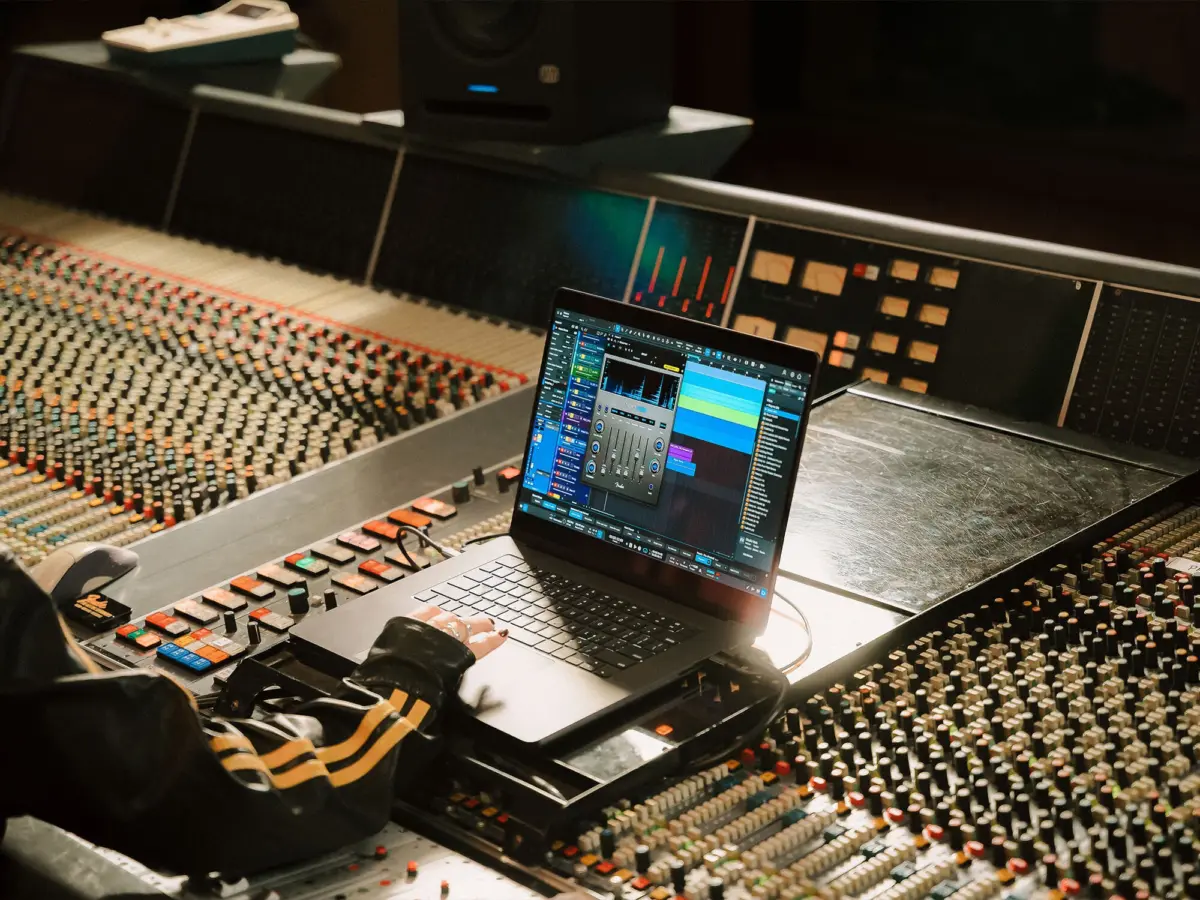
When Fender acquired PreSonus and subsequently rebranded Studio One into Fender Studio Pro, industry observers watched closely to see how the pricing architecture would shift. The Studio Pro 8.1 update revealed a classic subscriber funnel in action. While the cost of a perpetual Studio Pro license was adjusted downward, a suite of advanced features, collaborative tools, and expanded content libraries were cordoned off exclusively for "Studio Pro+" subscribers.
Suddenly, the perpetual license was relegated to a baseline or middle-tier option, incentivizing users to graduate to the recurring billing model if they wanted access to the platform’s full developmental trajectory.
Case Study B: LANDR’s Acquisition of Reason Studios
A similar economic blueprint unfolded when LANDR acquired Reason Studios. Following the acquisition, perpetual license prices for the standalone Reason DAW dropped dramatically, stoking immediate fears within the long-standing Reason community. At the same time, the Reason+ subscription was supercharged by bundling it with LANDR’s expansive ecosystem: unlimited AI-powered mastering, global music distribution, cloud stem separation, and an ever-expanding sample library numbering in the millions.
While Reason+ had launched years prior, the LANDR acquisition highlighted how legacy music software is frequently leveraged to drive traffic into broader, cloud-based creator ecosystems.
The Power of Community Pushback
Despite the corporate push toward recurring revenue, the DAW market possesses a unique defensive mechanism: vocal, highly organized user bases.
A stark lesson in consumer leverage occurred in 2022 when Bitwig attempted to introduce paid add-on features for Bitwig Studio. Despite being a smaller independent brand compared to industry giants like Ableton or Apple, the Bitwig user community mobilized swiftly and cohesively against the paywall shift. The backlash was severe enough that Bitwig issued a public apology and reversed course, making the disputed features freely available to existing license holders.
Similarly, when acquisitions raise existential questions regarding software integrity, community pressure often forces new parent companies to publicly reaffirm their commitment to perpetual licenses—proving that consumer solidarity still holds tangible weight in the music tech sector.
Official Industry Perspectives
Navigating the delicate balance between corporate profitability and user goodwill requires open dialogue. Key stakeholders from leading music tech companies share their perspectives on how they manage this tightrope.
Max Gutnik, Chief Product Officer at Fender, on User-Driven Development
Addressing the anxieties surrounding the Studio One transition to Fender Studio Pro, Max Gutnik emphasizes the importance of direct community engagement in shaping software updates:
"We rely heavily on direct feedback from our users. Our forums, support channels, beta community, and direct conversations with customers tell us which workflows people depend on and where they’re getting stuck. We also spend a lot of time talking with working musicians, producers, and engineers. We want to understand where people are trying to go and where the software can get out of their way.
Studio One users are passionate, and after the rebrand they told us very clearly what mattered to them: protect the workflow they love and keep Studio Pro a serious tool for producers and engineers as well as guitar players. Studio Pro remains a cutting-edge professional DAW at its core. We’ll keep investing in the fast, uncluttered workflow people chose Studio One for, while adding intelligent tools that help musicians spend more time making music and less time navigating software."
Daniel Rowland, VP of Strategy & Partnerships at LANDR, on Preserving Reason’s Legacy
Daniel Rowland, a 25-year veteran user of Reason who now guides strategy at LANDR, acknowledges the initial anxiety that rippled through the electronic music community following the acquisition:
"I know there was some anxiety in the community when we acquired the company that we’d somehow get rid of perpetual licenses, push everyone toward subscriptions, or get rid of the DAW in favor of just the Rack plugin. Of course, we’ve gone in pretty much the opposite direction, and I think it’s only been a value-add so far, with more coming. I’ve been a Reason user for 25 years. The last thing I’m going to be involved in is disrupting the community or the software that helped birth my career.
The philosophy is to respect the history of Reason while tastefully improving and expanding its capabilities; meet people where they are when it comes to pricing and the way they want to access the software; and let the community guide us. An example that ties all of those things together is the concept behind how Reason Free is built, which came directly from a conversation I had with a power user. He asked for the ability to buy individual Reason Rack Extensions to augment what comes with the free version, for people who just wanted to build their own custom rack in lieu of a subscription or even buying a full Reason license. So that’s exactly what we did."
Future Outlook: The Fragmented Horizon of DAW Economics
As the music technology landscape presses forward, the long-term societal and economic effects of subscription models are becoming increasingly pronounced.
In creative industries—where income is rarely distributed in predictable monthly increments—forced subscription models carry real exclusionary risks. Much like Adobe’s Creative Cloud pricing structure has historically isolated freelance designers and independent artists, high-end subscription tiers like Pro Tools Ultimate frequently price out independent creators. These tiers cater primarily to high-budget post-production facilities and commercial studios with steady cash flow, driving independent users toward alternative platforms like Apple Logic Pro, Cockos REAPER, and Image-Line FL Studio. These alternatives often maintain transparent pricing structures, such as free lifetime updates or unbundled perpetual licenses.
The Looming Dichotomy
Over time, a stark dichotomy emerges within companies caught between artistic heritage and corporate accounting. A software suite may contain inspiring, meticulously crafted instruments and mixing tools designed by musicians for musicians. Yet, the overarching corporate pricing strategy dictating its distribution can feel cold and purely transactional. When this disconnect widens, users inevitably begin exploring decentralized, independent options.
Conclusion: Making Informed Choices
The modern DAW market proves that consumers are no longer passive participants in software pricing evolution. Whether evaluating an annual upgrade fee, weighing the perks of a cloud-bundled subscription, or investing in a traditional perpetual license, today’s musicians have more options than ever before.
The most powerful takeaway for producers is simple: you are never obligated to remain loyal to a brand that does not make its user base its top priority. By demanding transparency, supporting brands that respect user autonomy, and leveraging the diverse ecosystem of competing DAWs, musicians can ensure that the tools of their trade remain creative instruments—rather than corporate cash funnels.