Executive Overview
In an era where regional cultural infrastructure often finds itself squeezed by funding pressures and shifting municipal priorities, the national music charity Orchestras Live continues to serve as an indispensable catalyst for social cohesion, regional equity, and artistic enrichment. Dedicated to bringing the transformative power of live orchestral music to traditionally underserved regions, the organization has officially released its highly anticipated **2026
Impact Report**. The document paints a vivid picture of resilience, artistic innovation, and measurable community transformation across the East, North, and Midlands of England.
Operating primarily in rural and coastal communities—locales where high-quality classical and contemporary orchestral experiences are historically scarce—Orchestras Live has carved out a unique role within the United Kingdom’s cultural landscape. Rather than viewing the orchestra as a static, metropolitan museum piece, the charity positions large-scale musical ensembles as dynamic, responsive tools for community building, civic pride, individual well-being, and mental health support.
The 2026 Impact Report captures a formidable span of activity, detailing approximately 35 distinct projects and events delivered over the past operational cycle. By forging strategic alliances with 37 local partners and 19 leading orchestral organizations, Orchestras Live successfully orchestrated over 26,000 individual musical experiences. These initiatives reached everyone from wide-eyed schoolchildren hearing the resonant swell of a live brass section for the very first time to vulnerable displaced youth and families navigating the isolating complexities of long-term dementia care.
This comprehensive overview delves into the operational methodology of Orchestras Live, breaks down the core developmental metrics of their latest report, explores three flagship initiatives (Our Music Our Way, Culture Sounds, and Good Company), and evaluates the enduring socio-economic impact of democratizing access to orchestral music in contemporary Britain.
Detailed Chronology: A Year of Targeted Intervention and Artistic Expansion
To understand the scope of the 2026 Impact Report, one must trace the deliberate, methodical chronology of how Orchestras Live designs and executes its regional interventions. Eschewing the "parachute" model of touring—where an orchestra arrives for a single evening performance and departs immediately afterward—Orchestras Live builds multi-layered, enduring residencies that root the music deep within the socio-cultural fabric of the host community.
Phase One: Foundation and Regional Mapping (Early Planning Cycles)
The groundwork for the 2026 reporting period began months prior through extensive consultation with regional music hubs, local authorities, and grassroots social services. Recognizing that coastal and rural areas often suffer from structural deficits in public transport, dedicated arts venues, and sustained funding, Orchestras Live collaborated closely with local partners in regions such as Redcar and Cleveland, Leicester, and Essex. This mapping phase ensures that every orchestral intervention addresses a genuine, self-identified community need, whether that is educational enrichment, trauma recovery, or adult social care support.
Phase Two: Co-Creation and Collaborative Residencies (Spring to Autumn)
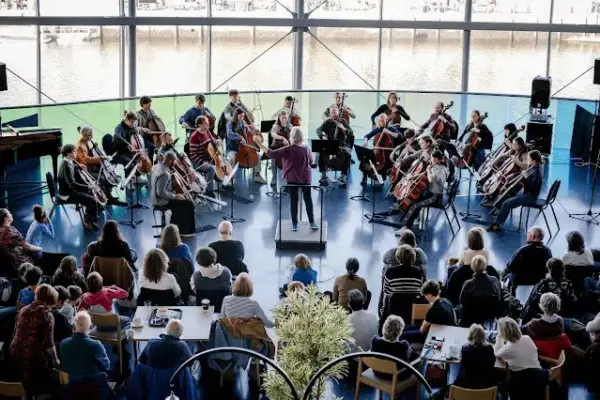
Rather than imposing a rigid classical repertoire, the core of the Orchestras Live methodology relies on co-creation. Throughout the year, professional musicians from partner ensembles—such as the Royal Northern Sinfonia, Sinfonia Viva, and the One World Orchestra—embedded themselves within local environments.
- In Redcar and Cleveland, the partnership with Tees Valley Music Services and composer Michael Betteridge saw schools transform into creative laboratories. Children not only listened to professional musicians but actively worked alongside them to co-write original compositions that reflected their own local identities and industrial heritage.
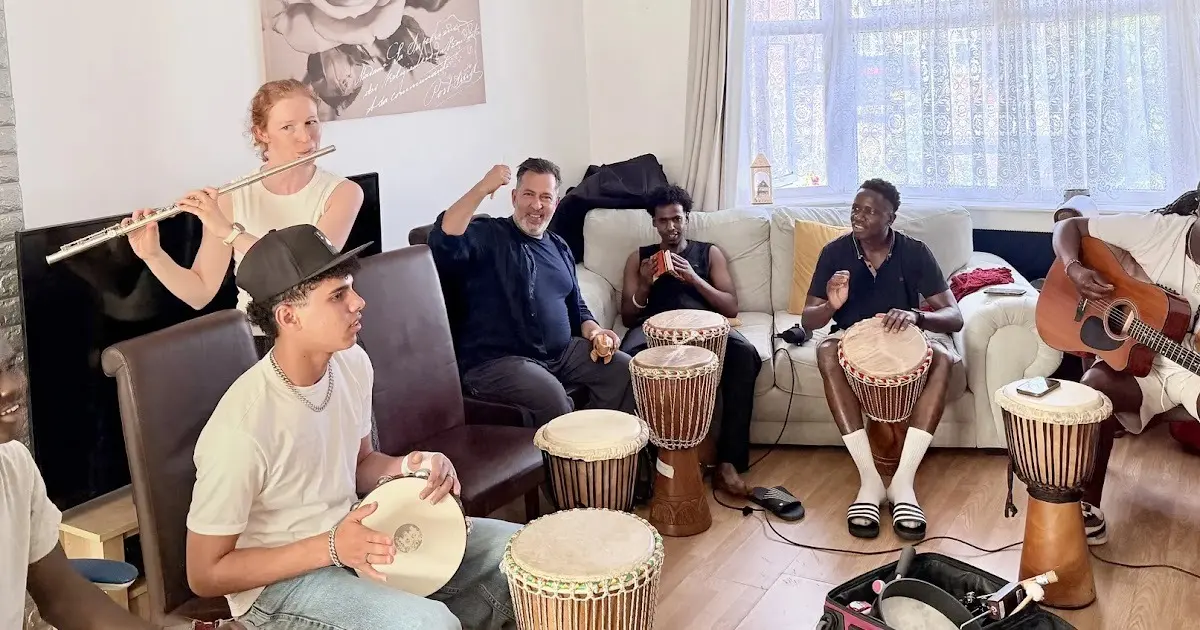
- In Leicester, trauma-informed music workshops were integrated directly into a residential facility for displaced young people, utilizing rhythm and melody as a bridge across linguistic and cultural divides.
Phase Three: Evaluation, Reflection, and the 2026 Impact Launch
As projects culminated toward the close of the operational cycle, rigorous qualitative and quantitative data collection took center stage. Working alongside independent evaluators, Orchestras Live measured indicators ranging from confidence shifts in young participants to reduced caregiver burnout metrics in elder-care settings. The culmination of this multi-tiered data gathering process resulted in the official publication of the 2026 Impact Report, serving both as an accountability document for funders and a strategic roadmap for the charity’s future expansions.
Supporting Context & Metrics: The Numbers Behind the Music
A superficial glance at classical music statistics in the UK often reveals a stark urban concentration, with major symphony orchestras tethered to metropolitan centers like London, Manchester, Birmingham, and Leeds. Orchestras Live was founded precisely to counteract this geographic disparity. The metrics cited in the 2026 Impact Report underscore a massive logistical and artistic undertaking designed to democratize access to the arts.
Key Metrics from the 2026 Impact Report:
- Total Projects and Events: ~35 distinct regional initiatives delivered across the UK.
- Local Partnerships: 37 active collaborations with municipal authorities, music hubs, and grassroots community organizations.
- Orchestral Collaborations: 19 professional orchestral partners deploying world-class musicians into non-traditional venues.
- Direct Audience & Participant Reach: Over 26,000 discrete orchestral experiences facilitated, ranging from intimate therapeutic workshops to large-scale public performances.
- Geographic Focus: Heavy concentration in coastal, rural, and economically post-industrial communities across the East, North, and Midlands of England.
These figures represent more than mere headcounts; they are indicators of cultural inclusion. In rural districts where public arts funding has historically struggled to penetrate, the arrival of a professional ensemble validates local experiences. By bringing high-art standards into community halls, local libraries, and rural school gymnasiums, Orchestras Live actively dismantles the perceived elitism often associated with classical music, proving that the orchestra belongs to everyone.
Flagship Initiatives: Case Studies in Transformation
The true measure of Orchestras Live’s success lies in its specialized programs. The 2026 Impact Report highlights three distinct flagship initiatives, each tailored to address a specific demographic challenge through the medium of orchestral music.
1. Our Music Our Way: Planting Musical Roots in Redcar and Cleveland
For many children growing up in post-industrial coastal communities, the symphonic orchestra is an abstract concept—something seen on a television screen or heard through digital recordings, far removed from daily reality. Our Music Our Way was designed to shatter that distance.
Conducted as an ongoing schools programme in partnership with the Royal Northern Sinfonia, acclaimed composer Michael Betteridge, and dedicated educators from Tees Valley Music Services, the project brought the raw, acoustic power of a professional orchestra directly to young people in Redcar and Cleveland.
The initiative operated on a dual track:

- First-Time Encounters: Hundreds of children experienced the visceral impact of live orchestral instruments up close, demystifying the instruments and the musicians who play them.
- Co-Creation and Performance: Going beyond passive listening, students worked hand-in-hand with Betteridge and members of the Royal Northern Sinfonia to co-write, rehearse, and ultimately perform their own original musical works.
By centering the children’s own voices and stories within a symphonic framework, Our Music Our Way fostered profound local pride, enhanced classroom engagement, and demonstrated that creative excellence is not bound by geography or socio-economic background.
2. Culture Sounds: Trauma-Informed Music Making in Leicester
In an increasingly interconnected yet fractured world, the needs of displaced children and young people navigating the UK care system demand innovative, highly sensitive approaches. Traditional talk therapy and conventional educational frameworks can sometimes falter when faced with complex trauma and language barriers. Enter Culture Sounds.
Designed as a series of trauma-informed creative opportunities, Culture Sounds explores how collaborative music-making can cultivate a deep-seated sense of belonging, personal agency, and self-confidence among vulnerable youth.
During the reporting period, professional musicians from the One World Orchestra and Sinfonia Viva delivered a series of intensive, highly responsive music workshops at a young people’s residence in Leicester. Working in close coordination with on-site local support workers—ensuring psychological safety and trauma-informed practice throughout—the musicians invited residents to engage in rhythm, improvisation, and collaborative songwriting.
The success of these pilot sessions has yielded tangible structural outcomes: the One World Orchestra has officially secured new funding to launch an expanded, full-scale programme in the coming year, ensuring that these vital creative lifelines will remain open to care-experienced and displaced youth.
3. Good Company: Creative Dementia Support in Essex
The crisis in adult social care is one of the defining domestic policy challenges of our time. Families caring for relatives with dementia often experience acute social isolation, physical exhaustion, and emotional strain. Recognizing that creative engagement can unlock memories, stimulate neurological pathways, and restore interpersonal connection, Orchestras Live developed the Good Company initiative in Essex.
Good Company provides specialized, creative dementia support tailored specifically for family carers and their relatives living with the condition. By engaging participants in shared musical experiences, the project helps families stay connected, maintain a sense of personal independence, and experience moments of joy and shared humanity away from the clinical stress of medical environments.
Building upon the resounding success of these sessions, Orchestras Live has announced a new iteration of the project to be delivered in Rayleigh. This upcoming phase builds directly upon a rich legacy project previously established in the area by the Dance Network Association, proving the value of cross-disciplinary, inter-agency collaboration in community care.
Official Statements and Institutional Perspectives
The release of the 2026 Impact Report has drawn praise from arts advocates, regional stakeholders, and cultural commentators alike, who view the charity’s work as a vital counterweight to urban-centric cultural policies.
In introductory remarks accompanying the report, leadership at Orchestras Live emphasized the philosophical core of their mission:
"Live orchestral music possesses a unique, visceral capacity to unite people, bridge social divides, and awaken a profound sense of self-worth. When we bring these experiences to communities that have been historically overlooked—whether they are coastal towns weathering economic transition, children in care seeking a safe harbor of expression, or families navigating the lonely waters of dementia—we are not merely staging concerts; we are actively constructing communities of belonging."
Regional partners have similarly lauded the collaborative ethos of the charity. Representatives from Tees Valley Music Services noted that the presence of the Royal Northern Sinfonia during the Our Music Our Way residency left an indelible mark on the local teaching staff and student body alike, elevating pedagogical aspirations and inspiring a new generation of young musicians.
Furthermore, social care professionals involved with the Culture Sounds and Good Company initiatives have repeatedly highlighted the clinical and emotional benefits of the work. By embedding trauma-informed practitioners and skilled orchestral musicians into residential care homes and youth facilities, Orchestras Live has bridged the gap between high-level artistic performance and frontline social welfare.
Future Outlook: Sustaining Momentum Beyond 2026
As Orchestras Live looks beyond the milestones documented in its 2026 Impact Report, the organization faces both significant opportunities and persistent challenges. The demand for targeted, community-based arts interventions has never been higher. Local authorities, grappling with ongoing budgetary constraints, increasingly rely on agile charities like Orchestras Live to deliver essential social, educational, and well-being outcomes that municipal structures can no longer support alone.
Strategic Priorities for the Horizon:
- Scaling Successful Pilots: With the One World Orchestra successfully securing funding to expand the Culture Sounds initiative into a full-scale regional programme, the priority will be scaling similar pilot models across additional counties in the Midlands and the North.
- Deepening Inter-Disciplinary Partnerships: Building on the cross-sector success of the Good Company project in Essex—which harmonizes musical practice with the legacy of the Dance Network Association—Orchestras Live aims to forge deeper alliances with the healthcare, social work, and educational sectors.
- Advocating for Regional Equity: The charity continues to serve as a vocal advocate for national cultural policies that recognize the intrinsic value of rural and coastal communities, pushing back against the metropolitan bias that frequently starves non-urban areas of sustainable arts funding.
- Long-Term Longitudinal Tracking: Moving forward, Orchestras Live is investing in enhanced longitudinal research methodologies to measure the multi-year psychological and educational impacts of early childhood orchestral interventions, ensuring that empirical data continues to back up artistic intuition.
In summary, the Orchestras Live 2026 Impact Report is far more than a retrospective accounting of concerts held and workshops delivered. It stands as a manifesto for cultural democracy—a testament to the fact that when professional orchestras step outside traditional concert halls and embed themselves within the daily realities of everyday people, music ceases to be a passive luxury and becomes an active, life-affirming force for social transformation.