Executive Overview
The intersection of nostalgia, analog warmth, and modern digital production has rarely been mapped as successfully as it has by synthwave icons The Midnight. Comprising singer-songwriter Tyler Lyle and producer-multi-instrumentalist Tim McEwan, the duo has spent over a decade constructing a cinematic sonic universe that bridges 1980s aesthetic touchstones with contemporary pop structures. Their signature sound—characterized by lush analog pads, gated drums, and evocative, melancholic lyricism—has earned them a devoted global following and cemented their status as modern pioneers of retro-futurism.
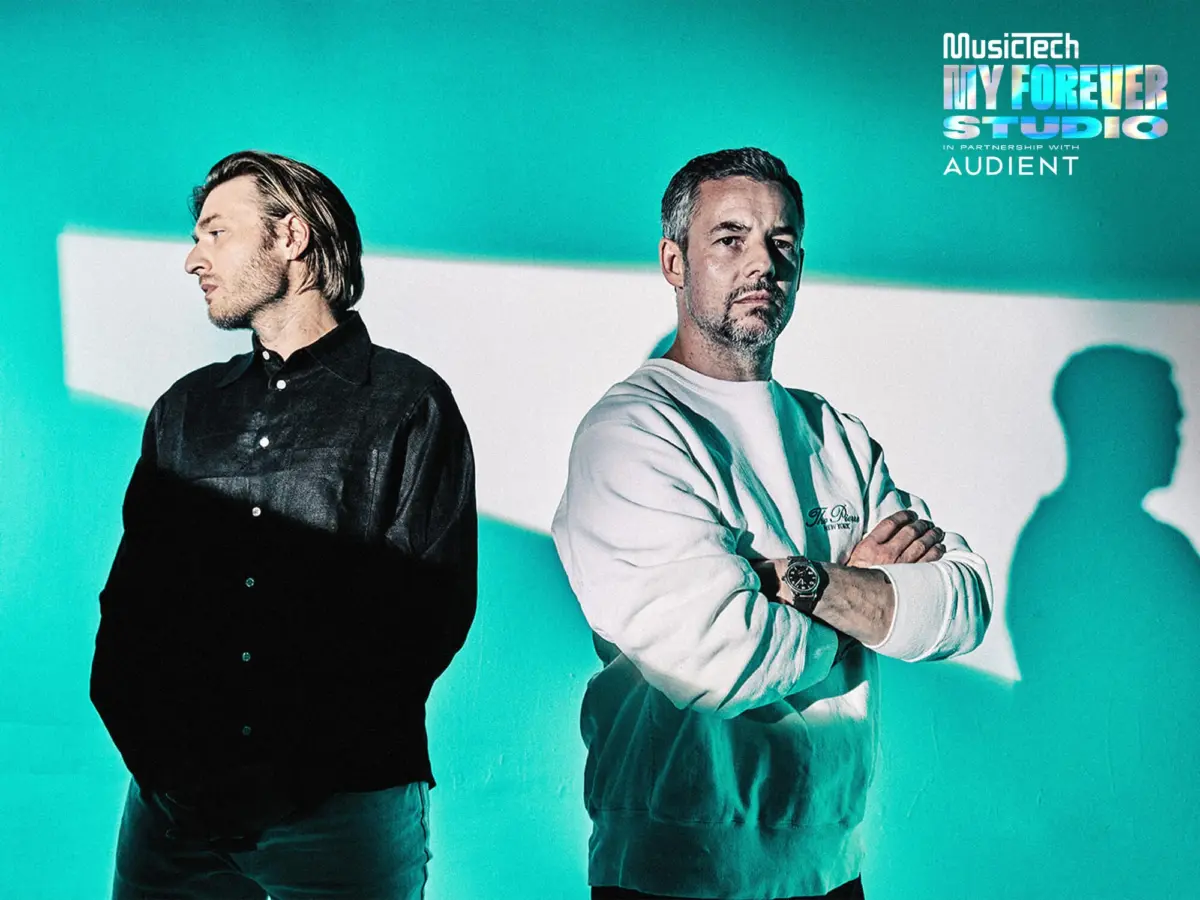
In the latest installment of the critically acclaimed podcast My Forever Studio—produced in partnership with Audient and hosted by Chris Barker and Will Betts—Lyle and McEwan stepped up to the ultimate creative challenge. Tasked with designing their dream, permanent workspace without the luxury of bloated plugin bundles or endless hardware redundancies, the synth aficionados had to handpick their definitive gear ecosystem.
Across the episode, the duo reveals the foundational analog synthesizers they would take to a desert island, the lifetime-keeper microphone anchoring their vocal chain, and the surprisingly affordable, under-the-radar software plugins that secretly drive some of their most iconic tracks. Furthermore, the discussion offers rare technical insight into how Lyle and McEwan maintain a seamless, long-distance collaborative workflow while living on opposite coasts of the United States.
This deep dive explores the mechanics of that conversation, examining the philosophy of gear curation, the balance between "in-the-box" efficiency and hardware tactility, and what The Midnight’s dream studio reveals about the future of modern music production.
Detailed Chronology: Building the Dream Creative Space
Setting the Rules of the Forever Studio
The premise of My Forever Studio is deceptively simple yet creatively agonizing: artists are invited to build an idealized, permanent production sanctuary. However, hosts Chris Barker and Will Betts impose strict budgetary and structural constraints. Guests are permitted a heavily curated, strictly limited number of items to populate their space. There are no expansive software bundles, no infinite gear lockers, and no room for redundancies. Every single piece of equipment must justify its footprint through profound emotional attachment, functional versatility, or inimitable sonic character.
When Tyler Lyle and Tim McEwan first encountered the challenge, their initial reaction was one of cautious hesitation. Building a studio that must last "for eternity" forces creators to confront their absolute core musical identities. For a duo whose discography spans soaring synthwave anthems, ambient interludes, and indie-pop sensibilities, distilling their sprawling sonic palette down to a handful of essentials required deep introspection.
The Long-Distance Workflow: Bridging the US Divide
Before diving into individual hardware and software choices, the discussion touched upon the logistical reality of The Midnight. Operating as a bi-coastal entity—with Lyle and McEwan residing on opposite sides of the United States—the duo has perfected a remote workflow that defies the traditional confines of a single shared studio room.
In the episode, the pair detailed how they keep sessions running smoothly across thousands of miles. Rather than relying on rigid, localized tracking schedules, their process is built on a foundation of mutual trust, file-sharing agility, and unified template management. McEwan often handles the heavy lifting of beat-making, structural arrangement, and mix engineering in his dedicated production hub, while Lyle contributes vocal toplines, lyrical narratives, and harmonic restructuring from his own space.
This remote synergy heavily influences their perspective on gear. Because they frequently operate in disparate environments before bringing ideas together under The Midnight banner, their choices for a "Forever Studio" had to reflect tools that are not only sonically exceptional but also adaptable to hybrid, modern-day production pipelines.
Curating the Hardware: Synths, Mics, and Secret Weapons
As the conversation progressed into the heart of the studio curation challenge, Lyle and McEwan began revealing their non-negotiable items. While the exact itemized manifest unfolds across the podcast runtime, the overarching philosophy centered heavily on tactile interaction versus digital convenience.
- The Go-To Analog Synths: True to their genre roots, the duo weighed the merits of vintage analog polyphonic heavyweights against modern recreations. For a Forever Studio, reliability meets sonic majesty; the chosen synthesizers needed to provide the foundational warmth, filter resonance, and organic detuning that define the late-night driving anthems of records like Endless Summer and Monsters.
- The Microphone for Eternity: Vocal delivery is critical to The Midnight’s emotional resonance. Lyle’s distinctively intimate vocal performances require a microphone that captures nuance without introducing harsh sibilance. Selecting a single microphone to use for the rest of time sparked a rigorous debate over capsule types, transient response, and how well a particular diaphragm handles both breathy whisper-tones and soaring chest-voice choruses.
- The Budget Software Saviors: Perhaps the most surprising revelation of the episode involved the software ecosystem. While hardware dominates the visual aesthetic of synthwave, McEwan and Lyle pulled back the curtain on the surprisingly affordable plugins—some ringing in at around the $50 mark—that are aggressively scattered across their entire oeuvre. These aren’t bloated workstation instruments, but rather surgical utilities, saturators, and emulation tools that bridge the gap between pristine digital audio and analog grit.
Supporting Context & Metrics: The Anatomy of Modern Synthwave Production
To understand why The Midnight’s selections for My Forever Studio matter, one must examine the technical landscape of modern synthwave and indie-electronic production. The genre, which experienced a massive commercial and cultural resurgence throughout the late 2010s and 2020s, relies heavily on a delicate tension between authenticity and modern fidelity.

The "In-the-Box" vs. Hardware Paradigm
In contemporary music production, the debate between hardware and software is often framed as a binary choice. However, producers like Tim McEwan operate in a hybrid ecosystem. According to industry metrics and creator surveys, over 70% of independent electronic music producers utilize a hybrid workflow—employing software for recallability, editing speed, and polyphonic complexity, while leaning on hardware for tactile inspiration and non-linear happy accidents.
The Midnight’s approach exemplifies this balance. While vintage Roland, Sequential Circuits, and Oberheim synthesizers loom large in their public image, their actual session architecture relies deeply on internal digital signal processing (DSP). By integrating low-cost, high-impact plugins alongside heavy-hitting analog gear, they achieve a polished, commercial loudness standard without sacrificing the lo-fi warmth and tape saturation inherent to 1980s pop culture.
The Economics of Curation
The My Forever Studio challenge deliberately strips away the consumerist impulse that plagues modern gear acquisition syndrome (GAS). In an era where plug-in subscription models and hardware releases bombard bedroom producers daily, limiting creators to a handful of items forces a return to mastership. As Lyle and McEwan demonstrated, knowing a single $50 plugin inside and out yields far better creative results than hoarding hundreds of unmastered software instruments.
Official Statements & Insights
Reflecting on the ethos of the podcast and the specific contributions of The Midnight, series co-hosts Chris Barker and Will Betts emphasized the unique lens through which the duo approaches their craft.
"When you invite artists of this caliber to build a studio from scratch with severe limitations, you quickly find out what truly matters to their creative soul," noted co-host Chris Barker during the rollout of the My Forever Studio series. "Tyler and Tim didn’t just pick the most expensive or prestigious gear on the market; they picked the tools that carry their memories, solve their workflow bottlenecks, and define their signature emotional palette."
In companion features and interviews surrounding their production methodologies, The Midnight have frequently underscored that technology is merely a vehicle for storytelling.
"The gear is important, but it’s entirely subservient to the narrative of the song," Tim McEwan has noted in past technical retrospectives. "Whether it’s a vintage analog poly synth or a cheap software distortion plugin we found online, if it doesn’t make you feel like you’re driving down a neon-lit highway at 2 AM, it doesn’t make the final cut."
Future Outlook: The Evolution of The Midnight’s Sound
As The Midnight continue to push the boundaries of their musical identity—incorporating elements of heartland rock, saxophone-driven jazz solos, and modern alternative pop into their core synthwave framework—the lessons learned from curating their "Forever Studio" highlight a sustainable path forward for electronic music creators.
The music industry is currently witnessing a pushback against hyper-complex, software-heavy rigs. Producers are increasingly seeking streamlined setups that minimize screen fatigue and maximize creative flow. By spotlighting accessible plugins, strategic hardware choices, and resilient long-distance collaboration strategies, The Midnight’s appearance on My Forever Studio serves as a masterclass for the next generation of bedroom producers and studio engineers alike.
Whether fans are listening to their latest cinematic release or revisiting foundational classics, the underlying architecture remains the same: a meticulous blend of vintage soul and forward-thinking digital execution. As Lyle and McEwan prove, you don’t need an endless warehouse of gear to build a legacy—you just need the right tools, forever.
To hear the full episode and discover the exact itemized list of gear chosen by The Midnight, subscribe to My Forever Studio on Apple Podcasts, Spotify, or visit MusicTech.