For
over three decades, singer-songwriter Michael Weston King has carved out an uncompromising, transatlantic musical identity. Spanning roughly 20 albums across a career encompassing early post-punk pop dabblings, country-rock outfits, folk collaborations, and critically acclaimed duets, King’s trajectory has been defined by a resolute pivot away from British pop orthodoxies toward the rich, melancholic terrain of American country and roots music.
Today, King is best known for his work alongside his wife and creative partner, Lou Dalgleish, under the moniker My Darling Clementine—a project that has spent a decade and a half revitalizing the classic country duets of the mid-20th century for modern audiences. Yet, beneath the professional accolades and artistic longevity lies a profound human narrative.
Following a period of unimaginable personal tragedy—the loss of King’s granddaughter, Bebe, in the devastating Southport knife attack in 2024—the duo’s creative process was irrevocably altered. Unable to write collaboratively in the immediate wake of the trauma, King retreated inward to craft his most emotionally complex and critically lauded solo statement to date: Nothing Can Hurt Me Anymore.
This feature-length profile explores King’s storied musical evolution, from his formative days sneaking into Liverpool’s Eric’s club in the late 1970s and his encounters with Americana royalty like Townes Van Zandt, to the resilience required to channel profound grief into transcendent art.
Detailed Chronology: From the Merseybeat Echoes to Country Roads
1. The Formative Years: Pop Dreams and Post-Punk Liverpool (Late 1970s–1980s)
Born in Stockport, Michael Weston King’s musical awakening occurred against the backdrop of late-70s post-punk Britain. Sneaking into Liverpool’s legendary club Eric’s as an underage teenager—benefiting from lax door policies—King witnessed the dawn of the New Wave firsthand.
"I was too young, but they weren’t strict on the door," King recalls with a laugh. "I saw Joe Jackson’s first tour although I missed Elvis Costello. It was two or three years until I put a band together, Fragile Friends, a bit like China Crisis. They were my pop years."
Those early pop explorations eventually collided with a life-altering catalyst in 1981: the release of Elvis Costello’s landmark country covers album, Almost Blue. The record served as a gateway drug to the heavyweights of American roots music. King’s musical compass shifted decisively toward George Jones, Merle Haggard, and Gram Parsons, soon followed by master songwriters Townes Van Zandt and Guy Clark.
2. Hybrid Folk and The Good Sons (Early 1990s–1998)
Before stepping into his own as a bandleader, King sharpened his craft as a guitarist in Gary Hall & The Stormkeepers, a northern outfit navigating a hybrid country-folk space. By the early 1990s, he had formed country-rockers The Good Sons.
Signed to the German independent label Glitterhouse, the band established a formidable reputation, touring as support acts for Americana luminaries like Joe Ely and Steve Earle. Between 1995 and 2001, The Good Sons released four albums, marrying British melodic sensibilities with gritty, guitar-driven American rock. Their third studio album, Wine, Lines and Valentines, picked up distribution via the Texan label Watermelon (which had secured a deal with Sire), drawing stylistic comparisons to Minneapolis alternative-rock stalwarts Soul Asylum.
During this era, King also worked as a UK tour promoter for British folk heroes such as John Renbourn and Bert Jansch. His transatlantic ambitions bore fruit when he befriended Townes Van Zandt, culminating in the cult American songwriter contributing guest vocals to King’s track "Riding The Range" on the debut album Singing The Glory Down.
"He sang on my ‘Riding The Range’ and a year later cut the song himself," King notes. "Not that many people can say they had a song recorded by Townes!"
When Van Zandt toured the UK—boosted by the Tindersticks’ indie-chart success covering "Kathleen"—he played to packed houses, including an 800-plus crowd at London’s Union Chapel that left the legendary American troubadour visibly taken aback.
3. The Collapse, The Crash, and Solo Solitude (1998–2010)
The momentum of the 1990s came to a brutal halt in 1998. Label turbulence struck when Watermelon collapsed financially. Shortly thereafter, a severe road crash in Germany hospitalized King and left The Good Sons’ gear totaled, effectively spelling the end of the band (barring a brief 2001 reunion for the album Happiness).
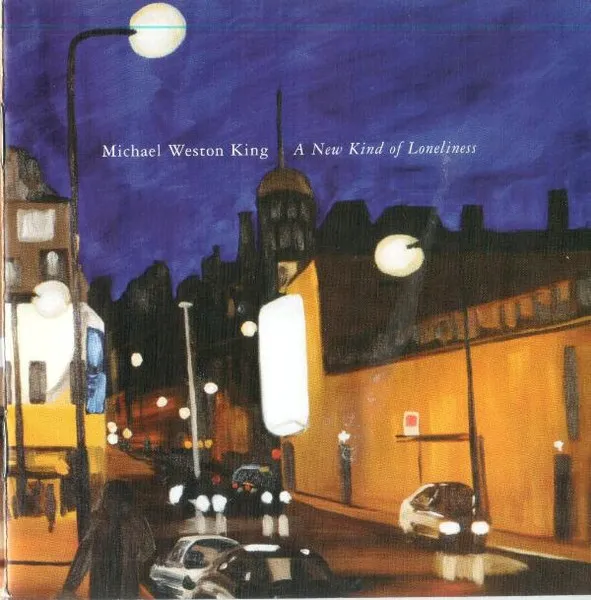
Propelled into a solo career, King released his debut solo record, God Shaped Hole, in 1999—a work he wryly describes as "a real miserable record, but still my biggest seller in Germany!"
Collaborations defined the early 2000s. Acclaimed Scottish singer-songwriter Jackie Leven produced and performed on 2003’s A Decent Man, subsequently leading King’s touring backing band, The Decent Men. Around this time, King crossed paths with gifted singer-songwriter Lou Dalgleish. Their burgeoning personal relationship blossomed into a profound creative partnership.
By the late 2000s, however, the grueling realities of the solo troubadour life caught up with him.
"I did lots of solo tours in America and toured myself out," King reflects. "The dream of one man and his guitar driving across the prairie to the next gig wears you down. Then I thought, ‘I’m married to this amazing singer, how can we combine the voices?’ I was listening to a Porter Wagoner-Dolly Parton album and thought, this would be brilliant."
4. My Darling Clementine: The Golden Duet Era (2011–2023)
The genesis of My Darling Clementine in 2011 bridged classic Nashville vocal interplay with a contemporary, uniquely British songwriting perspective. Their debut album, How Do You Plead?, enlisted top-tier UK roots musicians such as Geraint Watkins and Martin Belmont. It combined King’s stockpile of country songs left over from The Good Sons with Dalgleish’s Patsy Cline-esque torch ballad, "The Other Half."
What was initially conceived as a one-off side project rapidly expanded into a critically adored 15-year institution:
- The Reconciliation? (2013): Produced by Colin Elliot (noted for his work with Richard Hawley), this record leaned further into smoky country-soul.
- Still Testifying (2017): A return to roots-rock arrangements exploring the nuances of marriage, wit, and domestic adversity—exemplified by Dalgleish’s deceptively upbeat Southport-hailing track "No Matter What Tammy Said (I Won’t Stand By Him)", which addresses domestic abuse.
- The Other Half (2015): A multidisciplinary collaboration with crime novelist Mark Billingham, transforming Clementine songs into a theatrical music-and-spoken-word stage show featuring guest appearances by Graham Parker and actor David Morrissey.
- Country Darkness (2020–2021): A series of four EPs reimagining obscure Elvis Costello country-soul compositions as duets, aided by Attractions pianist Steve Nieve and featuring daring reinterpretations like transforming "Stranger In The House" into a rhumba.
5. The Unthinkable: Tragedy and Transformation (2024–Present)
By the early 2020s, as My Darling Clementine’s joint songwriting temporarily plateaued, King briefly returned to solo work with his 2022 album, The Struggle. Yet, plans to re-engage fully as a duo in 2024 were permanently shattered by unimaginable horror.
Bebe, King’s granddaughter, was killed in the horrific Southport knife attack. The tragedy upended the family’s existence.
"It changed our lives," King states quietly. "We are still broken-hearted but have to push forward. As songwriters you put stuff that affects you into songs, and nothing can be more affecting than what happened to us."
Supporting Context & Metrics
To contextualize Michael Weston King’s enduring footprint across the British and international music landscapes, several key metrics and creative milestones stand out:
- Career Output: Approximately 20 studio albums released across various monikers (solo, band collaborations, and duets) since the mid-1990s.
- My Darling Clementine Tenure: 15 years of continuous recording and touring as an internationally recognized country-duet standard-bearer.
- Transatlantic Reach: Extensive touring history across Europe and the United States, including high-profile collaborations with American legends Townes Van Zandt, Steve Earle, and Joe Ely.
- Critical Acclaim for Latest Work: King’s solo release, Nothing Can Hurt Me Anymore, has received widespread critical praise, drawing a personal email endorsement from Elvis Costello describing it as "a beautiful, complex piece of work."
- Intense Live Schedule: A demanding 2024 itinerary featuring 42 live dates across seven European countries between February and June, followed by festival appearances including Twickenham’s High Tide festival.
Official Statements & Industry Perspectives
The artistic weight of King’s career—and the profound gravity of his recent output—has drawn public and private commendations from peers across the music industry.
Discussing the genesis of Nothing Can Hurt Me Anymore, King emphasizes that despite emerging from the darkest period of his life, the record is deliberately constructed to offer light rather than despair:
"It’s not a doom and gloom record. There are dark moments, but we needed hope and optimism. Ironically, I think it’s the best record I’ve ever made."
Elvis Costello, whose early work served as King’s initial gateway into country music decades ago, reinforced this sentiment in a private correspondence to King, praising Nothing Can Hurt Me Anymore as "a beautiful, complex piece of work."
Reflecting on the psychological barrier of attempting to write jointly in the shadow of family tragedy, King explains the rationale behind temporarily sidelining the planned My Darling Clementine release in favor of distinct solo projects:
"We didn’t feel we could write jointly, we needed to be in our own place."
Future Outlook
As 2024 draws to a close, Michael Weston King and Lou Dalgleish continue to navigate their grief through their enduring commitment to performance and songwriting.
Rather than signaling an end to My Darling Clementine, the tragedy has catalyzed a dual-pronged artistic path:
- Solo Horizons: King’s acclaimed solo album, Nothing Can Hurt Me Anymore, is currently available via Continental Song City. Meanwhile, Lou Dalgleish’s upcoming solo offering—tentatively titled The Leaving And The Left Behind and likewise produced by Colin Elliot—is scheduled for release at the end of the year.
- Live Resurgence: The duo maintained an aggressive touring schedule early in the year, playing 42 dates across seven countries. In late July, they reunited the original My Darling Clementine touring lineup—featuring Martin Belmont’s signature rockabilly-country-swing guitar—for an intimate church performance at Twickenham’s High Tide festival.
- The ‘Together Apart’ Tour: Plans are locked in for a late-year tour under the banner My Darling Clementine – Together Apart. The shows will feature a two-set structure: the first half dedicated to beloved fan favorites from their extensive catalog, and the second half trading songs from King’s and Dalgleish’s powerful new solo records, backed by a newly assembled band led by Colin Elliot.
While the emotional scar of the Southport tragedy will never truly fade, Michael Weston King has forged an artistic pathway forward, proving that even in the face of profound devastation, song remains a vital instrument for survival, remembrance, and quiet resilience.