Executive Overview
For a generation raised on the neon-soaked aesthetics of 1980s pop culture, few musical entities evoke the era quite as vividly as Wang Chung. Formed in London in 1980, the new wave outfit achieved rare international crossover success, anchoring themselves permanently in the transatlantic consciousness with immortal pop anthems like "Dance Hall Days" and the ubiquitously catchy "Everybody Have Fun Tonight."
Yet, beneath the glossy sheen of their commercial peaks lies a far more complex narrative. It is a story of unfulfilled progressive rock ambitions, punk-era catalysts, high-stakes encounters with Hollywood royalty, and an enduring sonic footprint that continues to resonate today.
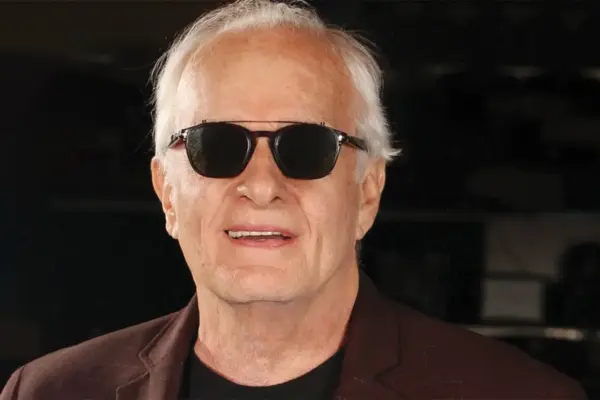
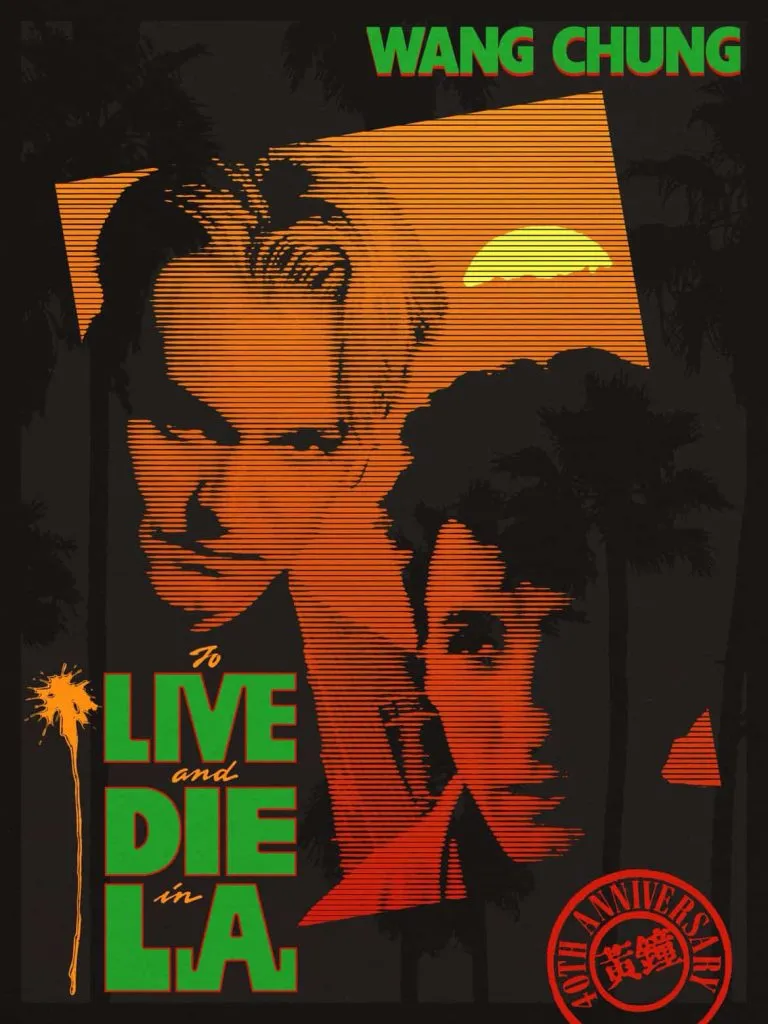
As the band marks the 40th anniversary of their seminal soundtrack to William Friedkin’s electrifying thriller To Live and Die in L.A. with an expanded physical and digital release via Interscope, founding member Jack Hues sat down for an exhaustive retrospective. Speaking from his current home in Austin, Texas, Hues pulls back the curtain on the serendipitous, often turbulent journey of a band whose name inadvertently became a permanent fixture of global pop culture lexicon.
Detailed Chronology: From Gillingham to Global Stardom
The Formative Years: Jazz Roots and the Great British Awakening
The musical odyssey of Jack Hues began long before the synthesizers and drum machines of the 1980s dominated his creative output. Born in Gillingham in 1954, Hues was exposed to the mechanics of performance early on through his father, a professional saxophone player.
"My dad was a saxophone player," Hues reflects. "I remember loving some of dad’s jazz stuff, but the great awakening for me was The Beatles."
That initial spark launched a lifelong devotion to the guitar. By the time Hues reached his eighteenth year, his technical proficiency was such that it earned him a formal music degree at Goldsmiths in London, followed by rigorous classical and theoretical studies at the prestigious Royal College of Music.
Despite his formal training, Hues remains philosophical about the boundaries of academic instruction. "Music’s a strange thing, in that you can’t be taught it in a way, but you can be inspired by all sorts of different influences," he observes.
Chief among those early inspirations was the burgeoning progressive rock movement of the early 1970s. Artists like King Crimson and Genesis cast a profound, lasting spell over the young musician, celebrated not merely for their atmospheric textures, but for their sheer technical intimidation. "That stuff was very aspirational," Hues notes, "because what those guys play is tricky."
The Punk Detour and the Birth of Huang Chung
The complex, sprawling soundscapes of prog rock were violently upended in 1977 with the eruption of the British punk rock explosion. Rather than alienating the classically trained Hues, the movement served as a revitalizing jolt.
"This was when punk broke in London," Hues recalls. "That Sex Pistols album got me back into rock music."
Sensing a shift in the cultural winds, Hues responded to a "musicians wanted" classified advertisement placed in the pages of the influential music weekly Melody Maker by guitarist Nick Feldman. A creative partnership was struck instantly. Feldman brought along drummer Paul Hammond, a veteran of progressive blues-rock outfit Atomic Rooster.
"I liked him. I liked his drummer… Meeting Nick was the catalyst that put me on the trajectory of writing songs again."
Rounded out by bassist Bud Merrick, the nascent lineup initially dubbed themselves The Intellektuals. However, the volatile nature of the late-70s underground music scene meant the project lasted less than a year. Undeterred, Hues and Feldman regrouped, cycling through various iterations including 57 Men—a short-lived outfit that featured future Heaven 17 vocalist Glenn Gregory, bassist Leigh Gorman (later of Adam & The Ants), and drummer Darren Costin.
When 57 Men also dissolved, Hues, Feldman, and Costin decided to strip things back. In 1980, they rebranded under the moniker Huang Chung, a stylistic nod derived from huang zhong, the primary foundational pitch in the ancient Chinese 12-tone musical system.
Independent Beginnings and the Arista Era
The newly minted trio quickly caught the attention of independent imprint Rewind Records, securing a modest two-single deal. They released a pair of sharp, kinetic tracks: the rattling punk-pop manifesto "Isn’t It About Time We Were On Television?" and the spiky, jagged "Stand Still." Around this period, saxophonist Dave Burnand joined the fold, expanding their sonic palette.
Crucially, the independent releases found their way to the turntable of legendary BBC Radio 1 broadcaster John Peel. "We got a bit of play on John Peel for ‘Isn’t It About Time…’, even though he didn’t like it," Hues laughs. Despite the broadcaster’s lukewarm reception, the airplay served as a vital springboard, catching the attention of major-label scouts and securing them a lucrative contract with Arista Records.
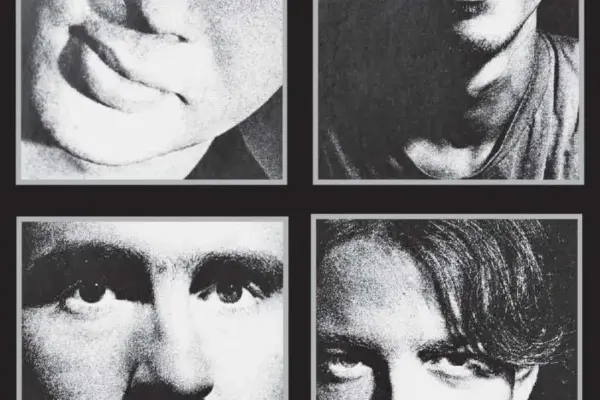
Working alongside producer Rhett Davies—renowned for his extensive work with art-rock innovators Roxy Music—the band entered the studio to record their self-titled debut LP, released in 1982. The resulting record was an intriguing hybrid of sophisticated new wave and avant-garde abstraction. Commercially, however, it stalled.
Reflecting on the misfire, Hues is candid about the creative disconnect:
"Things got a bit confused. We got [producer] Roger Béchirian [Elvis Costello, The Undertones] to try and create a single, because basically I was making a prog record, and that clearly wasn’t what you should have been doing in 1981."
The stylistic friction yielded a product Hues describes as "a bit diffuse," leaving their label unsure of how to position them in a rapidly modernizing commercial landscape.
The American Dream and Becoming Wang Chung
Realizing that a strategic pivot was necessary, the band began work on a follow-up project. They recorded an early version of what would become their signature track, "Dance Hall Days," under the guidance of producer Tim Friese-Greene (noted for his work with Talk Talk).
Around this time, David Massey—a close friend of Feldman and future powerhouse executive at Universal Music Group—stepped in to evaluate their trajectory. His assessment was blunt and decisive: "You need to be in America."
With Massey acting as their champion, the band underwent a critical metamorphosis. They officially streamlined their name from Huang Chung to the more phonetically accessible Wang Chung, parted ways with saxophonist Dave Burnand, and signed an international deal with Geffen Records in the United States.
Their sophomore album, Points On The Curve, dropped in 1983 to immediate commercial validation. Propelled by a newly polished, high-energy recording of "Dance Hall Days," the record climbed to No. 30 on the Billboard 200. The single itself became a global smash, peaking at No. 16 on the Billboard Hot 100 and No. 21 on the UK Singles Chart.
Suddenly, Wang Chung was thrust into the upper echelons of global pop stardom.
"We did a gig with Elton John at Wembley and toured the US with The Cars," Hues recalls of the whirlwind era. "It was an incredible experience."
Supporting Context & Metrics
The Hollywood Intersect: To Live and Die in L.A.
Just as Wang Chung was establishing its footing as a premier pop-rock commodity, an unexpected phone call altered their cultural legacy forever. On the other line was legendary Academy Award-winning filmmaker William Friedkin, the visionary director behind cinematic milestones like The French Connection and The Exorcist. Friedkin was deep in production on his gritty, nihilistic 1985 neo-noir crime thriller, To Live and Die in L.A.
"I got this phone call from William Friedkin," Hues says. "He said our track, ‘Wait’, was exactly the atmosphere he wanted. We didn’t see the movie before we made the soundtrack. It was really just off the back of this conversation… Then he edited the movie around the music."
Rather than following the traditional Hollywood scoring model where a composer watches finished footage and writes music to fit the picture, Friedkin utilized Wang Chung’s atmospheric, synthesizer-driven demos as a rhythmic structural blueprint. The resulting soundtrack was a masterclass in tension, marrying avant-garde ambient textures with driving electronic rhythms. Today, the score is rightfully celebrated as a high-water mark of 1980s cinematic sound design, prompting Interscope’s comprehensive 40th-anniversary reissue.
The Apex of Commercial Pop: Mosaic and "Everybody Wang Chung Tonight"
Hot on the heels of their cinematic detour, Wang Chung returned to pure pop mechanics for their fourth studio album, 1986’s Mosaic. To ensure maximum commercial penetration, Geffen enlisted producer Peter Wolf, a hitmaker who had previously guided Starship to chart dominance with "We Built This City" and worked extensively with Heart.
"So that was his job," Hues explains bluntly, "just to squeeze a No. 1 record out of us, and that was ‘Everybody Have Fun Tonight’."
Driven by an infectious, high-octane dance-pop beat and complemented by a dazzling, ground-breaking music video directed by the legendary duo Godley & Creme, the track nearly achieved its mandate, peaking at No. 2 on the Billboard Hot 100.
Most importantly, the track’s iconic refrain—"Everybody Wang Chung tonight"—instantly transcended the charts, embedding itself permanently into the global pop-culture lexicon as both a verb and a catchphrase.
"At the time, I thought, this is polarizing, really, from what we’ve done before," Hues admits, reflecting on the track’s massive pop footprint. "But it established Wang Chung as a force in America."
Official Statements & Retrospective Insights
The Changing Tides and the 1990s Hiatus
Every cultural wave eventually crashes, and by the late 1980s, the musical landscape was undergoing a seismic shift. Wang Chung’s fifth studio album, 1989’s The Warmer Side Of Cool, failed to replicate the stratospheric success of its predecessors. By 1990, the core duo mutually decided to shutter the project.
Hues is characteristically reflective about the dissolution:
"I was still trying to make a prog album, and there was a sort of sea change in the music. Guns N’ Roses and Nirvana had signed to Geffen. The whole approach that we’d grown up with, which was this hybrid of funk and rock and prog, was no longer the thing."
Following the split, Nick Feldman transitioned into high-level A&R work, while Jack Hues concentrated on production and alternative musical avenues. Yet, the gravitational pull of their catalog proved too strong to ignore indefinitely.
In 1997, Hues and Feldman reunited in the studio to record a brand-new track, "Space Junk," for a career-spanning Greatest Hits compilation. This rekindled chemistry eventually paved the way for full-scale studio returns in the 2000s, yielding albums such as Tazer Up! (2012) and the orchestral reimagining Orchesography (2019).
Future Outlook
Today, Wang Chung remains an active, vibrant touring entity, playing to adoring audiences worldwide who continue to embrace the sophisticated musicianship underpinning their high-charting pop hits.
Reflecting on their enduring legacy—culminating recently in a landmark headlining performance at the historic Hollywood Bowl—Hues maintains a humble perspective on his place in rock history:
"We played the Hollywood Bowl last year for the first time. We’ve had lots of songs in movies, so people came to us through all sorts of different ways. I never had a plan, but I think I have a sound. I have an approach that’s pretty unique, and my voice is pretty unique, for better or worse, you know."
As the 40th-anniversary edition of To Live and Die in L.A. hits the market via Interscope, listeners are afforded a timely reminder that Wang Chung was never merely a flash-in-the-pan novelty act of the MTV era. They were, and remain, a collective of formally trained musicians who successfully bent pop structures to their adventurous creative will, leaving an indelible imprint on both the silver screen and the radio dial.