Executive Overview
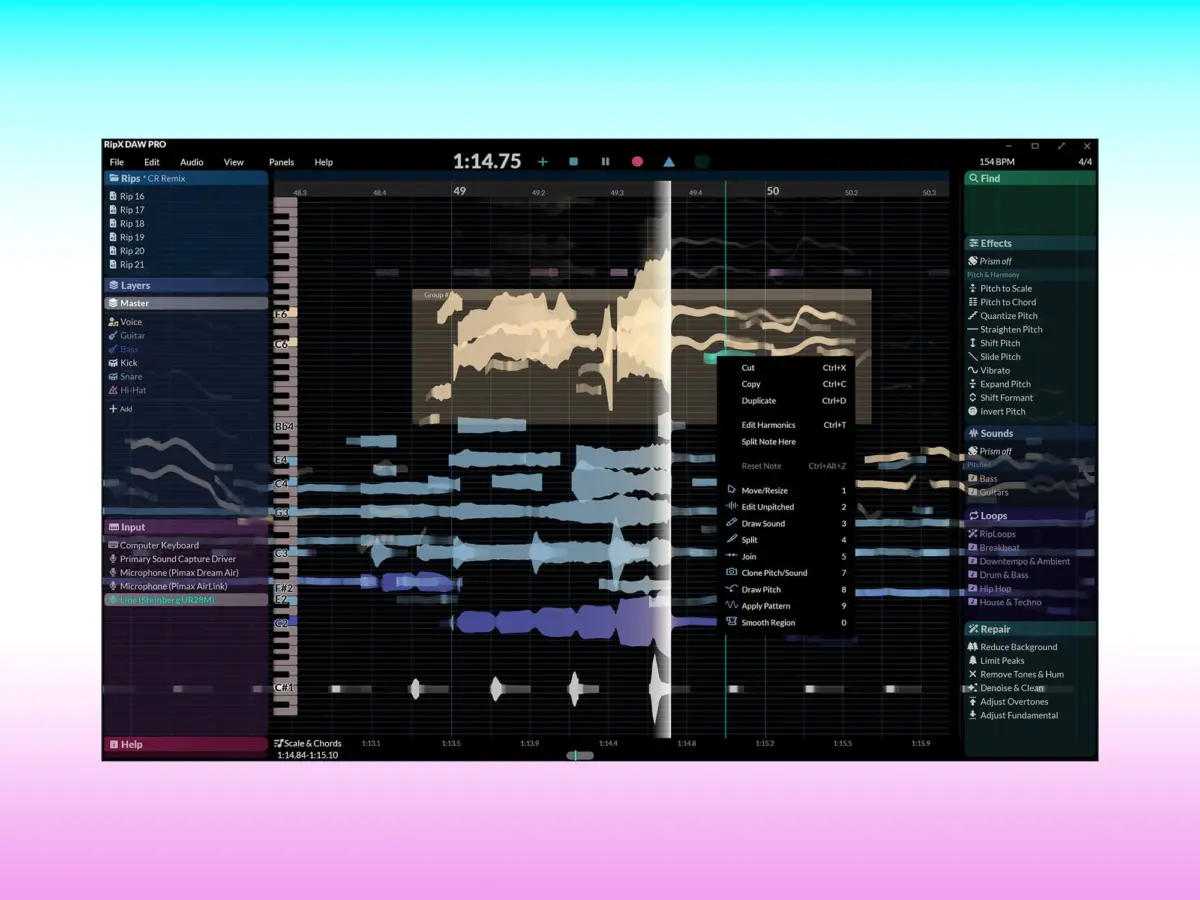
The landscape of modern music production is continuously reshaped by the intersection of artificial intelligence, digital signal processing (DSP), and traditional workflow paradigms. UK-based audio software innovator Hit’nin’Mix has once again pushed the boundaries of what is possible within a Digital Audio Station (DAW) with the official release of RipX DAW 9 and its advanced counterpart, RipX DAW PRO 9.
Arriving just under a year after the milestone release of version 8—which heavily emphasized next-generation audio/MIDI editing and advanced stem separation—RipX DAW 9 builds upon that foundational architecture with razor-sharp precision. The latest iteration introduces refined automation, vastly improved note detection, pristine instrument sound replacement, and highly optimized file management systems. Furthermore, Hit’nin’Mix has rolled out an aggressive early Black Friday promotional campaign, offering a 30% discount across the entire RipX DAW product line through December 1.
For bedroom producers, mixing engineers, and sound designers alike, version 9 represents a maturation of Hit’nin’Mix’s core philosophy: breaking audio down into its fundamental building blocks (notes, harmonics, and unpitched sounds) and granting the user unprecedented, surgical control over every single element. This comprehensive feature-by-feature analysis explores the technical upgrades, operational enhancements, and broader industry implications of RipX DAW 9.
Detailed Chronology: The Evolution Leading to Version 9
To understand the engineering leap represented by RipX DAW 9, it is essential to trace the trajectory of the software over recent product cycles. Hit’nin’Mix has consistently positioned itself at the vanguard of audio separation technology, moving far beyond the traditional frequency-based EQ slicing or rudimentary phase-cancellation tools of the past.
The Foundation: RipX DAW 8
Released in late 2024, version 8 fundamentally altered how creators viewed audio and MIDI integration. It introduced a suite of AI-powered features designed to jumpstart the creative process. Among its most celebrated additions were:
- Dynamic Track Starters: Intelligent generative templates designed to help creators rapidly formulate ideas across various genres.
- Advanced Chord Progression Tools: Designed to streamline songwriting and harmonic structuring directly within the workspace.
- Expanded Sonic Palettes: 11 new effects, alongside a wealth of fresh sounds and loop libraries.
- Loopable Selections: Streamlined loop creation for electronic music producers and beatmakers.
While version 8 successfully married generative composition aids with deep stem separation, users occasionally noted minor artifacts during complex polyphonic extractions, and file sizes for heavily manipulated projects could scale rapidly.
The Leap to Version 9
Enter RipX DAW 9. Rather than focusing solely on adding flashy, surface-level features, the development team at Hit’nin’Mix pivoted toward algorithmic refinement, operational stability, and core engine optimization. The result is a platform that feels substantially faster, cleaner, and more musically intuitive.
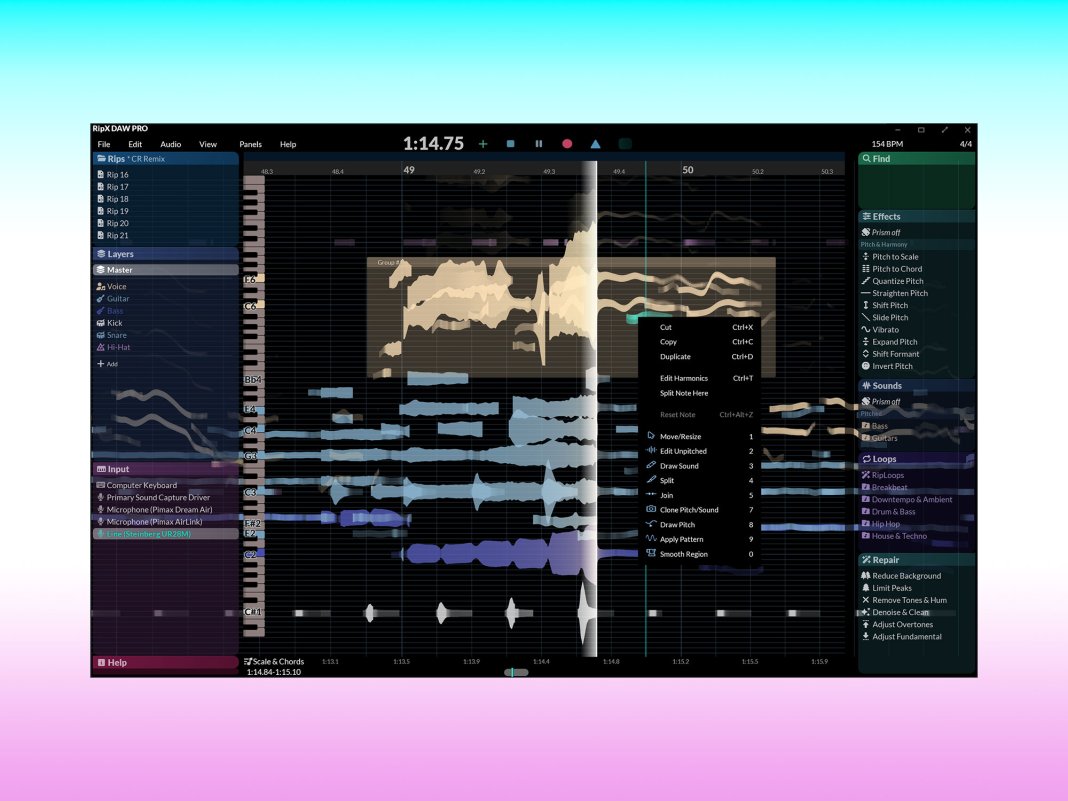
Key milestones in the release of version 9 include:
- Algorithmic Overhauls: Drastic improvements in note detection accuracy, extraction clarity, and automated pitch-snapping to scales.
- Structural Intelligence: Enhanced barline and key detection algorithms that dynamically parse musical context.
- Storage Efficiency: The implementation of "Smaller Rips" as an optimized, default file-saving protocol, drastically reducing project footprints without compromising sonic integrity.
- Comprehensive Effects Suite Upgrades: Significant overhauls to core processing tools like Harmony, Vibrato, Reverb, Shimmer, Saturation, alongside brand-new De-esser and Distortion modules.
Supporting Context & Metrics: Under the Hood of RipX DAW 9
To appreciate why these updates matter to professional audio engineers and modern producers, one must examine the specific technical enhancements introduced in this release.
1. Surgical Precision: Note Detection and Extraction
In previous iterations, separating dense, polyphonic mixes—such as a heavily distorted electric guitar track overlapping with cymbals and vocals—could occasionally introduce transient smearing or spectral artifacts. RipX DAW 9 deploys upgraded machine learning models that yield significantly cleaner note extraction.
- Automatic Pitch Snapping: Pitch-correction and snapping to scales now behave in a far more organic, transparent manner. Instead of locking notes into a robotic grid, the algorithm reads the surrounding musical context, ensuring that micro-tonal bends and expressive vibratos are preserved.
- Barline and Key Detection: The software’s internal engine now possesses a heightened capability to automatically detect structural barlines and identify song keys even in complex, shifting time signatures, cleanly capturing the active scale the moment it becomes mathematically clear.
2. Streamlined Tracking, Metronome Sync, and Instrument Replacement
Recording live instrumentation into an AI-centric DAW requires absolute synchronization between human performance and algorithmic tracking.
- Count-In Sync: Version 9 introduces a revamped recording and metronome sync system featuring a dynamic count-in that follows the actual beat within the bar, rather than acting as a static, disconnected click track.
- Instrument Sound Replacement: For producers looking to swap out real instruments for virtual counterparts (or vice versa), the sound-replacement engine now features vastly superior level-balancing. This ensures that dynamic swings translate seamlessly when swapping audio profiles, eliminating abrupt volume jumps or phase cancellation anomalies.
3. File Management: The "Smaller Rips" Revolution
One of the most practical, everyday quality-of-life updates in version 9 is the optimization of project file architecture.
- Five to Six Times Smaller: By default, RipX DAW 9 utilizes an optimized storage protocol ("Smaller Rips") that shrinks project and separated file sizes by a factor of five to six.
- Zero Sonic Degradation: Crucially, this aggressive compression is achieved through intelligent data structuring rather than lossy audio reduction, ensuring that the master audio quality remains untouched while saving precious solid-state drive (SSD) real estate.
4. Expanded Processing: Effects Overhaul
Hit’nin’Mix has substantially upgraded its native processing arsenal, bridging the gap between a separation tool and a fully fledged mixing and mastering suite:
- Harmony: Now equipped with automatic variation generation for instant, lush backing vocal arrangements.
- Vibrato: Upgraded with dedicated vibrato-reduction capabilities, allowing users to tame over-modulated performances.
- Reverb, Shimmer, and Saturation: Refined algorithms for richer spatial diffusion and analog warmth.
- New Additions: Brand-new dedicated De-esser and Distortion effects provide immediate tonal control without needing to resort to third-party plugins.
Official Statements and Industry Reception
The response from the audio technology community has been overwhelmingly positive, particularly given the timing of the release alongside the annual Black Friday retail window.
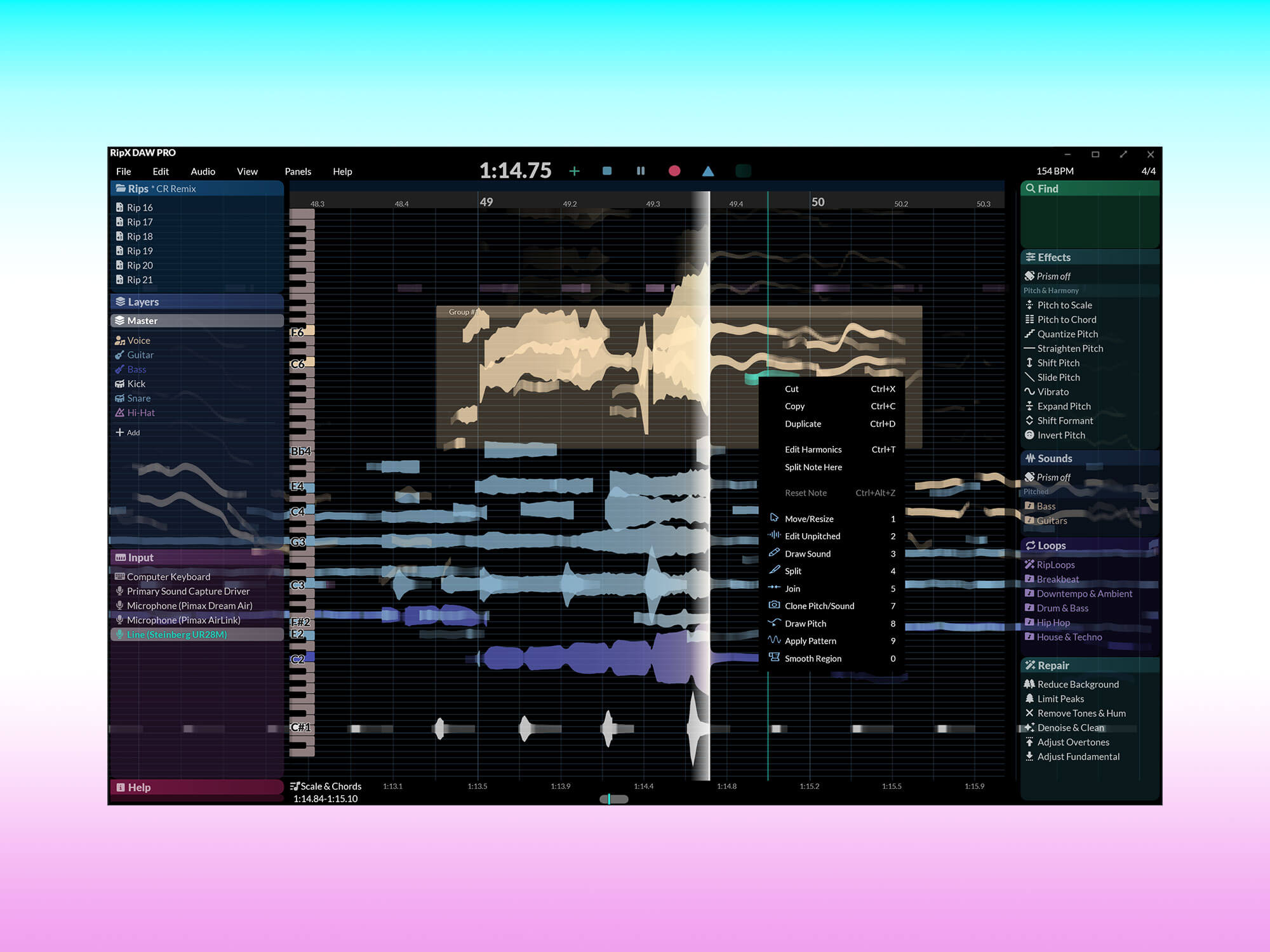
Industry analysts have noted that by offering a 30% discount across the RipX DAW and RipX DAW PRO 9 lineups through December 1, Hit’nin’Mix is aggressively positioning its software as an essential, high-value acquisition for producers looking to upgrade their production rigs before the end of the year.
While official press releases emphasize the software’s capability to bridge the gap between AI-driven audio separation and traditional timeline-based mixing, early adopter reviews highlight the sheer speed improvement. Producers working with legacy multitracks or extracting samples from full stereo mixes have lauded version 9 for drastically reducing the time spent cleaning up artifacts, allowing them to focus entirely on arrangement, sound design, and mixing decisions.
Future Outlook: The Road Ahead for AI-Assisted DAWs
As the audio software industry charges further into the mid-2020s, the debate surrounding artificial intelligence in music creation has largely shifted from whether AI should be used to how effectively it can be integrated into human-led workflows.
Hit’nin’Mix has consistently championed a philosophy where AI does not replace the musician or engineer, but rather acts as an ultra-powerful magnifying glass—allowing creators to see, touch, and manipulate audio at the note, harmonic, and frequency level in ways that were previously confined to science fiction.
With RipX DAW 9, the company has successfully resolved many of the friction points associated with early stem-separation software: file bloat, unnatural pitch correction, and tracking latency. Looking forward, we can expect future iterations to push even deeper into real-time collaborative cloud processing, multi-user stem sharing, and even more advanced generative composition features.
For now, RipX DAW 9 stands as a definitive statement on the current state of modern music production technology. By combining rigorous scientific DSP advancements with intuitive, musician-first workflows, Hit’nin’Mix has ensured that version 9 is not just an incremental update, but an indispensable tool for the modern audio professional.
Key Takeaways for Producers
- Availability: RipX DAW 9 and RipX DAW PRO 9 are available now via the official Hit’nin’Mix website.
- Promotional Discount: A 30% early Black Friday discount is active across all Hit’nin’Mix products through December 1.
- Key Upgrades: Enhanced note detection, smaller default file sizes (5x–6x reduction), smarter metronome/count-in sync, and overhauled effects including new De-esser and Distortion modules.