Executive Overview
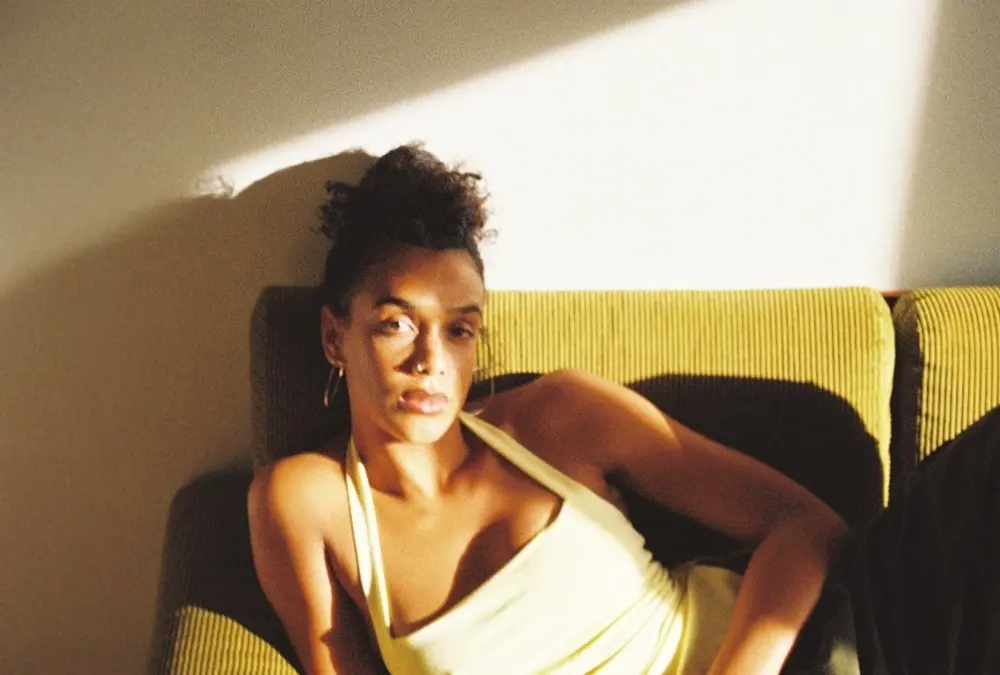
In the contemporary landscape of modern electronic and hip-hop production, where algorithms frequently dictate trends and the democratization of Digital Audio Workstations (DAWs) has flooded streaming services with hyper-compressed content, true originality remains a rare commodity. Enter Ruby Francis: a self-taught producer, multi-instrumentalist, and DJ whose creative DNA is rooted deeply in the rich, eclectic soil of North London.
As part of the ongoing Sonic Architects series, this deep dive explores Francis’s journey from a childhood surrounded by a bass-playing father and a hallway bedroom studio to a celebrated artist marking a critical juncture in her career. Fresh off the heels of her critically acclaimed, self-produced sophomore album, Pages of Philosophy, and a high-profile remix EP featuring electronic heavyweights such as MXXWLL, Geotheory, and Fiji Mageba, Francis has established a sonic identity defined by paradox: her beats are simultaneously minimal yet richly textured, undeniably gritty yet undeniably soft.
This article examines Francis’s meticulous production philosophy, dissects the lonely winter on the Canary Island of Lanzarote that birthed her career-defining track, and investigates her nuanced perspective on the shifting paradigms of modern music technology. By balancing raw analog sensibilities with the infinite capabilities of digital production, Francis stands at the forefront of a new wave of artists who refuse to let the history of sound be swallowed by the convenience of the algorithm.
Detailed Chronology
The North London Genesis: A Household of Rhythm
To understand the textured, genre-bending output of Ruby Francis, one must first look to her upbringing in North London—a metropolis renowned for its rich musical heritage, spanning the genres of grime, dub, jazz, and indie rock. Music was not merely an extracurricular interest for Francis; it was the architectural framework of her domestic life.
Growing up with a bass-playing father, Francis was exposed early to the visceral, physical nature of low-end frequencies. Her environment was saturated with sound. Down the hall from her childhood bedroom sat a functional home studio, acting as a constant invitation to experiment. Rather than being funneled into classical piano lessons or traditional conservatory training, Francis engaged in a process of organic osmosis. She absorbed the eclecticism of a shared family record collection that bridged generations and genres.
This foundational immersion allowed her to develop an intuitive understanding of arrangement, groove, and timbre. When she eventually transitioned to operating software and hardware independently, she did not approach production as a sterile technical exercise. Instead, she treated it as an extension of the tactile, organic instrumentation she had grown up witnessing. This background forms the bedrock of her signature sound: a meticulous blend of acoustic warmth and electronic precision that she defines simply as "minimal, gritty yet soft."
The Lockdown Breakthrough: Archives and "Stuck Right Here"
The global disruptions of 2020 marked a period of profound introspection and isolation for independent musicians worldwide. For Francis, this enforced solitude became a crucible for focused creativity. Working out of her North London base, she channeled the collective anxiety and stillness of the lockdown era into her debut full-length album, Archives.
Out of this cohesive body of work emerged "Stuck Right Here," a track that would establish her presence in the underground beat-making scene. Characterized by its restrained percussion, hypnotic chord progressions, and an underlying sense of urban claustrophobia tempered by soulful warmth, the track resonated deeply with listeners navigating the psychological labyrinth of lockdown. "Stuck Right Here" demonstrated Francis’s emerging mastery over space in music—proving that what is left out of a mix is often just as important as what is included.
Transitional Tides: Pages of Philosophy and the Genesis of "Lanzarote"
One year after the release of Archives, Francis returned with her sophomore full-length project, Pages of Philosophy. The album showcased a maturation in her songwriting, moving deeper into realms of jazz-infused chords, lo-fi textures, and sophisticated rhythmic syncopation.
At the emotional center of this project sits "Lanzarote," a song that Francis identifies as her personal favorite among her expansive catalog. The track’s origins trace back to January 2024, during a period of personal transition and emotional isolation in a new home located in Stoke Newington.
"The beat was made in January ’24, I was in a lonely and transitional place living in a new home in Stoke Newington," Francis recalls. "I found this kind of 80s indie drum loop and just went with it. I’d been listening to a lot of Men I Trust and World Brain, and feeling that 80s psychedelic, rocky vibe, and was inspired to make something like that but with my usual jazzy chords."
The track’s gestation period, however, extended far beyond her London flat. A few weeks after laying down the foundational beat, Francis packed her mobile rig and traveled to the Canary Island of Lanzarote alongside close friend and collaborator Laura Roy. Seeking a change of scenery and grappling with personal emotional turbulence, the duo used the volcanic landscape as a backdrop for creative catharsis.
This juxtaposition of external beauty and internal turmoil is palpable in the final mix of "Lanzarote." The song operates on a fascinating emotional duality: it relies on a feel-good, highly danceable 80s-inspired groove, yet carries an unmistakable undercurrent of melancholic vulnerability through its vocal delivery. It stands as a testament to Francis’s ability to transmute life’s heavier moments into rhythmic, life-affirming art.
The Remix Ecosystem: Pages of Philosophy Reimagined
The momentum generated by Pages of Philosophy did not stop with the original tracklist. Recognizing the collaborative spirit of the modern electronic and hip-hop underground, Francis curated a comprehensive remix EP that invited esteemed producers and beat-makers to reinterpret her work.
The project handed the master stems of her sophomore album over to an elite tier of international talent, including MXXWLL, Geotheory, and Fiji Mageba. This collaborative phase underscored Francis’s standing within the global beat-making community. By allowing her intimate, London-centric compositions to be pulled through the sonic prisms of diverse producers, Pages of Philosophy transformed from a personal diary into a communal conversation, cementing her status as an artist’s artist.
Supporting Context & Metrics
The Mechanics of "Minimal, Gritty Yet Soft"
To fully appreciate Francis’s catalog—from the lockdown introspection of Archives to the sun-bleached melancholy of Pages of Philosophy—one must analyze the structural components of her production style.
- Minimalism: Francis utilizes space as an active instrument. Rather than overcrowding the frequency spectrum with competing elements, she allows individual sounds—a crisp snare hit, a resonant Rhodes chord, or a pulsating bassline—to breathe. This approach borrows heavily from dub and minimalist techno traditions, where rhythm is generated by the interplay of silence and impact.
- Grittiness: The warmth and texture in Francis’s tracks are rarely accidental. By integrating hardware emulations, tape saturation, and lo-fi filtering, she strips away the sterile, clinical sheen often associated with modern in-the-box digital production. The grit provides an analog nostalgia that grounds her futuristic chord progressions in a tangible reality.
- Softness: Balancing the industrial or lo-fi grit are her vocal arrangements and harmonic choices. Drawing from jazz vocabularies, her chord extensions (major sevenths, ninths, and suspended chords) create an emotional cushion. This counterbalances the starkness of her drum loops, yielding an end product that is deeply comforting yet intellectually stimulating.
The Modern Production Landscape: Metrics of Accessibility
The proliferation of digital audio workstations (DAWs) such as Ableton Live, Logic Pro, and FL Studio has fundamentally altered the demographics of modern music creation. No longer locked behind the financial barriers of million-dollar commercial mixing suites, millions of bedroom producers now possess the computational power to rival legacy studios.
However, this democratization has triggered intense debate within the industry regarding quality control, discoverability, and the preservation of foundational music history. Industry metrics indicate that over 100,000 new tracks are uploaded to global streaming platforms daily—a staggering level of market saturation that presents unprecedented hurdles for independent artists attempting to achieve financial sustainability.
Official Statements & Industry Insights
In her exclusive interview for the Sonic Architects series, Ruby Francis addressed the complex socio-technological implications of accessible music production software. Her perspective bridges the enthusiasm of the digital native with the reverence of the audio historian.
When asked whether the widespread accessibility of production software is a net positive or negative for the music ecosystem, Francis offered a balanced, highly nuanced appraisal:
"Good question. I can’t give a solid answer, I think there’s pros and cons. Yes, because it means many people of all abilities and backgrounds now have access to a new way of musical expression that may have previously not been affordable, been difficult to understand or learn to use, or they’ve been intimidated by the DAWs. For me, more people creating art always = a better world!"
Francis champions the egalitarian nature of modern technology, viewing creation as an inherent human right rather than a commercial privilege. Yet, she remains acutely aware of the historical disconnect threatening contemporary beat-making culture:
"However, from an industry and business perspective, it has become very saturated and the knowledge of the original art form and history from analog to digital is starting to fade. There’ll be a wave of young producers and beat makers who may not understand that a synth plug-in used on a DAW is replicating a real life synth that existed many years before, which I feel should always be understood."
This insight highlights a growing concern among veteran sound designers and producers: the loss of contextual literacy. As software instruments abstract the physical mechanics of sound generation—such as voltage-controlled oscillators, tape loops, and physical mixing consoles—there is a risk that the next generation of creators may treat music production as a purely visual game of MIDI blocks rather than an interaction with physics and history.
Despite these hurdles, Francis remains pragmatic about the realities of modern music commerce. She identifies the true battlefield not as the act of creation itself, but as the post-creation struggle for visibility:
"But in the end, more accessibility is not intrinsically wrong. I think the struggle more so comes after the creation, when you want to make yourself visible and sell your music. This is where I feel there may be an over saturation; to try and be heard, seen and make a solid living out of your work. But what I do know is working smart and consistency always works!"
Future Outlook
As Ruby Francis looks toward the horizon following the exhaustive rollout of Pages of Philosophy and its accompanying remix EP, her trajectory points toward sustained, deliberate growth. In an industry obsessed with viral moments and fleeting algorithmic spikes, Francis represents a masterclass in organic career building.
Her philosophy of "working smart and consistency" serves as a reliable blueprint for independent artists operating in an oversaturated market. By refusing to compromise the sonic integrity of her North London roots—maintaining that delicate equilibrium between minimal space, analog grit, and harmonic softness—she has carved out a distinct lane that resists easy categorization.
Future projects will undoubtedly continue to test the boundaries between electronic experimentation and organic instrumentation. Whether she is retreating to volcanic islands to process personal transitions or collaborating with global remixers to reinvent her catalog, Francis proves that true sonic architecture is built not on software trends, but on authentic lived experience, technical curiosity, and an unwavering respect for the history of sound.
This feature is an expanded adaptation from the Sonic Architects series. For the complete, unedited conversation with Ruby Francis, along with an extensive archive of deep-dives into the foundational figures of hip-hop and global culture, explore the official Viper Substack.