Executive Overview
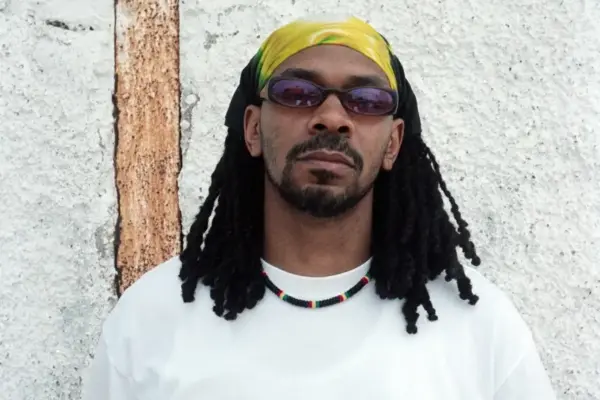
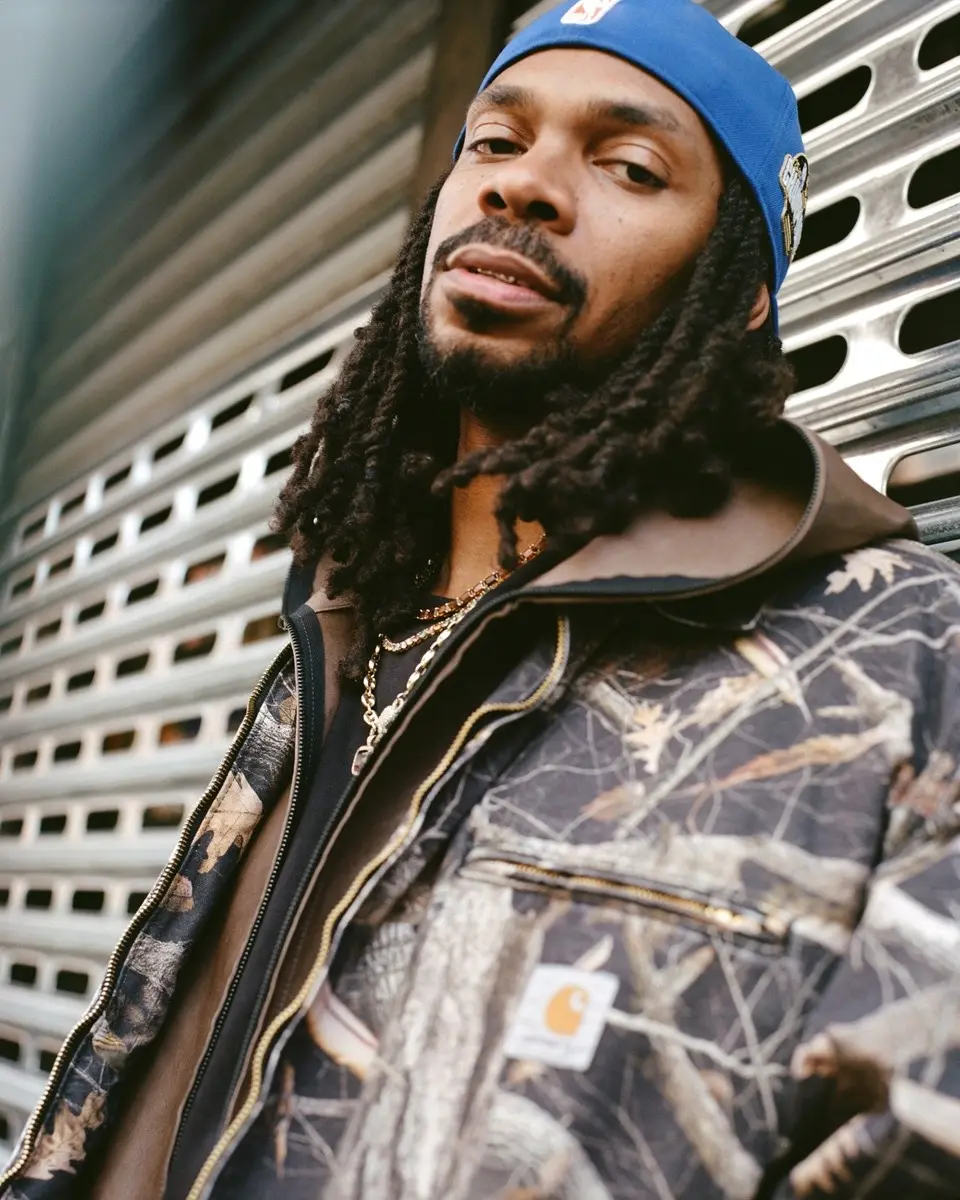
Erick Elliott has never belonged to a single box, genre, or zip code. Better known to the global hip-hop community as Erick the Architect—founding member, primary sonic architect, and resident producer of the legendary Brooklyn trio Flatbush ZOMBiES—he occupies a rare echelon in modern music. He is a producer’s producer who commands the microphone with equal authority, a genre-fluid innovator weaving soul, dub, psychedelia, and electronica into a cohesive tapestry, and an independent-minded artist who refuses to let corporate milestones dilute his creative compass.
As he prepares to unveil his highly anticipated solo sophomore project, AFTERBURNER, Elliott finds himself at a fascinating crossroads of momentum and maturity. Fresh off a monumental collaboration with Apple for the WWDC26 keynote, high-profile transatlantic writing camps with legends like Busta Rhymes and James Blake, and a relentless slate of cross-genre link-ups spanning London and New York, the producer is charting a course defined entirely by propulsion.
In this comprehensive, wide-ranging interview and profile, Elliott pulls back the curtain on the creative mechanics of his explosive new single “YERR”—which features an unexpected pairing of Harlem’s Fergie Baby and Staten Island royalty Ghostface Killah—the deep cultural ties connecting New York to the UK music scene, and why ultimate success in the modern music industry means never having to compromise your reflection in the mirror.
Detailed Chronology: From Flatbush Basements to Global Stages
To understand Erick the Architect’s trajectory is to understand the evolution of underground New York hip-hop over the past decade and a half. Emerging alongside Meechy Darko and Zombie Juice as the production backbone of Flatbush ZOMBiES, Elliott helped spearhead the "Beast Coast" movement of the early 2010s. Armed with hazy, menacing, and kaleidoscopic beats, the group captured the psychedelic underbelly of New York City, releasing critically acclaimed projects like BetterOffDead and their major-label debut album, Vacation in Hell.
Yet, a creative collective requires a delicate balance of ego and accommodation. As Elliott notes, producing for a group means building a sonic canvas broad enough to support multiple distinct personalities, leaving little room for individual artistic selfishness. Recognizing the need to stretch his own boundaries, Elliott steadily cultivated a solo career, stepping into the spotlight as a primary vocalist and conceptual lead.
His debut solo album, I’ve Never Been Here Before, served as a critical masterclass in vulnerability and genre-blending, proving that his sonic palette extended far beyond boom-bap foundations. Rather than resting on those laurels, Elliott immediately pivoted into a period of hyper-collaboration. He became a fixture in international writing camps, trading ideas with British electronic icons like James Blake and genre-bending polymaths like Jamiroquai, while also lending his production genius to Jungle on the infectious single “Candle Flame.”
Now, in 2026, the timeline accelerates. With the rollout of AFTERBURNER, Elliott is transitioning from the introspective, headphone-heavy atmospheres of his previous work to a project intentionally engineered for motion, movement, and momentum.
[2012-2018: Flatbush ZOMBiES Era]
      │ (Group production, Beast Coast dominance, group consensus)
      ▼
[2024: Solo Breakthrough (*I've Never Been Here Before*)]
      │ (Introspective songwriting, establishing solo identity)
      ▼
[2025-2026: Transatlantic Expansion & Tech Partnerships]
      │ (Jungle, UK scene integration, Apple WWDC26 keynote)
      ▼
[Present: *AFTERBURNER* & The Future]
        (Propulsion, high-concept features, uncompromised autonomy)
Supporting Context & Metrics: Bridging New York and the UK Underground
One of the most defining characteristics of Elliott’s recent artistic output is his seamless integration into the United Kingdom’s vibrant music ecosystem. Having collaborated with acts like Col3trane, JGrrey, and Jungle, Elliott views London not merely as an international tour stop, but as a spiritual sister city to New York.
"There are a lot of parallels between New York and London in terms of the energy and culture—it’s probably the most integrated city culturally besides New York!" Elliott explains.
He draws a fascinating parallel between the creative habits of artists in both metropolises. Pointing to the shared climatic realities of adverse weather conditions, Elliott notes that both New York and London foster a breed of creators who are forced indoors by harsh elements, spending months huddled over drum machines and notebooks, only to unleash their pent-up creativity the moment the sun breaks through.
This cross-pollination extends into corporate and high-tech arenas as well. In a landmark achievement for an independent-minded artist, Elliott crafted custom music for Apple’s WWDC26 keynote in Cupertino, California—specifically producing the standout piece titled “Appreciation.”
Reflecting on the surreal nature of designing soundscapes for a multi-trillion-dollar global technology platform, Elliott maintains that his foundational process remained untouched. "Once I understand my goal and my audience, I get to work," he says. For an artist who famously rapped on his COVID-lockdown track "Skinny Ramen"—"They don’t like my output or my Outlook, I’m an Apple guy anyway"—seeing his work permanently entwined with Apple’s global brand feels less like a corporate compromise and more like poetic justice from a proud native of the Big Apple.
Official Statements & Interview Insights
In our exclusive conversation, Erick the Architect broke down the granular details behind his latest single, "YERR," his philosophy on features, and the conceptual weight driving his upcoming album.
Deconstructing “YERR” and Rewriting Feature Expectations
Opening with a looping, casual street greeting—"Yerr, what’s up? We good? OK"—“Yerr” instantly establishes an authentic New York sonic landscape.
- On the Greeting’s Origins: "I’m not sure, the first time I heard someone say yerr… it’s one of those things you just pick up because you hear it all the time. To me, nothing is more New York than to greet someone by saying yerr, followed up by asking if they are good or not. New York is such a fast-paced city, sometimes we feel like that’s all we need to know about someone in the moment. You good?"
The track takes an unexpected turn midway through, snapping from a woozy, modern club bounce into a slowed, nostalgic East Coast head-nodder. Rather than engineering the beat switch around a pre-determined guest list, Elliott built the structural pivot organically.
- On Unpredictable Collaborations: By recruiting Harlem’s Fergie Baby and Staten Island legend Ghostface Killah for the same track, Elliott deliberately subverted modern hip-hop’s formulaic feature culture. "I know what both of these MCs are capable of… and I always think from the mindset of a listener. What would I be most excited about? I think a lot of today’s hip-hop is full of predictability, and I wanted someone to say that this song didn’t make sense because of their expectation. I think that’s reason enough to give something a play in a time where I feel like a lot of the features are so predictable: ‘Of course they’d get [X] and [Y] on a song!’"
The Philosophy of AFTERBURNER
Moving away from the moody, insular atmospheres of his earlier discography, Elliott’s upcoming LP AFTERBURNER represents a distinct philosophical and sonic shift.
- On Propulsion Over Nostalgia: "‘AFTERBURNER’ became the title shortly after recording the first few records for this album. I feel like the name is significantly different from my previous projects, and so is the music. I feel like a lot of my music was best heard in headphones, and I wanted to make something I intended to be listened to on the move. Much of what has moved me emotionally in the last year or so musically are things that give me nostalgia and movement. The ‘AFTERBURNER’ isn’t dwelling on the first step or first day, it’s propulsion. Continuing to keep something going even when it’s the hardest to put one foot in front of the other. Expect a project that delivers on this feeling, for sure."
Navigating Industry Longevity and Ownership
During his recent work with GRAMMY House NYC for the Black Music Collective, Elliott emphasized that contemporary artists must prioritize structural independence and authentic artistry above fleeting trends.
- On Power and Endurance: "Simply; ownership is power. Longevity is accomplished by making music that is true to you and not falling victim to fitting in with whatever else is out there. All of my idols practiced a healthy balance of both of these things in order to last the test of time."
Future Outlook: The Unyielding Vision of Erick Elliott
As the music industry continues to fragment into algorithmic micro-trends and hyper-commercialized viral loops, Erick the Architect stands resolute as a practitioner of craft, patience, and unyielding personal integrity.
With AFTERBURNER on the horizon, global tech partnerships cemented, and a deep-seated respect binding the underground scenes of Brooklyn and London together, Elliott’s definition of success remains refreshingly grounded. It is no longer measured purely by chart positions or plaque counts, but by the preservation of identity.
"I am grateful to be able to make an impact in the industry while still being myself in 2026 and so forth," Elliott concludes. "I’ve never had to change myself to be accepted by anyone, and I don’t plan to. Success to me is continuing to tell this story and being able to look into the mirror and still see Erick Elliott."
For more deep dives into the architects of hip-hop and global culture, explore the full archives on the Viper Substack.