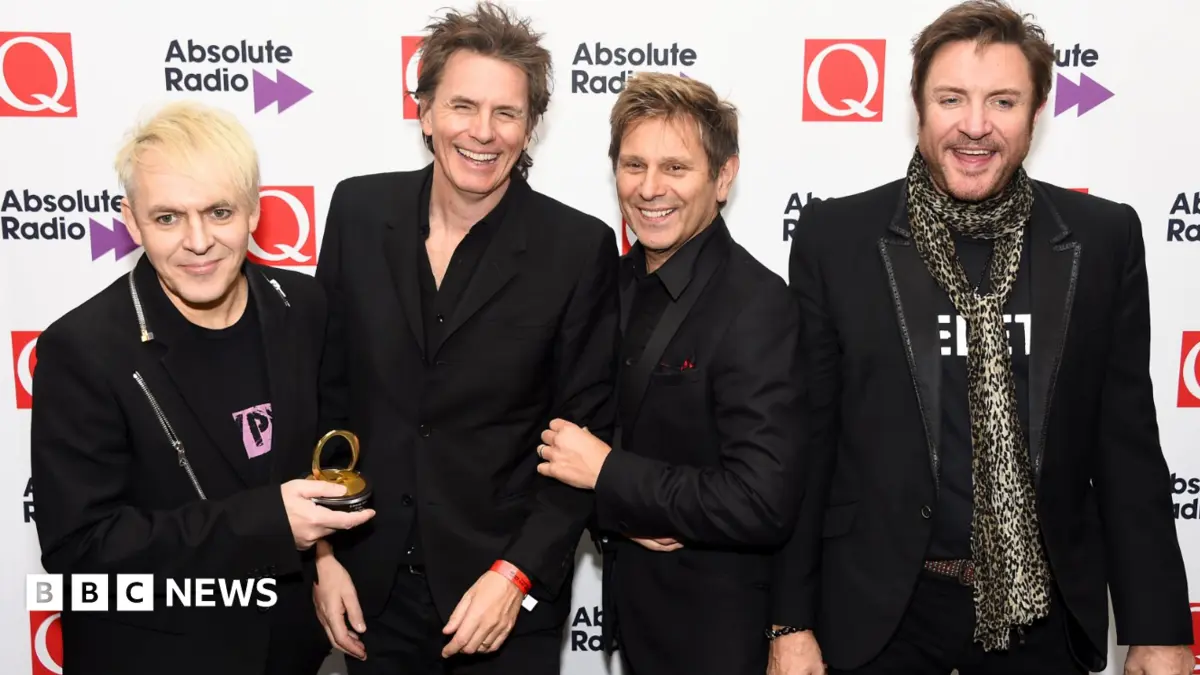
In a poignant announcement that marks the closing of a monumental chapter in pop music history, Duran Duran founding drummer Roger Taylor has officially announced his departure from the legendary New Wave ensemble. Citing a severe and worsening battle with chronic tinnitus—a debilitating auditory condition characterized by persistent ringing and damage to the inner ear—the 66-year-old percussionist has made the difficult decision to step away from the rigors of touring and recording.
This announcement brings to a close a nearly five-decade association with the Birmingham-born band that helped define the sonic and visual landscape of the 1980s. Taylor has been the rhythmic heartbeat of the chart-topping group since its inception in 1978. While his departure is an undeniable blow to the remaining members—frontman Simon Le Bon, keyboardist Nick Rhodes, and bassist John Taylor—the decision has been met with profound understanding, mutual respect, and an overwhelming sense of gratitude for a shared musical journey that spans generations.
Taylor’s exit follows a stringent medical evaluation, forcing him to heed the warnings of his physicians and prioritize his long-term auditory health. The musician leaves the band at the absolute zenith of a modern-day renaissance, fresh off a critically acclaimed UK and European tour, a triumphant return to the studio with legendary producer Nile Rodgers, a monumental second headline performance at London’s BST Hyde Park, and the group’s long-overdue induction into the Rock & Roll Hall of Fame.
For millions of fans worldwide, Roger Taylor’s steady, driving, and instantly recognizable groove was the engine that powered global smashes such as "Hungry Like the Wolf," "Rio," and the James Bond theme "A View to a Kill." As the music world processes the departure of one of the era’s most influential timekeepers, this report examines the chronological weight of his career, the medical realities of musician-acquired tinnitus, the official reflections of his bandmates, and what the future holds for both Roger Taylor and the enduring legacy of Duran Duran.
Detailed Chronology: From the Birmingham Underground to Global Superstardom and Beyond
To understand the magnitude of Roger Taylor’s departure, one must retrace a remarkable timeline that began in the industrial heartlands of the United Kingdom during the late 1970s.
1978–1985: The Rise of the New Romantic Movement
In 1978, amidst the post-punk wreckage and the burgeoning electronic underground of Birmingham, Roger Taylor joined forces with keyboardist Nick Rhodes and bassist John Taylor. Soon joined by guitarist Andy Taylor (no relation) and charismatic frontman Simon Le Bon, the definitive lineup of Duran Duran was forged.
Roger’s sophisticated, danceable, and rock-solid drumming provided the essential bridge between disco’s infectious four-on-the-floor pulse and the icy, futuristic synthesizer soundscapes championed by Rhodes. As MTV launched in the early 1980s, Duran Duran became the poster boys for the New Romantic movement. They weaponized high-fashion aesthetics, cinematic music videos shot in exotic locales, and peerless pop songwriting.
During this initial blitz, Roger Taylor anchored ten hit albums and performed on monumental chart-topping singles, including "Is There Something I Should Know?" and "The Reflex." His thunderous yet precise groove on the 1985 James Bond theme "A View to a Kill"—the only 007 theme song to ever hit number one on the US Billboard Hot 100—cemented his status among elite rock drummers.
1985–2001: The Hiatus and Re-emergence
The relentless pace of "Duranmania," exhaustive global touring, and intense media scrutiny took a heavy toll on the band. Following the grueling schedule of the mid-1980s, the original lineup fractured. Roger Taylor, exhausted by the pressures of unprecedented global fame, retreated from the public eye to the quiet English countryside, stepping away from the music industry entirely for over a decade.
During his absence, the band morphed through various iterations. However, the cultural footprint left by the original five members remained indelible. In 2001, to the absolute ecstasy of the global fanbase, the classic lineup reunited. Roger Taylor stepped back behind the drum kit, proving that his time away had done nothing to diminish his innate sense of rhythm, pocket, and performance style.
2001–2024: The Modern Renaissance
The second act of Roger Taylor’s tenure with Duran Duran proved to be just as creatively fertile as the first. Rather than serving merely as a legacy act relying solely on 1980s nostalgia, the band continuously pushed forward, releasing critically lauded contemporary records that embraced cutting-edge production while retaining their signature sonic DNA.
Culminating in a series of career-defining milestones—including their emotional and prestigious induction into the Rock & Roll Hall of Fame and recent collaborations with musical icon Nile Rodgers—Taylor’s return to the fold anchored the band through another quarter-century of sold-out arena tours and festival headlining slots.
Supporting Context & Metrics: The Hidden Toll of Loud Music and Chronic Tinnitus
While Roger Taylor’s departure marks the end of an era, it also shines a harsh, necessary spotlight on a pervasive and deeply debilitating occupational hazard that plagues musicians across every genre: noise-induced hearing loss and chronic tinnitus.
Understanding Tinnitus in the Music Industry
Tinnitus is not a disease in itself, but rather a symptom of an underlying condition, most commonly neural damage caused by prolonged exposure to high decibel levels. For rock and pop drummers, who sit inches away from crashing cymbals, acoustic snare drums, and towering stage monitor wedges, the decibel exposure can routinely exceed 100 to 110 decibels—equivalent to the sound of a roaring chainsaw or a low-flying aircraft.
Over decades of touring, the tiny hair cells (stereocilia) in the inner ear become irrevocably damaged or destroyed. When these cells are bent or broken by stray sound waves, they "leak" electrical impulses to the brain, manifesting as a phantom ringing, buzzing, roaring, or hissing sound in the ears. For sufferers, this noise is constant, often intensifying in quiet environments and severely impacting sleep, mental health, and general well-being.
The Growing Wave of Musician Retirements
Roger Taylor is far from the first legendary musician to be sidelined by auditory health issues. In recent years, high-profile artists have increasingly spoken out about the toll of decades of high-volume performance:
- Phil Collins: The iconic Genesis drummer and solo artist was forced to stop playing drums entirely due to nerve damage in his hands and severe back issues, exacerbated by years of intense physical strain behind the kit.
- Brian Johnson: The frontman of AC/DC famously had to step away from the band’s Rock or Bust world tour after doctors warned him that continuing would result in total, irreversible hearing loss (though he later returned utilizing custom in-ear monitor technology).
- Eric Clapton: The legendary blues-rock guitarist revealed that he has been battling severe tinnitus and progressive hearing loss stemming from decades of unmitigated stage volume.
- Huey Lewis: The soul-rock singer was forced to cancel all tour dates after being diagnosed with Meniere’s disease, a inner-ear disorder causing sudden, fluctuating hearing loss and severe vertigo.
Taylor’s decision underscores a broader, much-needed cultural shift within the live music industry. Whereas musicians of previous generations often viewed hearing damage, exhaustion, and physical pain as unavoidable "badges of honor," modern artists are increasingly listening to their physicians, prioritizing preventative care, and recognizing when the human body has reached its absolute threshold.
Official Statements: Heartfelt Tributes and Mutual Respect
The announcement of Roger Taylor’s departure was accompanied by deeply personal, emotional statements from both the drummer himself and his lifelong bandmates. The transparency and affection evident in these statements highlight the unique bond shared by the members of Duran Duran after nearly fifty years in the public eye.
Roger Taylor’s Farewell to the Fans and Bandmates
Reflecting on his historic run with the band, Roger Taylor shared a message characterized by profound gratitude and hard-earned peace:
"Playing drums in this band has been the joy of my life, and I’ll never be able to properly thank the fans for the love they’ve shown us over the years. But the truth is that my tinnitus has been getting steadily worse.
I’ve reached the point where I must now listen to my body and my doctors, who have made it clear that protecting my hearing and long-term health must now come first. Deciding on the timing has been difficult, but I am so pleased to be going out on a real high.
We’ve just returned from a hugely successful UK and European tour, which followed our second headline show at BST Hyde Park, our induction into the Rock & Roll Hall Of Fame, and a return to the studio with Nile Rodgers. I couldn’t have asked for a better final chapter, with so many special moments that I’ll treasure forever.
I move on with enormous pride, and with nothing but love for Simon, Nick, and John."
The Band’s Response: Honoring a Brother
In a joint statement released on behalf of Simon Le Bon, Nick Rhodes, and John Taylor, the remaining members of Duran Duran expressed their unwavering support for their founding drummer, celebrating his monumental contributions to their global legacy:
"Roger is our brother. His drumming helped define the sound of Duran Duran from the very beginning, and having him back with us since 2001 has been incredibly important to us all.
While we are naturally saddened by his departure, this decision comes after careful consideration and medical advice that we completely support. Protecting his health and well-being must come first.
Roger performed on 10 hit albums, our two number one singles—’Is There Something I Should Know?’ and ‘The Reflex’—and our iconic 1985 James Bond theme ‘A View to a Kill.’ He leaves an irreplaceable footprint on our music.
He will always be part of this family, while we continue exploring new and exciting projects with the band. We wish him absolute health, peace, and happiness in this next chapter of his life."
Future Outlook: What Lies Ahead for Roger Taylor and Duran Duran?
As the dust settles on this major musical announcement, industry analysts, music critics, and dedicated "Durannies" alike are left pondering the future trajectory of both the departing drummer and the continuing core trio.
Roger Taylor’s Post-Touring Horizon
For Roger Taylor, stepping away from the grueling, high-decibel environment of international concert touring does not necessarily mean the complete cessation of his creative endeavors. Modern studio production, specialized composition work, and educational masterclasses offer avenues for musical expression that do not require subjecting the ears to punishing stage volumes.
More importantly, Taylor’s departure represents a vital reclamation of personal health. By taking decisive action now, he ensures that he can enjoy his retirement years with preserved residual hearing and a dramatically reduced risk of further auditory deterioration. His legacy as one of the most tasteful, pocket-conscious, and stylish drummers of the MTV generation is permanently secure.
The Next Chapter for Duran Duran
As for Duran Duran, the band has proven time and time again that they possess an extraordinary capacity for reinvention and resilience. Having navigated lineup changes, shifting musical landscapes, and decades of cultural evolution, the remaining trio—Le Bon, Rhodes, and John Taylor—stands as a remarkably cohesive creative unit.
While the identity of who will step behind the drum kit for future live performances and studio sessions has not yet been officially announced, industry insiders speculate that the band will likely enlist a trusted, top-tier touring percussionist capable of faithfully executing Roger’s intricate, driving beats while injecting fresh energy into the live set.
Furthermore, with recent studio sessions alongside Nile Rodgers yielding thrilling creative results, the band has signaled that they have no intention of slowing down artistically. Whether they choose to return to the studio for a brand-new full-length project or curate special live events, the enduring spirit of Duran Duran remains unbroken.
A Lasting Legacy
Ultimately, Roger Taylor’s exit serves as a poignant reminder of the physical realities behind the glamorous facade of rock-and-roll stardom. He leaves the stage not in disgrace or decline, but at the absolute pinnacle of artistic achievement—surrounded by the love of his bandmates, the adoration of millions of fans, and the eternal satisfaction of a job profoundly well done.
As the opening bars of "Rio" or "Hungry Like the Wolf" continue to echo across global airwaves for decades to come, the steady, driving pulse of Roger Taylor will forever remain the beating heart of Duran Duran.