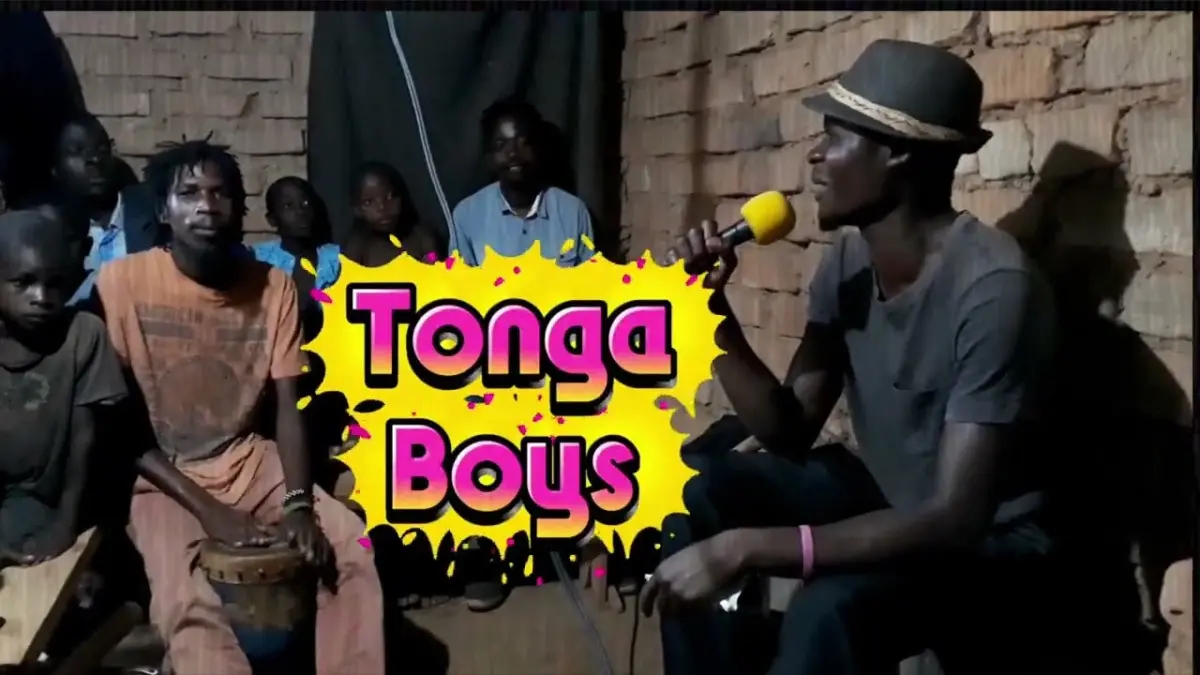
Executive Overview
In an era where the global music industry is increasingly homogenized by algorithmic streaming strategies and corporate consolidation, rare artistic phenomena emerge from the peripheries to remind listeners of the raw, unadulterated power of human expression. The Tonga Boys, a groundbreaking musical collective hailing from the northern Malawian city of Mzuzu, have spent years crafting a sonic universe that refuses to be neatly cataloged.
Now, as geographical dispersion threatens to dissolve the group, they are orchestrating a poignant, high-energy farewell. Their fifth and presumably final studio album, Tonga Boys vs Artificial Intelligence, is slated for release on November 11 through the Warsaw-based independent label 1000HZ.
Led by the recent departure of founding member Albert Manda, who has relocated to Tanzania in search of new opportunities, and Peter Kaunda, who has moved south to Malawi’s capital of Lilongwe, the band’s physical disintegration marks the end of an era. Yet, rather than fading quietly into the background, the Tonga Boys are going out with a literal and figurative blaze.
The lead single, "Moto (Fire)"—alongside its predecessor, "Terinah (She Who Has a Strange Voice)"—serves as a triumphant victory lap, a roll call of gratitude, and a defiant artistic statement. This comprehensive report explores the trajectory of the Tonga Boys, the cultural weight of their upcoming album, the intricate cross-continental collaborations that brought it to life, and what this parting means for the future of underground African avant-folk music.
Detailed Chronology
The Genesis in Mzuzu (2019)
The story of the Tonga Boys is rooted in the fertile, culturally rich landscape of northern Malawi. Operating out of Mzuzu, a city nestled amidst highlands and near the shores of Lake Malawi, the group emerged as local innovators. Rather than adopting the slick, digital pop aesthetics dominating contemporary African commercial radio, the Tonga Boys anchored their sound in the deep historical traditions of their region.
From their earliest jam sessions, the core personnel—including Albert Manda, Peter Kaunda, and percussionist Solomon Njikho—focused on reimagining indigenous Malawian genres. They drew heavily from malipenga, a vibrant, military-style dance music originating along the northern lakeshore, traditionally characterized by synchronized marching movements, kazoo-like horns, and driving drum patterns. They similarly immersed themselves in vimbuza, the rhythmic drumming and vocal traditions associated with spirit-possession healing rituals.
Cross-Continental Bridges: The Warsaw Connection
By the early 2020s, the Tonga Boys’ localized experiments caught the attention of international ethnomusicological and production circles. Central to this bridge was Piotr Cichocki (affectionately dubbed "Peter Poland"), a Warsaw-based anthropologist and producer. Cichocki recognized the profound cultural value and raw kinetic energy of the Mzuzu ensemble.
This cross-cultural encounter led to the co-founding of the Warsaw indie imprint 1000HZ, a label dedicated to championing boundary-pushing global sounds. Over a protracted recording period spanning from 2019 to 2026, the Tonga Boys, in collaboration with Cichocki, recorded across disparate geographies: Mzuzu, Katula, and Warsaw. These sessions were not merely technical exercises; they were cultural exchanges that documented the evolution of a band pushing its acoustic limits.
During these sessions, percussionist Solomon Njikho made a critical modification to his setup, integrating a sound module into his primary drum. This subtle technological intervention warped the traditional acoustic rhythms, dragging the organic Malawian folk structures into uncharted sonic territories redolent of dub, industrial noise, and avant-garde sound art.
The Diaspora and the Final Chapter (2024–2026)
As economic pressures and personal ambitions pulled the members apart, the future of the collective grew increasingly precarious. Albert Manda crossed the northern border into Tanzania to seek new horizons, while Peter Kaunda relocated south to Lilongwe. Realizing that a unified, localized recording unit was no longer viable, the group channeled their collective history into what would become their swan song.
Rather than succumbing to the pressures implied by their album’s tongue-in-cheek title, Tonga Boys vs Artificial Intelligence, the musicians leaned into their humanity. They completed the album not through digital automation, but through sweat, wood, hide, and metal. The title stands as a provocative critique of the modern music industry’s rush toward machine-generated content, asserting that true cultural resonance cannot be synthesized.
Supporting Context & Metrics
Cultural Signposts: Malawian Traditions in a Modern Context
To fully appreciate the significance of the Tonga Boys’ final project, one must understand the traditional musical vocabularies they adapted and subverted:
- Malipenga: Originating in colonial-era northern Malawi, malipenga (derived from the English word "trumpets") is a satirical and celebratory dance form where performers mimic British military brass bands using homemade instruments, primarily mirlitons (kazoo-like instruments constructed from gourds and paper) and snare drums. The Tonga Boys modernized this kinetic marching music, transforming it into an urgent, contemporary dancefloor catalyst.
- Vimbuza: Recognized by UNESCO for its intangible cultural heritage, vimbuza healing dances rely on polyrhythmic drumming and call-and-response singing to diagnose and treat psychological ailments through spiritual catharsis. The Tonga Boys infused their arrangements with the hypnotic, trance-inducing qualities of vimbuza, lending their secular dance tracks a profound spiritual weight.
Album Production Metrics & Timeline
- Recording Span: 2019 – 2026 (7-year developmental arc)
- Recording Locations: Mzuzu (Malawi), Katula (Malawi), and Warsaw (Poland)
- Primary Instruments: Indigenous drums, modified acoustic kits with integrated sound modules, kazoo-like horns, and vocal harmonies.
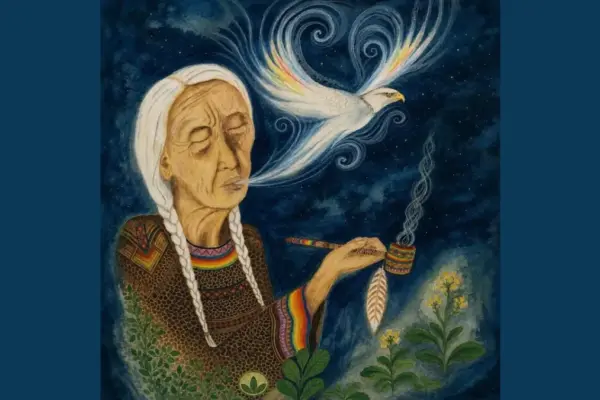
- AI Utilization: Strictly limited to the conceptual generation of the album artwork; 100% of the audio performance is human-generated.
- Release Date: November 11
- Label: 1000HZ (Warsaw, Poland)
Tracklist Highlights
- "Terinah (She Who Has a Strange Voice)" – Released as the primary promotional precursor, showcasing the group’s vocal dexterity and unsettling, beautiful harmonic structures.
- "Moto (Fire)" – Serving as the official send-off single, the track operates as an auditory manifesto, thanking international allies, celebrating the acoustic fire of the band, and executing a complete roll call of contributors before the final curtain falls.
Official Statements & Lyrical Deconstruction
Dissecting "Moto (Fire)"
"Moto (Fire)" is much more than a farewell anthem; it is a meticulously detailed historical document of the relationships that sustained the Tonga Boys throughout their international journey.
The track opens with direct expressions of gratitude directed toward the band’s Polish supporters, explicitly naming Bogusia, Waldek, Maria, and Wojtek. By enshrining these names in song, the Tonga Boys break down the transactional barriers typically found in international music distribution, transforming professional alliances into deep, personal kinships.
Later in the track, the lyrical focus shifts to the metaphor of fire (Moto kumapiri—fire in the mountains). The band chants this phrase repeatedly, positioning their music as an elemental, unstoppable force. In the context of Mzuzu nightlife, this fire is credited with driving women to traditional ululation, securing valuable FM radio airplay, and leveling social hierarchies on the dancefloor. As the lyrics suggest, when the music plays, everyone participates as equals, "whichever child they are."
The Final Roll Call
Perhaps the most emotional aspect of "Moto (Fire)" is its closing outro, which functions as a spoken-word roll call celebrating every living participant in the band’s ecosystem. Among the names immortalized in the final seconds of the track is Piotr Cichocki ("Peter Poland"), whose anthropological engagement and co-founding vision for 1000HZ provided the conduit through which Mzuzu’s local sounds reached European ears. Cichocki also directed the official music video for the single, visually capturing the raw, unpolished camaraderie of the group.
Future Outlook
The Legacy of Tonga Boys vs Artificial Intelligence
As the music world braces for the November 11 release of Tonga Boys vs Artificial Intelligence, the project stands as a monument to what can be achieved when disparate cultures collide with mutual respect and artistic integrity.
While the physical dispersal of Albert Manda to Tanzania, Peter Kaunda to Lilongwe, and Solomon Njikho’s continued work in Malawi means the Tonga Boys as a touring and recording unit will likely cease to exist, their recorded catalog remains an invaluable contribution to global ethnomusicology. They have proven that regional African folk traditions do not need to be stripped of their complexity or localized context to appeal to international audiences. Instead, by retaining their uncompromising sonic identity—enhanced rather than diluted by noise modules and cross-continental partnerships—they have carved out a permanent space in the annals of avant-garde world music.
Industry Implications in the Age of AI
The album’s title, Tonga Boys vs Artificial Intelligence, acquires deeper resonance when viewed against the backdrop of contemporary music production. At a time when tech companies flood digital streaming platforms with synthetic, algorithmically generated audio designed to capture passive listener metrics, the Tonga Boys offer a radical counter-proposal. Every transient, every vocal crack, every imperfection in their rhythm, and every modification to Njikho’s drum kit represents the irreducible complexity of human lived experience.
Even as they utilize artificial intelligence purely for the superficial veneer of the album’s cover art, the core message remains absolute: the soul of music belongs to human hands, human breath, and human community.
As fans stream "Moto (Fire)" and anticipate the full LP, they are not merely consuming a product; they are bearing witness to a final, blazing testimony of friendship, geography, and cultural survival. The fire in the Malawian mountains may be scattering its embers across Tanzania, Lilongwe, and Warsaw, but the warmth of the Tonga Boys’ flame will echo long after the final track fades to silence.