Executive Overview
The landscape of modern music production is undergoing a tectonic shift, one defined by the convergence of generative artificial intelligence and traditional Digital Audio Workstation (DAW) environments. For years, producers, beatmakers, and sound designers have watched artificial intelligence evolve from experimental web applications and isolated cloud tools into deeply integrated, real-time studio hardware and software. Yet, a persistent barrier has remained: the friction of context-switching. The need to leave a trusted DAW environment, generate assets via an external web browser, download audio files, and manually drag them into a project has long disrupted creative flow states.
Enter Sonura Flow, a groundbreaking free plugin developed by audio technology innovator Sonura designed to bridge this exact gap. Released to the public amidst a flurry of industry anticipation, Sonura Flow functions as a native generative audio VST that operates directly within a producer’s workspace. By leveraging simple text prompts combined with intuitive category selection—ranging from rumbling sub-bass and crisp drum loops to ethereal vocal chops and atmospheric pads—producers can conjure custom, royalty-free audio assets on demand.
What sets Sonura Flow apart in an increasingly saturated market of AI-assisted music tools is not merely its prompt-to-audio engine, but its nuanced approach to licensing, workflow integration, and accessibility. Offering a generous, perpetual free tier accompanied by public domain (CC0) licensing for generated outputs, Sonura is aggressively targeting the ethical and legal anxieties that have long plagued AI music generation. Furthermore, the inclusion of Sonura Kit—a companion drum machine driven by the same text-prompt philosophy—ensures that rhythm and melodic generation are unified under a single installation umbrella.
As the audio industry grapples with the implications of generative models, Sonura Flow represents a maturation of the medium: moving away from novelty text-to-song generators and toward granular, utility-driven production tools meant to enhance, rather than replace, human creativity. This comprehensive deep-dive explores the technical capabilities, licensing frameworks, workflow impacts, and future trajectory of Sonura Flow as it reshapes the modern studio ecosystem.
Detailed Chronology: The Evolution and Launch of Sonura Flow
To understand the significance of Sonura Flow, one must examine the timeline of its development and the broader historical trajectory of generative audio tools entering the mainstream DAW market.
Phase 1: The Genesis of Prompt-Based Audio (2023–2025)
Over the past three years, the intersection of machine learning and audio engineering shifted from academic research papers to commercial applications. Early generative models focused primarily on text-to-music concepts—users could type "lo-fi hip-hop beat for studying," and a monolithic, fully mastered track would be generated. While impressive to casual consumers, these early iterations offered very little utility for professional music producers. They lacked stems, multi-track separation, tempo synchronization, and, crucially, integration with industry-standard DAWs like Ableton Live, Logic Pro, Pro Tools, and FL Studio.
Recognizing these limitations, developers began pivoting toward micro-generative tools. Instead of generating entire songs, companies started building models focused on transient generation, texture synthesis, and loop creation. Sonura positioned itself at the vanguard of this micro-generative movement, recognizing that producers do not want an AI to write their tracks for them; rather, they want an AI assistant that can generate custom building blocks—one-shots, textures, and bespoke loops—that fit a specific harmonic and rhythmic context.
Phase 2: Beta Testing and Workflow Refinement (Mid to Late 2025)
During the months leading up to its public rollout, Sonura quietly refined its neural audio models through closed beta testing cycles involving electronic music producers, film scorers, and beatmakers. The primary engineering challenge during this period was latency reduction and parameter control. Initial prototypes allowed for text prompting, but lacked granular control over musical elements such as key, time signature, loop length, and sonic character.
Engineers at Sonura implemented a dual-layer approach: a natural language processing (NLP) parser that interprets descriptive adjectives (e.g., "gritty," "analog," "ethereal," "distorted") coupled with hard structural parameters (e.g., tempo synchronization, category selection). This ensured that when a producer requested a "128 BPM dark techno bass loop," the underlying generation engine respected the temporal constraints of the host project while capturing the requested aesthetic mood.
Phase 3: The Official Public Release and Black Friday Rollout
Sonura Flow officially debuted to the global production community with cross-platform support for macOS (Apple Silicon and Intel running macOS 12 or later) and 64-bit Windows 10 and 11 environments. Capitalizing on market momentum, Sonura paired the plugin’s launch with an aggressive introductory campaign, including a limited-time Black Friday promotion offering a 50% discount on annual paid tiers using the promotional code BLACKFRIDAY.
The release strategy was multi-pronged: offer a robust, zero-cost entry point to capture market share and eliminate adoption friction, while providing scalable, high-generation paid tiers for heavy commercial users and professional studios. Accompanying the software release was a suite of comprehensive video tutorials demonstrating the plugin’s zero-latency drag-and-drop capabilities directly into various DAW timelines.
Supporting Context & Metrics: Architecture, Licensing, and Usability
An analytical breakdown of Sonura Flow reveals a thoughtfully engineered product designed to address the primary friction points of modern digital audio production. Below, we examine the core structural components that define the plugin’s ecosystem.
The User Interface and Generation Workflow
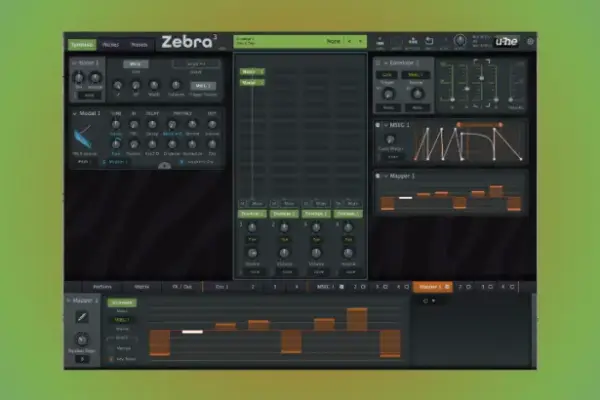
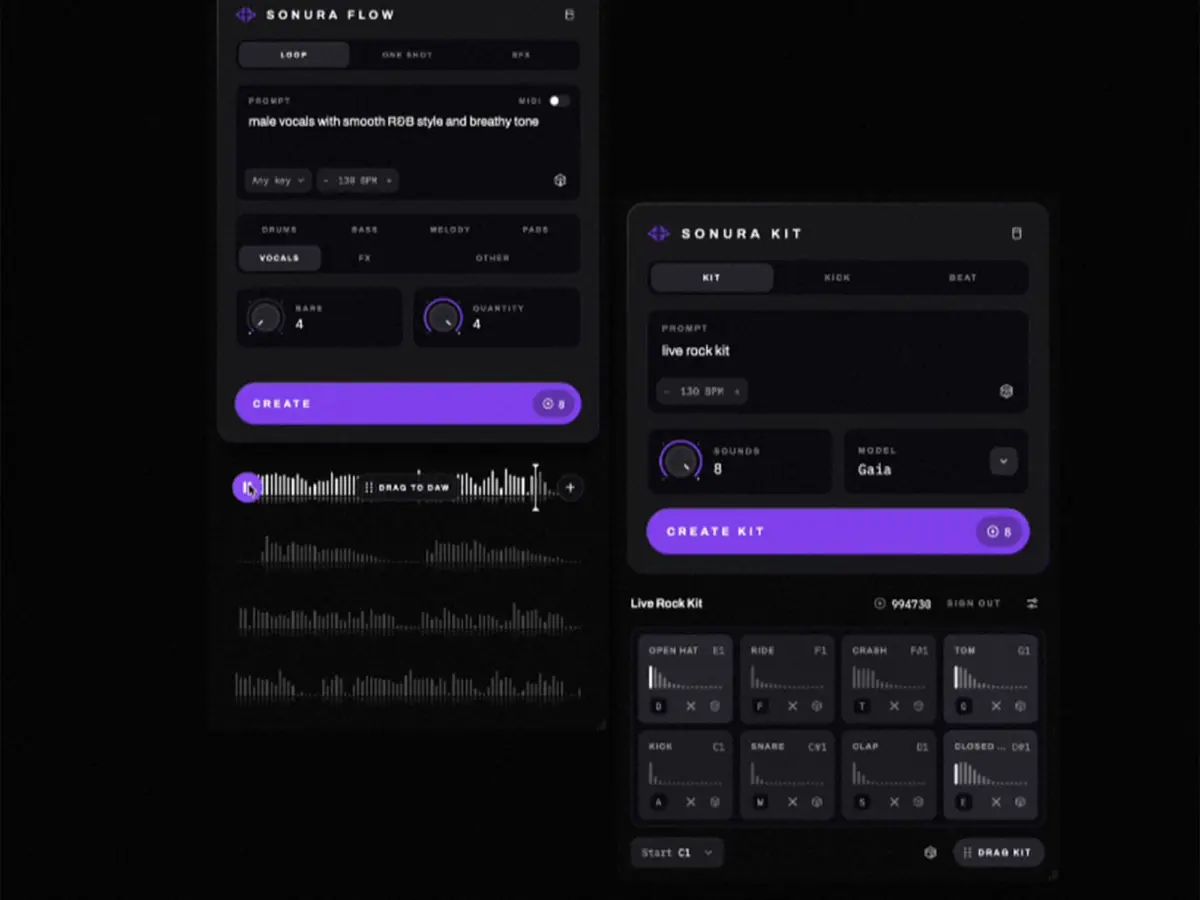
Sonura Flow avoids the cluttered, skeuomorphic interfaces common in vintage-emulation plugins, opting instead for a clean, modern, dark-mode UI optimized for extended studio sessions.
- Prompt Entry Field: Users enter freeform text descriptions. The NLP engine is trained on a vast corpus of musical terminology, allowing for highly specific prompts like "warm analog synth pad with heavy tape flutter" or "punchy 808 sub-bass with aggressive saturation."
- Category Filters: To refine results, users select from a drop-down taxonomy including Drums, Bass, Melody, Pads, Vocals, and Effects. This acts as a structural anchor, guiding the neural network toward appropriate synthesis models or acoustic profiles.
- Temporal Control: Producers can dial in exact loop lengths and time signatures, ensuring that generated audio files seamlessly align with the host project’s grid.
- Variation Engine: Upon submitting a prompt, Sonura Flow generates multiple distinct variations simultaneously. This multi-option approach acknowledges the probabilistic nature of AI generation; rarely is the first output optimal. Producers can audition each variation directly inside the plugin via low-latency audio streaming.
- Drag-and-Drop Integration: Once a preferred sound is selected, it can be dragged straight from the plugin interface into the DAW’s timeline or sample pool as a standard WAV file.
Pricing Tiers and Usage Metrics
Sonura has structured its pricing model to accommodate everyone from hobbyist bedroom producers to professional commercial studios:
- The Free Plan:
- Generations: 10 loops, 20 one-shots/effects, and up to 4 full tracks per day.
- Cost: $0 (Forever free, no time limits).
- Credit Card Requirement: None. Users can sign up via email and begin generating immediately.
- Licensing: 100% Public Domain (CC0).
- Paid Annual Plans:
- Designed for power users, commercial beatmakers, and media composers requiring limitless or heavily expanded generation quotas.
- Includes priority processing queues, higher fidelity rendering options, and expanded style controls.
- Currently incentivized through the 50% off Black Friday promotion running from November 13 through December 2.
The Licensing Breakthrough: CC0 Public Domain
One of the most contentious issues surrounding AI-generated audio is copyright ownership. Traditional sample libraries are protected by strict intellectual property laws, and many AI music tools operate in legal grey areas regarding training data and output ownership.
Sonura has addressed this head-on by declaring that all sounds generated on the free plan are released into the public domain under a CC0 (Creative Commons Zero) license. This is a massive win for producers. A CC0 designation means that creators waive all copyright and related rights to the generated audio, allowing producers to use the loops, one-shots, and vocals in commercial releases, film scores, video game soundtracks, and sync placements without attribution, royalties, or licensing restrictions.

This policy effectively neutralizes the legal anxiety that has kept many professional producers from incorporating generative AI into their commercial workflows.
Sonura Kit: The Companion Drum Machine
Beyond Sonura Flow, the installation package includes Sonura Kit, a specialized drum machine plugin built upon the same generative foundation. Rather than generating isolated loops, Sonura Kit allows producers to synthesize entire multi-instrument drum kits and intricate rhythmic patterns using text prompts.
By combining Sonura Flow (for melodic, harmonic, and textural elements) with Sonura Kit (for rhythmic foundations), producers effectively gain an end-to-end AI-assisted composition suite directly inside their DAW mixer channels.
Official Statements and Industry Perspective
While Sonura’s marketing materials emphasize the creative empowerment of the producer, the broader reception across the music technology landscape reflects a complex mixture of enthusiasm and cautious pragmatism.
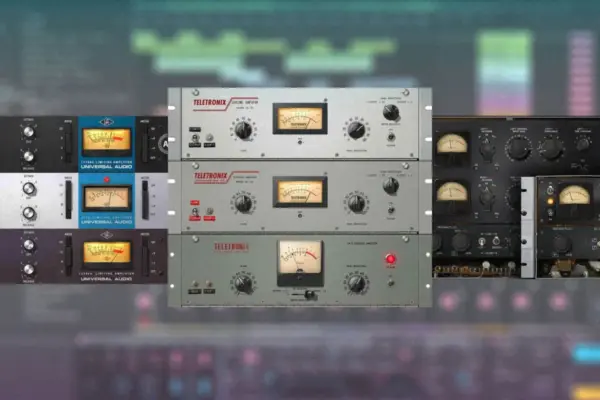
Industry analysts note that Sonura Flow arrives at a critical juncture where producers are experiencing "plugin fatigue." With thousands of compression, EQ, and saturation plugins saturating the market, software developers are increasingly forced to look toward generative and algorithmic workflows to capture consumer attention.
In promotional briefings accompanying the launch, Sonura’s engineering team emphasized that Sonura Flow was built with a philosophy of augmentation, not replacement.
"We did not set out to build a machine that writes music for you," a representative for Sonura stated during the rollout. "We built Sonura Flow to eradicate writer’s block. When you are staring at an empty timeline at 3:00 AM, needing a textural pad or a unique vocal chop that sits perfectly in the background of your mix, Sonura Flow acts as an infinite, on-demand collaborator. What you do with those raw materials—how you chop, process, arrange, and mix them—remains entirely your artistic domain."
Independent producers and beta testers have echoed this sentiment, highlighting the plugin’s utility as a high-end sound design sandbox. Unlike static sample packs, where thousands of producers might be pulling the exact same kick drum or synth loop from Splice, Sonura Flow’s prompt-based engine ensures that every generated asset is statistically unique to that specific query and user session.
Future Outlook: Where Generative DAW Tools Are Headed
The launch of Sonura Flow is indicative of a broader, irreversible trend: the migration of artificial intelligence from external cloud platforms directly into the native DAW ecosystem. As neural processing units (NPUs) become standard in modern computer architectures—particularly within Apple’s Silicon series and Intel/AMD processors—the boundary between local computing and cloud-based AI generation will continue to blur.
1. Hyper-Localized Custom Model Training
Looking ahead over the next 3 to 5 years, tools like Sonura Flow are expected to evolve beyond generalized text-to-audio models. Future iterations will likely allow producers to feed their own sample libraries into the plugin, training a localized, proprietary AI model on their specific sonic signature. Imagine typing a prompt and having Sonura Flow generate a loop that sounds precisely like your personal analog synth collection or your signature drum processing chain.
2. Deeper Harmonic and Structural Awareness
While current generative plugins excel at creating loops and one-shots that match tempo and key, future developments will likely focus on real-time harmonic reactivity. As a chord progression changes in the DAW’s MIDI timeline, generative plugins will dynamically alter their output to match not just the static key, but the evolving harmonic tension and release of the composition.
3. Industry Integration and Standardization
As copyright frameworks surrounding AI generation continue to evolve globally, Sonura’s proactive adoption of CC0 public domain licensing for its free tier may well become the gold standard for the industry. Producers will increasingly demand absolute legal clarity regarding the provenance and ownership of generated assets, making transparent licensing frameworks a prerequisite for commercial DAW adoption.
Conclusion
Sonura Flow is much more than a free promotional plug-in; it is a clear indicator of where music production is heading. By successfully integrating prompt-to-audio generation directly into the DAW timeline, eliminating legal ambiguity through CC0 public domain licensing, and packaging its tools with zero financial barrier to entry, Sonura has lowered the barrier to elite sound design.
Whether used as an antidote to writer’s block, a texture generator for film scoring, or a rapid-fire beatmaking assistant via Sonura Kit, Sonura Flow proves that the future of AI in music is not about replacing the human artist, but about expanding the infinite palette of sound from which they create.
To explore the software, review system requirements, or download Sonura Flow for macOS and Windows, visit the official portal at sonurastudio.com/plugin.