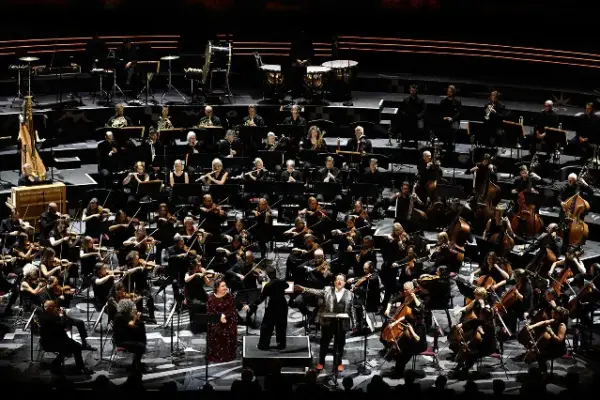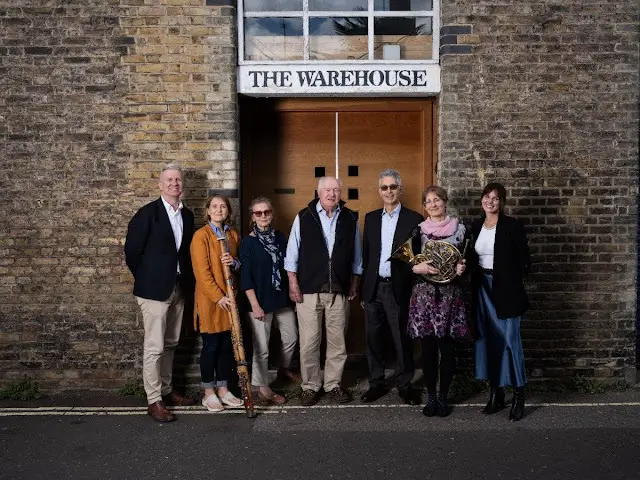
In a landmark development for the British classical music landscape, the world-renowned Academy of St Martin in the Fields (ASMF) has officially acquired The Warehouse—London’s quintessential Waterloo-based rehearsal, recording, and creative hub. Previously owned and operated by the London Festival Orchestra (LFO) and its visionary founder Ross Pople, The Warehouse has served as a cornerstone of the UK’s musical infrastructure for over three decades.
This historic acquisition marks a monumental turning point for the ASMF. Founded in 1959 under the legendary baton of Sir Neville Marriner, the ensemble has spent over sixty years as a musical nomad, achieving global acclaim while lacking a permanent, physical headquarters of its own. Now, through a fully philanthropic capital acquisition funded heavily by international donors—most notably from the United States—the orchestra has secured a central London sanctuary.
Rather than merely functioning as administrative offices or storage for sheet music, The Warehouse is envisioned as an integrative ecosystem. It will unite the orchestra’s musicians, administrative staff, and extensive music library under a single roof, while simultaneously doubling down on community outreach, grassroots educational programs, and support for early-career artists. With plans to launch a secondary fundraising drive—dubbed Our Players. Our Purpose. Our Future. Our Home—aiming to secure an additional £500,000 by April 2027, the ASMF is carefully balancing fiscal prudence with visionary architectural and community development. This report explores the legacy of The Warehouse, the mechanics of the acquisition, the transformative interior and operational plans, and the profound impact this new era holds for classical music in London and beyond.
Detailed Chronology
The Genesis of The Warehouse (1990s)
The story of The Warehouse is inextricably linked to conductor and violist Ross Pople. During the 1990s, Pople established the venue in the heart of London’s Waterloo district to serve as a dedicated home for the London Festival Orchestra (LFO) and to fill a desperate industry-wide void: a flexible, high-acoustics space where orchestras, choirs, chamber ensembles, and soloists could rehearse and record without the prohibitive costs and scheduling pressures of commercial concert halls.
Over the decades, The Warehouse evolved into a hallowed sanctuary for the global classical elite. Its studios echoed with the artistry of legendary figures such as Yehudi Menuhin, Daniel Barenboim, Mitsuko Uchida, and even crossed genres to host iconic contemporary performers like Annie Lennox and Shirley Bassey. It became a living, breathing archive of British musical creation.
The Turning Point (2012–Present)
The operational trajectory of The Warehouse shifted dramatically in 2012 when Ross Pople suffered a near-fatal skiing accident. The incident forced Pople to lay down his baton, bringing the active performance life of the London Festival Orchestra to a premature close. However, Pople remained fiercely dedicated to preserving the venue, maintaining its operations as a vital beating heart for the broader musical community.

Fast forward to late 2024, negotiations between the ASMF leadership and the LFO culminated in a historic handover. By acquiring the venue, the ASMF ensured that The Warehouse’s legacy would not be paved over by commercial development, but rather stewarded by a major international orchestra that understands the acute pressures facing classical musicians in the capital today.
The Acquisition and Phased Transition
Unlike corporate acquisitions financed through commercial debt or operational borrowing, the ASMF’s buyout of The Warehouse was executed through ring-fenced philanthropic funding. Crucially, the orchestra’s leadership ensured that every penny required for the purchase was secured before the papers were signed, insulating the ensemble’s day-to-day touring and performance budgets from financial vulnerability.
The transition is now entering its second phase. Having successfully acquired the physical asset, the organization has launched the Our Players. Our Purpose. Our Future. Our Home campaign. Running through April 2027 with a target of £500,000, this public and philanthropic appeal is designed to finance critical infrastructure upgrades, interior restructuring, and community accessibility initiatives.
Supporting Context & Metrics
Architectural Anatomy and Future Transformations
Located in Waterloo, The Warehouse is a sprawling, highly adaptable urban facility. Its core infrastructure includes:
- Two Main Studios: Acoustic spaces designed to accommodate varying ensemble sizes. The larger studio is fully equipped to house a complete, Beethoven-scale symphony orchestra for high-fidelity recording sessions while holding a licensed audience capacity of up to 100 people for intimate salon concerts.
- Ross Pople’s Former Apartment: A unique two-story residential and studio space that is slated for conversion into a state-of-the-art administrative headquarters, housing the orchestra’s extensive music library, collaborative meeting rooms, and executive offices.
- The Arts Hub Concept: Current administrative spaces, temporarily utilized by the ASMF team, are earmarked for redevelopment. The organization envisions an incubator space—offering hot-desking and collaborative facilities—for early-career arts organizations and independent creators.
- Vertical Expansion Potential: Crucially, the building holds existing planning permission for an additional floor, opening up future avenues for architectural and programmatic growth.
Financial Engineering and Governance
The acquisition was structured to ensure absolute financial health. The ASMF operates as the sole shareholder of The Warehouse. Consequently, while the building will continue to function on a commercial basis—renting out rehearsal and recording space to third parties, local neighbourhood groups, and industry peers—every single pound of profit generated is funneled directly back into the orchestra.
International philanthropy played a pivotal role in the buyout. A substantial portion of the capital was raised in the United States, reflecting the ASMF’s robust transatlantic touring footprint and the deep loyalty of its international patron base. To manage the day-to-day operations of the venue without draining the artistic and administrative bandwidth of the orchestra, the ASMF is actively recruiting a dedicated Building Manager.

Social Impact and Community Integration
The ASMF’s acquisition of The Warehouse is not merely an institutional land grab; it represents a profound scaling up of the orchestra’s social mission. For years, the ensemble has run groundbreaking outreach programs that extend far beyond the concert hall:
- Ensemble Unheard: A pioneering initiative that works directly with individuals experiencing homelessness. Participants are given access to musical instruments, participate in creative workshops, and compose original works. The initiative’s impact has grown exponentially—tripling or quadrupling in scale over recent years. Regular weekly sessions now take place inside the newly acquired sanctuary of The Warehouse, offering participants a stable, dignified creative home. This work culminates in high-profile public showcases, such as a major performance at the National Gallery featuring music inspired by the gallery’s permanent collection.
- School Outreach Programs: ASMF musicians regularly embed themselves within local schools, introducing young children to classical instrumentation and creative expression.
- Marriner Projects: A bespoke internal funding scheme named after founder Sir Neville Marriner, allowing ASMF orchestral players to apply for grants to spearhead self-generated community projects. Recent iterations include viola player Fiona Bonds’ chamber music series in Hertford and educational cello tours focusing exclusively on works by female composers. The Warehouse will now act as the primary incubator and rehearsal incubator for these artist-led endeavors.
Official Statements
The significance of the acquisition has drawn high-profile commentary from the leadership and artistic figures driving the ASMF forward:
"Throughout my past 15 years as the orchestra’s Music Director, many of my most rewarding musical experiences have come from working with the extraordinary musicians of the Academy. I have rehearsed with them many times at The Warehouse, so it is especially meaningful to see this much-loved space become the orchestra’s permanent home."
— Joshua Bell, Music Director, Academy of St Martin in the Fields
Reflecting on the emotional and historical weight of the venue during a recent guided walkthrough, ASMF Chief Executive Annie Lydford emphasized the continuity of the space:
"It’s a beloved space… Neville Marriner and Ross Pople knew each other well, and both orchestras were founded as personal, visionary projects. We aren’t here to erase the history of The Warehouse; we are here to honor it while writing its next chapter."
Lydford further highlighted the transformative operational benefits of centralization:

"Having our musicians, our administration, and our library under one roof will have a transformative effect on the way we function. It allows even the most mundane operational tasks to happen seamlessly, while giving our players a physical space to dream up new projects."
Future Outlook
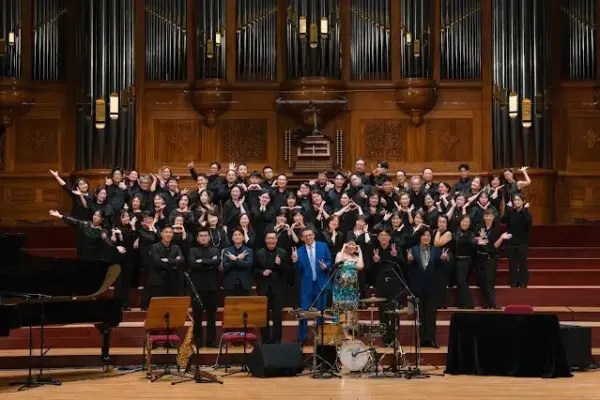
Despite planting permanent roots in Waterloo, the Academy of St Martin in the Fields remains an aggressively active global touring powerhouse. The orchestra’s itinerary reads like a masterclass in international mobility: fresh off an extensive tour across China, Taiwan, and Hong Kong, the ensemble is already preparing for major orchestral residencies in Germany in the New Year.
Simultaneously, the ASMF is deeply embedded in London’s cultural calendar. The orchestra is spearheading celebrations for the 300th anniversary of St Martin-in-the-Fields—the iconic Trafalgar Square church where the ensemble gave its inaugural performance in 1959. Tickets for their high-profile January 17 concert at Cadogan Hall alongside Music Director Joshua Bell sold out months in advance.
Looking ahead, the ASMF has confirmed that its London performance schedule will see no reduction. Instead, the presence of The Warehouse will allow the orchestra to curate a hyper-local salon series, launch collaborative partnerships with early-career artists, and expand its residency and educational footprints.
As the Our Players. Our Purpose. Our Future. Our Home fundraising campaign marches toward its 2027 milestone, the Academy of St Martin in the Fields stands at the intersection of illustrious heritage and bold modern innovation. By securing a physical home, the orchestra has not only safeguarded its own operational future but has preserved a vital sanctuary for the entire British musical community for generations to come.