Executive Overview
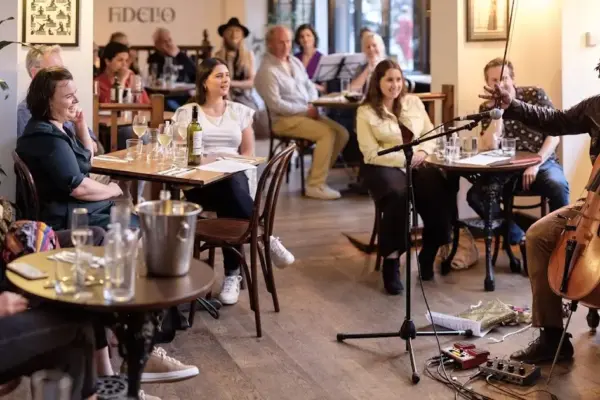
In the depths of Auckland’s southern winter in 2025, a cultural void was acutely felt across Aotearoa’s largest metropolis. Despite a thriving nocturnal landscape, the city lacked a reliable, mid-week anchor for improvised, adventurous music. Recognizing this gap, local DJ luminaries Frank Booker and Samuel Harmony—the creative engine behind the club outfit Music First—decided to intervene. They claimed Wednesdays at Goblin, an intimate upstairs bar nestled on Auckland’s bustling Ponsonby Road, and handed the keys over to gifted keyboardist Joe Kaptein.
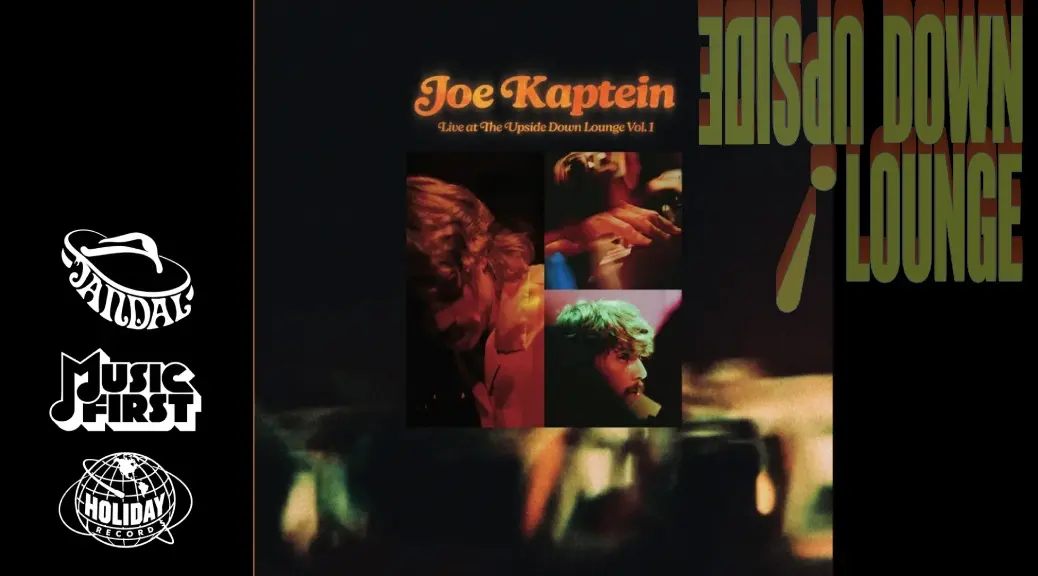
Thus was born the Upside Down Lounge, a free-entry residency designed to showcase the shifting tides of Aotearoa’s contemporary jazz ecosystem. A year on, that weekly experiment has been immortalized on vinyl with the release of Live at the Upside Down Lounge Vol. 1.
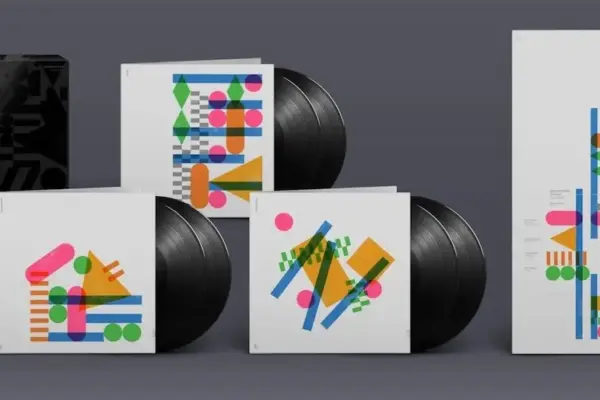
Pressed on heavy 180-gram black vinyl in a strictly limited run of 300 hand-numbered copies—a collaborative venture between Kaptein’s own Jandal Records, Music First, and Holiday Records—the album captures a combustible era of local jazz-fusion. Eschewing the conventional acoustic piano entirely, Kaptein marshals an army of vintage electronics, including a Fender Rhodes, a Yamaha CS-5 monosynth, and a 1979 Yamaha SK-10 ensemble keyboard. Across five expansive tracks, Kaptein and a rotating cast of virtuosic collaborators blend classic 1970s jazz-funk, modal explorations, and sci-fi synth soundscapes into a modern-day testament to spontaneous collaboration.
Detailed Chronology and Line-Up Dynamics
The anatomy of a live residency is defined by flux, and the Upside Down Lounge is no exception. The rhythm section supporting Kaptein on this recording diverges significantly from the personnel who anchored his studio work earlier in the year. While April 2025 saw Kaptein sharing the Goblin stage with bassist Wil Goodinson and drummer Elijah Whyte—the rhythm section responsible for underwriting his acclaimed album Eternal Afternoon—Vol. 1 preserves the explosive opening night of a subsequent three-week residency featuring a fresh iteration of players.
On this landmark evening, Kaptein was joined by:
- Hank Trenton on double bass
- George Brajkovich on drums
- Ruby Fainaa on percussion
Despite the introduction of a new configuration, underlying musical relationships ran deep. Trenton, Kaptein, and Brajkovich shared a foundational history, having previously performed together in Trenton’s original ensemble during the Creative Jazz Club’s "Fresh Faces" showcase back in 2022. For Trenton, whose primary livelihood involves holding down the low end on international cruise ships, this residency was a fleeting window of terrestrial creativity; immediately following the run’s final June performance, he was once again bound for the sea.
This sense of transience infuses the recording with an unmistakable urgency. The ensemble navigates complex arrangements with telepathic communication, transforming the cozy, echoing confines of the Ponsonby Road bar into a laboratory of high-octane improvisation.
Sonic Architecture and Instrumentation
To understand the sonic signature of Live at the Upside Down Lounge Vol. 1, one must examine Joe Kaptein’s deliberate rejection of the acoustic piano. By anchoring his setup exclusively in mid-century electronic instruments—primarily the Fender Rhodes, complemented by the Yamaha CS-5 and the textural brass, string, and organ sections of the 1979 Yamaha SK-10—Kaptein deliberately steps into the lineage of early jazz-fusion pioneers.
The Fusion Legacy Reimagined
Critics and connoisseurs will immediately recognize the stylistic echoes of Patrice Rushen and Dave Grusin in Kaptein’s warm, bell-like touch on the Rhodes. Yet, his modal vocabulary and multi-keyboard architecture reach even further back, invoking the pioneering spirit of Denny Zeitlin. Unlike contemporary fusion projects that frequently dilute their emotional resonance in favor of technical calibration, Kaptein’s approach feels remarkably uncompromised.
Side A: Atmospheric Grooves and Sci-Fi Textures
Side A opens with "Lonnie," a composition first introduced on the 2024 Sarang Bang release Eternal Afternoon. The track initiates with a hesitant, repetitive motif played on the Rhodes, gradually blooming into a rich, enveloping theme that evokes Bob James’s iconic "Angela" (the legendary theme from the television sitcom Taxi). As the groove drops, the ensemble locks into a classic early-1980s jazz-funk pocket. Enhanced by the natural, atmospheric wash of room reverb, the recording balances raw live energy with pristine spatial clarity, capturing the palpable tension in the room before the crowd erupts into applause.
The momentum continues with "Sleepy Space Cadet," originally the opening track of Kaptein’s 2025 debut Pool Sharks on Jandal Records. Here, the composition is given ample space to breathe. The track lifts off via sci-fi sound effects generated from the Yamaha synths, before the Rhodes glides effortlessly across the top. Traces of Joe Zawinul, Chick Corea, and Herbie Hancock permeate the performance, while Ruby Fainaa’s auxiliary percussion injects a persistent, feel-good pulse. Trenton drops subtle hints of swing before synthesizers dominate the mix in an earnest pursuit of what might be called the lost chord of astrological consciousness.
Side B: Intergalactic Explorations and Soul-Jazz Revival
Side B plunges headfirst into science fiction with a blistering interpretation of Charles Earland’s "Intergalactic Love Song," originally found on Earland’s 1976 Mercury release Odyssey. At Goblin, the synthesizers establish an immediate, spiritual-jazz trajectory before New Zealand jazz royalty Nathan Haines enters on soprano saxophone.

Haines—widely celebrated in the UK for his London years and seminal Chillifunk albums Sound Travels and Squire For Hire, and a frequent collaborator with Kaptein in the trio Soft Chaos—delivers a masterclass in tone and fire. Bolstered by Brajkovich’s driving percussion and Kaptein’s steady leadership, the performance stands as a modern-day jazz-fusion masterwork, drawing ecstatic mid-song cheers from the enraptured audience.
The set transitions into "On My Mind," the sole Kaptein original on the record absent from his studio catalog. Propelled by a Latin rhythm interwoven with synthesizer effects, the quartet embarks on a high-octane sprint. Crucially, even at breakneck speed, the players actively listen to one another, maintaining a tight, responsive interplay.
The album closes with a nod to Eddie Harris’s soul-jazz classic "Listen Here," a Billboard chart fixture during the summer of 1968. Opening to rapturous applause, Trenton initiates a driving bass rhythm, Fainaa adds texture with the güiro, and the piece morphs into a subtle, Afro-Cuban Herbie Hancock-esque groove. With Haines stepping back after his feature on the Earland track, the iconic melody originally played on Harris’s amplified Varitone saxophone is ingeniously transferred to Kaptein’s keyboards.
Supporting Context & Production Metrics
Live at the Upside Down Lounge Vol. 1 is as much a triumph of local independent infrastructure as it is of musical execution. The physical release bridges three distinct pillars of Aotearoa’s contemporary music community:
| Release Metric | Detail |
|---|---|
| Format | 180-gram black vinyl (Hand-numbered) |
| Pressing Run | Limited to 300 copies globally |
| Collaborating Labels | Jandal Records, Music First, Holiday Records |
| Primary Venue | Goblin Bar (Upstairs, Ponsonby Road, Auckland) |
| Residency Origin | Southern Winter 2025 |
The involvement of Holiday Records is particularly significant. As the arm of an Auckland-based vinyl pressing plant—Aotearoa’s first domestic pressing facility since EMI shuttered its historic Lower Hutt factory in 1987—Holiday represents the resurgence of physical music manufacturing in New Zealand. Coupled with the curation of Frank Booker and Samuel Harmony’s Music First imprint and Kaptein’s Jandal Records, the release cements a localized ecosystem capable of recording, pressing, and distributing world-class improvised music entirely on its own terms.
Official Statements & Industry Reception
While formal press releases for underground jazz recordings are frequently understated, the communal sentiment surrounding the Upside Down Lounge speaks volumes about its cultural impact.
Reflecting on the ethos of the Wednesday night gatherings, co-promoter Frank Booker noted the original vision behind the partnership: "Auckland has no shortage of weekend nightlife, but we felt a distinct void during the midweek. Wednesdays needed a heartbeat—a place where musicians and heads could congregate without pretense. Joe Kaptein and his rotating lineups turned Goblin into that sanctuary."
Reviewers and jazz critics have similarly praised the record’s refusal to pander to modern commercial constraints. Steve Williams, writing for UK Vibe, emphasized the rare technical courage displayed across the session: "Across five tunes, the quartet weave an eclectic tapestry of multi-coloured strands, with a technical willingness to experiment that’s often absent from similar music today."
Furthermore, the integration of veteran voices like Nathan Haines with emerging instrumentalists like Hank Trenton and George Brajkovich has been hailed as a vital bridge between generations of Aotearoa jazz practitioners.
Future Outlook
As the final notes of Live at the Upside Down Lounge Vol. 1 fade out, attention naturally turns toward the horizon. The album’s open-ended title deliberately leaves space for continuation, and given the boundless nature of Joe Kaptein’s musical curiosity, a second volume feels not merely possible, but inevitable.
The Upside Down Lounge continues to serve as an incubator for Auckland’s creative underground. With a rotating cast of musicians cycling through Goblin’s upstairs room week after week, the residency is never short of prospective candidates for future recordings. As Aotearoa’s independent vinyl infrastructure solidifies through partnerships like those between Jandal, Music First, and Holiday Records, the future of local jazz-fusion looks remarkably fertile.
For jazz enthusiasts, crate-diggers, and patrons of the avant-garde, Wednesday nights on Ponsonby Road are no longer just a midweek diversion—they are ground zero for a quiet, funky renaissance.