Executive Overview
For decades, the cinematic shorthand of villainy has relied on a tired, damaging visual trope: the antagonist marked by facial scars, severe burns, birthmarks, or other visible differences. From classic Hollywood blockbusters to contemporary prestige television, physical divergence has routinely been exploited as a shorthand for moral corruption, inner darkness, or psychological instability. Now, a powerful coalition of actors, advocacy organizations, and casting professionals is pushing back.
Spearheaded by the leading UK equality charity Changing Faces, a national campaign and petition have been launched to demand a fundamental overhaul of how the screen industries represent individuals with visible differences. Backed by prominent actors such as Robert Rhodes (Silent Witness, House of the Dragon, The Rapture) and Beau Bradfield, the movement arrives at a critical cultural crossroads.
At the heart of this crusade is newly released, groundbreaking research from the Centre for Appearance Research (CAR) at the University of the West of England. This empirical study provides the definitive proof that advocates have long suspected: exposure to negative, villainous portrayals of visible differences on screen directly corrupts public perception, leading to real-world prejudice, stigma, and discrimination against the estimated 4.9 million people in the United Kingdom living with a visible difference.
As the entertainment industry increasingly embraces diversity across race, gender, sexuality, and neurodivergence, disability and visible difference remain glaringly overlooked blind spots. By pairing industry insights with academic rigor, this movement aims to dismantle tropes that have normalized the dehumanization of millions, steering the media toward authentic, multi-dimensional storytelling.
Detailed Chronology and the Genesis of the Campaign
The momentum driving the current anti-stigma movement has been decades in the making, born from the lived experiences of performers and advocates who have watched Hollywood monetize their physical realities for dramatic shock value.
The Lived Experience: Robert Rhodes and Beau Bradfield
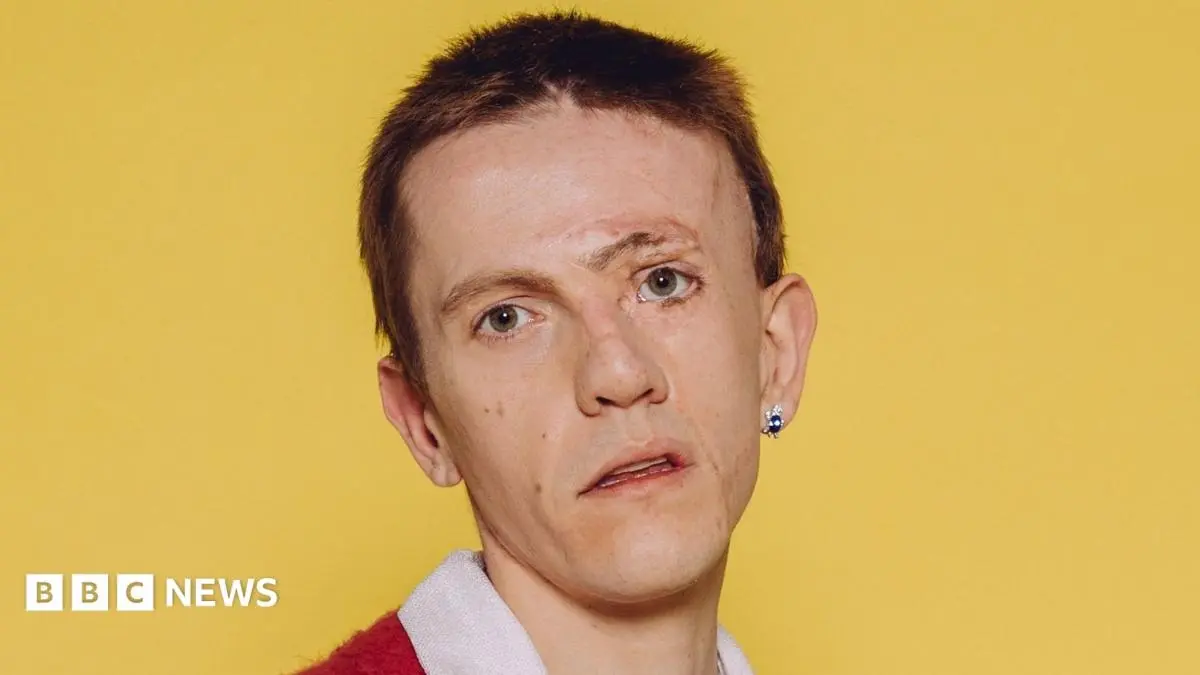
The campaign’s prominent public face, Northamptonshire-based actor Robert Rhodes, knows the realities of visible difference intimately. Born with a large facial birthmark resulting from congenital melanocytic nevus, Rhodes underwent multiple surgical procedures as a child, leaving him with enduring facial scarring. Despite building a successful career with high-profile credits in major productions like Silent Witness and House of the Dragon, Rhodes has witnessed firsthand the systemic pigeonholing of actors with atypical appearances.
"We can’t wait for action any longer," Rhodes stated passionately. "Yes, there is often trauma associated with a scar, but we experience joy, love, and success just like everyone else. More neutral and aspirational characters on screen will improve real perceptions of the whole visible difference community."
Echoing these sentiments, fellow actor Beau Bradfield emphasizes the psychological impact these narrow casting parameters have on younger generations. "As an actor with facial scarring, I know how important it is to see people with visible differences represented on screen as real, complex people," Bradfield explains. "I want children growing up with visible differences to see characters who look like them being heroes, friends, parents, and love interests—not just villains."
The Strategic Evolution of Changing Faces
Changing Faces has spent years lobbying producers, directors, and commissioners to re-evaluate their narrative choices. However, the organization realized that soft persuasion was no longer enough. By launching a formal petition and leveraging data analytics, the charity has shifted from dialogue to direct action.
A crucial milestone in this chronology has been Changing Faces’ collaboration with the Creative Diversity Network (CDN). Through persistent advocacy, visible difference has successfully been integrated as an official category within the CDN’s diversity data monitoring and reporting frameworks. This administrative breakthrough ensures that broadcasters can no longer ignore or sweep visible differences under the rug; it is now a measurable metric of industry inclusion.
Supporting Context, Psychological Research, and Industry Metrics
To understand why this campaign is gaining unprecedented traction, one must examine the intersection of media psychology, casting mechanics, and demographic realities.
The Centre for Appearance Research (CAR) Findings
Until recently, critics of media tropes relied largely on anecdotal evidence. That changed with the release of the landmark study conducted by the Centre for Appearance Research at the University of the West of England.
The CAR research empirically demonstrated a direct causal link between media consumption and social stigma. The study revealed that when audiences—particularly those with limited interpersonal exposure to atypical appearances—are repeatedly exposed to villains bearing scars, burns, and facial disfigurements, they internalize these associations. Consequently, viewers develop significantly more negative, fearful, and prejudiced perceptions of real-world individuals who share those exact physical traits.
Louise Wright, Chief Executive of Changing Faces, underscored the gravity of these findings: "For years we’ve asked the industry to think about the stories it tells about visible difference. Now, for the first time, we have proof that those stories don’t stay on screen—they shape how people with visible difference are treated in real life. Halloween is the moment this is impossible to ignore, which is why we’re asking industry, and the public, to help us change it."
The Scale of the Community
The urgency of this reform is further underscored by sheer demographics. According to Changing Faces, approximately 4.9 million people in the UK alone—roughly one in fourteen individuals—live with a visible difference. This encompasses burn survivors, individuals with congenital birthmarks, people with skin conditions such as severe eczema, vitiligo, or psoriasis, and those living with the aftermath of trauma or cancer surgeries.
When nearly five million citizens are systematically erased from heroic, romantic, or everyday narratives—or worse, are continuously equated with evil—the societal toll in terms of mental health, employment discrimination, and social isolation is staggering.
Official Statements and Industry Perspectives
Transforming a century-old cinematic habit requires cooperation from those who hold the keys to production: casting directors, writers, and network executives. Fortunately, voices within the casting community are stepping forward to prove that inclusive casting is not only an ethical imperative, but an artistic upgrade.
Challenging the Casting Brief
Bailey Frances, representing Cambridge-based Shakyra Dowling Casting and a member of the prestigious Casting Directors’ Association (CDA), offers an insider’s perspective on how lazy writing habits manifest in casting rooms.
"Villains are often written with visible differences (e.g., facial scars) as shorthand," Frances explains. However, she notes that these tired tropes are entirely surmountable through proactive collaboration between casting professionals and creatives.
"Asking whether a character could be interpreted differently, or whether that difference is essential to the story, leads to better, more truthful storytelling," Frances asserts.
Detailing the mechanics of progressive casting, Frances highlights how industry professionals can disrupt tokenism: "We regularly present actors who don’t match the description on the page but fit the character perfectly, and they’re often the ones who get the job. Casting directors are in a unique position to widen the search and open up the conversation with writers and directors, challenging the initial casting briefs where needed."
The Call for Multi-Dimensional Storytelling
The consensus among advocates, researchers, and progressive casting agents is clear: nobody is arguing that characters with visible differences should never be portrayed as complex, flawed, or even villainous. The core issue is proportionality and tokenism. When the only time an audience sees a scar, burn, or birthmark is attached to a sociopath, a monster, or a criminal, the representation ceases to be art and begins to function as propaganda against a marginalized group.
Actors like Robert Rhodes and Beau Bradfield are demanding a landscape where a surgeon, a romantic lead, a superhero, or an ordinary next-door neighbor can possess a visible difference without it serving as a plot device or a metaphor for moral decay.
Future Outlook: What Lies Ahead for Screen Representation?
As Changing Faces’ national petition gains momentum across social media, trade publications, and cultural forums, the film and television industry stands at a historical crossroads.
The Path to Sustainable Change
Realizing the vision set forth by Robert Rhodes and Louise Wright will require a multi-pronged strategy across the entertainment ecosystem:
- Writer’s Room Sensitization: Writers must be trained to recognize when they are defaulting to physical anomalies as narrative crutches for villainy. Crafting compelling antagonists relies on psychological depth, motivation, and dialogue—not superficial bodily traits.
- Inclusive Production Pipelines: By utilizing data collection metrics established in partnership with the Creative Diversity Network, studios can set internal benchmarks for casting actors with visible differences across all genres, from gritty dramas to lighthearted sitcoms.
- Empowering Casting Directors: As demonstrated by industry leaders within the Casting Directors’ Association, casting professionals must continue to aggressively challenge restrictive casting briefs and champion blind or inclusive casting practices.
- Public Awareness and Education: Campaigns like those spearheaded by Changing Faces must continue to educate the broader public, helping viewers deconstruct the subconscious biases reinforced by decades of lazy media consumption.
Conclusion
The narrative shift demanded by Robert Rhodes, Beau Bradfield, and Changing Faces is more than a plea for professional equity for actors with physical differences; it is a fundamental demand for human dignity.
When the media industry stops using scars and physical anomalies as a shortcut for evil, it does not just open doors for talented performers waiting in the wings—it heals the way society views nearly five million of its own citizens. As the petition gathers signatures and industry heavyweights join the conversation, the countdown begins for the screen to finally mirror the rich, diverse, and authentic spectrum of the human face.