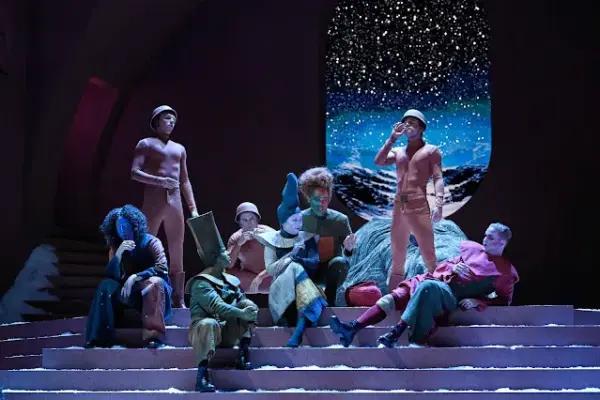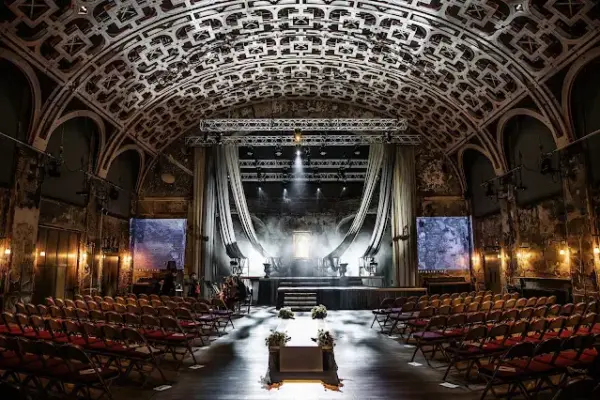
This Thursday, October 29, 2026, the London classical music scene plays host to a major archival revival as Gothic Opera launches its brand-new staging of Fromental Halévy’s La Dame de Pique at the Battersea Arts Centre (BAC). Directed by Jonny Danciger and conducted by Hannah von Wiehler, this production marks the first time the complete opera has been staged since its historic 1850 premiere at the Opéra Comique in Paris.
Loosely adapted from Alexander Pushkin’s classic Gothic short story of the same name, Halévy’s operatic rendition predates Pyotr Ilyich Tchaikovsky’s globally renowned masterwork by four decades. While Tchaikovsky’s 1890 version commands the standard international repertoire, Halévy’s original creation has languished in near-total obscurity for over 170 years. Gothic Opera’s autumn staging seeks to correct this historical oversight, offering contemporary audiences a rare window into mid-19th-century French Romanticism infused with Gothic theatricality.
Ahead of opening night, Planet Hugill’s Saskia Bibb sat down with rising baritone Charlie Epps. A recent graduate of the Royal Welsh College of Music and Drama (RWCMD), Epps steps onto the professional operatic stage for the very first time to portray André Roskaw on October 29 and 31. The following extensive, in-depth feature explores Epps’s transition from conservatoire training to the professional spotlight, the complex psychology of his character, the tempestuous nature of Halévy’s neglected score, and how a nineteenth-century opéra comique set against the backdrop of the French Revolution holds urgent, contemporary resonance for modern theatergoers.
Detailed Chronology
From Pushkin to Paris: The 1850 Genesis
The lineage of La Dame de Pique (The Queen of Spades) begins with Alexander Pushkin’s 1834 masterpiece of Russian literature—a chilling psychological tale exploring obsession, greed, and the supernatural. When French composer Fromental Halévy turned his attention to the subject in the late 1840s, he operated at the height of his creative powers. Having already achieved international fame with his grand opera La Juive (1835), Halévy collaborated with librettists Eugène Scribe and Henri Saint-Georges to craft a work tailored to the aesthetics of the Parisian Opéra Comique.
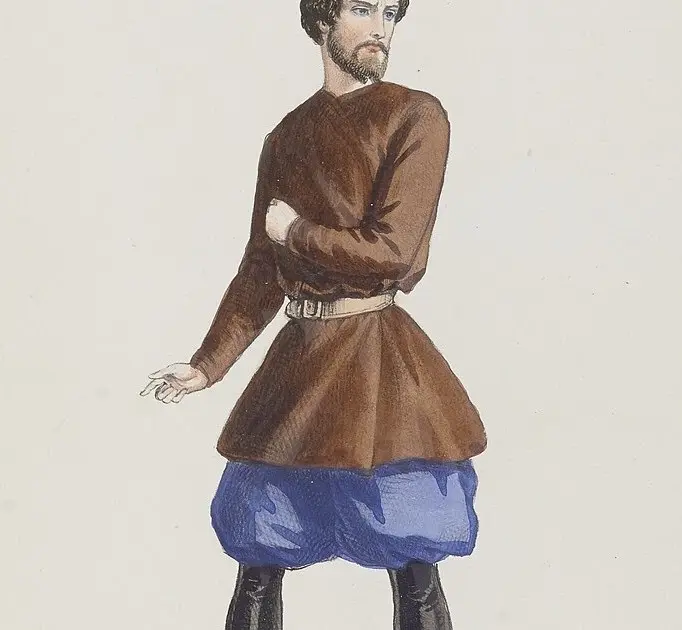
Opening in 1850 with legendary bass-baritone Charles-Aimable Battaille originating the role of André Roskow (Roskaw), the opera enjoyed initial curiosity but was soon eclipsed by the shifting tastes of Parisian audiences toward grander, more bombastic spectacles and, later, the towering works of Verdi, Wagner, and ultimately Tchaikovsky’s own setting of the Pushkin text. For nearly two centuries, Halévy’s score remained dormant in European archives, treated more as a footnote in music history than a living, breathing piece of musical theater.
The 2026 Revival Chronology
The journey toward the 2026 Battersea Arts Centre production represents a meticulous reconstruction and artistic reimagining by Gothic Opera.
- Pre-Production & Archival Excavation (2025–2026): Director Jonny Danciger and conductor Hannah von Wiehler spearheaded the effort to unearth Halévy’s rare manuscript and orchestral parts. Working within the confines of sparse performance history, the creative team balanced historical staging practices with modern interpretive freedom.
- Casting and Conservatoire Integration (Summer 2026): Auditions brought forward fresh talent from the UK’s leading music conservatoires, paving the way for recent RWCMD graduate Charlie Epps to secure his debut professional role.
- Rehearsal Period (September–October 2026): Intensive staging workshops tackled the physical vocabulary of Roskaw, the intricate social dynamics of the mining community, and the complex harmonic structures of Halévy’s orchestration.
- Opening and Performance Run (October 29 – November 1, 2026): The production opens on October 29 at the Battersea Arts Centre, running through All Hallows’ Eve and concluding on November 1—a seasonal alignment deliberately chosen to underscore the work’s dark, Gothic undertones.
Supporting Context & Metrics
The Birth of a Professional Career: Charlie Epps on Conservatoire to Stage
Stepping directly from the structured environment of a top-tier music college into a fully realized, professional opera production is a formidable leap. For Epps, the unique nature of mounting a long-dormant work provided an unexpected artistic advantage.
"It’s really important that these opportunities exist, where there’s a fully staged, fully invested-in and believed-in opera," Epps reflects. "The fact that it hasn’t been performed for so long makes for a perfect opportunity for young artists to revive it and, in many ways, to invent something new. There are some stage directions and some documented evidence of how it would have been performed at the premiere, but there’s a lot of space for creativity as well, which Jonny [the director] has really tapped into."
Because no living performer owns the modern performance history of André Roskaw, Epps enjoyed an artistic canvas free from the heavy shadow of iconic predecessors.
"This is my first professional role—and the audition was my first professional audition—so it’s also great not having to compare myself to anyone else who may have performed the role! You’re creating a standard for yourself, with people around you who are in the same boat. It’s a really nice way to start and to gain experience."
Psychological Anatomy of André Roskaw
In Halévy’s narrative framework, Roskaw is far from a standard operatic villain or a romantic hero. Placed at the intersection of economic transformation and social anxiety, his character study reflects the turbulent class dynamics of nineteenth-century industrial Europe.
"André Roskaw has been made chief foreman of the Anzin coal mines, owned by Lisanka’s benefactress, Princess Polowska," Epps explains. "He really feels his status: Lisanka isn’t from the aristocracy, but nor is she from working stock, whereas Roskaw was a physical labourer before and feels unsure in his new position. I’ve tried to bring some of that into the physicality. Roskaw is unstable, and sometimes very direct in his interactions with the other characters. You see this edge to him from the start."
Gambling functions as the psychic engine of the opera, driving characters to financial and moral ruin. Epps notes how director Jonny Danciger contextualized this addiction within historical reality:
"Gambling is, of course, a central theme of this opera. Johnny has talked about how important gambling was in society at the time and how rife it was. Even though it was officially banned, there was an honour code among gamblers: if you didn’t pay your debts, you got a bad reputation. Roskaw has a bit of a bad reputation among the miners."
Consumed by monomania, Roskaw’s fixation on wealth borders on the pathological. Epps draws direct parallels between his current operatic character and classic dramatic theater roles he tackled during his conservatoire studies:
"He’s also a ruminator, someone who fixates on things. From the beginning, he’s obsessed with money and thinks about gambling all the time. He says that has one pleasure and one wish: the game. He’s consumed by his fixation on gold, repeating, ‘de l’or, de l’or… encore, encore.’ At university I played Joe Keller in Arthur Miller’s All My Sons, and I’m finding something similar in this role: I have a deep dark secret—do I confess it or withhold it?"
Musical Architecture: Distinctly French, Stormy, and Contrasting
Musically, Halévy’s score defies the weighty brass and pervasive gloom later associated with Tchaikovsky’s Russian setting. Instead, it offers a distinctly Gallic brand of romanticism characterized by harmonic agility and dynamic contrast.

"It really deserves to be heard and seen," Epps insists. "The music is very French. That’s something we noticed straight away in its character; it’s very romantic. My aria has a lot of harmonic changes and moves frenetically from one idea to the next, with a lot of repetition in the text. In Roskaw’s music generally, there’s a lot of tremolo, a lot of diminished chords, jumping and sliding into other keys. It’s very stormy music. To offset that, you get Constantin’s aria that follows, which is much more lyrical, gentle, idyllic and picturesque. So there’s a lot of contrast."
The score’s structural brilliance extends far beyond solo numbers into its complex ensemble writing, which mirrors the social tapestry of nineteenth-century drama:
"Another great thing is the detail in the big ensembles and finales. People are coming in and out, a bit like some of the scenes in Eugene Onegin, with lots of little interactions and gossip between the characters happening at the same time. The chorus appear as miners, soldiers and even revolutionaries."
Reflecting on why such a masterwork fell out of the standard performance canon, Epps points to shifting historical tides rather than intrinsic musical flaws:
"I was talking to Johnny about this the other day: why did such brilliant writing get neglected? We wondered whether it simply wasn’t well received at its premiere. There are plenty of operas that weren’t well received initially, like The Barber of Seville and some of Mozart’s operas, because they didn’t suit audiences’ tastes at the time. And as an opéra comique, it might have been seen as a bit trivial, especially as the really big, heavy operas started to dominate soon afterwards. Whatever the reason, I see it as a really rich vein from which to create something fresh."
Official Statements
Physicality, Technique, and Directorial Vision
Portraying a character driven by obsessive gambling required rigorous physical discipline. Epps credits director Jonny Danciger with helping him channel internal psychological tension into effective stage movement without compromising vocal production.
"You could call Roskaw a monomaniac, specifically for gambling," Epps notes. "The difficulty for me is showing tension in the body without letting it get into your shoulders, your neck, and especially your tongue and jaw. Johnny has been helping me with that. You can show a lot in your arms, and that will read well onstage. Roskaw is a physical person and an unstable character. When he gets worked up, I’ve been trying to find the optimum amount of movement: enough to make it read, without it becoming too busy."
This physicalized instability feeds into a broader character arc concerning class mobility and personal accountability:
"I wonder—is he a victim of circumstances to some extent? It’s partly a story about his rise from having nothing to suddenly earning proper money and asking, what do I do with it, and where do I go from here? The challenge is making that a trajectory, rather than holding the same extreme push and pull feeling all the way through."
Social Mobility and Modern Resonance
Set against the backdrop of the French Revolution, Gothic Opera’s production uses its opéra comique format not merely for light entertainment, but as a vehicle for biting social commentary. Epps highlights how the interpersonal relationships on stage mirror contemporary debates regarding wealth distribution and class privilege:
"It’s an opéra comique, but it has serious themes as well. Johnny is going for some comic relief in the dialogue, while also making some more serious social commentary. There’s a lot of commentary on social mobility in the relationships between the characters. Roskaw comes from a working-class mining background and has made his way up, but he’s still very money-conscious. Lisanka and the Princess have this line: ‘rules can be changed.’ Zizianow believes in the power of the family name, and that nobility grants you certain privileges."
Furthermore, the ideological battle lines drawn between aristocratic figures add layers of political complexity to the plot:
"There’s also this interesting standoff between Princess Poloska and Prince Zizianow—the prince is snobbish and a chauvinist, while the princess believes in social mobility. The prince feels that ‘you’re a princess, you’re supposed to be on my team’. So there isn’t necessarily a determinism. Roskaw’s not a working class hero either, he’s kind of a bad guy. The work raises questions that feel very current: who gets to move up in society, who wants to keep the doors closed, and what can sudden money do to a person?"
Future Outlook
As Gothic Opera prepares to lift the curtain at the Battersea Arts Centre, anticipation within the London arts community continues to build. The production stands as a testament to the vital cultural work being performed by fringe and independent opera companies—rescuing unjustly forgotten masterpieces from archival dust and matching them with the raw, untapped talent of emerging artists like Charlie Epps.
When asked to provide a final teaser for prospective audiences, Epps points to both the dramatic highs of the musical score and the atmospheric staging choices tailored for the autumn season:
"There’s a wonderful duet between Roskaw and the Princess. It’s a beautiful piece of writing, beautifully staged and we’ve done really detailed work on it. You get ten minutes of tension, excitement and drama between two very different characters. I think it stands up against other great duets that might come more readily to mind from the canon. Also, lanterns! It’s spooky, you see faces come out of the dark, people emerging with unknown intentions… perfect for Halloween!"
Gothic Opera’s production of Fromental Halévy’s La Dame de Pique runs at the Battersea Arts Centre (BAC) from October 29 to November 1, 2026. Full ticketing details and performance schedules are available directly through the Battersea Arts Centre Website.