Executive Overview
Director Christian Mungiu’s latest cinematic achievement, Fjord, cuts deep into the fragile fault lines where personal liberty, religious dogma, and state intervention collide. Set against the majestic, yet emotionally unforgiving backdrop of the Norwegian fjords, the film follows the harrowing trials of the Gheorghius family—an immigrant household caught in the cogs of a rigid child-welfare apparatus.
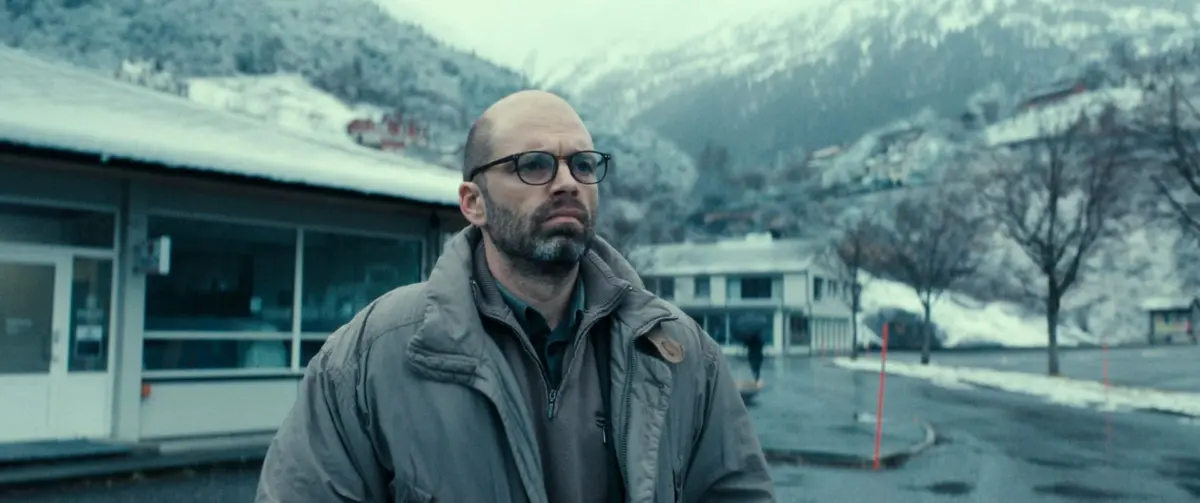
The narrative unfurls when Mihai, a Romanian migrant portrayed with striking restraint by Sebastian Stan, and his Norwegian wife Lisbet, played by Renate Reinsve, find their family life upended. What begins as a subtle cultural friction within a tight-knit coastal community rapidly devolves into an institutional battle royale after one of their children arrives at school bearing bruises.
For sociologists, migration experts, and legal scholars alike, Fjord transcends conventional drama to serve as a high-stakes sociological mirror. It investigates the weaponization of difference, the limits of progressive tolerance, and the heavy-handed nature of modern state paternalism. Mungiu refuses to offer neat resolutions, forcing audiences to wrestle with the uncomfortable grey areas that emerge when universal child rights lock horns with conservative, faith-based parenting traditions.
Detailed Chronology: The Escalation of a Cultural Collision
Act I: Arrival and the Inception of Suspicion
The film opens with the hauntingly familiar strains of the hymn Amazing Grace, establishing a sonic and thematic baseline that juxtaposes traditional religious values against the secular norms of contemporary Norway. The Gheorghius family has just relocated to the remote
, picturesque village of Lisbet’s birth. They settle next door to Mats, an amiable local headteacher played by Markus Tønseth.
In this insular micro-society, everyone’s business is public knowledge. Initially, the community extends a polite, if cautious, welcome. However, as the Gheorghius family attempts to integrate while remaining unapologetically anchored to their Christian evangelical faith, the atmosphere shifts. Mundane expressions of piety and conservative child-rearing methods are quietly cataloged by neighbors as anomalies, transforming initial curiosity into lingering wariness.
Act II: The Catalyst and the State Intervention
The tipping point arrives abruptly when one of the children, Elia, goes to school with visible bruises. In a nation where corporal punishment is strictly outlawed and systemic oversight of youth welfare is robust, the school reacts swiftly.
This single incident triggers an emotional and bureaucratic storm. The remaining runtime of Fjord tracks a relentless, harrowing descent into the machinery of the Norwegian welfare state. Through tense, tightly framed encounters with local police, educational administrators, and social workers, Mungiu lays bare the chasm separating state-mandated progressive ideals from conservative parental autonomy. The children are swiftly removed from the home, placing the parents in a defensive, Kafkaesque struggle against a detached institutional behemoth.
Act III: Widening Fractures and Media Exploitation
As the legal battle intensifies, the narrative expands to expose external pressures and internal fractures. Desperate to counter the state’s narrative, Mihai begins leveraging the family’s plight, mobilizing media-savvy, conservative Christian networks stretching from Romania across the Atlantic to the United States.
Simultaneously, the film exposes the quiet dysfunctions rippling beneath the polished surface of the local community. Teenage residents, such as Mats’ daughter Noora, grapple with hidden anxieties and self-harm behind glowing screens, while elderly and disabled members of the community are quietly sequestered away by institutional care. The illusion of a flawless, progressive society begins to fray, matching the jagged, fractured landscape of the fjords themselves.
Act IV: The Ambiguous Anti-Climax
The climax of Fjord refuses to provide the catharsis or vindication typically found in standard legal dramas. Instead, the narrative winds down into a heavy, deliberate anti-climax. No triumphant hero emerges from the wreckage; the children are caught in a permanent state of limbo, and both the parents and state representatives bear the psychological scars of an ideological war. The film closes on a quiet, unsettling note, emphasizing that when deeply entrenched worldviews shout across an ideological chasm, institutional and human casualties are inevitable.

Supporting Context & Metrics: Sociological Realities and Cinematic Themes
To fully appreciate the cultural resonance of Fjord, one must examine the socio-political context surrounding migration, state intervention, and child welfare in the Nordic region.
The Dynamics of Integration and the "Other"
In contemporary sociological research, the integration of migrants into homogeneous or tightly knit societies frequently highlights the tension between assimilation and pluralism. Fjord directly channels academic discourse regarding how newcomers are categorized as the "other."
| Thematic Dimension | State / Progressive Perspective | Conservative / Migrant Perspective |
|---|---|---|
| Child Rearing | Zero-tolerance for physical discipline; emphasis on individual autonomy. | Reliance on traditional, faith-based authority and parental prerogative. |
| Institutional Approach | Bureaucratic, detached, uniform application of child protection rights. | Perceived as cold, assimilationist, and culturally insensitive. |
| Community Structure | Open, secular, reliant on institutional safety nets and public transparency. | Insular, faith-centered, relying on informal networks and transnational advocacy. |
As noted by migration experts studying Nordic diversity, state-led welfare frameworks can inadvertently echo historical policies of cultural homogenization—such as historical assimilation projects directed at Indigenous Sámi populations. When bureaucratic agents enforce rigid lifestyle norms under the banner of child protection, the line between safeguarding a minor and erasing cultural difference becomes dangerously blurred.
Power Dynamics and Weaponized Vulnerability
Mungiu’s screenplay masterfully interrogates the distribution of power. The film asks fundamental questions about institutional accountability:
- Whose responsibility is it to safeguard rights?
- Whose rights take precedence? The child’s right to physical safety, the parents’ right to a family and religious life of their choosing, or the broader secular society’s demand for cultural conformity?
Furthermore, the film highlights how vulnerability can be weaponized by all parties. While Mihai exploits global conservative media networks to build public sympathy, representatives of the state are not immune to tactical maneuvers; personal attributes, such as a welfare officer’s childlessness, are dragged into custody hearings to undermine her professional credibility.
Official Statements and Critical Reception
The release of Fjord has sparked widespread debate among film critics, sociologists, and child welfare advocates across Europe.
Director’s Vision
In early press statements regarding the film’s conceptualization, Christian Mungiu emphasized his desire to avoid heroes and villains:
"I did not want to make a film that tells the audience who is right and who is wrong. The tragedy of modern institutional life is that both the protective state and the devout parent often act out of a genuine belief that they are saving the child. The catastrophe happens when neither side is willing to step outside their ideological armor to listen to the human being standing right in front of them."
Critical Divide
Film critics have been deeply divided over the film’s approach to institutional bureaucracy:
- Detractors have argued that Fjord occasionally leans into exaggerated portrayals of social welfare agencies, utilizing cold, unyielding bureaucrats to heighten dramatic tension.
- Proponents, conversely, view this stylistic choice as a deliberate critique of cartoonish binaries. Scholars of public administration suggest that the film accurately reflects the alienation individuals experience when navigating massive, risk-averse state institutions.
Future Outlook: Implications for Policy and Storytelling
As European societies continue to grapple with shifting demographics, transnational migration, and the friction between secular law and religious freedom, the conversations sparked by Fjord are likely to reverberate far beyond the box office.
- Reforming Child Welfare Interventions: Social work departments across Scandinavia and Western Europe are increasingly forced to balance rigid child protection mandates with cultural competency training. Films like Fjord serve as cultural touchstones that challenge agencies to refine how they communicate across language and belief barriers.
- The Evolution of European Cinema: Mungiu’s work signals a maturation in how European art-house cinema addresses multiculturalism. Rather than relying on simplistic narratives of assimilation, contemporary filmmakers are diving headfirst into the messy, unresolved realities of cross-cultural co-existence.
- Continued Academic Discourse: In university departments of sociology, anthropology, and law, Fjord is poised to become standard viewing material. It provides an accessible, emotionally resonant case study for students analyzing the legal limits of religious freedom and the heavy hand of state paternalism.
Ultimately, Fjord stands as a masterclass in cinematic empathy and moral ambiguity. By refusing to offer easy answers, Christian Mungiu challenges viewers to look past their own ideological comfort zones and confront the profound human cost of cultural misunderstanding.