Executive Overview
The intersection of artificial intelligence and the modern music economy has officially crossed a dark legal threshold. In a landmark sentencing handed down by the US Attorney’s Office for the Southern District of New York, North Carolina resident Michael Smith was condemned to 18 months in federal prison for orchestrating a sophisticated, multi-year streaming fraud operation. Operating at an industrial scale, Smith funneled thousands of AI-generated tracks through an army of automated bot accounts across major digital service providers (DSPs), systematically siphoning upwards of $8 million in illicit royalties.
For years, music industry executives, major record labels, and independent artists alike have raised alarms over the threat of artificial inflation, phantom streams, and algorithmic manipulation. Smith’s prosecution and subsequent sentencing provide the first major systemic validation of these fears, transforming nebulous digital piracy into tangible, hard-time consequences. Federal prosecutors describe the scheme not merely as copyright theft, but as a calculated technological assault on the foundational trust that underpins the modern digital music marketplace.
By substituting genuine human artistry with algorithmic noise and replacing real listeners with automated software scripts, Smith manipulated royalty distribution pools to rob authentic creators of their rightful earnings. As the legal fallout from the case reverberates across the tech and entertainment sectors, the music industry finds itself reckoning with an uncomfortable truth: the same technological tools democratizing music creation are also lowering the barrier to industrial-scale financial crime.
Detailed Chronology: How the Scheme Unfolded
The blueprint for Michael Smith’s enterprise was laid long before generative artificial intelligence became a mainstream consumer phenomenon. Federal investigators revealed that the operation officially commenced as early as 2017—an era when AI music tools were far more rudimentary, and bot-driven streaming manipulation was largely limited to repetitive loops of human-recorded tracks.
Phase 1: Laying the Infrastructure (2017–2018)
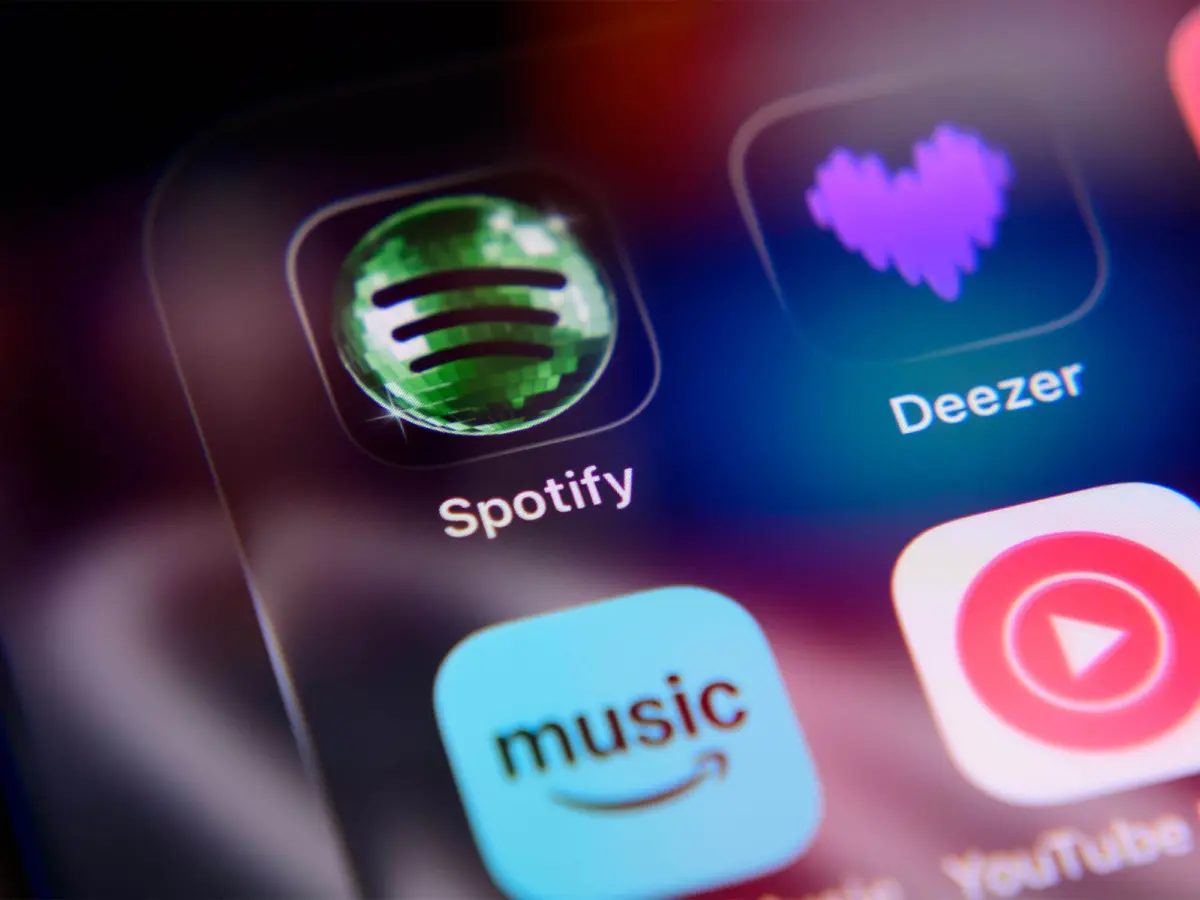
In the early days of the enterprise, Smith recognized a glaring structural vulnerability in the streaming economy. DSPs like Spotify, Apple Music, Amazon Music, and YouTube Music pay out royalties based on a pro-rata share system, where a percentage of a user’s subscription fee is distributed based on how frequently a specific track is streamed relative to the total number of streams platform-wide. By inflating his personal stream counts into the millions, Smith could skew this proportion in his favor, effectively drawing a disproportionate slice of the royalty pie.
To achieve this, Smith did not rely on viral marketing or genuine audience engagement. Instead, he cultivated a sprawling network of automated bot accounts. Operating thousands of virtual personas, he engineered custom software scripts designed to mimic human listening behavior, bypassing basic anti-fraud detection filters implemented by streaming platforms.
Phase 2: The AI Pivot and Scaling Up (2019–2023)
As generative artificial intelligence evolved, Smith identified an opportunity to supercharge his operation. Manually acquiring or producing thousands of tracks to feed his bot network was labor-intensive and costly. By incorporating early-stage AI music generation tools, Smith could bypass traditional composition, recording, and mixing entirely.
Working in the shadows, Smith allegedly generated hundreds of thousands of bespoke, low-quality AI tracks. These songs required no human musicians, no studio time, and no copyright clearance. With his automated production line firing on all cylinders, he uploaded the tracks across multiple aggregator services and distributed them widely to Spotify, Apple Music, Amazon Music, and YouTube Music under various pseudonymous artist profiles.

Once uploaded, his bot army went to work. The software continuously streamed these AI-generated tracks on an infinite loop, 24 hours a day, 7 days a week, across thousands of concurrent sessions. Because the tracks were often only a minute or two long—just long enough to trigger a royalty payout threshold on platforms like Spotify—the velocity of his automated listening machine was staggering.
Phase 3: The Crackdown and Legal Reckoning (2024–Present)
The house of cards began to collapse in 2024 when US federal prosecutors formally indicted Smith, exposing the inner workings of his multi-million-dollar operation. Investigations spearheaded by the Department of Justice revealed that while Smith had amassed roughly $14 million in gross revenue over the lifetime of the scheme, his net illicit gains were calculated at over $8 million.
In March, facing mounting evidence and the certainty of a federal trial, Smith pleaded guilty to one count of conspiracy to commit wire fraud. As part of his plea agreement, he consented to a staggering forfeiture of $8,091,843.64. Last week, the legal chapter culminated in an 18-month prison sentence—a ruling that sends a resounding warning shot to bad actors attempting to exploit the digital music ecosystem.
Supporting Context & Metrics: The Anatomy of Streaming Fraud
To fully grasp the magnitude of Michael Smith’s crime, one must examine the delicate economic mechanics of the modern streaming landscape. Streaming fraud—often colloquially referred to as "stream manipulation" or "artificial streaming"—is not a victimless crime. Every dollar diverted to a bot-generated track is a dollar stolen from a working musician, songwriter, or producer who relies on streaming revenues to pay rent, fund tours, and sustain their creative careers.
The Financial Footprint
- $14 Million: The estimated gross revenue generated by Smith over the multi-year lifespan of his streaming fraud scheme.
- $8.09 Million: The exact financial forfeiture agreed upon by Smith as part of his March guilty plea, representing the net illicit proceeds targeted by federal prosecutors.
- 18 Months: The federal prison sentence handed down to Smith by the US Attorney’s Office for the Southern District of New York.
- Thousands: The approximate number of AI-generated tracks and automated bot accounts utilized to keep the stream-farming engine operational across Spotify, Apple Music, Amazon Music, and YouTube Music.
The Mechanics of Algorithmic Exploitation
DSPs have historically guarded their anti-fraud detection algorithms like state secrets. Because streaming platforms process billions of transactions daily, distinguishing between a passionate fan streaming their favorite album on repeat and a server rack in a basement running thousands of headless bot instances is an immense technological challenge.
Smith’s success relied on a sophisticated understanding of these blind spots. By spreading his artificial streams across multiple platforms and distributing them over countless obscure artist profiles, he avoided triggering immediate anomalies that would flag a single account for suspicious activity. Furthermore, by utilizing AI to endlessly generate micro-variations of musical compositions, he avoided copyright strike filters designed to catch direct audio piracy or unauthorized uploads of commercial music.
Official Statements & Industry Reactions
The sentencing of Michael Smith has elicited strong, unified responses from federal prosecutors and global music industry bodies alike, highlighting an industry-wide mobilization against tech-enabled financial crime.
Following the sentencing, US Attorney Jamie McDonald pulled no punches in condemning Smith’s actions:

"Michael Smith exploited super intelligence technology to generate a fraud by flooding music streaming platforms with automated bots in the place of consumers, and fake songs in the place of creativity. Smith robbed millions in royalty payments from genuine artists and their fans."
The International Federation of the Phonographic Industry (IFPI), the organization representing the recording industry worldwide, emphasized that Smith’s conviction marks a critical milestone in protecting the integrity of global music distribution:
"This result sends a clear message that streaming fraud is a crime and has serious consequences. But enforcement is only one part of tackling streaming fraud—we also need to prevent, detect, and disrupt fraudulent activity."
The IFPI further pointed to collaborative industry efforts, such as the Streaming Integrity Initiative, which seeks to build unified technological defenses across major DSPs to protect artists, rightsholders, and consumers while strengthening overall trust in streaming infrastructure.
Future Outlook: The Broader AI Music Crisis
While Michael Smith’s imprisonment provides a satisfying sense of judicial closure, his case is merely a symptom of a much larger, systemic crisis unfolding at the intersection of music and artificial intelligence.
As Smith was being sentenced, the broader music technology landscape was grappling with parallel controversies regarding AI ethics, data transparency, and platform trust. In the weeks preceding the sentencing, users of popular AI music generation platform Suno turned their backs en masse on the service following its controversial v6 update. The exodus was triggered after Suno publicly acknowledged what critics had long suspected: that its models were trained on vast quantities of audio data scraped directly from platforms like YouTube without artist consent or compensation.
The convergence of unauthorized AI training datasets and industrial-scale streaming fraud paints a precarious picture for the future of digital audio. On one end of the spectrum, generative AI platforms are being built using scraped intellectual property. On the other end, bad actors are weaponizing those same generation tools to flood the market with low-quality, non-human audio designed solely to loot royalty pools.
What Lies Ahead for DSPs and Artists?
- Aggressive Algorithmic Policing: Streaming platforms are under immense pressure from major labels and independent distributor networks to deploy advanced machine learning models capable of identifying non-human listening behavior in real-time.
- Stricter KYC (Know Your Customer) Protocols: Music distributors may soon be required to implement rigorous identity verification processes for anyone uploading music, making anonymous, multi-account fraud significantly harder to execute.
- Royalty Pool Restructuring: Discussions around shifting away from the pure pro-rata model toward user-centric payment systems (where a user’s subscription fee only goes to the artists they actually listen to) are gaining renewed urgency as a defense against bot manipulation.
Michael Smith may be heading to federal prison for 18 months, but the digital battlefield he helped pioneer is evolving by the day. As artificial intelligence continues to reshape the boundaries of human creativity, the legal and technological systems designed to protect the music industry face an ongoing race against algorithmic deception.