Executive Overview
For decades, the ritual of music discovery has suffered from a universally relatable friction point: the awkward prologue. Whether handing an auxiliary cord to a friend in the passenger seat or sending a link over a messaging app, the user experience is routinely bottlenecked by the slow build of a track. By the time the chorus drops or the beat switches, the recipient’s attention span—increasingly conditioned by the hyper-kinetic velocity of short-form video feeds—has already started to fracture.
Enter Drops, a freshly minted music-sharing application engineered to bypass the preamble entirely. Developed by audio technology powerhouse HARMAN—the parent company behind heavyweight consumer and professional audio brands such as JBL, AKG, and Mark Levinson—Drops reimagines peer-to-peer music curation through the lens of micro-content.
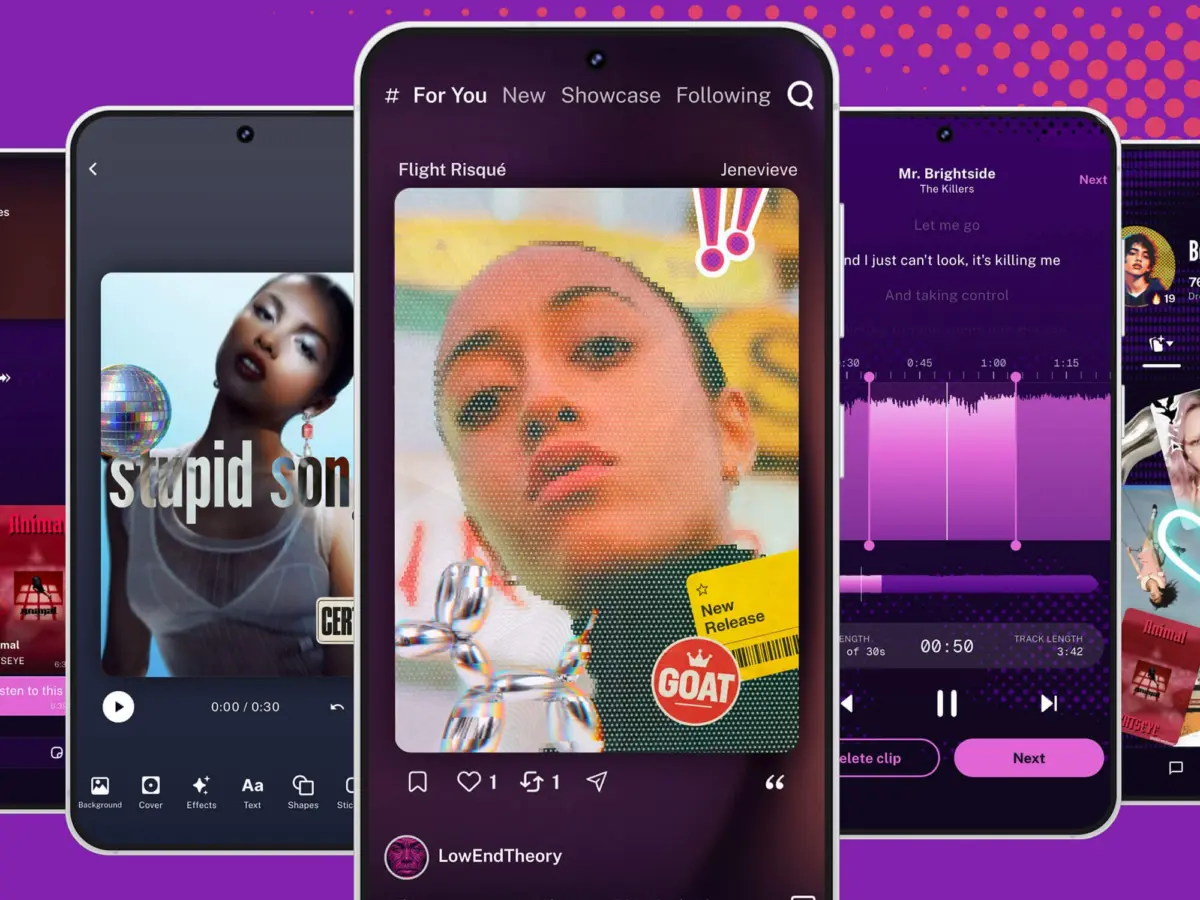
Positioned at the crossroads of social media and streaming, Drops allows users to comb through vast legal catalogs, isolate their absolute favorite 30-second snippet of a song, pair it with artist-approved visual assets, and broadcast the resulting package (also called a "drop") to a dedicated network of followers. Akin to the function of a "tweet" in the early days of Twitter, these bite-sized audio-visual posts can be published publicly to a profile feed or fired off directly into direct messages as bespoke musical recommendations.
Rather than relying on the opaque, feedback-loop algorithms of legacy streaming giants—which critics argue often funnel listeners toward what is already popular—Drops leans hard into human-to-human curation. Supported from day one by licensing agreements with major powerhouses like Universal Music Group and Beggars Group, alongside independent distribution heavyweights like EMPIRE, Symphonic, and UnitedMasters, Drops launches with an industrial-strength catalog.
Currently sitting in its preview phase on both iOS and Android, Drops represents a calculated gamble by HARMAN: that the future of music promotion isn’t found in endless passive playlists, but in active, gamified, social micro-recommendations.
Detailed Chronology: The Genesis and Architecture of Drops
To understand how Drops came to be, one must look closely at the shifting tectonic plates of modern media consumption. Over the past five years, the attention economy has been radically restructured by short-form video formats. TikTok, Instagram Reels, and YouTube Shorts proved definitively that listeners do not necessarily need a full three-and-a-half-minute track to form an emotional attachment to a piece of audio; often, a viral 15-to-30-second loop is all it takes to spark global phenomena.
However, traditional streaming applications like Spotify, Apple Music, and TIDAL remain tethered to the macro-album and single formats. While some platforms have introduced in-app clip feeds or vertical discovery tabs, their core architecture is designed around long-form listening sessions.
HARMAN identified a distinct structural white space between passive streaming and social media sharing. While users frequently ripped audio clips to post on Instagram stories or TikTok videos, doing so involved a cumbersome multi-step process often fraught with copyright friction. Drops was conceived to streamline this workflow into a native, legally compliant, community-driven ecosystem.
The Anatomy of a "Drop"
The user experience of Drops is built around deliberate simplicity and kinetic visual feedback:

- Search & Isolate: A user opens the app and searches for a track within the expansive, licensed catalog. Using an intuitive waveform interface, they scrub through the audio to pinpoint their preferred 30-second window—the exact moment where the song captures its highest emotional or sonic peak.
- Visual Pairing: Once the audio snippet is locked in, the user pairs the audio with official, artist-approved imagery, promotional art, or visual loops supplied directly through industry partnerships.
- Publishing & Broadcasting: The completed creation is designated as a "drop." Users can publish drops to a centralized public profile feed where followers can browse, sample, and re-share, or route them privately to friends to spark intimate conversations.
- The Anti-Algorithm Feed: By following trusted tastemakers, friends, and verified artists, users curate a chronological or relevance-weighted timeline driven entirely by human taste rather than black-box recommendation engines.
Supporting Context & Metrics: The Crisis of Algorithm Fatigue and the Independent Renaissance
The launch of Drops arrives at a critical juncture in the music industry. For years, listeners and independent creators alike have voiced growing frustration over the hegemony of algorithmic discovery. While algorithmic curation has undeniably democratized access to global markets, it has also created a homogenization of sound. Critics argue that recommendation engines prioritize safety, familiarity, and metrics-driven predictability, often trapping listeners in comfort-zone loops and making it exceptionally difficult for boundary-pushing independent acts to break through the noise.
Furthermore, the mechanics of modern music consumption reveal stark shifts in how audiences interact with audio:
- The Shrinking Intro: Data analytics from multiple streaming services indicate that the average time a listener gives a song to hook them has plummeted significantly over the last decade, leading many modern producers to front-load hooks and place chorus elements within the first ten seconds of a track.
- The Social Curation Imperative: Market research consistently demonstrates that Gen Z and younger millennial consumers place a higher degree of trust in peer recommendations and micro-communities than in traditional editorial playlists or algorithmic suggestions. Music is increasingly consumed as a social currency—a way to signal identity and taste within digital peer groups.
By positioning Drops as a direct counter-weight to automated curation, HARMAN is tapping directly into the "human element" of music sharing.
Crucially, the platform’s architects recognized that a social music app lives or dies by the strength of its rights management. Rather than operating in the legal grey zones that historically plagued early-web music apps, Drops secured formidable backing right out of the gate. Major conglomerates including Universal Music Group and Beggars Group have cleared their catalogs for the platform, ensuring mainstream chart-toppers are readily available.
Simultaneously, deals with heavy-hitting independent distributors like Symphonic Distribution, EMPIRE, and UnitedMasters ensure that the underground, the avant-garde, and the fiercely independent are given equal billing—transforming the app into a legitimate testing ground for tomorrow’s headliners.
Official Statements and Industry Perspectives
The announcement of Drops has drawn significant commentary from executives across both the audio hardware and music distribution sectors, highlighting the collaborative nature of the platform’s rollout.
Clare Hunter, General Manager of Drops, emphasizes that the app is fundamentally about restoring intimacy to digital music culture:
"The way we discover music is evolving, but the most meaningful recommendations have always come from people we trust," Hunter notes. "Drops brings that human element to the forefront, giving people a new way to find music through the moments that make a song special and the perspectives of those who share their taste. We see an opportunity to make music discovery more personal, more social, and more connected to the way people listen today."
Behind the app stands HARMAN, a giant in the global audio landscape. Known primarily for hardware engineering—ranging from high-end consumer headphones and smart speakers to professional cinematic mixing gear—HARMAN’s foray into software-driven social application design signals a strategic pivot toward owning the discovery touchpoint of the consumer journey, long before the user ever plugs in a pair of JBL or AKG headphones.

Independent music distributors, who constantly search for novel pathways to break talent outside of saturated traditional social media ad markets, have embraced the platform with open arms. Andrew Migdail, VP of Distribution & Sync Operations at UnitedMasters, points to the systemic flaws in legacy discovery models as the primary catalyst for their partnership:
"So much of music discovery is built to recommend what’s already popular. Drops is built to surface what’s next, and UnitedMasters is built to help artists get there," says Migdail. "We’re proud to partner with HARMAN to bring this opportunity to our community of independent artists driving culture forward."
Future Outlook: Challenges and Potential Impact on the Music Economy
As Drops enters its critical preview phase on iOS and Android, industry watchers are monitoring several key factors that will determine whether the application can scale into a permanent fixture of the digital music landscape.
1. Monetization and Artist Compensation
In an era where streaming payouts are fiercely contested, any new platform utilizing commercial sound recordings must navigate complex royalty attribution models. While initial licensing agreements secure legal compliance, the long-term viability of Drops will depend heavily on how micro-streams, profile clicks, and outbound conversions back to primary DSPs (such as Spotify or Apple Music) translate into tangible revenue for rights holders and performing artists.
2. Preventing Platform Fatigue
The social media landscape is littered with the corpses of defunct audio-social experiments (such as the initial gold rush surrounding drop-in audio apps). To avoid becoming a fleeting novelty, Drops must prove that its core loop—sharing 30-second clips—retains long-term stickiness once the novelty of the user interface wears off. The integration of robust social mechanics, comment threads, and seamless exportation back to primary listening apps will be vital retention tools.
3. Redefining Music Marketing
For independent artists and major label marketing teams alike, Drops offers an entirely new vector for promotional campaigns. Rather than paying for targeted video ads that users routinely skip, labels may begin deploying official, high-impact "drop templates" directly into the ecosystem, allowing fans to organically amplify promotional snippets across their follower networks.
Conclusion
Drops arrives as a provocative challenge to the status quo of passive music consumption. By weaponizing the best elements of short-form content platforms, pairing them with bulletproof major and indie licensing, and anchoring the design philosophy in human-to-human trust, HARMAN has engineered an application that addresses a genuine, daily frustration of the modern music lover.
Whether Drops can successfully rewrite the rules of how the world finds its next favorite song will depend entirely on how eagerly users adopt the role of micro-curators. For now, the preview is live, the catalog is loaded, and the slow-burn intro may officially be a thing of the past.