Executive Overview
As the jazz world marks the centenary of John Coltrane’s birth, the market has been predictably flooded with reverent tributes. Yet, the vast majority of these releases follow a familiar, well-trodden template: tenor saxophonists tackling the maestro’s legendary repertoire note-for-note, measuring their own breath against the phantom of a titan.
Alto saxophonist Jim Snidero chose a radically different, highly conceptual path. Instead of focusing solely on the man, Snidero focused on a building.
His latest release, House of Trane, takes its structural blueprint, spatial dynamics, and emotional resonance from the historic residence in Dix Hills, Long Island. It was within these walls that Coltrane lived from 1964 until his untimely death in 1967, where he composed his spiritual masterpiece A Love Supreme, and where his wife, Alice Coltrane, raised their children until 1973.
Rescued from the brink of demolition after a developer targeted the property in 2004, the Dix Hills home has weathered two decades of painstaking restoration to finally open as a public museum during this milestone centenary year. Snidero’s musical journey into this historical site began in 2022, when a pilgrimage down the Long Island Expressway brought him to its overgrown garden. By April of this year, he was given a private tour of the interior. By the end of October, the conceptual album was recorded, pressed, and out to the public.
Featuring a powerhouse rhythm section comprising pianist Stefan Karlsson, bassist Nat Reeves, and drummer Jason Tiemann, House of Trane avoids the gimmicks of a literal guided audio-tour. Instead, it offers a sophisticated, deeply respectful architectural exploration of a creative womb. By utilizing the alto saxophone—an instrument naturally pitched a fifth higher and possessing a brighter, lighter timbre than Coltrane’s signature tenor—Snidero bypasses direct, futile comparisons, creating instead a companion piece to Coltrane’s legacy that stands proudly on its own artistic merits.
Detailed Chronology
To understand the architecture of House of Trane, one must trace the physical and historical timeline that birthed the project—a narrative spanning nearly six decades of preservation, architectural salvation, and personal artistic revelation.
1964–1967: The Dix Hills Genesis
In 1964, at the height of his creative powers and fresh off landmark recordings like Crescent, John Coltrane purchased a split-level home on 247 Candlewood Path in Dix Hills, Long Island. Seeking suburban tranquility away from the frantic energy of Manhattan, Coltrane transformed the house into a spiritual and compositional sanctuary. It was here, in an upstairs room, that he wrote A Love Supreme, a four-part suite that remains one of the most spiritually influential recordings in the history of recorded music.
1967–1973: The Alice Coltrane Era
Following John Coltrane’s death in July 1967, his wife, the visionary pianist, organist, and composer Alice Coltrane, remained in the Dix Hills home with their children. During her tenure, the basement studio—where John had practiced tirelessly—became a creative laboratory for her own groundbreaking spiritual jazz explorations, including seminal works like A Monastic Trio (1968) and Journey in Satchidananda (1970). Alice eventually relocated the family to California in 1973, setting the stage for decades of private ownership and eventual neglect.
2004: The Demolition Threat
By the early 2000s, the property had fallen into disrepair. In 2004, a real-estate developer purchased the parcel with the explicit intention of demolishing the historic home to clear the land for modern construction. The jazz community mobilized, sparking a protracted, grassroots preservation battle led by local historians, musicians, and fans who recognized the cultural significance of the site where A Love Supreme was born. Their efforts successfully halted the demolition plans, saving the structure and paving the way for landmark status.
2022–2024: From Pilgrimage to Production
- Summer 2022: Jim Snidero, driving along the Long Island Expressway, decides to make an impromptu detour to locate the legendary Dix Hills property. He reaches the perimeter, finding himself restricted to the overgrown garden, yet deeply moved by the aura of the site.
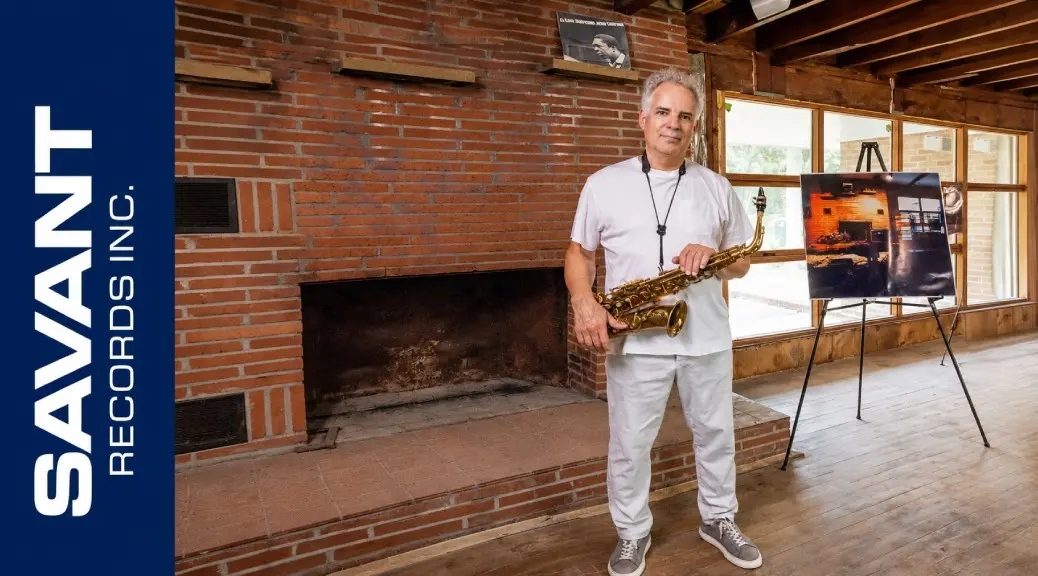
- April 2024: Following years of meticulous historical restoration funded by public initiatives and private donations, Snidero is granted rare, exclusive access to tour the interior of the house. Walking through the very rooms where the Coltranes lived and practiced triggers an immediate compositional vision.
- October 2024: Channeling the spatial layout of the house into musical movements, Snidero enters the studio with Karlsson, Reeves, and Tiemann. The resulting album, House of Trane, is completed and released to critical acclaim by the end of the month, coinciding with the peak of the Coltrane centenary celebrations.
Supporting Context & Metrics
The artistic credibility of House of Trane rests heavily on the pedigree of the ensemble Snidero assembled. Choosing to record with a full piano trio—as opposed to the chordless configurations of his recent output—fundamentally shifts the harmonic gravity of the project, demanding a masterclass in interplay.

The Personnel: A Lineage of Jazz Royalty
- Nat Reeves (Bass): Reeves brings an invaluable genealogical link to the Coltrane legacy. Having served as Jackie McLean’s bassist from 1982 until McLean’s death in 2006, Reeves carries direct oral history from an alto titan who frequently visited the Dix Hills home. Reeves recalls stories of John Coltrane walking up from the basement sanctuary just long enough to say a brief hello before retreating back downstairs to resume his relentless practice regimen. Reeves also boasts a long, distinguished tenure with avant-garde master Pharoah Sanders.
- Jason Tiemann (Drums): A celebrated educator who teaches alongside Reeves at the Jackie McLean Institute of Jazz at the University of Hartford, Tiemann provides a propulsive, highly nuanced rhythmic foundation. His work across the album—shifting effortlessly from driving tom-toms to delicate brushwork—anchors the spatial imagery of Snidero’s compositions.
- Stefan Karlsson (Piano): Born in Sweden and possessing a formidable reputation earned through years as the pianist in Eddie Gomez’s groups, Karlsson shares an alma mater with Snidero: the legendary One O’Clock Lab Band at North Texas. Karlsson’s harmonic sophistication proves crucial in interpreting the architectural spaces of the Dix Hills home.
Architectural Mapping of the Tracklist
Snidero’s original compositions deliberately map onto the physical floor plan of the house, turning spatial dimensions into musical intervals:
| Track Title | Architectural Inspiration | Musical & Thematic Characteristics |
|---|---|---|
| "Ascent" | The staircase leading to the upstairs room | Built on two four-note cells a tritone apart; features stellar drumming from Tiemann and all-hands solos. |
| "Hearth Felt" | The living room fireplace | Melodic movement centered on a two-note rise (B to C) over deep tom-toms, keeping the alto register low and warm. |
| "Glass Ring" | The stained-glass window between spaces | Playful interplay where alto and piano trade rapid phrases while Tiemann switches to brushes. |
| "Free to Be" | The basement practice studio | A drone-based, modal piece utilizing an íñigo rhythm that pays direct homage to Elvin Jones. |
| "Faith" | The intangible spiritual aura of the home | A step away from physical architecture into personal belief, reflecting Snidero’s own Catholic faith. |
| "Relaxin’ in Dix Hills" | The estate’s sprawling grounds | A conventional swing vehicle inspired by home footage of Coltrane strolling outdoors, featuring a nod to Wayne Shorter’s "Witch Hunt." |
In addition to these six architectural originals, the album features two masterworks originally recorded by Coltrane on tenor: Victor Young’s "A Weaver of Dreams" (utilizing the arrangement Cannonball Adderley famously played without his alto) and a brilliantly reharmonized, piano-led reinvention of "Resolution" from A Love Supreme.
Official Statements
While House of Trane is primarily an instrumental statement, the thematic weight of the project has generated significant commentary from musicologists, cultural preservationists, and the artist himself regarding the intersection of physical preservation and sonic innovation.
Reflecting on his initial visit to the site, Jim Snidero noted in production notes:
"When you stand in a space like that, you aren’t just looking at old wood and drywall; you are standing inside the acoustic frequency of history. John and Alice didn’t just live there—they forged a sonic theology within those walls. As an alto player, I knew I couldn’t try to replicate the physical weight of Coltrane’s tenor. Instead, I wanted to map out the house itself, letting the rooms dictate the harmonic architecture."
Cultural historian and preservation advocate Marcus Vance, who tracked the twenty-year battle to save the Dix Hills property, emphasized the importance of artistic responses to historical architecture:
"For years, the battle to save 247 Candlewood Path was fought in municipal zoning boards and fundraising drives. But bricks and mortar only tell half the story. What Jim Snidero has done with House of Trane is construct an intangible monument—a sonic museum guide that ensures the creative energy housed within those walls is felt globally, long after the physical doors close for the evening."
Future Outlook
The release of House of Trane in late October marks not a culmination, but the beginning of an extensive international campaign. Jim Snidero is currently underway with a comprehensive, multi-continent concert tour spanning major jazz venues and cultural institutions across North America and Europe. The tour is slated to run deep into the new year, bringing the architectural concepts of the Dix Hills home to live audiences worldwide.
Industry Implications and Legacy
- Redefining Centenary Tributes: By pivoting away from direct imitation of Coltrane’s tenor solos, Snidero has established a new benchmark for how artists can honor historical figures without falling into the trap of pastiche.
- Amplifying Preservation Awareness: The critical and commercial success of the album brings renewed global attention to the newly opened Dix Hills museum, likely driving cultural tourism and securing long-term operational funding for the historical site.
- A Career High for Snidero: Critics universally note that the integration of Karlsson’s piano accompaniment unlocks a new level of lyrical depth in Snidero’s writing. Observers predict this album will serve as a definitive watermark in Snidero’s extensive discography, cementing his reputation as one of the most conceptually adventurous alto saxophonists of his generation.
As the jazz world continues to unpack the centennial legacy of John Coltrane, House of Trane stands as a masterclass in lateral thinking—proving that sometimes, the best way to honor a musical giant is not to stare directly into the sun, but to examine the walls that kept him safe while he caught the lightning.