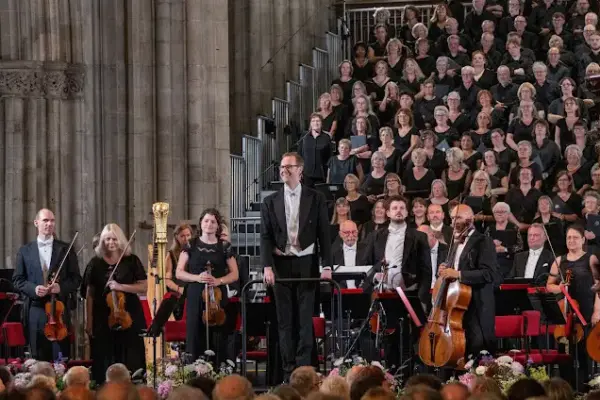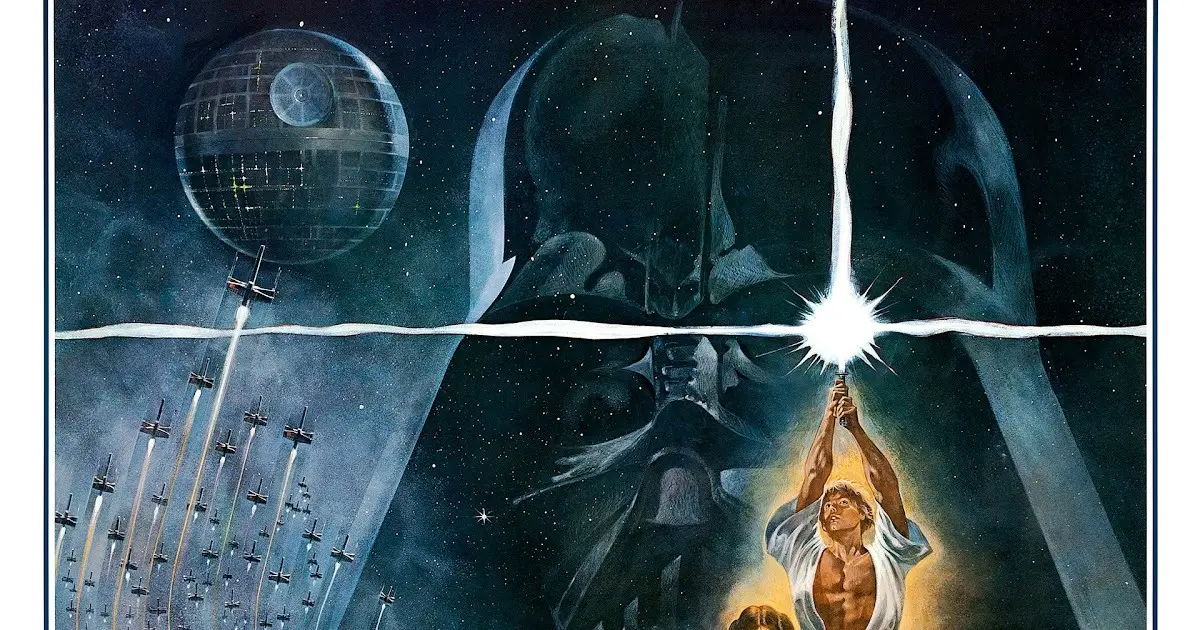
London’s prestigious Royal Festival Hall is set to play host to a monumental cultural double-celebration on February 9, 2027. The Philharmonia, under the dynamic baton of conductor Caleb Young, will present a high-profile anniversary concert dedicated to two towering pillars of modern culture: the golden jubilee of George Lucas’s cinematic masterwork Star Wars (originally released in May 1977—noting a minor historical correction to the initial draft’s 1997 typo) and the 95th birthday of its legendary composer, John Williams.
This landmark event offers more than a nostalgic trip down a cinematic memory lane. It serves as a rigorous, celebratory examination of a six-decade compositional career that has fundamentally shaped the auditory landscape of global cinema and contemporary orchestral music alike. While the evening will reverberate with the familiar, brass-heavy fanfare and celestial leitmotifs of Star Wars, Close Encounters of the Third Kind, E.T. the Extra-Terrestrial, and Hook, it will also venture into the less-frequented concert hall domain of Williams’s catalogue. The programme features his haunting, structurally intricate Viola Concerto, performed by virtuoso soloist Antoine Tamestit.
By bridging the gap between populist cinematic scores and rigorous contemporary concert hall repertoire, the upcoming Southbank Centre presentation underscores a vital musicological truth: John Williams is not merely a film composer who writes catchy tunes, but a symphonic master in the lineage of late-Romantic and twentieth-century orchestral tradition. As the cultural apparatus prepares to mark half a century of the Force and nearly a century of the man who gave it its voice, this concert invites audiences and critics to re-evaluate the profound, enduring legacy of America’s most performed living composer.
Detailed Chronology: Milestones of a Maestro and a Galaxy Far, Far Away
To understand the magnitude of the February 2027 concert, one must trace the parallel timelines of a groundbreaking motion picture and an artist whose productivity and creative longevity remain virtually unmatched in the history of Western art music.
The Genesis of a Cultural Phenomenon (1977)
In the spring of 1977, the entertainment landscape was forever altered. Released on May 25, 1977, Star Wars (later subtitled Episode IV: A New Hope) defied expectations, studio skepticism, and production hurdles to become a sociological and financial juggernaut. Central to its immersive world-building was its soundscape. Director George Lucas made the fateful decision to eschew the avant-garde electronic soundscapes popular in 1970s science fiction, opting instead for a lush, neo-symphonic, Korngold-esque orchestral score.
Lucas turned to a 45-year-old, classically trained jazz pianist and seasoned Hollywood orchestrator named John Williams. Fresh off his Academy Award-winning work for Jaws (1975), Williams conceptualized a score that functioned as an invisible actor, utilizing leitmotifs—recurring musical themes associated with specific characters, planets, and ideas—akin to the operatic techniques of Richard Wagner and the film scoring blueprints of Max Steiner. The London Symphony Orchestra’s historic recordings of these themes at Abbey Road Studios birthed a cultural touchstone that remains as vital today as it was five decades ago.
The Expanding Canvas: Concertos and Collaborations (2009–Present)
While Williams is universally lionized for his filmography, his parallel life as a composer of absolute music is equally compelling, though frequently overshadowed by his cinematic output. Over the decades, Williams has stepped away from the film lot to write substantial concertante works for elite soloists and major American orchestras.
A prime example of this output is his Viola Concerto, which takes centre stage at the Royal Festival Hall in 2027. Premiered in 2009 by the Boston Pops Orchestra, the piece was custom-built for the orchestra’s principal violist, Cathy Basrak. Uniquely, Williams also wove a prominent, demanding role into the premiere for the timpanist—who happened to be Basrak’s husband.
This work sits within a sprawling collection of over twenty concertante compositions. Williams’s voyage into non-cinematic classical forms began as early as 1969 with his Flute Concerto, and has continued well into his nineties. Notable milestones include:
- Concertos for Violin, Piano, Cello, and Clarinet: Written for world-class soloists such as Itzhak Perlman, Yo-Yo Ma, and Gil Shaham.
- Late-Career Masterworks: Including his recent When The World Was Waltzing for violin and orchestra, premiered in 2025.
These compositions reveal a composer of immense technical discipline, exploring complex polyphony, modal shifts, and textural nuance far removed from the narrative constraints of Hollywood moviemaking.
Supporting Context & Metrics: The Scale of Williams’s Achievement
Quantifying the career of John Williams requires looking at numbers that stagger the imagination. His artistic output is not merely prolific; it represents a standard of sustained excellence that has influenced generations of musicians, listeners, and directors.
Awards, Nominations, and Industry Standing
Williams’s CV is a masterclass in peer recognition and popular acclaim. His statistics place him in an elite echelon of cultural history:
- Academy Award Nominations: 54. This makes Williams the most Oscar-nominated living person in history, and second only to Walt Disney across all categories.
- Academy Awards (Wins): 5 (Fiddler on the Roof, Jaws, Star Wars, E.T. the Extra-Terrestrial, and Schindler’s List).
- Other Laurels: Multiple Grammy Awards, Emmy Awards, Golden Globes, and the prestigious Kennedy Center Honors (2004), alongside the National Medal of Arts (2009) and the Presidential Medal of Freedom (2016)—the highest civilian award in the United States.
The Collaborative Matrix
Williams’s longevity is further highlighted by the breadth of cinematic directors he has worked with. Across more than six decades, he has scored upwards of 100 films, bridging the gap between classic Hollywood and the modern blockbuster era. His legendary, decades-long partnership with Steven Spielberg stands as the most famous director-composer collaboration in film history, encompassing nearly every major Spielberg film from The Sugarland Express (1974) to The Fabelmans (2022). Beyond Spielberg, Williams has lent his musical voice to visions by:

- Alfred Hitchcock (Family Plot, 1976)
- Robert Altman (The Long Goodbye, 1973; Images, 1972)
- George Lucas (The Star Wars saga)
- Chris Columbus (The early Harry Potter films)
The Philharmonia and the Royal Festival Hall Connection
The choice of the Philharmonia orchestra and the Southbank Centre’s Royal Festival Hall for this 2027 celebration is fitting. As one of the United Kingdom’s premier orchestral bodies, the Philharmonia has a rich history of championing both canonical masterworks and accessible symphonic programming. Under the direction of rising-star conductor Caleb Young, the orchestra is uniquely positioned to balance the cinematic precision required for Williams’s film cues with the nuanced, chamber-like interplay demanded by his Viola Concerto.
Official Statements & Programme Breakdown
The Southbank Centre has curated an evening designed to explore the dichotomy at the heart of John Williams’s artistic identity: the populist maestro of the silver screen and the introspective modernist of the concert hall.
The Concert Programme
While full casting and granular scheduling details continue to roll out via the official Southbank Centre portal, the announced repertoire highlights a deliberate curatorial strategy:
-
The Cinematic Core:
- Star Wars Suite (commemorating the 1977 release)
- Selections from Close Encounters of the Third Kind (1977)
- Selections from E.T. the Extra-Terrestrial (1982)
- Selections from Hook (1991)
-
The Concert Hall Masterwork:
- Viola Concerto (2009) — Featuring internationally acclaimed soloist Antoine Tamestit.
Musicological Significance of the Repertoire
By pairing the brassy, soaring optimism of the Star Wars and E.T. suites with the melancholic, lyrical introspection of the Viola Concerto, the concert directly addresses a historic critique often leveled at film music: that it relies too heavily on pastiche and immediate emotional manipulation.
As musicologists have frequently noted, Williams’s concert works strip away the safety net of visual narrative. In pieces like the Viola Concerto, listeners encounter a composer deeply engaged with the expressive capabilities of individual orchestral instruments. The viola—traditionally an underappreciated middle voice in the string section, prized for its dark, reedy, autumnal timbre—is given a profound vocal autonomy. Soloist Antoine Tamestit, renowned for his mastery of both historical and contemporary repertoires, brings a rigorous interpretive lens to a score that marries traditional harmonic structures with subtle twentieth-century chromaticism.
Future Outlook: Preserving and Reinterpreting a Living Legacy
As John Williams approaches his 95th year, questions naturally arise regarding the future preservation, performance, and academic study of his immense catalogue. For decades, film music occupied a nebulous space in the cultural hierarchy—dismissed by purists as commercial craft rather than high art. However, the cultural landscape of the 21st century has undergone a seismic shift.
The Academic and Institutional Shift
Major symphony orchestras worldwide—from the New York Philharmonic and the Los Angeles Philharmonic to the London Symphony Orchestra and the Philharmonia—now routinely programme film scores alongside Beethoven, Brahms, and Mahler. This institutional embrace is largely thanks to figures like Williams, whose meticulous orchestration, structural integrity, and thematic cohesion demand the highest levels of symphonic execution.
The 2027 concert at the Royal Festival Hall is indicative of this broader institutional maturation. It treats Williams not as a nostalgia act, but as a living classic. Programmes that juxtapose popular film themes with lesser-known concert hall commissions signal a new pedagogical approach: teaching audiences to trace the DNA of modern orchestral music from the silver screen back to the concert stage, and vice versa.
What Lies Ahead
As the world counts down to February 2027, anticipation within the classical and cinematic communities continues to build. The dual milestone—50 years of Star Wars and 95 years of John Williams—acts as a cultural anchor point. It reminds us of an era when orchestral music could capture the global imagination, uniting millions of cinemagoers through the shared language of melody, rhythm, and harmony.
For those eager to witness this historic union of the Philharmonia, conductor Caleb Young, violist Antoine Tamestit, and the immortal sounds of a cinematic galaxy, full ticketing details, scheduling updates, and priority booking options are available directly through the official Southbank Centre website. As the baton drops in London on that winter evening in 2027, it will not merely be a celebration of past glories; it will be a living testament to the enduring, universal power of symphonic storytelling.