Executive Overview
In the sprawling, polyrhythmic landscape of modern global music, few names carry the monumental historical weight, political gravity, and cultural insurgency of the Kuti family. More than a quarter-century after the passing of the Afrobeat pioneer Fela Kuti, his youngest son, Seun Kuti, continues to pilot Egypt 80—the legendary, sprawling orchestra his father forged as an engine of liberation and social critique.
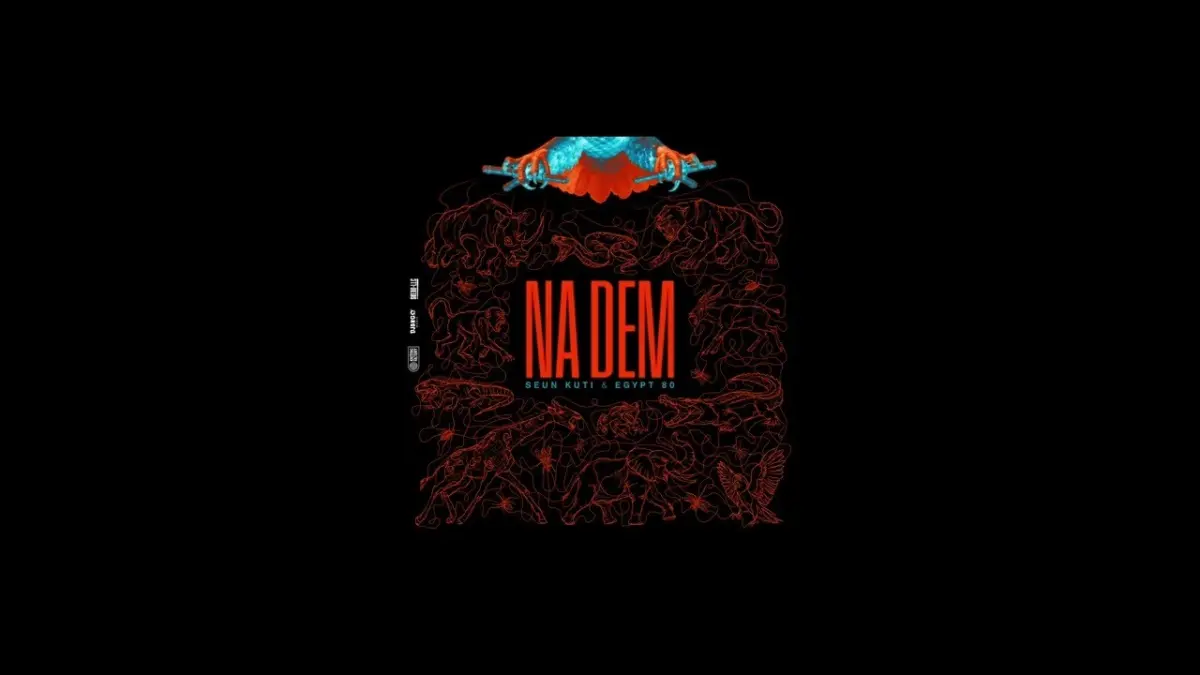
Released on November 6 via Django Music, Seun Kuti and Egypt 80’s latest full-length project, Na Dem, represents a vital cross-generational and international milestone. Produced by Femi Koleoso of the Mercury Prize-winning British jazz-fusion powerhouse Ezra Collective, the album is a masterclass in modern political consciousness set to irresistible, earth-moving grooves.
The crown jewel of this latest chapter is the album’s fourth single, "Adara." Featuring a poignant vocal opening by Seun’s young daughter, Adara, the track transcends traditional protest music to become an intimate generational prayer. It blends Yoruba blessings, Pidgin defiance, and an uncompromising demand for systemic equity.
Across Na Dem, Seun does not merely inherit a musical legacy; he weaponizes it for the contemporary geopolitical landscape. Bolstered by high-profile collaborations—including Rage Against the Machine guitarist Tom Morello and Jamaican reggae heavyweight Kabaka Pyramid—alongside the active participation of the third generation of Kuti musicians, Na Dem proves that Afrobeat is neither a museum exhibit nor a relic of 1970s West African resistance. It is an evolving, breathing, and urgent global manifesto.
Detailed Chronology: From the Shrine to the Global Stage
The Roots of the Dynasty and Early Childhood
The story of Egypt 80 is inextricably linked to the personal and political sacrifices of the Kuti household. Long before he fronted the ensemble, a nine-year-old Seun Kuti was stepping onto the stage to open his father’s concerts, singing a handful of songs with Egypt 80 before Fela Kuti would materialize in a cloud of smoke and theatrical grandeur.
Music was never merely a career choice in the Kuti family; it was an act of survival and an ideological duty. Seun’s mother, Fehintola, sang in the ensemble alongside Fela, cementing the matriarchal and collaborative backbone of the band. Meanwhile, Seun’s half-brother, Femi Kuti, spent his formative years playing the saxophone within the ranks of Egypt 80 before striking out on his own in 1986 to form his band, the Positive Force.
This deep familial lineage continues to thrive today. The musical torch has officially been passed to a third generation: Femi’s son, Made Kuti, delivered a blistering trumpet solo on the 2024 track "Stand Well Well," setting the stage for his cousin Adara’s star turn on "Adara" two years later.
The Inheritance at Fourteen
When Fela Kuti passed away in 1997, a 14-year-old Seun was thrust into the impossible position of inheriting Egypt 80. Rather than letting the band dissolve into history, Seun stepped up to the microphone, assuming the mantle of bandleader while still navigating his teenage years.
Remarkably, the ensemble he inherited at fourteen still includes veteran musicians who toured and recorded alongside Fela himself. Today, these legendary instrumentalists share the stage with a newer generation of players drawn from across Africa and its global diaspora. This blend of seasoned institutional memory and youthful fire ensures that Egypt 80 retains its signature labyrinthine horn arrangements, hypnotic percussion, and deep-pocket funk.
The Evolution of Na Dem
The rollout of Na Dem has been a masterclass in strategic, hard-hitting single releases, culminating in its full arrival on November 6 via Django Music. Produced by Femi Koleoso—whose work with Ezra Collective has injected a fresh, boundary-pushing vitality into the UK jazz and afro-fusion scenes—the album bridges historical Afrobeat with contemporary transnational movements.
The campaign began with the explosive title track, "Na Dem," which featured a searing guest appearance by Tom Morello, the iconic guitarist known for his work in Rage Against the Machine and Audioslave. Morello’s razor-sharp, feedback-drenched guitar lines fused seamlessly with Egypt 80’s percussion-heavy fury, creating an instant anthem for global resistance.
This was followed by "Problems," a conscious collaboration with Jamaican reggae artist Kabaka Pyramid, which drew a direct line between the struggles of the African continent and the broader Caribbean diaspora. Next came "DJB," an instrumental showcase that rightfully placed Egypt 80’s formidable rhythm section at the forefront, reminding listeners that the band’s engine room remains one of the most lethal in contemporary music.
Finally, the release of "Adara" shifted the narrative inward, grounding the sweeping global politics of the album into the intimate, high-stakes reality of parenting in an unequal world.
Supporting Context & Metrics: The Anatomy of "Adara"
To fully comprehend the cultural impact of "Adara," one must examine its lyrical architecture and the profound sociological context from which it emerges.
Lyrical Breakdown and Evolution
The track opens with the sweet, unvarnished voice of Seun’s daughter, Adara, immediately setting an emotional and generational tone. Seun then takes over, offering a blessing in Yoruba: he asks for adara, a word he translates as the hope for a better day—for himself, for the listener, and for humanity at large—before offering a dedicated blessing for the children of the world.
As the song progresses, the mood shifts from spiritual invocation to political confrontation. The chorus answers back in Pidgin with the defiant refrain:
“If them no believe / No mind them”
It is a direct instruction to the listener to tune out the cynics, the gatekeepers, and the oppressors.
Midway through the track, the blessing hardens into an unyielding political demand. Seun lists the luxuries effortlessly secured by the children of the powerful—the best houses, the finest food, and the most elite schools—before asserting with unflinching clarity:
“the same best thing for we children”
This demand is driven forward by an insistent, militant chant of "now now now now," commanding the ruling class to surrender what rightfully belongs to the youth immediately.
The Intersection of Art and Activism
Seun Kuti’s commitment to socio-political transformation extends far beyond the recording studio and the concert stage. In recent years, he has revived the Movement of the People (MOP), the political party originally founded by Fela Kuti in 1979 before it was systematically dismantled and shut down by Nigeria’s military government. By resurrecting MOP, Seun is actively translating the radical ideology of his father’s lyrics into tangible political organization, challenging corporate corruption, state-sponsored violence, and economic disenfranchisement in modern Nigeria.
Official Statements and Artistic Intentions
In interviews surrounding the release of Na Dem and the single "Adara," Seun Kuti has been candid about the deeply personal motivations driving his art. Speaking on the duality of the song’s joyous instrumentation versus its militant message, Seun remarked:
“It’s a joyful song, but I can’t remove it from the politics.”
This statement encapsulates the core philosophy of Afrobeat: the music must compel you to dance, but it must simultaneously force you to think. Seun has frequently elaborated on how his daily life informs his creative process, noting that the systemic injustices he fights on a global scale are mirrored in his most intimate domestic responsibilities:
“Those politics reach into my own home, where I have to teach my daughter about patriarchy, so the two of us wrote it as a prayer for every child to have a good life.”
Producer Femi Koleoso has similarly praised the collaborative energy surrounding the Na Dem sessions, emphasizing that working with Egypt 80 is not merely about capturing a vintage sound, but about channeling a living, breathing spirit of liberation that remains urgently relevant to contemporary struggles in London, Lagos, and beyond.
Future Outlook: The Enduring Legacy of Egypt 80
As Na Dem continues to resonate with critics and listeners worldwide, the future of Egypt 80 appears both secure and formidable. The seamless integration of third-generation family members—such as Made Kuti and young Adara—ensures that the Kuti dynasty will remain a guiding light for African musical and political consciousness for decades to come.
Furthermore, Seun Kuti’s willingness to collaborate with artists outside the traditional Afrobeat ecosystem—ranging from rock icon Tom Morello to reggae visionary Kabaka Pyramid and jazz innovator Femi Koleoso—demonstrates a sophisticated understanding of modern global solidarity. By building bridges across genres and continents, Seun is expanding the reach of Afrobeat, transforming it from a localized West African genre into an overarching umbrella for global anti-imperialist and progressive art.
For listeners eager to engage with this vital body of work, the single "Adara" is currently available to stream across all major platforms via Bandcamp, and the complete Na Dem album can be purchased and explored directly through the official Na Dem Album Link.
In an era defined by political cynicism and deepening global inequality, Seun Kuti, Egypt 80, and the entire Kuti lineage offer an antidote: an unyielding demand for justice, set to the most powerful groove on earth.