Executive Overview
The intersection of celebrity and public adoration has long generated headlines, usually dominated by the modern, highly visible phenomenon of pop fandom. When modern megastars like Taylor Swift, Harry Styles, or Emma Watson receive eccentric gifts—ranging from hand-painted turtle shells and Bibles to deeply personal items of clothing—media outlets frame these incidents as symptoms of an increasingly fractured, hyper-parasocial digital age. These gestures are frequently dismissed as boundary-crossing aberrations, indicative of modern youth culture run amok.
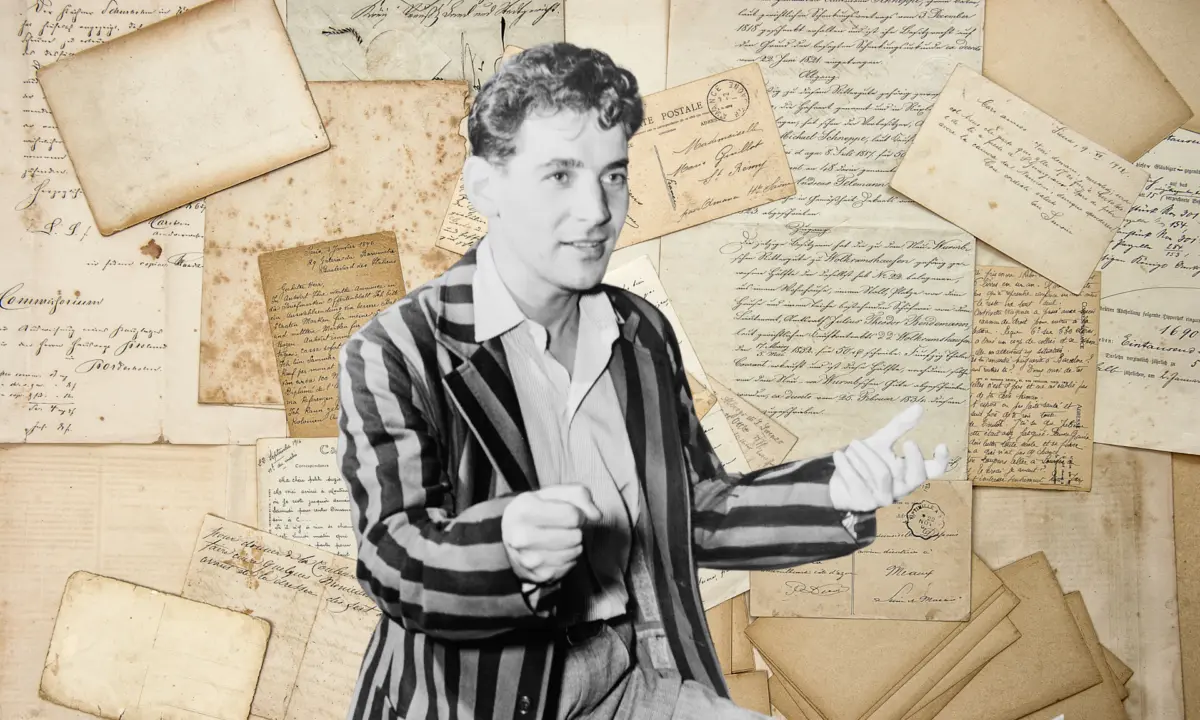
However, a deep dive into historical archives reveals that intense, obsessive fan devotion is far from a recent, pop-culture-exclusive invention. Long before the era of algorithmic social media, coordinated fan collectives, and stadium-spanning "Eras" tours, devotees of high art practiced their own forms of fervent idolization. An analysis of historical correspondence from the mid-20th-century archive of legendary conductor, composer, and television personality Leonard Bernstein uncovers a parallel universe of highbrow fanaticism. From custom-scented face creams and homemade poetry booklets to requests for fine china and hand-delivered handkerchiefs meant to wipe away a maestro’s sweat, classical music enthusiasts proved just as capable of boundary-crossing devotion as any modern "Swiftie."
This investigation explores the psychological mechanics of fandom across centuries. It examines how seemingly disparate musical subcultures—the highbrow classical appreciator and the pop-crazed youth demographic—share the same fundamental human impulse: the desperate, unifying need to find a tribe, enact personal identity through shared rituals, and bridge the unbridgeable gap between admirer and icon. By juxtaposing contemporary pop culture spectacles with historical archival finds, this report challenges the comforting myth of cultural hierarchy, arguing that all fandoms, regardless of their aesthetic veneer, are inherently eccentric and driven by the same deeply human quest for connection.
Detailed Chronology: From Maestro Mailbags to Modern Stadiums
To understand the evolution of parasocial devotion, it is instructive to trace how fandom has manifested across different eras of mass media, shifting from physical letter-writing campaigns to instantaneous digital interactions.
The Mid-Century Maestro Era (1950s)
- March 4, 1951: A Californian admirer writes a glowing letter to Leonard Bernstein following a San Francisco concert, enclosing a personal handkerchief intended to help him cope with the physical strain of conducting. This sets a precedent for a flood of intimate, domestic items sent to the maestro.
- Mid-1950s: Bernstein’s archive swells with eccentric correspondence. Fans recommend specific cosmetics, mail hand-printed booklets of inspirational poetry, and send photographic evidence of domestic shrines, such as Bernstein-themed table settings crafted by nuns. A blind couple writes to request authentic china tea cups and saucers directly from the conductor.
- The Classical Code: During this period, classical music communities enforce strict behavioral codes. Belonging is signaled not by branded merchandise or concert chants, but by esoteric rituals: arriving early to preserve absolute silence, mastering the etiquette of withholding applause between symphony movements, and avoiding the rustle of candy wrappers.
The Rise of Modern Pop Parasociality (2010s–Present)
- February 2012: One Direction member Harry Styles reveals the bizarre lengths of fan devotion when he is mailed a sanitary pad bearing his own name, highlighting the visceral, boundary-testing nature of modern teen pop idolatry.
- Early 2010s to 2020s: Stars like Emma Watson are systematically bombarded with religious texts (such as mass deliveries of Bibles), while Taylor Swift receives surreal artistic tributes, including a turtle shell painted with her likeness.
- The Era of the Imaginary Community: Modern fandoms evolve from passive appreciation into highly organized, transnational subcultures. Communities like "Swifties" establish intricate internal lore, secret languages, and mandatory concert rituals—such as coordinated chants before specific song verses and the mass illumination of smartphone flashlights during emotional ballads. These practices serve as modern tribal markers, separating the initiated from the outsider.
Supporting Context & Metrics: The Anatomy of Fandom
Fandoms are frequently scrutinized through a clinical lens, categorized as one-sided, parasocial relationships where emotional energy flows exclusively from the fan to the unreachable celebrity. Yet, sociological data and historical archives suggest that the primary psychological function of fandom is peer-to-peer connection rather than mere celebrity worship.
Cultural Hierarchies and the "Snobbery" Trap
Society maintains a rigid cultural hierarchy regarding how enthusiasm is expressed. Pop music fans—particularly teenage girls, who have historically driven the commercial success of acts from The Beatles and Frank Sinatra to One Direction and Taylor Swift—are routinely pathologized. Their enthusiasm is labeled hysterical, superficial, or overly emotional.
Conversely, consumers of classical art, jazz, or literature have historically cast themselves as "appreciators" or "connoisseurs" rather than "fans." This linguistic sleight of hand creates a false dichotomy of sophistication. However, the Leonard Bernstein archive proves that the psychological underpinnings of both groups are identical. Whether a devotee is trading handmade friendship bracelets outside a sold-out stadium or debating the merits of a Mendelssohn recording on a specialized forum, the core motivation remains the same: the desire to anchor one’s personal identity within a larger, collective narrative.
The Mechanics of Tribal Belonging
Anthropologically, tribes define themselves as much by their exclusions as their inclusions. The table below outlines the structural parallels between classical music enthusiasts of the 1950s and contemporary pop music collectives:
| Dimension | Classical Music Appreciators (1950s) | Modern Pop Fandoms (Swifties, etc.) |
|---|---|---|
| Self-Identification | "Music lovers," "connoisseurs," "critics" | "Swifties," "Directioners," "BeyHive" |
| Unifying Artifacts | Program notes, specialized CDs, autographs, historical correspondence | Friendship bracelets, customized tour merchandise, vinyl variants |
| In-Group Rituals | Refraining from applause between movements; silent, early arrival at halls | Coordinated chants ("One, two, three, let’s go bitch!"); phone light displays |
| Boundary Enforcement | Disdain for perceived vulgarity, noise, or "unrefined" concert behavior | Rejection of casual listeners, gatekeeping of deep-cut lore and lyrics |
| Nature of Boundary Crossing | Intimate, domestic gifts (handkerchiefs, skin creams, handmade poetry) | Parasocial digital intimacy, physical gifts (turtle shells, garments) |
Official Statements & Archival Insights
The archival record left behind by cultural icons provides invaluable, unfiltered access into the minds of both the celebrated and the devoted.
Scholars studying the Leonard Bernstein Collection at the University of Bristol have shed light on the complex dynamics between the charismatic maestro and his correspondents. Archivists note that Bernstein, who straddled the worlds of high art and mass television entertainment, naturally attracted a uniquely diverse and fervent cross-section of society.
Dr. Hannah-Marie Ward, a researcher specializing in Bernstein’s fan mail, observes:
"The letters sent to Leonard Bernstein challenge our comfortable assumptions about the evolution of fan culture. We tend to view modern social media as the breeding ground for extreme parasocial attachment. Yet, looking at the mid-20th century, we see individuals writing deeply intimate, almost domestic letters to a man they only knew through a television screen or a concert hall stage. They wanted to care for him, to soothe his physical exhaustion, and to weave themselves into the fabric of his daily life."
Furthermore, cultural historians point out that celebrities often navigate a precarious tightrope when dealing with such devotion. While public figures rely on fan dedication for their economic viability and cultural relevance, the physical items sent to their homes or dressing rooms frequently serve as stark reminders of the volatile nature of public access.
As musicologists studying parasocial phenomena note, the transition from admiring a piece of art to projecting personal identity onto its creator is seamless. When a teenager listens obsessively to Jascha Heifetz to master bow control, or when a contemporary fan memorizes every hidden lyric on a surprise album drop, they are engaging in an act of self-actualization through proxy. The celebrity ceases to be merely a human being; they become a canvas upon which the fan paints their own aspirations, insecurities, and desires for community.
Future Outlook: The Evolution of Parasocial Culture in the Digital Age
As we look toward the future of entertainment and public life, the boundaries governing the relationship between creators and consumers will continue to shift. Several emerging trends and challenges are set to shape the landscape of fandom:
1. The Algorithmic Acceleration of Intimacy
Modern social media platforms (TikTok, Instagram, X) have dismantled the traditional barriers of access that protected mid-20th-century icons like Bernstein. Today, stars offer curated, real-time glimpses into their personal lives, kitchens, and creative processes. This illusion of accessibility intensifies parasocial loops, making modern fans feel as though their idols are personal friends. Consequently, the psychological shock when boundaries are tested—or when fans overstep—will likely amplify, leading to heightened security measures and tighter legal protections for artists.
2. The Institutionalization of Fan Culture
Far from being dismissed as fringe anomalies, fandoms are increasingly recognized by corporations, academic institutions, and tourism boards as major economic and cultural drivers. Universities now offer courses analyzing the sociological impact of figures like Taylor Swift and Beyoncé, while cities undergo temporary economic booms when major tours arrive. As fandoms professionalize and scale, the internal rituals—once informal and localized—will become formalized global phenomena.
3. Reckoning with Our Inner "Weirdness"
Ultimately, the historical through-line from 1950s handkerchief-donating concertgoers to modern friendship-bracelet-trading stadium crowds carries a liberating truth: human beings have always been a little eccentric in what they love and how they express it.
As cultural appreciation fragments into hyper-specific digital micro-communities, the urgent need to find one’s tribe remains unchanged. Whether through the austere, reverent silence of a classical symphony hall or the screaming, glittering euphoria of a pop arena, fandom continues to serve its ancient, essential purpose. It is a shared theater of belonging—a collective agreement to embrace our mutual eccentricities and find comfort in the fact that we are never entirely alone in our devotions.