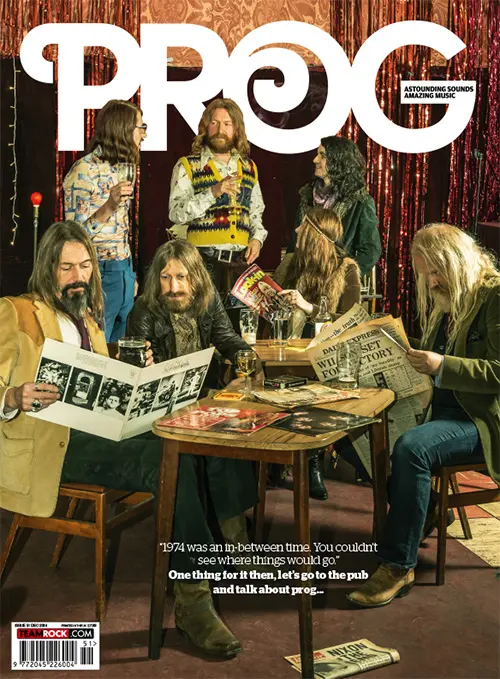
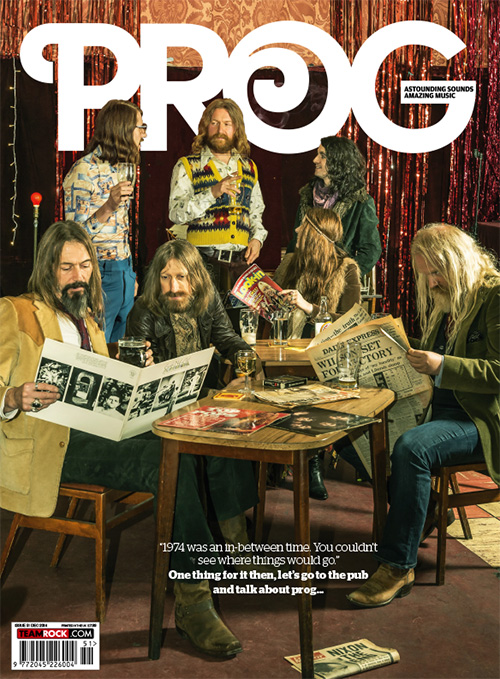
The year 1974 stands as one of the most enigmatic, volatile, and transformative junctures in twentieth-century popular culture. Set against a backdrop of severe sociopolitical malaise—characterized in the United Kingdom by power cuts, the Three-Day Week, two general elections, and intensifying civil strife—the global music industry was simultaneously undergoing a seismic transition. Progressive rock, having reached a pinnacle of commercial dominance and arena-level spectacle, found itself hovering at a precipice.
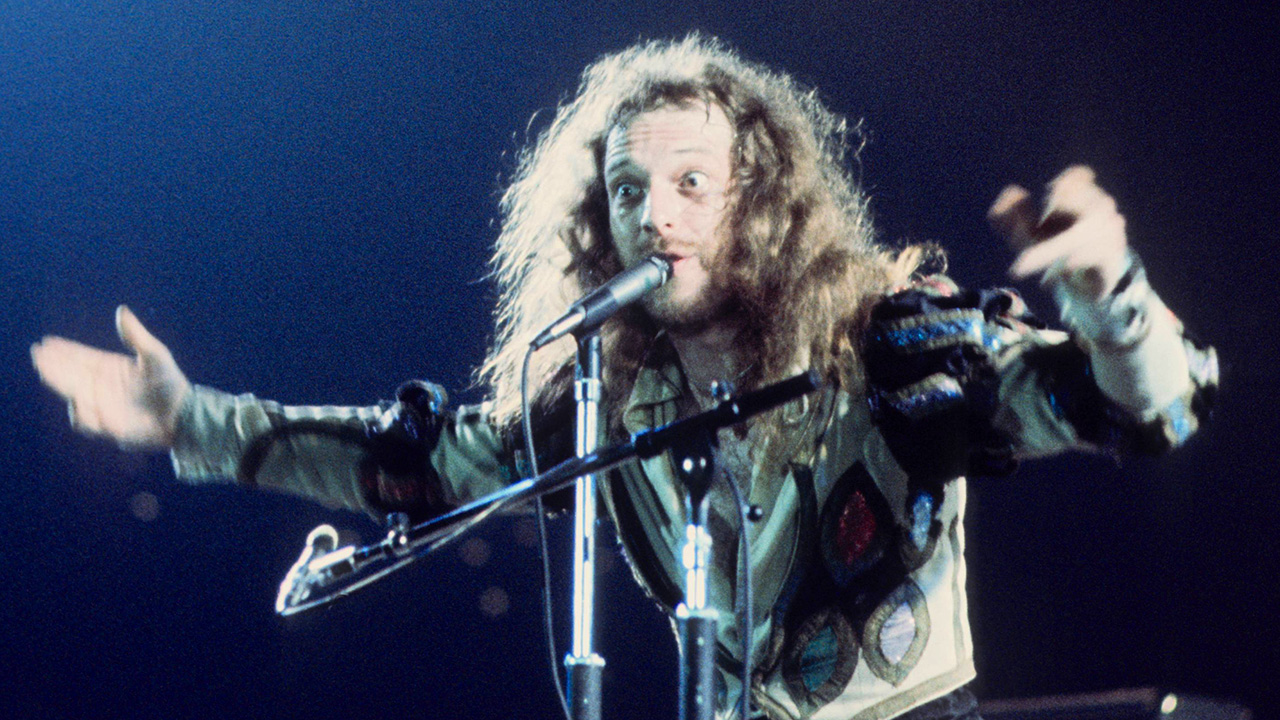
For Ian Anderson, the mastermind behind Jethro Tull, 1974 was defined by creative recalibration, industry friction, and artistic pivot. Following the critical polarization surrounding 1973’s A Passion Play, Anderson initially sought to transcend the traditional rock album format altogether by mounting an ambitious, feature-length cinematic production titled War Child. When Hollywood studio politics, directional clashes, and financial conservatism derailed the film, Anderson hastily adapted the soundtrack material into Jethro Tull’s seventh studio album.
Released in October 1974, War Child yielded major commercial hits such as "Bungle in the Jungle" and "Skating Away on the Thin Ice of a New Day," yet Anderson himself would later view the LP with characteristic understatement, describing it as "kind of okay." Beyond the boundary of his own band, however, Anderson recognized 1974 as a crucial cultural crucible—an transitional era that witnessed the peak of theatrical prog, the glam-rock explosion, and the foundational sparks of proto-punk.
Detailed Chronology
==================================================================================================
1972–1974: THE EVOLUTION OF JETHRO TULL'S "WAR CHILD"
==================================================================================================

 [Late 1972] -----------> [Mid 1973] ------------> [Late 1973] -----------> [Mid 1974] ------------> [Oct 1974]
  Château d'Hérouville     "A Passion Play"         "War Child" Film         Film Shelved;            "War Child"
  Sessions Abandoned       Released to Mixed        Script & Demos           Reworked at Morgan       Album Released;
  ("Château d'Isaster")    Critical Reception       Conceived                Studios, London          Rainbow Shows
==================================================================================================
1972–1973: The French Studio Debacle and A Passion Play
The origin of War Child traces back to the infamous recording sessions at Château d’Hérouville near Paris in late 1972. Dubbed "Château d’Isaster" by the band due to technical failures, tape corruption, food poisoning, and tax-exile discomforts, the aborted double-album sessions forced Jethro Tull to abandon hours of completed material. Upon returning to England, Anderson hastily wrote and recorded A Passion Play (1973). While a massive commercial success—topping the US Billboard charts—the album received sharp barbs from music critics overwhelmed by its dense, uninterrupted conceptual structure.
Late 1973–Early 1974: The Conception and Collapse of the War Child Feature Film
Seeking a fresh creative outlet away from pure music releases, Anderson drafted a detailed 50-page screenplay for a dark comedy feature film entitled War Child. The narrative drew heavily upon post-war British upbringing, blending surrealist humor reminiscent of Monty Python with existential satire.
High-profile artistic figures initially lined up to participate:
Co-Writer: Comedy legend John Cleese was brought on to co-write the final screenplay with Anderson.
Choreography & Ballet: Sir Frederick Ashton (recently retired director of the Royal Ballet) and prima ballerina Dame Margot Fonteyn expressed formal interest.
Cast: Character actors Leonard Rossiter and Donald Pleasance both agreed to join the cast (though both famously insisted on playing the role of God).
However, the project began to unravel during a fateful creative meeting with acclaimed British filmmaker Lindsay Anderson (If…, O Lucky Man!), who harshly dismissed Ian Anderson’s cinematic script.
Though veteran director Bryan Forbes (The Stepford Wives) subsequently signed on to direct, attempts to secure financial backing from major American studios failed. US executives demanded an American director, an American cast, and a relocation of the story to the United States. Unwilling to compromise the deeply British, post-war atmospheric identity of the piece, Anderson abandoned the film in early 1974.
Mid-to-Late 1974: Reworking the Soundtrack and the Rainbow Theatre Residency
Faced with an aborted film and an impending record deadline, Anderson retreated to Morgan Studios in North West London. He salvaged orchestral and band compositions written for the movie, combining them with reworked tracks salvaged from the 1972 Château sessions—including "Skating Away on the Thin Ice of a New Day," "Bungle in the Jungle," and "Only Solitaire."
In November 1974, to support the album’s release, Jethro Tull bypassed massive arena venues in favor of an intimate, three-night residency at London’s Rainbow Theatre. In a deliberate attempt to subvert rock concert tropes, the band hired legendary British racing driver Sir Stirling Moss to deliver the opening onstage introduction each night—a move that amused Anderson but occasionally bewildered concertgoers.
Supporting Context & Metrics
The 1974 Socio-Political Malaise
The cultural landscape of 1974 was shaped by deep-seated systemic volatility across the Western world. Jethro Tull’s creative decisions unfolded against a grim economic and political canvas:
Event / Indicator
Historical Impact (1974)
Impact on the Music Industry
UK Three-Day Week & Strikes
Government-mandated energy restrictions following miners’ strikes led to widespread power blackouts.
Limited studio time, curtailed venue operations, and manufacturing delays for vinyl pressing.
UK Supertax Regime
Top marginal income tax rate reached 83% (with unearned income surcharges pushing it to 98%).
Forced major British bands (Tull, Rolling Stones, Led Zeppelin) into temporary tax exile abroad.
Political Instability
Two UK General Elections in one year (Feb & Oct); resignation of US President Richard Nixon (Watergate).
Heightened public cynicism, feeding into both political escapism and aggressive counter-cultural art.
Emergence of Proto-Punk
Debut of bands like the Ramones at CBGB; early performance cycles in New York and London.
Laid the groundwork for the mid-70s rejection of expensive, complex progressive rock.
Architectural Breakdown of the War Child Album
Unlike its predecessors (Thick as a Brick and A Passion Play), which featured continuous album-length suites, War Child marked a return to shorter, self-contained track structures that blended folk melodies, hard rock riffs, and classical orchestrations arranged by David (now Dee) Palmer.
+-----------------------------------------------------------------------------------+
|                            "WAR CHILD" TRACK ORIGINS                              |
+-----------------------------------------------------------------------------------+
|  SALVAGED FROM "CHÂTEAU D'ISASTER" (1972)   |  COMPOSED FOR "WAR CHILD" FILM (1973–74)|
+-----------------------------------------------------------------------------------+
|  • "Skating Away on the Thin Ice..."        |  • "War Child"                              |
|  • "Bungle in the Jungle"                   |  • "Queen and Country"                      |
|  • "Only Solitaire"                         |  • "Back-Door Angels"                       |
|  • "Ladies"                                 |  • "Two Fingers"                            |
+-----------------------------------------------------------------------------------+
Official Statements & Critical Retrospectives
Ian Anderson on the Aborted Film and Hollywood Interference
Reflecting on the studio meetings that ultimately killed the War Child film project, Ian Anderson detailed the insurmountable cultural divide between British independent art and American studio financing:
"Bryan Forbes was very much seen by them as ‘Bryan Who?’ They wanted an American director, and also American actors. At the time, there was just no interest in British cinema, so they wanted to relocate the whole story to the States. But it was written in the twilight zone of dark British post-war weirdness—it would never have worked in the States."
Anderson also recalled the harsh rejection he faced from director Lindsay Anderson:
"He tore the whole thing to shreds and was very unkind, harsh, and cruel about the film when I met him. I suspect he viewed me as an upstart, entering a world I knew nothing about. It was very upsetting to have someone you admire being so nasty about your work."
        "The world was a lot more black and white in 1974 than it is now...
         The upheavals of the social and political spheres meant there was
         an equal uncertainty in music. It’s at times like these you get innovation."
                                                 — Ian Anderson
On the State of Progressive Rock in 1974
Ian Anderson provided a candid assessment of Jethro Tull’s contemporary peers during progressive rock’s commercial peak:
On Genesis (The Lamb Lies Down on Broadway era):
"On The Lamb Lies Down On Broadway, they appeared like a strange one-man band with theatrical elements. That was because of Peter Gabriel. The rest of them always looked faintly embarrassed."
On Yes:
"I found them noodly and austere and they took themselves terribly seriously. Rick Wakeman did give them a self-deprecating humor when he was in the band, which was their saving grace… Still, they were tight, always spot on, and had great songs."
On Emerson, Lake & Palmer (ELP):
"ELP were not known for humor, but they could take the mickey out of themselves. They eventually realized there was something pompous and silly about it all."
On King Crimson:
"They changed a lot as they went along. Sometimes these bands floundered commercially, but they didn’t follow the predictable path. They were the brave, restless souls of music. And the ones to whom I warmed."
On Touring and Backstage Dynamics
Unlike many of his peers who embraced the extravagant, hedonistic lifestyle of 1970s rock stardom, Anderson maintained a strictly disciplined, solitary routine on tour:
"I had no social life whatsoever. I was either on stage, in the studio, or else writing music. If I had any time off, I spent it on my own… On the road, I went to my room and read a book—John le Carré and Ian Fleming were my friends."
This solitary discipline was tested during the 1974 tour when the band brought an all-female string quartet on the road to perform the album’s orchestral arrangements:
"Through what I can only describe as mutual desperation, the members of this string quartet paired up with roadies or others in the band. And this inevitably diminished their situation musically. As always happens under such circumstances, when these relationships floundered, it brought about its own difficulties, because these personal problems were carried onstage and led to a strained atmosphere."
Future Outlook & Cultural Legacy
The Pivot Point toward Folk-Rock
Though War Child was born out of a failed cinematic project, its stylistic balance proved crucial to Jethro Tull’s trajectory. The album’s acoustic, pastoral undertones—present in tracks like "Skating Away"—foreshadowed the band’s celebrated late-1970s folk-rock trilogy: Songs from the Wood (1977), Heavy Horses (1978), and Stormwatch (1979).
+-----------------------------------------------------------------------------------+
|                        JETHRO TULL'S MID-70S STYLISTIC ARC                        |
+-----------------------------------------------------------------------------------+
|  [1972-1973]           |  [1974]                  |  [1977-1979]                  |
|  Complex Concept Prog  |  Pastoral / Orchestral   |  Folk-Rock Trilogy            |
|  • Thick as a Brick      • WAR CHILD               • Songs from the Wood          |
|  • A Passion Play      |                          |  • Heavy Horses               |
+-----------------------------------------------------------------------------------+
Re-Evaluating 1974
Five decades later, 1974 is increasingly recognized by rock historians not as a period of stagnation, but as a vital inflection point. It marked the moment where progressive rock’s grandiose ambitions hit the reality of economic hardship, giving rise to leaner, more immediate genres.
As glam rock dominated domestic charts and proto-punk bubbled underneath the surface, artists like Ian Anderson occupied a unique middle ground: skilled craftsmen navigating corporate studio roadblocks while continuing to innovate within an ever-shifting industry landscape. War Child remains a classic artifact of that moment—a testament to how artistic frustration can be converted into enduring musical craft.