In the ever-evolving landscape of contemporary queer cinema, filmmaker Jane Schoenbrun has carved out a singular, neon-lit niche exploring the existential anxieties and bittersweet redemptions of marginalized identities. Following the critical and cultural triumph of I Saw the TV Glow (2025)—a film that resonated deeply with queer, trans, and non-binary audiences as a metaphor for the transformative "egg-crack" moment of self-recognition—Schoenbrun returns with Teenage Sex and Death at Camp Miasma.
Winner of the prestigious Queer Palm at this year’s Cannes Film Festival, the film represents an ambitious pivot. It trades the nostalgic yearning of cult television for the visceral, blood-soaked playground of the 1980s slasher movie. Yet, this is no conventional exercise in nostalgic pastiche. Teenage Sex and Death at Camp Miasma functions as an affectionate, highly intellectualized meta-slasher that investigates the intersections of trauma, trans representation, female bodily autonomy, and the psychosexual thrills of horror spectatorship.
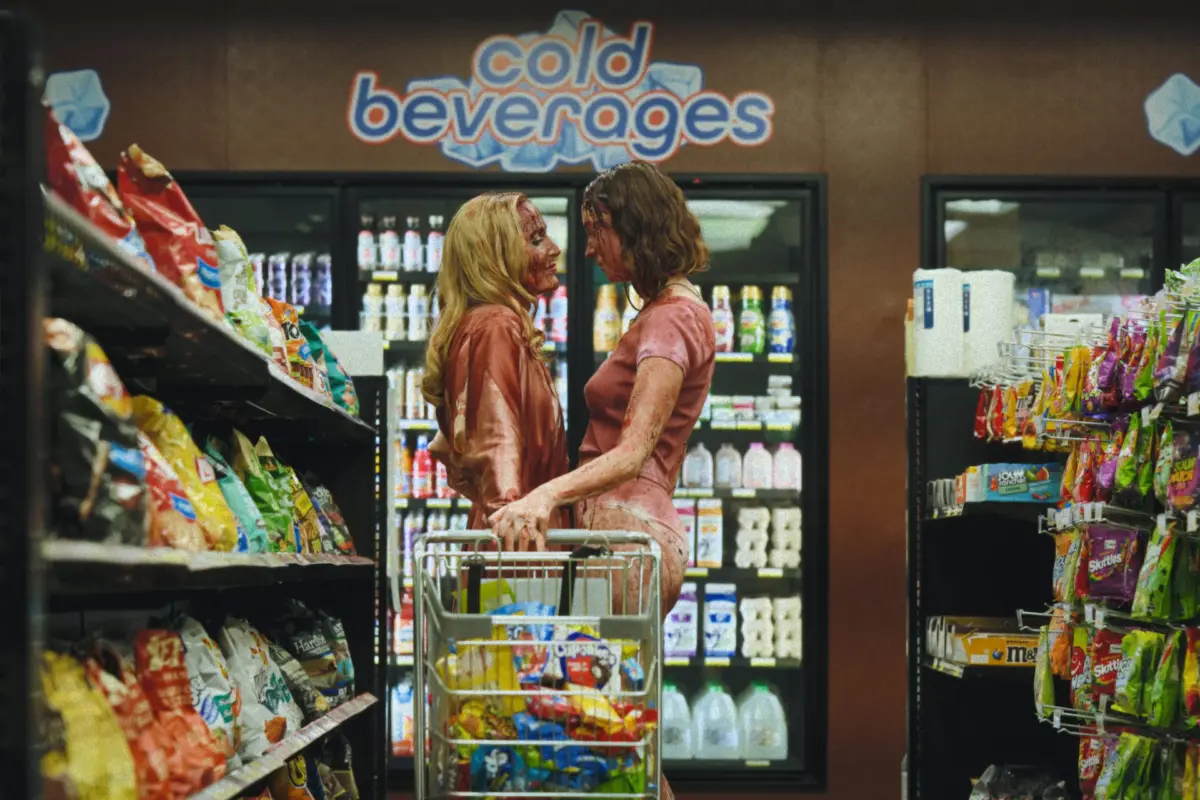
Anchored by a powerhouse performance from Gillian Anderson as Billy—a reclusive, Norma Desmond-esque former "final girl"—and Hannah Einbinder as Kris, a young queer filmmaker attempting to reboot the fictional franchise, the film examines how horror cinema can serve as both a site of deep-seated exploitation and a radical space for cathartic reclamation. Melding stylized, painted sets with hyper-nostalgic 1990s visual motifs, Schoenbrun delivers a work that defies strict genre categorization. It cements their status as one of the most visionary auteurs working in modern horror, expanding the boundaries of the burgeoning "new queer horror" movement.
Detailed Chronology: From Academic Parodies to Transgressive Reboots
The narrative spine of Teenage Sex and Death at Camp Miasma traces a collision between past exploitation and contemporary queer reclamation. To understand the thematic weight of Schoenbrun’s latest project, one must examine the trajectory of its protagonist, Kris, played with sharp vulnerability by Hannah Einbinder (Hacks).
Kris enters the industry as an overly intellectual indie filmmaker. Her debut feature, Jouissance—a title invoking psychoanalyst Jacques Lacan’s concept of overwhelming, transgressive ecstasy and pain—is described as a pretentious retelling of Alfred Hitchcock’s Psycho shot entirely from the perspective of the shower curtain. Despite its academic framing, Jouissance establishes Kris as an emerging trans filmmaker trying to find her artistic voice through the deconstruction of cinematic violence.
Following this debut, Kris is hired to spearhead a modern reboot of Camp Miasma, a fictional 1980s slasher franchise defined by its relentless exploitation of teenage bodies. Driven by an obsession with the original films, Kris tracks down Billy Presley (Gillian Anderson), the legendary actress who embodied the series’ classic "final girl." Billy has lived in total seclusion for decades at Camp Tivoli in the Pacific Northwest—the remote site where the original Camp Miasma was filmed.
Much like Jamie Lee Curtis’s return in 2018’s Halloween, Kris hopes to coax Billy out of retirement to star in her queer-infused franchise revival. However, this nostalgic pilgrimage unleashes a shattering psychological reckoning. Through evocative, rain-soaked 1980s flashbacks, Kris uncovers the dark reality behind Billy’s abrupt departure from acting and society: during the production of the original film, Billy was subjected to a real-life sexual assault disguised as a pivotal cinematic death scene.
As Kris and Billy confront this shared history, they forge a complicated psychosexual bond, exploring their desires and working through mutual feelings of shame surrounding sex. This healing process, however, is violently externalized by the film’s central antagonist: the ghost of Little Death.
Portrayed by Jack Haven, Little Death is a supernatural terror wrapped in an HVAC suit, wearing a large square air vent as a terrifying head mask. Armed with a spear, Little Death is the horrific embodiment of trans-vengeance—the spirit of a trans camper who was bullied, drowned in the lake, and left to fester at the bottom of the frozen waters for years. Emerging seasonally, this entity targets oversexed youth, stalking Kris and Billy in both their waking hours and feverish dreams.
Supporting Context & Metrics: Haunting the Slasher and Trans History
Schoenbrun’s film does not merely utilize slasher tropes; it actively interrogates the historical and theoretical frameworks that have long governed horror cinema.
Cinematic Lineage and Academic Echoes
Teenage Sex and Death at Camp Miasma is heavily layered with horror history. The antagonist, Little Death, acts as an explicit amalgamation of Angela—the trans-teen anti-hero of Robert Hiltzik’s cult classic Sleepaway Camp (1983)—and Friday the 13th‘s iconic masked killer, Jason Voorhees.
Furthermore, the film’s intellectual DNA converses directly with foundational feminist film theory. While Kris’s earlier work, Jouissance, parodies the psychoanalytical approaches popularized by scholars like Carol J. Clover (Men, Women, and Chain Saws) and Barbara Creed (The Monstrous-Feminine), Schoenbrun ultimately moves beyond sterile academic deconstruction. Instead, the film aligns itself with contemporary queer and trans film scholarship. It celebrates the subversive pleasures of spectatorship for LGBTQ+ audiences who have historically found safe havens in the monsters and outcasts of horror cinema.
The Real-World Shadow of "Camp" Culture
The film’s setting—a summer camp harboring dark secrets—also taps into a painful, complex chapter of real-world queer and trans history. As noted by queer historians and writers such as Susan Stryker and Michelle Tea, the real-life exclusion of trans women from the Michigan Womyn’s Music Festival between 1976 and 2015 sparked fierce resistance, ultimately leading to the creation of "Camp Trans" as a radical counter-protest festival. By setting their horror narrative within a literal summer camp, Schoenbrun bridges the gap between historical trans exclusion and the metaphorical hauntings of queer trauma.
Stylistic Influences
Aesthetically, Schoenbrun continues to hone their signature hyper-nostalgic visual style. The film’s sonic landscape—featuring a wistful, melancholic soundtrack—combined with its vibrant immersion in 1990s pop-consumerist tropes, draws direct comparisons to David Cronenberg’s visceral body horror and the anarchic, romantic spirit of Gregg Araki’s work within the New Queer Cinema movement.
Official Statements & Critical Perspectives
Speaking at the Cannes Film Festival following the film’s historic Queer Palm win, director Jane Schoenbrun offered profound insights into the thematic core of Teenage Sex and Death at Camp Miasma.
"This film is all about sex," Schoenbrun stated during their official press conference. "It is about the terror of inhabiting a body, the terror of desire, and the ways in which cinema can either lock us inside our traumas or provide the aesthetic keys to break us out."
Gillian Anderson, reflecting on her role as the reclusive former scream queen Billy, elaborated on the character’s unique coping mechanisms and her dynamic with Einbinder’s Kris:
"Billy didn’t just walk away from Hollywood; she went ‘far away’ inside her own mind," Anderson explained. "When you experience profound trauma on a set where the camera is constantly objectifying your body, you learn how to disassociate. Billy learned to receive a signal—viewing her own assault through the ‘killer eye’ POV of Little Death. It’s a harrowing way to survive, but it’s also how she managed to reclaim the narrative of her own destruction."
This dynamic manifests poignantly within the film’s dialogue. In a deeply vulnerable exchange, Kris confesses her own deep-seated anxieties regarding intimacy: "I’m bad at sex, I never have been able to lose myself."
Billy calmly retorts, "There is no bad at sex."
Film critics and academic researchers have been quick to praise the film’s sophisticated navigation of these themes. Dr. [Author Name], a leading scholar in queer horror studies, notes:
"Like I Saw the TV Glow, Schoenbrun’s latest refuses to offer clean, easily digestible resolutions. The conclusion shifts deliberately into the symbolic and the estranged. It proves that Teenage Sex and Death is not merely a slasher film, but ‘something else’—a vital vanguard of new queer horror that articulates both the immense horrors and the ecstatic pleasures of difference."
Future Outlook: The Evolution of New Queer Horror
The overwhelming critical acclaim and festival success of Teenage Sex and Death at Camp Miasma signal a watershed moment for queer and trans representation within mainstream and independent cinema. For decades, horror has functioned as a coded outlet for marginalized identities, yet explicitly queer and trans narratives were frequently relegated to subtext, independent margins, or outright villainy.
Schoenbrun’s consecutive triumphs with I Saw the TV Glow and now Camp Miasma demonstrate that there is a massive, highly engaged audience hungry for stories that refuse to sanitize the queer experience. By treating queer trauma, desire, and alienation with intellectual rigor while honoring the visceral thrills of genre filmmaking, Schoenbrun is helping to establish a new cinematic canon.
As Teenage Sex and Death at Camp Miasma prepares for its broader theatrical rollout, its industry impact is already palpable. Major studios and independent financiers are increasingly willing to back visionary, auteur-driven genre projects helmed by trans and queer creators. The film proves that horror is not merely a genre of cheap thrills, but a flexible, profoundly empathetic medium capable of rewriting personal and cultural histories—proving, frame by terrifying frame, that there is still time to confront the monsters of the past and reclaim one’s authentic self.