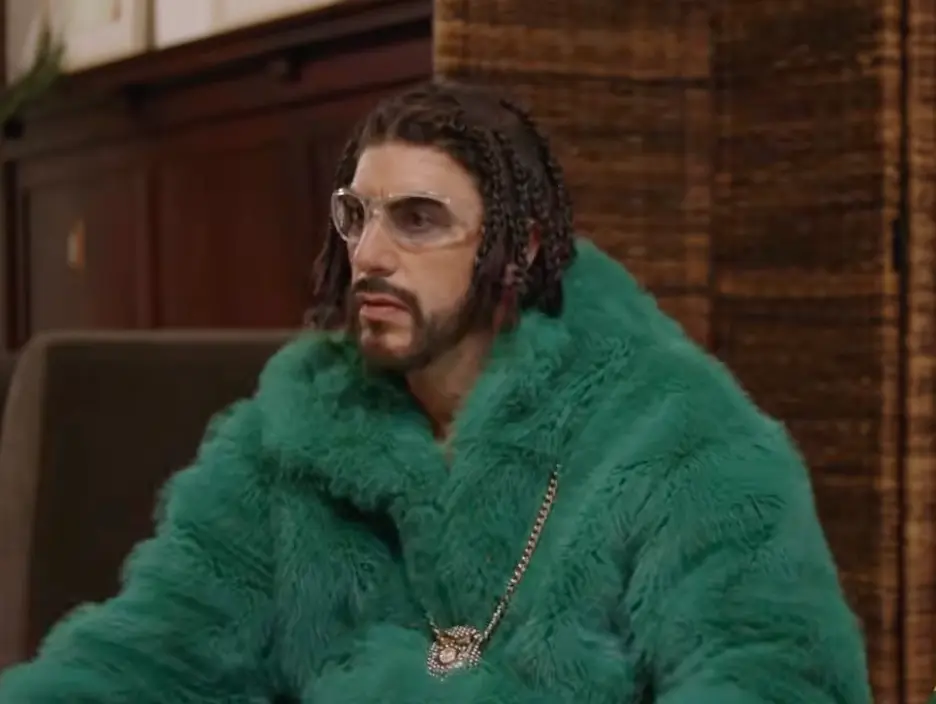
LONDON — Sacha Baron Cohen’s long-anticipated return as his iconic satirical creation, Ali G, has thrust the British comedian back into the eye of a fierce cultural storm. Barely days after Amazon MGM Studios dropped the official trailer for Ali G: Who Iz I?—a fly-on-the-wall mockumentary in the vein of Baron Cohen’s breakout hit Borat—the project has triggered a rapid and polarizing backlash across the United Kingdom.
Fuelled by a coordinated digital boycott campaign organized by British news and opinion platform NewsCord, public pressure has already yielded its first tangible industry casualty. Major U.K. theater operator Picturehouse Cinemas has confirmed it has no present plans to screen the film upon its scheduled October 23 release. With tens of thousands of automated protest emails flooding exhibitor inboxes and deep-seated historical debates over cultural appropriation, racial stereotyping, and class tourism violently re-emerging, the release of Ali G: Who Iz I? is proving to be far more contentious than its creators likely anticipated.
Executive Overview
The resurrection of Ali G—a character Sacha Baron Cohen originally developed in 1998 and immortalized in the 2002 narrative feature Ali G Indahouse—was designed to be a triumphant, boundary-pushing cinematic event. Instead, it has laid bare deep fractures within the British cultural landscape concerning who holds the license to parody marginalized communities, and whether satirical formats developed in the late 1990s have any place in a contemporary, hyper-aware media ecosystem.
The core of the current controversy centers on Ali G: Who Iz I?, an unscripted documentary project that sees Baron Cohen re-entering the public sphere to trap unsuspecting members of the public in elaborate satirical setups. While supporters celebrate the return of a biting agent provocateur capable of exposing hypocrisy and pomposity among the political and social establishment, critics argue that the character relies heavily on "blackface adjacent" tropes. They contend that Ali G serves as a safe proxy for the liberal middle classes to mock Black British working-class youth culture under the guise of high-concept satire.
As the theatrical distribution landscape fractures in response to grassroots activism—highlighted by Picturehouse Cinemas stepping back from the release—the film’s October premiere serves as a critical test case for the limits of provocative comedy in the modern era. This comprehensive report explores the chronology of the backlash, the historical roots of the criticism, the official statements from stakeholders, and the broader cultural implications of Baron Cohen’s latest satirical gamble.
Detailed Chronology: From Trailer Drop to Theater Boycotts
The trajectory of the Ali G: Who Iz I? controversy has escalated at breakneck speed, moving from online agitation to real-world commercial impact within a matter of days.
The Marketing Blitz and Premise Reveal
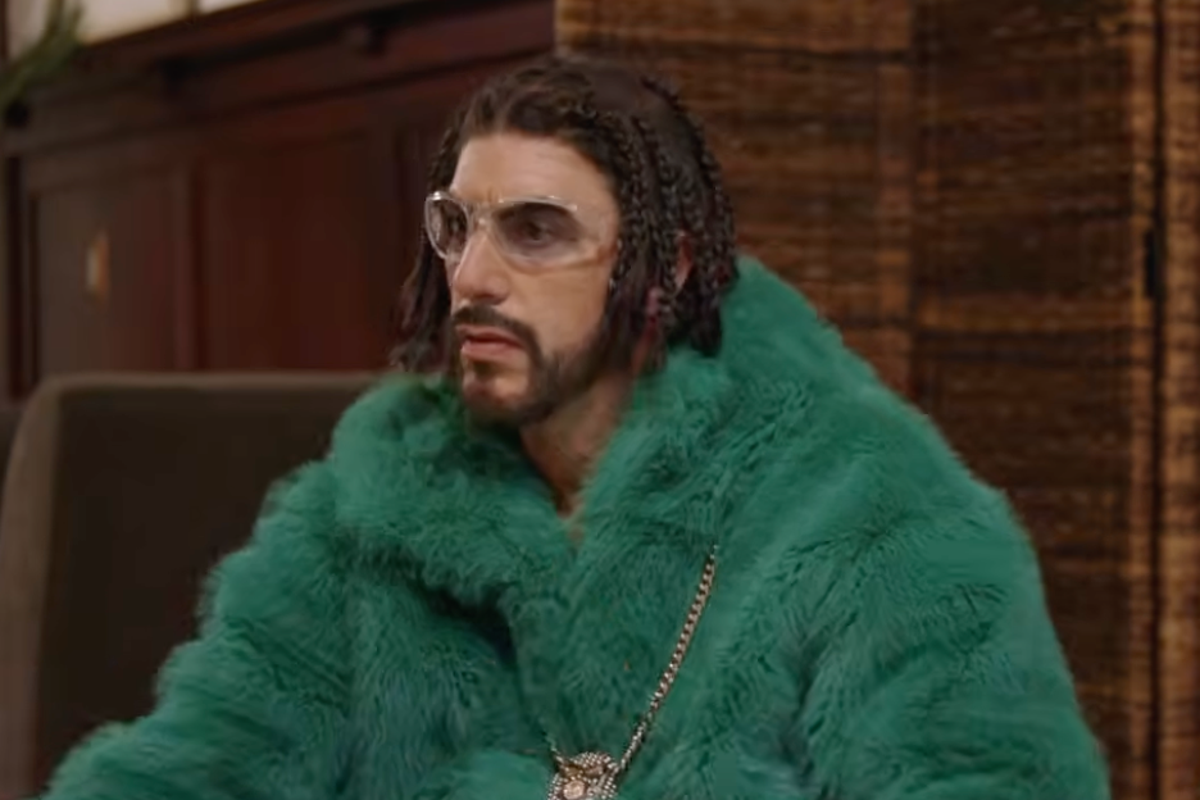
The controversy officially ignited earlier this week when Amazon MGM Studios and Sacha Baron Cohen released the first official trailer for Ali G: Who Iz I?. The promotional material revealed a narrative premise designed to thrust the aging, out-of-touch suburban wannabe-gangsta back into the limelight.
According to the official plot synopsis, the film finds Ali G after two decades spent "chillin’, tokin’ and bonin’." His laid-back existence is violently upended when he discovers that his long-term partner, Julie, is eight months pregnant. Faced with the sudden reality of fatherhood and an extra mouth to feed, Ali G pulls himself away from his domestic routine and heads across the Atlantic to America in a desperate bid to reclaim his former cultural glory. However, his trademark cluelessness quickly lands him in volatile situations, pitting him against adversaries who threaten both his and his unborn child’s existence.
The Launch of the NewsCord Boycott Campaign
Almost immediately following the trailer’s debut, the British news comparison and advocacy site NewsCord launched a targeted campaign demanding that U.K. cinema chains refuse to screen the film. Utilizing digital organizing tools, NewsCord mobilized its readership and critics of the character by framing the screening of the movie as an ethical choice for exhibitors.
In their foundational call to action, NewsCord pulled no punches, writing:
"Black British comedians called the character ‘an alibi for racism’ in 2000; Jeanette Winterson asked what separates it from the Black and White Minstrels; Kazakh and Arab organisations documented the harm of the catalogue behind it. Sony Pictures UK is selling it with the line ‘He iz back. We ain’t liable.’"
The manifesto concluded with a direct challenge to the exhibition sector: "The screens belong to the chains, and a booking is a choice."
Picturehouse Cinemas Blinks
The pressure campaign achieved its first major milestone when U.K. art-house and multiplex chain Picturehouse Cinemas—which operates 25 venues across the country—capitulated to public demand. In a brief but definitive statement issued to the entertainment publication Metro, Picturehouse confirmed:
"We currently do not have any plans to screen this film on its release."
This decision has been heralded as a major victory by NewsCord and participating activists, who view the refusal as a moral precedent that other independent and mainstream chains should follow. As of press time, the campaign claims that nearly 38,000 automated protest emails have been dispatched to various cinema operators throughout the United Kingdom.
Supporting Context & Metrics: Historical Roots of the Ali G Backlash
To fully understand why the revival of Ali G has provoked such visceral hostility, one must examine the character’s genesis and the immediate criticism he faced at the turn of the millennium. The current outcry is not a sudden, knee-jerk reaction to modern sensibilities; rather, it is the continuation of a decades-long critique regarding racial ventriloquism in British media.
The 2000 Backlash: Curtis Walker and Felix Dexter Speak Out
When Ali G first dominated British television screens via Channel 4’s The 11 O’Clock Show and subsequently Da Ali G Show, he was an inescapable cultural phenomenon. Yet, even at the height of his popularity, prominent Black British comedians voiced profound discomfort with the character’s construction.
Comedians such as Curtis Walker and Felix Dexter publicly challenged the premise of a white, privately educated Cambridge graduate (Baron Cohen) adopting a caricature of Black British street culture, patois, and mannerisms for comedic effect.
In a landmark interview with journalist Janine Gibson for The Guardian in January 2000, the late, great Felix Dexter—a star of the pioneering sketch show The Real McCoy—cut to the heart of the critique:
"I feel a lot of the humour is laughing at Black street culture and it is being celebrated because it allowed the liberal middle classes to laugh at that culture in a safe context where they can retain their sense of political correctness."
Critics argued that Ali G functioned as a composite stereotype, blending elements of Jamaican yardie culture, hip-hop posturing, and working-class white suburban youth (often pejoratively referred to as "chavs" or "townies"), ultimately reducing complex sociological identities to a punchline centered on ignorance and broken grammar.
Baron Cohen’s Defense and the Satirical Intent
For his part, Sacha Baron Cohen has consistently maintained that his creations serve a higher, subversive purpose. Speaking candidly during a 2016 appearance on Marc Maron’s WTF With Marc Maron podcast, the comedian reflected on the mechanics of his characters, noting that Ali G’s immense stupidity rendered him fundamentally unsustainable in real life over long periods. However, he defended the underlying intent of the character:
"Part of Ali G was an attempt, subtly, to slightly undermine the establishment."
Proponents of Baron Cohen’s work argue that his satirical targets have rarely been the marginalized groups his characters superficially resemble. Instead, his elaborate setups are designed to expose the latent bigotry, hypocrisy, and intellectual laziness of powerful figures—politicians, journalists, business leaders, and cultural elites—who eagerly agreed to be interviewed by a cartoonish stereotype just to secure media exposure.
Quantifying the Current Protest Movement
The scale of the modern digital protest is reflected in the metrics provided by NewsCord:
- Total Emails Sent: 37,658 (and counting at the time of publication).
- Exhibitors Responding: Picturehouse Cinemas (25 locations across the U.K.) has officially opted out of screenings.
- Target Release Date: October 23, leaving a narrowing window for other chains to clarify their programming stances.
Official Statements and Industry Reactions
The standoff between Amazon MGM Studios, grassroots activists, and cinema chains highlights a growing corporate nervousness surrounding controversial legacy intellectual property.
Picturehouse Cinemas
The decision by Picturehouse to distance itself from Ali G: Who Iz I? represents a calculated risk-management strategy. By issuing a terse, non-committal statement—"We currently do not have any plans to screen this film on its release"—the company has managed to defuse localized protests outside its branches while keeping its options legally open, though industry insiders suggest a reversal is highly unlikely given the toxic PR climate surrounding the title.
Distribution and Marketing Challenges
Sony Pictures U.K., which is handling elements of the promotional push or regional distribution footprint alongside Amazon MGM, has found itself forced into an aggressive defensive posture. The marketing tagline highlighted by critics—"He iz back. We ain’t liable"—reads as an intentional preemptive strike acknowledging the combustible nature of the material. By leaning into the controversy, the studio is attempting to position the film as an edgy, anti-establishment event, banking on the timeless allure of forbidden fruit to drive streaming subscriptions and box-office tickets among core fans who reject what they view as cancel culture.
Future Outlook: What Lies Ahead for Ali G: Who Iz I?
As the clock ticks down to the October 23 release date, the immediate future of Ali G: Who Iz I? remains fraught with uncertainty and high-stakes maneuvering.
Will Other Chains Fall in Line?
The primary question facing the film’s U.K. theatrical rollout is whether Picturehouse’s defection will trigger a domino effect among larger exhibition giants such as Cineworld, Odeon, and Vue. While independent and art-house chains are historically sensitive to community grassroots campaigns, major multiplex operators typically prioritize commercial yield and broad demographic appeal. However, if the digital boycott campaign scales past 50,000 emails and garners mainstream media attention from broadcast networks, corporate risk aversion could prompt additional chains to quietly quietly drop or restrict screenings.
The Streaming Safety Net
It is essential to note that unlike the theatrical landscape of 2002 when Ali G Indahouse premiered, the primary financial backer of this new venture is Amazon MGM Studios. The modern streaming economy reduces a film’s reliance on traditional box-office grosses. Even if physical screens in the U.K. slam shut across multiple independent chains, the ultimate destination for Ali G: Who Iz I? is Amazon Prime Video, where global algorithms and home-viewing privacy insulate the studio from physical protests and picket lines.
A Watershed Moment for Legacy Satire
Ultimately, the controversy surrounding Ali G: Who Iz I? transcends a single mockumentary. It serves as a cultural litmus test for how society evaluates retrospective comedy produced in vastly different eras. As audiences and exhibitors grapple with the ethics of racial performance and cultural parody, Sacha Baron Cohen’s attempt to resurrect his most famous alter ego may prove that some ghosts are better left resting in the past—or, at the very least, that the cultural price of admission has grown far steeper than it was twenty years ago.