After a summer defined by abnormal, scorching warmth and weeks-long droughts that left fields bone-dry, the opening day of Reading Festival 2026 offered a sobering, deeply nostalgic return to form: the classic, uncompromising British festival experience. The skies above Richfield Avenue dissolved into an ocean of dark, angry grey on Friday morning, unleashing persistent downpours that battered throngs of inadequately waterproofed revellers. Within hours, the terrain transformed into a morass of thick, fiendish mud. During a midday set by US rock breakout Geese, a tented stage sprung a leak, dousing a square metre of the crowd in cascading runoff.
Yet, beneath the inclement weather, Reading Festival 2026 reaffirmed its status as a multifaceted cultural barometer. While modern festival lineups resist rigid genre boundaries—freely blending rock, pop, hip-hop, and electronic music based on the ephemeral tastes of Gen-Z listeners—Friday’s bill leaned heavily into a guitar-driven identity. This orientation sparked intense debates across the site, ranging from the controversy surrounding the newly introduced "Canopy" stage to the ongoing cultural interrogation of what constitutes modern rock music in the streaming era.
From the laconic, razor-sharp musicianship of New York’s Geese to Charli XCX’s genre-blurring main stage triumph and the sullen, stadium-ready anthems of Fontaines D.C., the festival’s opening day delivered a masterclass in contrasting performance styles. This comprehensive dispatch examines the chronological unfoldings of Friday, evaluates the structural shifts in artist curation, reviews critical performances, and contextualizes the broader industrial pressures shaping the European festival landscape in 2026.
Detailed Chronology: Day One at Reading 2026
Morning: The Deluge and the "Nepo Baby" Controversy
The festival gates opened at 11:00 AM under skies that immediately signaled trouble. For a generation of festival-goers accustomed to the sun-baked dustbowls of the preceding two months, the abrupt meteorological shift caught many unawares. Ponchos vanished from trade stalls within minutes, and the pathways rapidly devolved into churning quagmires.
Despite the weather, early crowds clustered tightly around the newly minted Canopy stage. Replacing the historic BBC Introducing platform—which historically served as a vital incubator for truly unsigned, grassroots talent—the Canopy stage quickly earned a sharp moniker from festival attendees and music press alike: the “nepo baby stage.” Friday’s schedule underscored this perception, showcasing a lineup heavily populated by the offspring of rock royalty and cultural elite.
Among them was Villanelle, the grunge outfit fronted by Gene Gallagher (son of Oasis icon Liam Gallagher). Also slated across the weekend were high-profile progeny such as Violet Grohl (daughter of Foo Fighters frontman Dave Grohl) and Cruz Beckham. While performances by these acts demonstrated undeniable technical competency inherited through proximity to masterclass touring environments, the stage’s programming fueled ongoing industry discourse regarding meritocracy, institutional access, and the shrinking spaces available to genuinely working-class artists in contemporary British rock.
Mid-Afternoon: Geese Bring New York Cool to the Mud
As the afternoon wore on, attention shifted toward the festival’s more critically lauded imports. Chief among them were New York City’s Geese, fronted by the soulful, shaggy-haired 24-year-old vocalist Cameron Winter. Drawing heavily from their 2025 breakout sophomore LP, Getting Killed, the band delivered a robust, seamless midday set that dragged reluctant, rain-soaked audiences out of their lethargy.
Geese project the distinct aura of a band that has spent the better part of a year dragging the same rigorous setlist across European touring circuits. Their stage manner is aggressively dispassionate, occasionally bordering on lackadaisical. Winter and his bandmates eschew the performative showmanship common to festival mainstays, instead standing rooted in their instruments, letting intricate time signatures and jagged noise-rock textures do the heavy lifting.
While some critics noted that this world-weary posture occasionally borders on indifference, the underlying musicianship remained unimpeachable. Tracks from Getting Killed translate dynamically to large festival environments, proving that technical precision and compositional ambition can pierce even the grayest Berkshire overcast.
Evening: Charli XCX Crosses the Rubicon
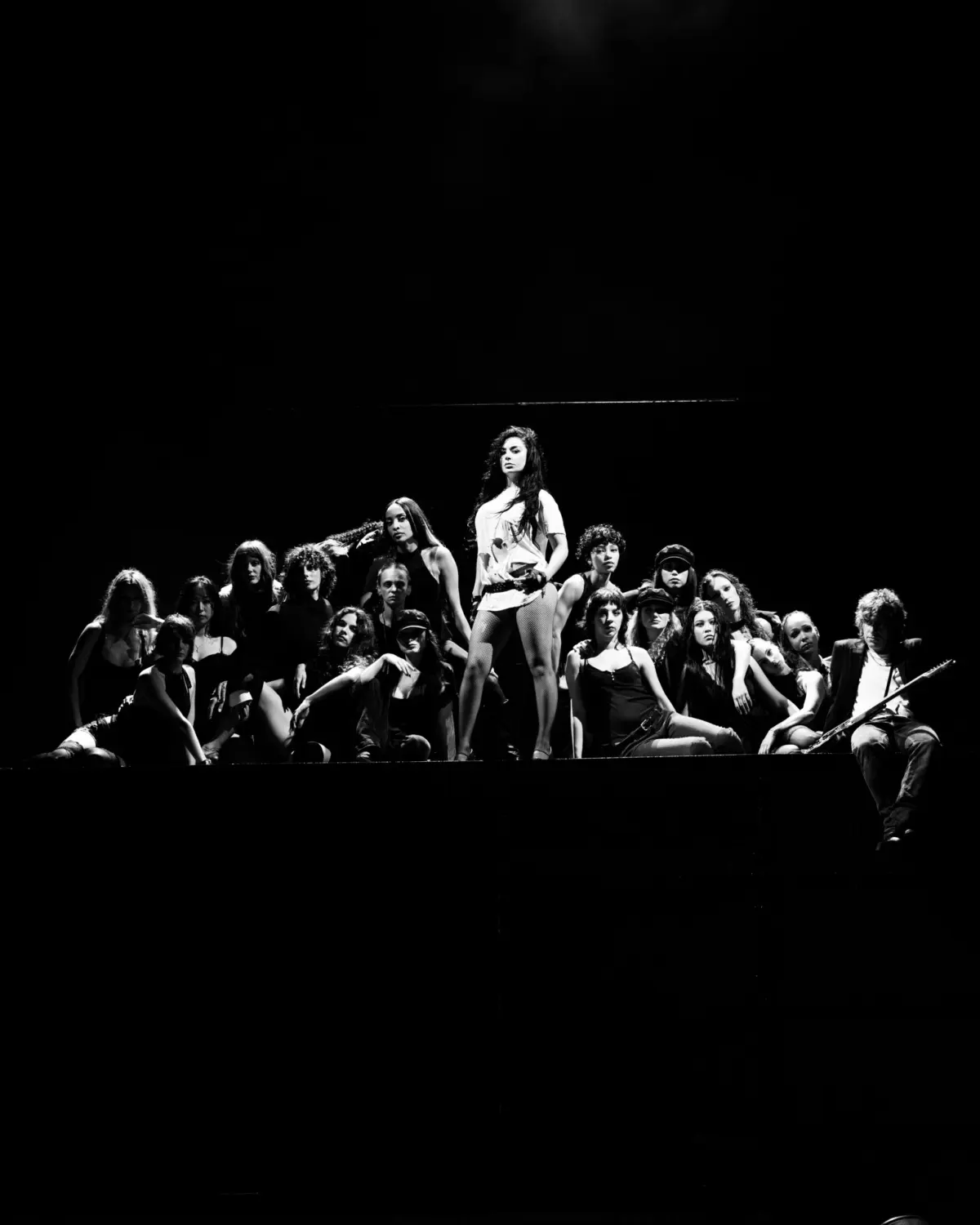
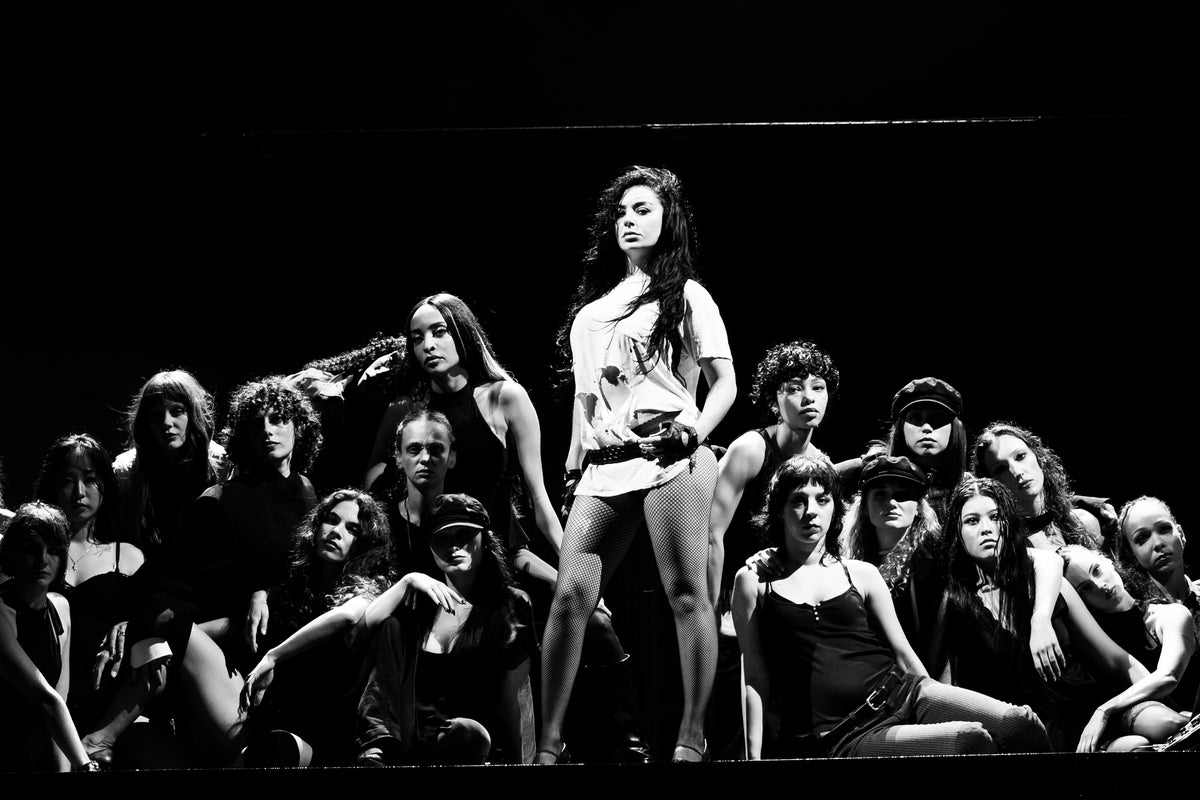
As dusk approached, the main stage hosted one of the most anticipated and contested sets of the weekend: Charli XCX. For much of 2026, music journalists and internet forums have engaged in a wearisome debate over whether Charli’s recent artistic pivot—culminating in her latest album, Music, Fashion, Film—can legitimately be classified as "rock music."
Charli addressed this semantic tug-of-war head-on with a brilliantly calculated staging strategy. For tracks off the new record, such as the glitchy-vocaled "Rock Music" and the faux-coy "Wink Wink," she bypassed backing tracks entirely, bringing out a formidable live guitar ensemble to inject raw analog grit into her avant-pop structures. When transitioning back to the snappy, high-octane electropop anthems of her cultural landmark Brat, the live band receded into the shadows, allowing the synthetic pulse of hyperpop to take command.
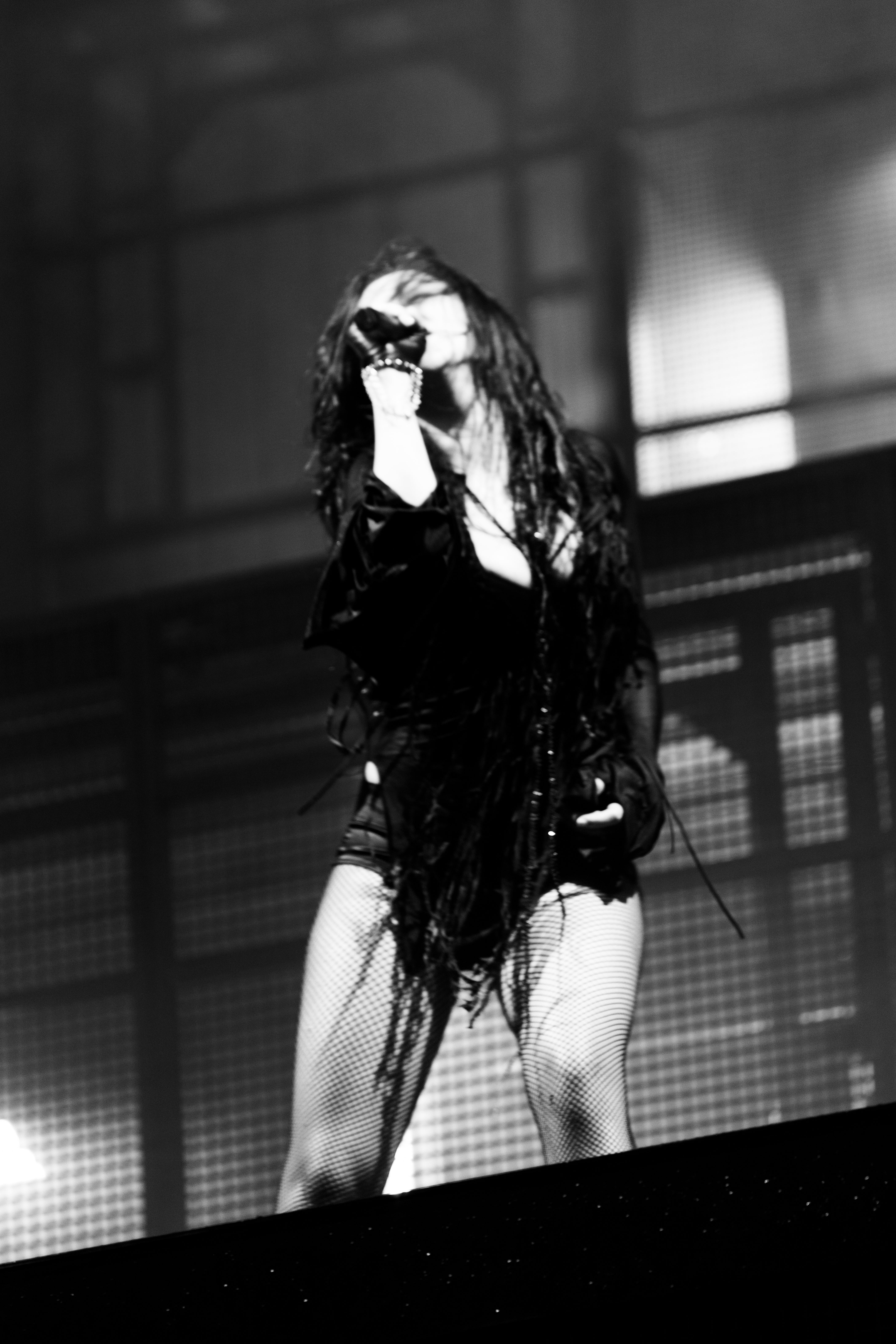
Wisely refusing to abandon the phenomenon that defined her previous era, Charli drew massive singalongs with cuts like "Apple," casually drawling, "Here’s a classic for you, Reading," to a track barely two years old. Observers noted that this performance marked a distinct evolutionary leap from her 2024 touring cycle. Her choreography was more deliberate and varied, the setlist stitched together with an elegance that minimized dead air and maximized emotional peaks. For a festival historically dominated by traditional rock bands, Charli XCX’s headlining-adjacent performance proved to be an undeniable triumph of modern pop auteurism.
Nightfall: Fontaines D.C. Deliver Sullen Catharsis
For purists still agonizing over the erosion of traditional genre boundaries, Friday’s ultimate antidote arrived in the form of Fontaines D.C. Stepping onto the stage only slightly behind schedule, the ascendant Irish post-punk outfit delivered a slick, sullen, and emotionally resonant masterclass.
Frontman Grian Chatten floated across the stage in an oversized, unpretentious football shirt, embodying a ramshackle charm that defies standard rock-star paradigms. Chatten’s vocal delivery remains characteristically flat, bearing the distinct, spoken-word cadence of Manchester legends like Ian Brown—a stylistic choice that reads less as a technical limitation and more as an intentional rejection of theatrical gloss.
Fontaines D.C. have rapidly transitioned from critical darlings into a premier festival institution. Their catalog—anchored by anthems like "Boys in the Better Land" and "Jackie Down the Line"—is custom-built for large-scale arenas, bearing structural shades of classic Oasis grandeur paired with the atmospheric expanse of Coldplay. Chatten kept stage banter to a bare minimum, utilizing his platform briefly to express solidarity with Palestine before delivering the emotional anchor of the evening: dedicating their standout track "Favourite" to the band’s late manager, Trevor Dietz, who passed away in June at the age of 47.
"Love you Trev," Chatten murmured into the microphone as the final feedback loops dissipated into the damp night air. It was a poignant reminder that beneath the stoic exterior of modern post-punk lies a wellspring of profound emotional vulnerability.
Supporting Context & Metrics
Festival Curation and Demographic Shifts
The booking strategy at Reading Festival 2026 reflects a broader macro-trend in live music curation: the intentional dismantling of genre silos. According to audience data collected by Festival Republic, over 64% of attendees under the age of 25 identify as "genre-fluid" consumers, regularly streaming hip-hop, hyperpop, and indie rock within the same listening sessions.
| Artist / Act | Primary Genre | Stage Assignment | Key Release / Epoch |
|---|---|---|---|
| Geese | Indie / Noise Rock | Tented Second Stage | Getting Killed (2025) |
| Villanelle | Grunge / Alternative | Canopy Stage | Debut Live Circuit |
| Charli XCX | Hyperpop / Experimental | Main Stage | Music, Fashion, Film (2026) |
| Fontaines D.C. | Post-Punk / Arena Rock | Main Stage Headliner | Romance Era / Catalog |
This fluidity has forced festival bookers to construct lineups that defy legacy categorization. However, as evidenced by the intense discourse surrounding the Canopy stage and Charli XCX’s guitar-backed set, this demographic evolution continues to create friction with traditionalist gatekeepers who view festivals as historical preserves for guitar-based subcultures.
Economic and Environmental Pressures
The 2026 festival season has been economically fraught. Following consecutive summers of extreme weather volatility—alternating between unprecedented heatwaves and sudden, infrastructure-testing deluges—production costs for major UK greenfield events have risen by an estimated 14% year-on-year. Investments in ground-reinforcement trackways, advanced drainage systems, and weather-resilient stage staging have become mandatory line items for promoters.
Despite these financial headwinds, ticket demand for Reading 2026 remained remarkably resilient, selling out its primary allocation three months in advance, proving that the British public’s appetite for live music weathering remains undiminished by macroeconomic pressures or temperamental skies.
Official Statements and Industry Reaction
Speaking backstage following their searing midday set, Geese frontman Cameron Winter addressed the band’s relentless touring schedule and their evolving relationship with large-scale festival stages:
"When you’re out on the road for months playing the same foundational material, the challenge isn’t just about hitting the notes—it’s about finding new ways to inhabit the songs without letting the fatigue show. Festivals like Reading demand a certain physical projection. You can’t hide behind studio production here; the weather, the mud, the sheer size of the crowd strips everything back to raw dynamics."
Meanwhile, Melvin Benn, Managing Director of Festival Republic, defended the implementation of the Canopy stage amid mounting criticism regarding industry nepotism and the displacement of grassroots development platforms:
"The landscape of artist development has transformed radically over the past five years. Traditional incubation pipelines have evolved, and platforms like the Canopy stage are designed to reflect where contemporary youth culture is discovering its artists. We remain deeply committed to supporting emerging talent, but we must also ensure our stages reflect the shifting realities of the modern music ecosystem."
Future Outlook
As Reading Festival 2026 moves past its baptism by mud and rain, Day One has established a compelling narrative template for the remainder of the weekend. The juxtaposition between heritage-driven guitar acts and boundary-pushing pop innovators highlights a festival in transition—one bravely navigating the tension between its historical identity as a rock pilgrimage and its modern reality as a sprawling, all-encompassing youth culture summit.
Looking ahead, promoters and industry analysts will be closely monitoring how subsequent weather patterns impact site logistics and whether the conversations sparked by the Canopy stage prompt structural revisions for future iterations. For now, however, the resounding takeaway from Friday on Richfield Avenue is clear: despite shifting demographics, corporate pressures, and the perennial unpredictability of British meteorological systems, the heartbeat of the UK festival circuit remains stubbornly, beautifully alive.