Executive Overview
Marking a milestone anniversary of punk rock prompts a reflection not merely on the safety-pinned leather jackets and three-chord anthems that defined the movement, but on the rigid sociological and aesthetic boundaries erected during its mid-1970s ascent. The arrival of punk was heralded as "Year Zero"—a cultural cleansing designed to completely decouple contemporary youth from the perceived bloated corpse of classic rock, progressive rock, and blues-based stadium acts. Before this era, rock and roll maintained a reverential, self-aware dialogue with its own history. The dawn of 1977, however, introduced an uncompromising binary framework: you were either part of the vanguard of modern musical destruction, or you belonged to the discarded past.
Yet, history is rarely so cleanly segmented. Beneath the dogmatic surface of punk’s exclusionary rhetoric lay a nuanced grey area populated by "The Acceptables"—a distinct class of artists who managed to secure exemption passes from the movement’s cultural gatekeepers. Whether through a shared economy of song structure, sympathetic alignment with emerging youth cultures, or direct lineage to protopunk godfathers, certain acts bypassed the purge. This investigation examines the fault lines of 1976 and 1977, mapping the hierarchy that separated the reviled "dinosaurs" from the revered ancestors and honorary allies who shaped the DNA of modern alternative music.
Detailed Chronology: The Road to Year Zero and Its Exceptions
1976: The Pre-Punk Vacuum and the Stagnation of Rock
To understand the radical nature of punk’s "Year Zero," one must first examine the state of popular music in 1976. While mainstream pop charts maintained a vibrant pulse as captured by programs like Top of the Pops, the rock landscape had largely calcified. Archival broadcasts of John Peel’s seminal radio shows reveal a paradox: rather than serving exclusively as hotbeds for radical new sounds, late-night rock programming frequently dwelt on retrospective deep-dives into bands like The Doors and The Beatles, despite those acts having dissolved only half a decade prior.
Concurrently, the live pub-rock circuit was lively but uneven. Aside from outliers like Dr. Feelgood, the recorded output of the period’s pub-rock and blues-based outfits frequently manifested as dull, elongated jams. Progressive rock monoliths and stadium dinosaurs dominated the commercial space with sprawling concept albums and extended solos. It was against this backdrop of musical inflation that punk emerged as a streamlined, boogie-less corrective—an urgent demand for brevity, accessibility, and immediacy.
1977: Drawing the Line and Raising the Stakes
The release of The Clash’s anthem "1977" effectively upped the ante on cultural alienation. The track expanded the roster of prohibited icons far beyond the usual suspects of The Beatles and The Rolling Stones, setting its sights on foundational figures like Elvis Presley. The ethos of the era dictated an absolute wall of separation between the new guard and the old guard.
However, this ideological purity immediately faced practical limitations. When early champions of the movement, such as John Peel, attempted to construct radio playlists dedicated entirely to punk, they encountered a severe inventory shortage: simply put, there were not yet enough punk records in existence to fill a broadcast hour. This logistical bottleneck forced a critical reckoning, opening the door for a select group of artists who were retroactively or concurrently granted diplomatic immunity.
Supporting Context & Metrics: Categories of the Exonerated
To survive the purge of 1976–1977, artists generally fell into one of three distinct categories of acceptance: the active allies, the proto-punk ancestors, and the supreme shapeshifter.
[Punk's Cultural Purge: The Spectrum of Acceptance]
 ├── The Dinosaurs / Proscribed Acts (Genesis, Yes, Pink Floyd, 70s Blues-Rock)
 ├── The Active Allies / "The Acceptables" (Motorhead, Thin Lizzy, Marc Bolan)
 ├── The Revered Ancestors (The Velvet Underground, The Stooges, New York Dolls)
 └── The Supreme Exemption (David Bowie & His Collaborative Web)
1. The Active Allies ("The Acceptables")
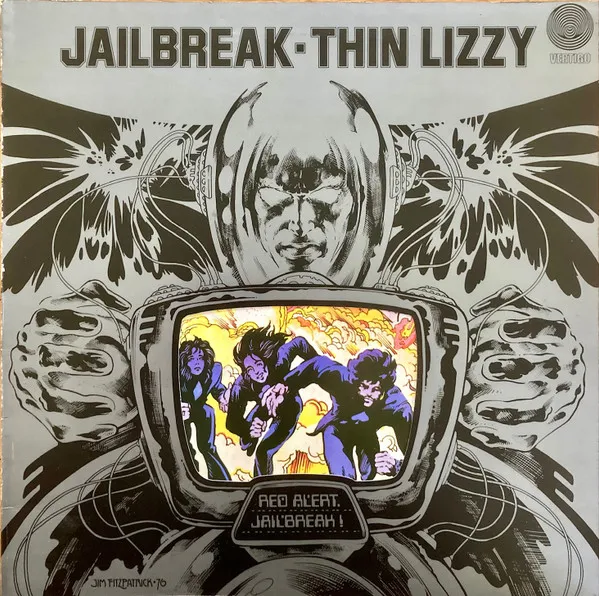
Bands like Motörhead and Thin Lizzy found themselves surprisingly welcomed into the punk fold. Several factors contributed to this alliance:
- Economic Songcraft: Both acts favoured concise, high-energy tracks over self-indulgent compositional wandering.
- Attitudinal Alignment: Rather than expressing resentment toward the hostile young upstarts, these artists exhibited a sympathetic, working-class camaraderie.
- Aesthetic Markers: The universal language of the leather jacket bridged stylistic divides.
Similarly, Marc Bolan occupied a uniquely privileged position. Not only did his television showcase provide an essential platform for underground punk acts when mainstream media outlets displayed open hostility, but T.Rex had also served as formative listening for the teenage demographic of 1976. This generational bridge was later cemented by acts like Siouxsie and the Banshees, whose creative homage to Bolan underscored his enduring credibility.
2. The Revered Ancestors
Because early punk radio programming suffered from a scarcity of homegrown product, broadcasters relied heavily on what became known as the "Revered Ancestors"—artists who had manifested the spirit of punk before the genre was formally codified.
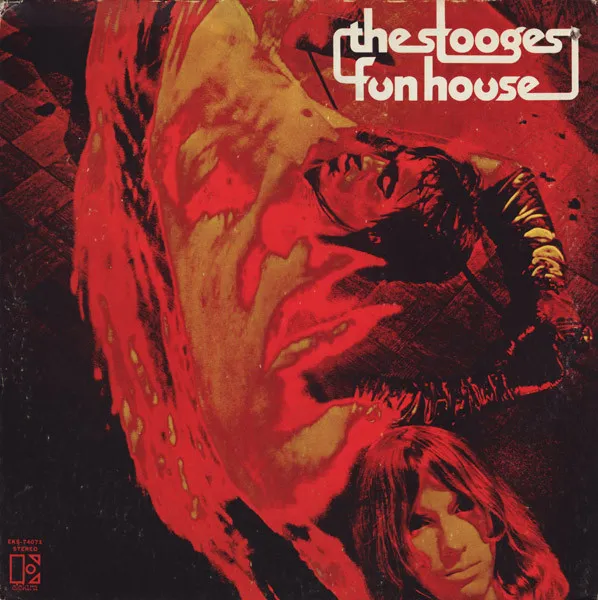
- The New York Vanguard: The Velvet Underground, The Stooges, and the New York Dolls were absorbed directly into the canon.
- Garage Rock Precursors: Sixties garage punk acts such as The Seeds and The Shadows of Knight were similarly re-evaluated.
During this foundational period, it became obligatory for nascent punk groups to feature a Stooges composition as a B-side or incorporate a cover of Lou Reed’s "Waiting for the Man" into their live sets. These artists were retroactively granted citizenship in the new musical state because they embodied the raw, unpolished urgency that the current generation sought to champion.
3. David Bowie: The King of the Exemption Pass
At the apex of this hierarchy sat David Bowie. Like Bolan, Bowie commanded the adoration of younger fans—solidifying this bond by penning anthems like Mott the Hoople’s "All the Young Dudes." However, unlike his glam-era contemporaries, Bowie spent the entirety of the 1970s engaged in a process of perpetual stylistic reinvention.
While other marquee artists drifted into bloated self-parody, Bowie retained a dynamic, cult-adjacent edge. Crucially, this halo effect extended outward to his collaborators. His production work with Iggy Pop and Lou Reed, alongside his creative partnerships with Brian Eno and Robert Fripp, endowed those figures with an unassailable cool by association.
Even as Bowie operated somewhat outside the immediate locus of British punk—producing challenging, avant-garde masterclasses like Low and "Heroes"—he remained its beating heart. RCA Records famously captured this paradox in their promotional campaign for "Heroes," declaring with absolute precision: "There’s Old Wave, There’s New Wave and There’s David Bowie."
Official Statements & Industry Reflections
Reflecting on the legacy of this era, musicologists and cultural commentators continue to debate the long-term impact of punk’s territorial demarcation. Industry veterans note that while the rhetoric of "Year Zero" was fierce, it ultimately served as a vital catalyst rather than a permanent barrier.
"Before punk, the idea of building a kind of wall between the new music and the old music would have been most bizarre—especially as rock music had always been very aware of its heritage and indeed respectful of it. But once there was a list, and if you weren’t on it, you weren’t getting in."
— Contemporary Music Historian Analysis
Label executives and media archivists point out that the rigid dividing lines of 1977 were unsustainable in the long run. By the dawn of the 1980s, the conceptual walls had begun to crumble. The very "dinosaur" bands that punk sought to eradicate—such as Genesis, Yes, and Pink Floyd—enjoyed massive commercial renaissances throughout the subsequent decade, proving that foundational songwriting and scale retained enduring market viability.
Future Outlook: The Dissolution of Boundaries in Modern Music
As the shockwaves of punk’s formative decades continue to echo through subsequent generations of alternative music, the legacy of "The Acceptables" offers a valuable lesson in cultural evolution. Punk eventually splintered into digestible sub-genres: new wave (characterized by 1960s pop sensibilities filtered through jackets and ties) and post-punk (marked by angular, non-pop experimentation clothed in the same uniform).
In the contemporary musical ecosystem, the hyper-segregated lists of 1977 appear increasingly antiquated. Modern streaming culture and genre-agnostic listening habits have dissolved the binary walls between "old" and "new," "acceptable" and "proscribed." Yet, the psychological imprint of punk’s great sorting remains palpable. It reminds us that artistic revolutions are rarely built on total invention; rather, they are forged through selective memory, strategic alliances, and the quiet preservation of those rare visionaries who manage to stay ahead of the axe.