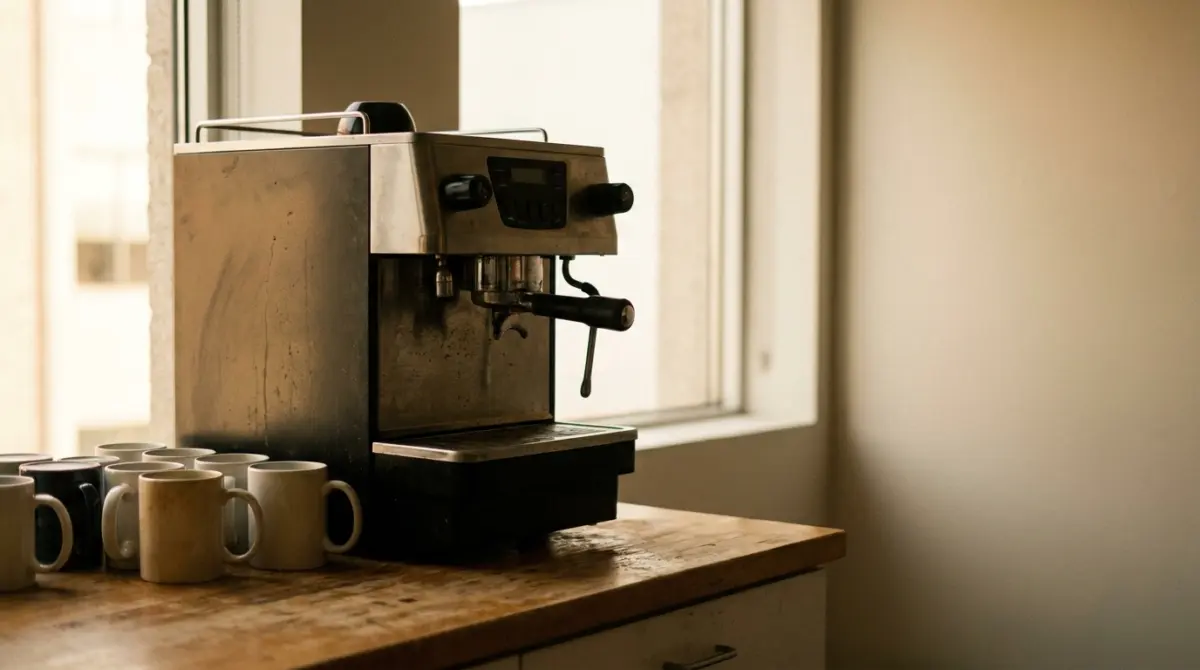
For decades, the office break room was treated as an architectural afterthought—a purely utilitarian box containing little more than a humming refrigerator, a scorched-earth coffee maker, a microwave of questionable cleanliness, and a generic cabinet of forgotten condiments. It was a space designed for brief, transactional pit-stops: a place to nuke yesterday’s leftovers or pour a lukewarm cup of instant coffee before retreating immediately to the isolation of the cubicle.
Today, that paradigm has fundamentally shattered. As the modern workplace adapts to the realities of hybrid schedules, compressed project timelines, and an escalating war for talent, the break room has undergone a radical transformation. Far from being a passive utility space, it has emerged as a high-leverage strategic asset directly tied to organizational culture, employee well-being, and cross-departmental collaboration.
Driven by shifting consumer expectations, technological innovations, and the post-pandemic imperative to make the physical office worth the commute, companies are rethinking workplace refreshments. From professionally managed office coffee services and curated micro-markets to smart, tech-enabled pantries, the contemporary break room is evolving into a dynamic ecosystem. This article investigates the forces reshaping this foundational workplace space, charting its historical trajectory, examining the operational metrics driving its adoption, and forecasting where workplace hospitality is heading next.
Detailed Chronology: From the Industrial Utility Closet to the Tech-Enabled Lounge
To understand the modern office refreshment ecosystem, one must trace how the break room evolved from a spatial necessity into an essential component of workplace design.
The Mid-20th Century (The Industrial & Corporate Utility Era):
During the post-war corporate boom, offices mimicked industrial assembly lines. Break spaces were strictly utilitarian "rest rooms" or smoking rooms. Amenities were minimal—often limited to a water cooler and a coin-operated vending machine dispensing lukewarm carbonated beverages and cellophane-wrapped pastries. The objective was purely physiological: hydration and minimal caloric intake without interrupting productivity.
The Late 20th Century (The Standardized Kitchenette Phase):
As white-collar workplaces expanded through the 1980s and 1990s, the kitchenette became standard architectural boilerplate. The introduction of the multi-cup drip coffee maker and the commercial microwave defined this era. However, provisioning remained an ad-hoc chore, typically thrust upon an administrative assistant or funded via an honesty-based "coffee fund" jar that was perpetually short on cash.
The Early 2000s (The Corporate Cafeteria & Specialty Coffee Wave):
Prompted by the dot-com boom and the subsequent rise of tech campuses, progressive companies began investing heavily in workplace perks. Gourmet single-cup brewing systems and subsidized snacks entered the scene. The break room grew in square footage, occasionally morphing into a mini-café designed to keep knowledge workers tethered to the physical campus for longer hours.
The Post-Pandemic Era (The Hybrid & Experience-Driven Ecosystem):
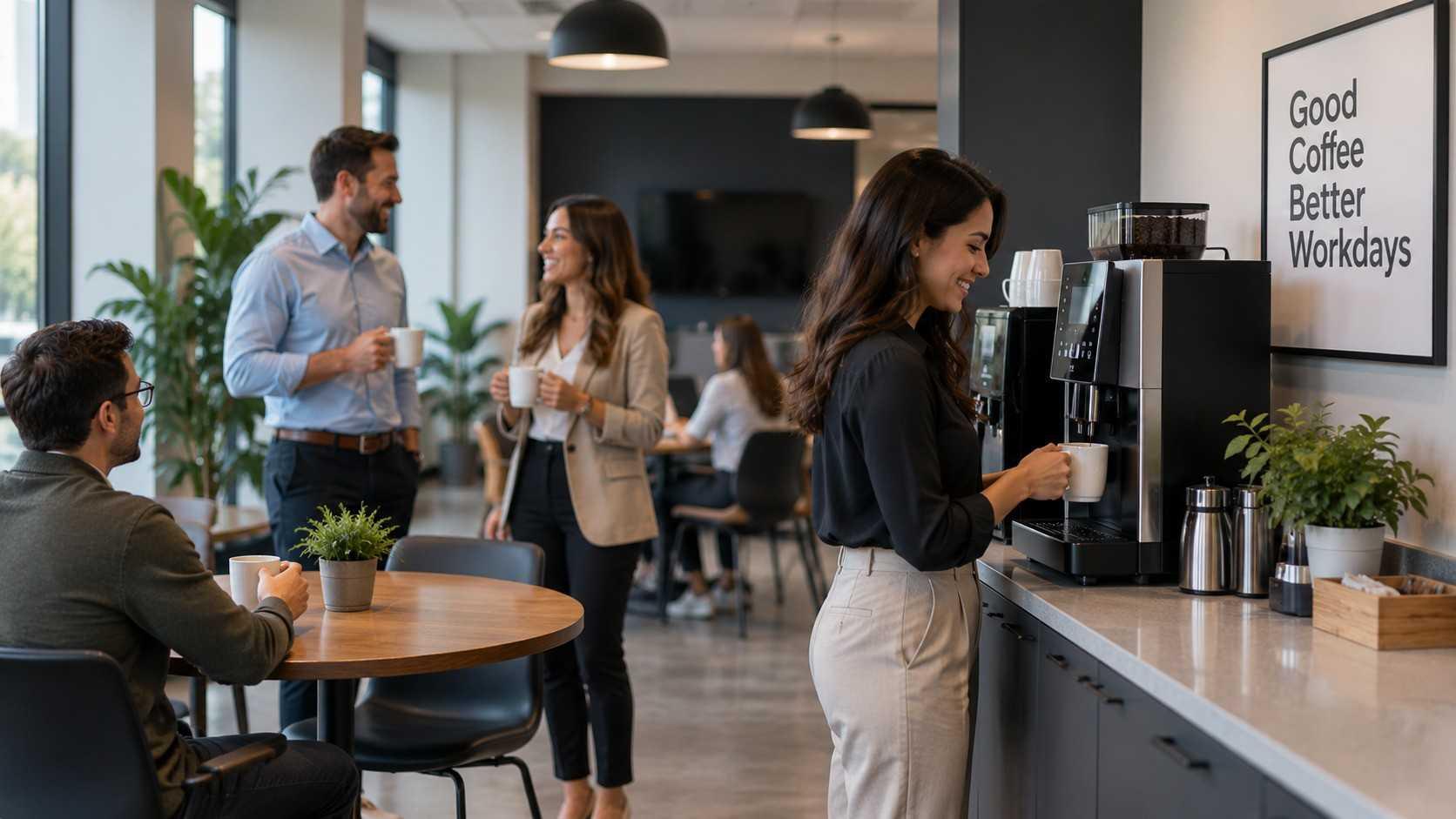
The widespread adoption of hybrid work models permanently altered office attendance metrics. Employees no longer came into the office simply to sit at a desk and answer emails—they came for connection, mentorship, and collaboration. Consequently, organizations began upgrading common areas. Today’s break room integrates smart inventory tracking, cashless self-checkout systems, dietary-inclusive food options, and artisanal coffee service to create an environment that rivals modern hospitality spaces.
Supporting Context & Metrics: The Economics of Workplace Refreshments
While aesthetic upgrades and premium snack selections are often viewed through the lens of corporate pampering, facility management data reveals a more pragmatic underlying calculus. Modern workplace strategy relies heavily on data-driven interventions to combat burnout and enhance employee retention.
The Hybrid Attendance Driver
According to recent workplace utilization studies, companies mandating return-to-office (RTO) policies face varying degrees of resistance. However, facilities that invest heavily in high-quality common amenities report higher voluntary attendance rates. When an employee’s commute yields access to superior specialty coffee, healthy grab-and-go nutrition, and spontaneous peer interaction, the psychological friction of leaving the home office decreases significantly.
Productivity and Micro-Breaks
Cognitive research consistently demonstrates that continuous, uninterrupted desk work leads to diminishing returns and mental fatigue. The brain requires intermittent micro-breaks to reset focus. A functional, welcoming break room provides a natural geographic boundary that encourages employees to physically detach from their screens. A brief walk to a centralized coffee station or pantry triggers minor physical movement and brief social interactions, both of which have been clinically shown to boost cognitive alertness and problem-solving capacity.
The Cost-Benefit Analysis of Retention
Recruiting and onboarding a new knowledge worker can cost an organization tens of thousands of dollars in lost productivity, headhunter fees, and training overhead. In contrast, comprehensive office pantry services and managed coffee programs represent a fraction of a percent of per-employee payroll costs. By treating everyday conveniences as foundational infrastructure rather than frivolous perks, employers signal an investment in the daily friction points of the employee experience.
Official Statements and Industry Insights
Industry leaders in workplace design, facility management, and human resources increasingly view the physical office environment as a holistic product designed to attract and retain human capital.
"The office is no longer a mandatory container for eight hours of solo keyboard work," notes a leading corporate real estate strategist. "It is a destination for human synchronization. If an organization expects professionals to commute, park, and navigate hybrid schedules, the physical workspace must offer tactile, sensory experiences that cannot be replicated over a Zoom call. The break room is ground zero for that mission."
Facility management professionals emphasize the shift from reactive purchasing to managed service models.
"Ten years ago, office managers spent valuable hours inventorying half-empty milk cartons, arguing with snack vendors, and troubleshooting broken drip machines," explains a commercial facilities director. "Today, outsourcing these touchpoints to professional office coffee and pantry services transforms a perpetual operational headache into a seamless, automated amenity. It ensures consistency, quality control, and zero administrative drag."
Furthermore, human resources executives highlight the psychological impact of visible organizational care.
"Culture isn’t built during annual reviews or all-hands presentations; it’s forged in the micro-moments between meetings," states a senior VP of People Operations. "When an employee walks into a clean, well-stocked pantry and finds a beverage or snack that respects their dietary preferences, it sends a subtle, powerful message that their daily well-being matters to the institution."
Future Outlook: Where the Modern Break Room Is Headed
As we look toward the horizon of workplace design, several macro-trends are poised to define the next generation of office refreshment spaces:
1. Hyper-Personalization and Dietary Inclusivity
The era of a single communal bag of potato chips and generic creamer is dead. Future break rooms will leverage anonymized consumption data to tailor offerings to the precise demographic and dietary makeup of a given office. Whether accommodating vegan, gluten-free, keto, or allergen-conscious preferences, pantry curation will become increasingly scientific and responsive.
2. Frictionless, Smart Technologies
The integration of Internet of Things (IoT) sensors and automated inventory management will eliminate out-of-stock scenarios. Smart coolers equipped with computer vision and RFID technology will allow employees to scan, grab, and go with zero friction, while automatically alerting suppliers when restock thresholds are met. Similarly, commercial coffee equipment will feature predictive maintenance capabilities, diagnosing brewing anomalies before a machine experiences downtime.
3. Multifunctional Architectural Zones
Rather than serving a single purpose at a fixed hour, tomorrow’s break spaces will be architecturally fluid. In the morning, high-throughput espresso stations will dominate the morning rush. By midday, the space will pivot into a collaborative lunch zone with communal seating and integrated power arrays. In the late afternoon, these areas will transition into relaxed, informal breakout zones for cross-functional brainstorming sessions.
4. Sustainability at the Core
As corporate environmental, social, and governance (ESG) mandates tighten, the break room will face intense scrutiny regarding waste generation. Single-serve plastic pods, disposable stirrers, and unmanaged packaging will be phased out in favor of compostable materials, bulk dispensers, energy-efficient commercial appliances, and closed-loop recycling programs.
Conclusion
The evolution of the office break room mirrors the broader transformation of work itself. As expectations surrounding autonomy, wellness, and spatial design have matured, the spaces that anchor our working days have had to keep pace.
While advanced technology, artisanal coffee equipment, and curated food selections are vital components of the modern refreshment ecosystem, their ultimate purpose remains remarkably simple: to provide human beings with a clean, comfortable, and reliable space to pause, reset, and reconnect. Organizations that recognize and invest in this fundamental dynamic will find themselves uniquely positioned to foster resilient, engaged, and cohesive workplace cultures for years to come.