Executive Overview
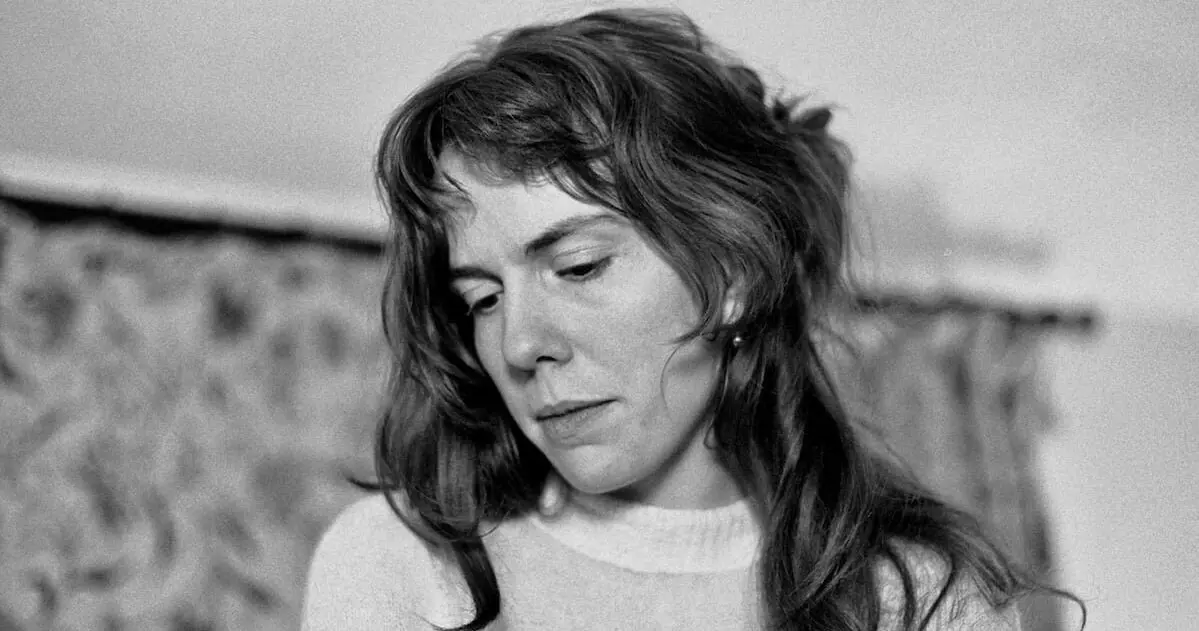
In the contemporary landscape of British folk and indie-singer-songwriter music, a distinct sonic wave has steadily risen to prominence. Marked by a loosely confessional, mildly psychedelic ethos, the genre often risks drowning in a sea of homogenous introspection. Yet, every so often, an artist emerges who cuts cleanly through the noise with a rare, surgical precision. Elanor Moss is undeniably one of those rare talents.
Following its release last month via Merge Records, Moss’s debut full-length album, The Knife, The Needle, has captured the imagination of critics and dedicated listeners alike, anchoring itself firmly on heavy rotation across independent airwaves. Reviewers have lauded Moss for a prodigious gift that sets her apart from her peers: the ability to balance a quiet, subtle mode of expression with a searing, visceral intensity of feeling. Compared to her earlier extended plays, the lyricism on The Knife, The Needle exhibits a newfound refinement, delivering an emotional impact that lands with uncompromising force. As critics have noted, Moss forms her hauntingly beautiful songs as if wielding a scalpel blade, exposing the soft tissue of human emotion with unerring accuracy.
In the wake of this widespread, critical acclaim, we are exceptionally privileged to present an exclusive, deep-dive track-by-track guide written directly by Elanor Moss for KLOF Mag. Offering profound transparency into her creative process, Moss unpacks the thematic foundations, accidental studio magic, and collaborative milestones that defined the making of one of the year’s most arresting debut records. Furthermore, as audiences prepare to experience these delicate yet powerful compositions live, Moss has announced an extensive autumn tour spanning the United Kingdom.
Detailed Chronology: The Making of The Knife, The Needle
The genesis of The Knife, The Needle is a story of patience, serendipity, and radical artistic trust. Recorded under uncompromising conditions—live to tape with all musicians occupying the same room simultaneously over a brisk two-and-a-half-day window at Middle Farm Studios—the album rejects digital perfectionism in favor of an organic, breathing reality.
From Concept to Consequence: The Evolution of "Fixer"
The album’s opening statement, "Fixer," arrived in a rare flash of instantaneous inspiration at Moss’s kitchen table. However, its lineage traces back to an earlier composition simply titled "The Knife."
"This was written very unusually for me all in one go," Moss explains. "Perhaps this was because this was a follow-up song to an earlier song I wrote called ‘The Knife’, which used the same metaphor but didn’t—I felt—take it as far as it could go, or to an interesting enough conclusion."
By shifting the metaphor from a knife to a needle, the song’s essence transformed into something more hopeful and resonant, ultimately providing a thematic throughline for the entire record. When paired with Matthew Herd’s thoughtfully restrained arrangements, which honor the narrative core of the lyrics, the track sets a vulnerable tone. Because the record was captured live to tape, imperfections were laid bare. Rather than fighting these flaws, Moss learned to embrace them as band members in their own right.
Navigating Loss: "Again, My Love"
In stark contrast to the swift genesis of "Fixer," "Again, My Love" required a protracted gestation period. Moss wrestled with the chord progressions and picking patterns before locking in the verse melody, only to hit a wall for several months. The breakthrough arrived unexpectedly with a simple "doo do doo" refrain that unlocked the next movement of the song.
While frequently misconstrued as a standard break-up or romance track, Moss clarifies its broader thematic weight:
"For me, it was about loss in the broader sense. Loss of past selves, loss of identity, loss of opportunity, loss of a life you thought you’d have… To me it feels related to the seasons—how autumn and winter clear the way for new life in Spring, and how loss is part of the natural cycle of things."
Short-Story Realism: "Sarah Waiting in the Car"
Functioning almost as a masterclass in narrative economy, "Sarah Waiting in the Car" explores the psychological loops of complex relationships. Moss deliberately avoided moralizing, leaving listeners to inhabit the speaker’s uncomfortable perspective. Highlighting lines such as "and we fight until the morning sun / chases off the moon," Moss sought to capture the psychological tether that keeps individuals anchored in turbulent dynamics—where the clarifying light of dawn conveniently washes away the wreckage of the night before.
Accidental Magic: The Self-Titled "Improvisation"
Perhaps no track better exemplifies the unpredictable alchemy of recording to analog tape than the album’s instrumental "Improvisation." Built from a rudimentary melodic line hummed to saxophonist Matthew Herd, the band collectively built a wonky, cyclical, and atmospheric interlude.
However, the recording process yielded a fateful technical anomaly:
"Once we got a take we were happy with for this track, we went into the control room to listen back, only to realise that there had been an error in the tape machine that had corrupted and warped the tape! The machine was pulling unevenly on the tape… That is why you can hear these microtonal key changes, where the music slides up and down into different keys. By some incredible stroke of luck, the effect this had on the recording really worked with the piece."
The Power of Space: "You Are Coming Home Tonight"
With a title and opening line that lingered in Moss’s mind for months before the rest of the song poured out effortlessly, "You Are Coming Home Tonight" serves as a showcase for raw vocal delivery. Moss points out that the track’s greatest triumph lies in how much sonic space it affords her voice, allowing her to lean fully into the plaintive, deeply painful emotional topography of the lyric.
Poetry in Motion: "Secrets of the Universe"
Originating as a standalone poem before a tentative, hesitant guitar part was introduced to mirror its psychological doubt, "Secrets of the Universe" stands as the record’s most directly autobiographical piece. The song traces an individual’s journey toward love despite deep-seated reservations. Its stunning closing realization—that what appeared to be a wall was actually a door—was entirely unscripted. Upon completion, Moss played the song for its subject, her now-partner, who promptly moved to tears.
Refining the Monologue: "Clothes in a Hotel Sink"
Nearly cut from the record entirely, "Clothes in a Hotel Sink" underwent the most drastic transformation of any track on the album. During a trip to New York, Moss shared the original version with collaborators Christian Lee Hutson and Maya Hawke. Their advice was surgical: reharmonize the chords to achieve a simpler, more immediate country feel, and ruthlessly trim narrative fat. Armed with this feedback, Moss discarded an entire verse. Bolstered by Reid Jenkins’s versatile fiddle work, the resulting track plays like an intercepted, intensely personal internal monologue scribbled down in a temporary hotel room.
Generational Echoes: "Louise"
Born out of Peter Miles’s prestigious Middle Farm Sessions retreat—an immersive exercise in artistic surrender where musicians write, arrange, and record a brand-new song to tape within a strict two-hour window—"Louise" represents the ultimate crystallization of Moss’s recording philosophy. Written late at night in an empty room following group discussions regarding family and generational trauma, the song functions as an epistolary address to Moss’s grandmother, exploring the complex architecture of forgiveness and empathy.
Intuitive Conclusions: "The Way That it Feels"
As the final composition written for the project, "The Way That it Feels" acts as an overarching lens for the entire album. Composed by following an intuitive vocal melody that dropped unbidden—"Oh and the way that it feels / to know you"—the song mirrors the working method championed by writer George Saunders in A Swim in a Pond in the Rain: writing blindly until a distinct voice emerges, and then faithfully following that voice wherever it leads.
Supporting Context & Metrics
- Release Date: August 21, 2026
- Label: Merge Records
- Recording Studio: Middle Farm Studios (Devon, UK)
- Production Methodology: Recorded 100% live to analog tape over 2.5 days
- Key Collaborators & Arrangers: Matthew Herd, Christian Lee Hutson, Maya Hawke, Reid Jenkins
The critical consensus surrounding The Knife, The Needle places Moss at the vanguard of a burgeoning UK movement that redefines modern folk music. By rejecting over-produced digital editing in favor of the raw acoustic fidelity of tape machines, Moss and her ensemble have delivered a physical artifact that mirrors the fragile, unvarnished nature of human vulnerability.
Official Statements & Creative Philosophy
Elanor Moss’s approach to her craft relies heavily on releasing the need for absolute control, allowing intuition to dictate narrative outcomes. Reflecting on her writing sessions, Moss notes:
"That’s what I love about writing—it helps me learn things I didn’t know already about how I am feeling or how I experience the world. I was able to name something there of my experience, which is always a very powerful experience when it happens."
Discussing the terrifying yet liberating nature of the Middle Farm Sessions, she emphasizes the spiritual necessity of abandoning over-analysis:
"It’s so easy normally to get paralysed in the creative process, worrying about how it will sound when it’s done, how it will be received. The beauty of working to tape and working quickly is that it functions as a documentation of work—like a photograph."
Future Outlook & Tour Dates
With The Knife, The Needle establishing her as one of the most compelling new voices in independent music, Elanor Moss is set to bring these intricate, analog-born arrangements to stages across the United Kingdom this autumn. Fans are strongly encouraged to secure tickets early, as intimate venues are expected to sell out rapidly.
Official Autumn Tour Dates
- Thu. Oct. 1 – Glasgow, UK @ The Poetry Club
- Fri. Oct. 2 – Leeds, UK @ The Attic
- Sat. Oct. 3 – Manchester, UK @ Low Four Studio
- Sun. Oct. 4 – Stroud, UK @ The Prince Albert
- Tue. Oct. 6 – Birmingham, UK @ Hare & Hounds
- Wed. Oct. 7 – Bristol, UK @ The Jam Jar
- Thu. Oct. 8 – Cardiff, UK @ Chapter Arts Centre
- Fri. Oct. 9 – Oxford, UK @ Common Ground
- Sat. Oct. 10 – Ashburton, UK @ Field System
- Sun. Oct. 11 – Brighton, UK @ The Folklore Rooms
- Thu. Dec. 3 – London, UK @ Cecil Sharp House
For tickets and further live information, visit the official Elanor Moss Live Hub.
Order your physical or digital copy of The Knife, The Needle via Merge Records / Linktree.