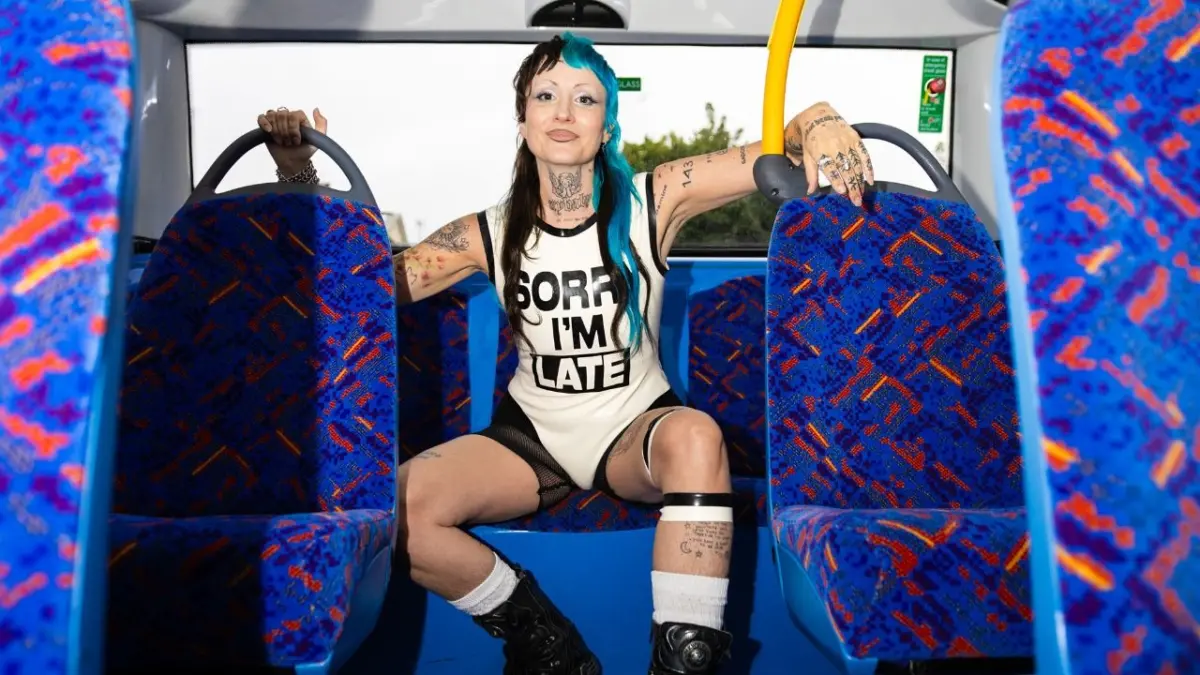
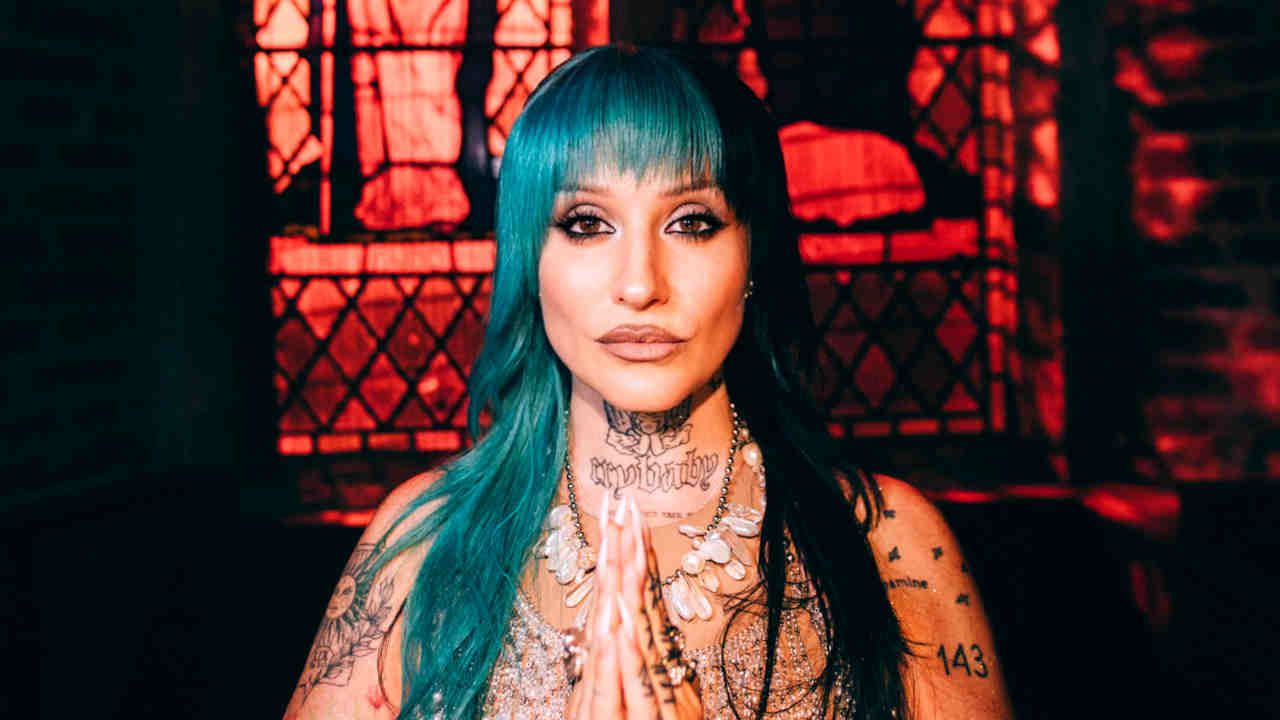
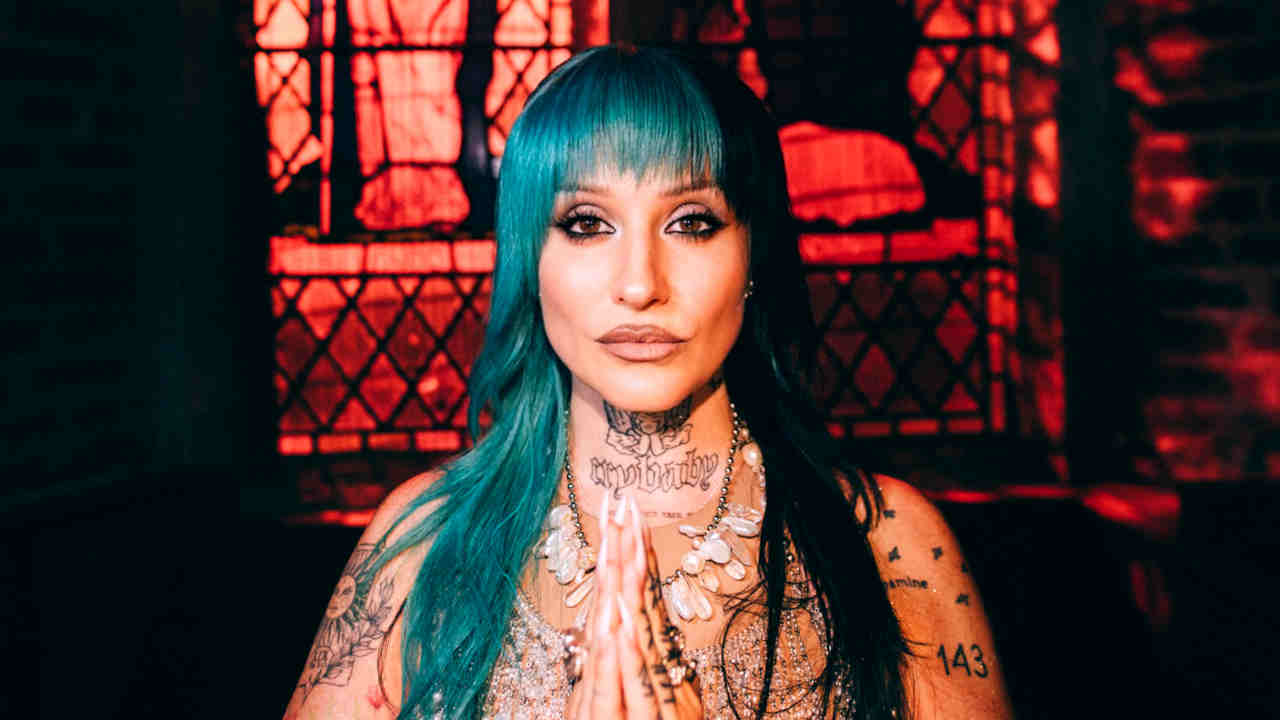
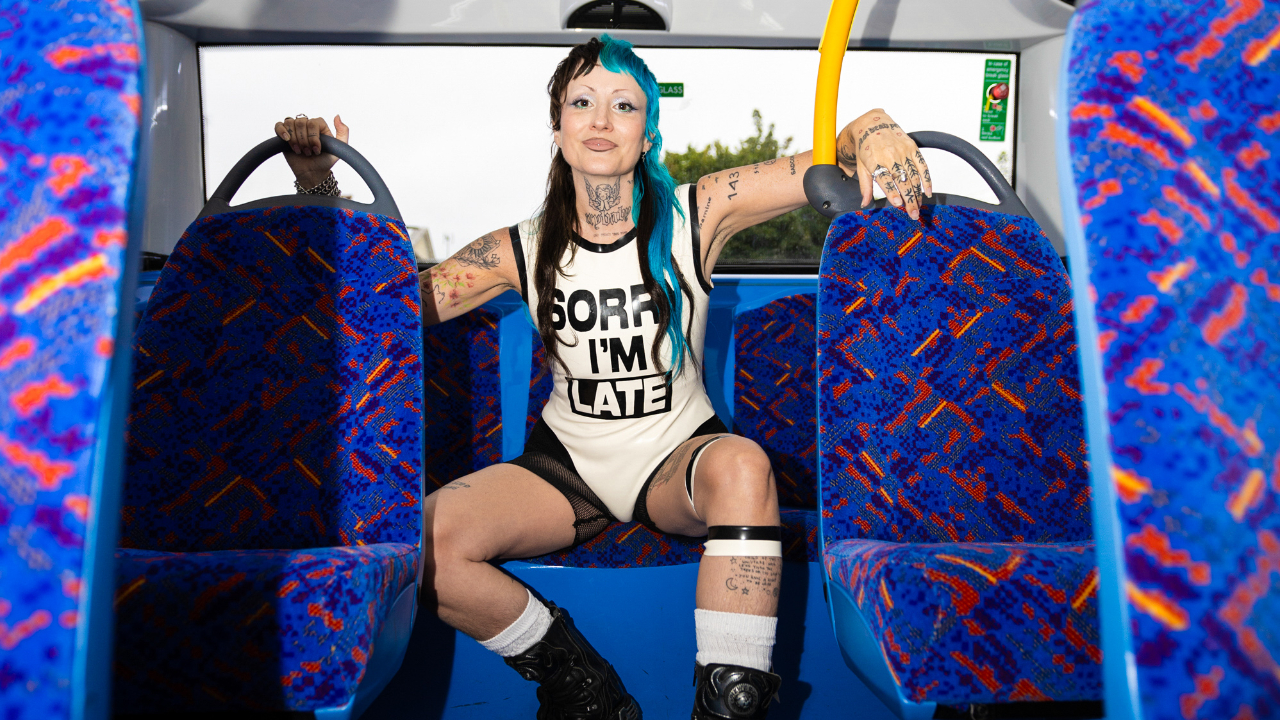
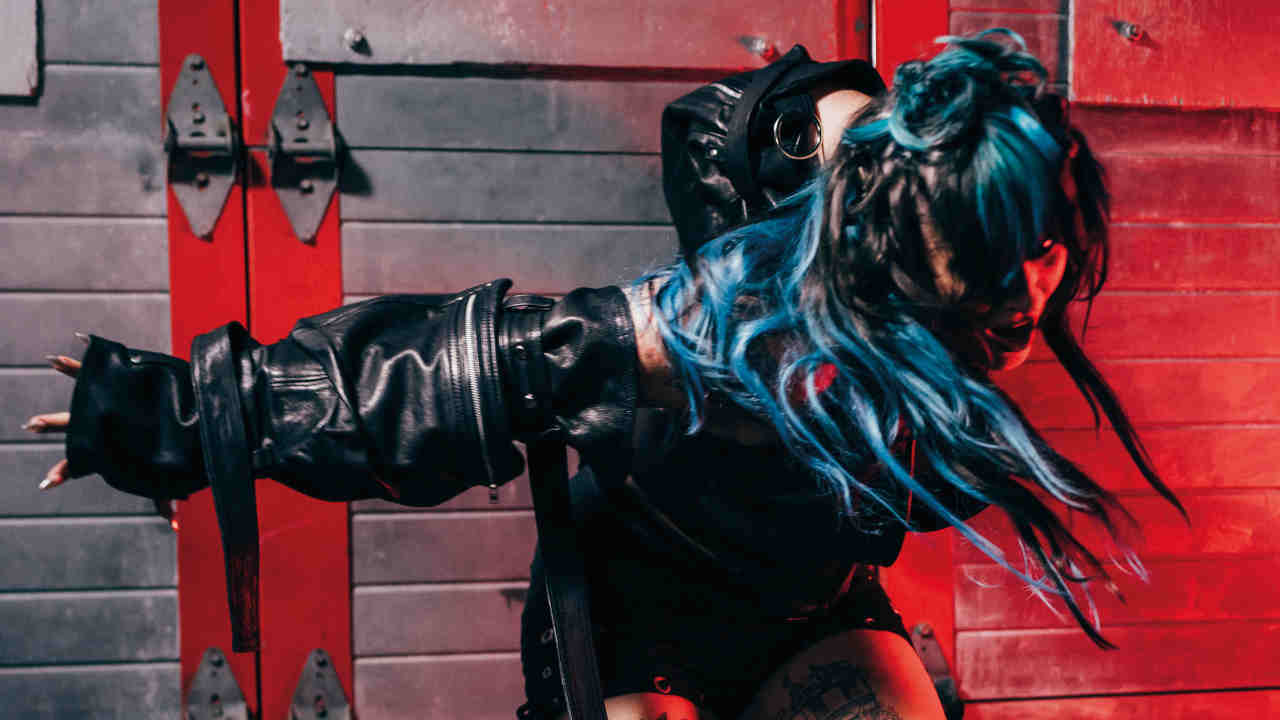
In an industry notoriously obsessed with youth and manufactured polish, the 41-year-old alternative rock artist RØRY (Roxanne Emery) stands as a profound anomaly. Overcoming personal tragedy, financial ruin, severe addiction, and decades of industry rejection, RØRY has staged one of the most remarkable late-career reinventions in contemporary British rock. Having spent years in the shadows as a sought-after pop songwriter for major artists like Charli XCX, she stepped back into the spotlight as a solo artist in her late 30s—adopting a fiercely independent, pop-punk and alt-rock persona characterized by blue hair, raw emotional honesty, and unfiltered self-deprecation.
Her debut full-length record, 2025’s Restoration, made an unexpected impact on the UK music landscape by crashing the UK Top 10 Albums Chart. This milestone shattered conventional wisdom regarding ageism in alternative music and proved the viability of self-directed, direct-to-fan artist models. Far from settling into comfort, RØRY has leveraged her newfound platform to confront deep-seated trauma, neurodivergence, and societal stigma.
Her second album, Bloodletting, released via her independent outfit Sadcøre, marks a pivot toward heavier, metal-infused soundscapes. The record cements her status as a vital voice for neurodivergent audiences, those recovering from addiction, and anyone who feels left behind by traditional timelines of success.
Detailed Chronology of Career and Personal Transformation
[2000s] Pursued Politics/Philosophy degree -> Accountancy graduate role
  │
[Age 22] Loss of mother to cancer -> Departs corporate sector -> Begins acoustic songwriting
  │
[Late 20s] Signed to indie folk label -> Label bankruptcy -> Self-funded debt crisis
  │
[Early 30s] Underground London rave scene -> Battle with addiction -> Shift to behind-the-scenes pop songwriting
  │
[2020–2021] Meets future partner -> Overcomes career hesitation -> Launches solo project RØRY (2021)
  │
[2023–2024] Releases "Black Hearse" -> Major festival appearances (Download Festival 2024)
  │
[2025] Debut album "Restoration" hits UK Top 10 -> Releases singles "Dead Girl Walking" & "Kids These Days"
  │
[2026 & Beyond] Marries partner -> Download Festival 2026 -> Releases second album "Bloodletting"
Early Life, Education, and Corporate Beginnings
RØRY’s early life was shaped by a strong working-class ethic. Raised by parents who grew up on council estates and subsequently put themselves through higher education to become teachers, RØRY was conditioned to seek stability through traditional career paths. Despite showing an early affinity for music—mastering the piano, guitar, and clarinet while experimenting with songwriting as an adolescent—she initially pursued a conventional professional trajectory. She earned a degree in Politics and Philosophy before securing a coveted graduate placement as a corporate accountant.
Loss, Musical Pivot, and Financial Ruin
The trajectory of her life altered drastically at age 22, when her mother passed away following a battle with cancer. Unable to reconcile corporate routine with acute grief, RØRY resigned from her accounting firm and moved back home. Turning to songwriting as a coping mechanism, she accepted a friend’s invitation to perform at a local open mic night.
Her natural lyrical vulnerability led to a rapid record deal, resulting in her debut album in her late twenties. That early work was rooted in acoustic folk, far removed from the distorted guitars and screamed vocals of her current output. However, her early momentum vanished when her record label unexpectedly went bankrupt. Driven to save her burgeoning career, RØRY chose to self-fund her releases, incurring crippling personal debt—a period she now characterizes as traumatic, yet indicative of her headstrong commitment to her craft.
The London Underground, Pop Songwriting, and Sobriety
Sinking into severe debt and disillusionment, RØRY drifted into London’s electronic dance music scene. Her early thirties were defined by substance abuse and prolonged benders within the rave community. Despite her personal instability, her fundamental talent for melodic structure remained intact. She eventually secured a full-time, five-day-a-week songwriting role for mainstream pop and electronic acts, penning tracks for high-profile performers including Charli XCX.
Removing substance dependency from her life provided the clarity needed to rebuild her career. Yet, even as her behind-the-scenes pop catalog accrued millions of streams, she suppressed her ambitions of performing as a frontwoman, believing she was both too old and insufficiently talented to break through under her own name.
Rebirth: The Creation of RØRY
The critical catalyst for her return to performing occurred in 2020, when she met her partner, whose unwavering support encouraged her to re-evaluate her artistic potential. In 2021, at age 38, she launched her solo rock project under the moniker RØRY. Navigating the modern music industry as an independent late-bloomer proved daunting, but her willingness to embrace her identity—complete with vibrant blue hair, a biting sense of humor, and open discussions about her Attention Deficit Hyperactivity Disorder (ADHD)—resonated deeply with online alternative communities.
By 2024, RØRY was performing on major festival stages, including the Download Festival, humorously adopting the self-assigned title of the scene’s resident "delusional, old, ADHD bitch." Her continuous touring and direct digital engagement culminated in her landmark 2026 return to Download, establishing her as an enduring presence in the UK rock circuit.
Supporting Context & Industry Metrics
Commercial Performance and Chart Impact
In an era where alternative rock artists often struggle to secure mainstream chart visibility without major label backing, RØRY’s commercial metrics demonstrate the power of direct-to-consumer fanbase building. Her debut record, Restoration (2025), achieved a UK Top 10 placement on the Official Albums Chart, an extraordinary commercial benchmark for an independent release.
+-------------------------------------------------------------------------+
|                    RØRY: DISCOGRAPHY & CHART EVOLUTION                  |
+---------------------+------+-------------------+------------------------+
| Project / Release   | Year | Primary Genre     | Key Milestone / Chart  |
+---------------------+------+-------------------+------------------------+
| Early Acoustic Album| 2010s| Acoustic / Folk   | Label Bankruptcy       |
| "Black Hearse"      | 2023 | Pop-Punk          | Underground Breakthrough|
| "Sorry I'm Late"    | 2025 | Alt-Rock          | Lead Single Campaign   |
| "Restoration" (LP)  | 2025 | Alt-Rock / Emo    | UK Top 10 Debut Album  |
| "Kids These Days"   | 2025 | Satirical Punk    | Viral Social Impact    |
| "Bloodletting" (LP) | 2026 | Heavy Metal / Alt | Release via Sadcøre    |
+---------------------+------+-------------------+------------------------+
Sonic Evolution: From Pop-Punk to Heavy Metal
RØRY’s musical trajectory illustrates a progressive step toward heavier sonic territory, mirroring her willingness to confront intense personal themes:
Pop-Punk Era (2021–2023): Characterized by high-energy guitar riffs and uptempo rhythm sections, exemplified by Black Hearse, which addressed toxic relationship patterns and commitment phobia through a nostalgic 2000s lens.
Euphoric Alt-Rock Era (2024–2025): Marked by expansive production, soaring choruses, and deeply personal narratives surrounding late-stage identity formation (Sorry I’m Late) and severe depressive episodes (Dead Girl Walking).
Heavy Metal & Screamo Influence (2026–Present): Her second full-length album, Bloodletting, abandons pop sensibilities in favor of aggressive, cut-throat vocal screams and tuned-down guitars, highlighted by the visceral lead single Degradation.
Neurodivergence, Social Satire, and Cultural Impact
A key component of RØRY’s resonance with younger and neurodivergent audiences is her confrontational approach to mental health discourse. In her 2025 single Kids These Days, she tackled systemic generational dismissiveness toward ADHD and mental health diagnoses.
Constructing the track’s lyrics entirely from hostile, real-world comment sections posted by online detractors, RØRY satirically transformed reactionary criticisms into a commentary on modern bigotry. By weaponizing tropes like "entitled coddled brat syndrome," she highlighted the ongoing societal friction between older generations and neurodivergent individuals navigating invisible disabilities.
                     TRADITIONAL ROCK VS. RØRY'S DIY MODEL
┌──────────────────────────────────────┐  ┌──────────────────────────────────────┐
│       Traditional Label Model        │  │          RØRY / Sadcøre Model       │
├──────────────────────────────────────┤  ├──────────────────────────────────────┤
│ • Signed in early 20s                │  │ • Breakthrough at age 38+            │
│ • Corporate A&R stylistic direction  │  │ • Unfiltered aesthetic (Blue hair)   │
│ • Polished, sanitized public persona │  │ • Open narrative: Addiction & ADHD   │
│ • Major label budget dependence      │  │ • Direct-to-fan, self-funded agility │
└──────────────────────────────────────┘  └──────────────────────────────────────┘
Official Statements and Reflective Commentary
Throughout her recent media appearances and promotional cycles, RØRY has consistently offered frank, unfiltered perspectives regarding her non-traditional life path, her artistic motivations, and the challenges of late-stage identity formation.
On Personal Aesthetics, Marriage, and Identity
Reflecting on her unconventional personal life and her recent wedding—an event she once swore off in her 2023 track Black Hearse—RØRY recalled her resistance to conventional societal expectations:
"I don’t wear dresses normally, they make me feel uncomfortable. [My outfit was] a pearl-encrusted Frankenstein’s creation of an outfit, constructed from the scraps of a beautiful vintage frock and a bargain corset… [paired with] beat-up New Rocks."
She acknowledged how dramatically her perspectives on love and vulnerability shifted after allowing herself to recover from past trauma:
"I’m only getting married if I’m leaving in a black hearse! … [But I’ve] since learned to let love in."
This shift culminated in an intimate ceremony featuring Blink-182’s First Date as her procession track, followed by a casual reception featuring pie and chips—an intentional rejection of corporate wedding norms.
On Past Struggles, Financial Ruin, and Sobriety
Recalling the loss of her mother, the collapse of her initial record deal, and her subsequent battle with addiction, RØRY spoke candidly about the chaos that defined her twenties and early thirties:
"My parents both grew up on council estates, and worked hard to become teachers. So I went to uni, got a degree in Politics and Philosophy, then got a graduate job as an accountant… [When my mum died] I couldn’t cope. I left my accountancy job, moved home… then I reconnected with writing to work through the grief."
On the fallout from her first label’s collapse:
"I got signed pretty quickly, and my very first album was in my 20s. It was very folky and acoustic… it was nothing like what I do now… then the label went bust. I was left in so much debt, but my focus was on the music. I’d given up everything just to make it work."
On overcoming addiction during her tenure in the London rave scene:
"Suddenly I was writing dance songs for people like Charli XCX. Who knew when you take the cocaine away and actually start working hard, things start looking up?"
On Late Success and Existential Shock
Despite the commercial triumph of her UK Top 10 record Restoration, RØRY admitted that achieving her lifelong dream after two decades of struggle caused unexpected emotional upheaval:
"I kept thinking I’m too old to be an artist, and I’m not talented enough. I tried before, I’d never do it again… but then I met my partner in 2020, and I finally had someone that believed in me."
On the psychological impact of chart success:
"It hit me so hard. I’ve been chasing this dream for 20 years; the chasing kept me alive… It kind of made me crash out. I mean, what the fuck am I supposed to do now?"
On artistic intent and balancing serious themes with humor:
"I love heavy music, and I take my art very seriously, but I’m also a clown… The music I’m writing now is much darker, much heavier… because the crash was just so horrendous."
Her closing outlook remains a rallying cry for untraditional career trajectories:
"No matter how bad it gets, you can really drag yourself out of the gutter and create something out of the absolute dregs of your own life… I’m a late fucking bloomer, baby, but I’m here! I’ve been late my entire life, but now it really feels like I’m right on fucking time."
Future Outlook and Artistic Legacy
The trajectory of RØRY’s career offers a compelling case study for the contemporary music industry. Her rise challenges longstanding structural assumptions regarding artist age, gender expectations, and release strategies in alternative rock.
                         FUTURE TRAJECTORY & IMPACT
                                     │
    ┌────────────────────────────────┼────────────────────────────────┐
    ▼                                ▼                                ▼
[Sonic Expansion]          [Direct-Fan Ownership]         [Industry Paradigm Shift]
Exploring aggressive,      Re-defining success via        Proving commercial viability
screamo/metal elements     her label Sadcøre without      for neurodivergent, late-blooming
on "Bloodletting".         major-label intervention.      artists in alternative rock.
Expanding the Independent Infrastructure (Sadcøre): By releasing her second album Bloodletting via Sadcøre, RØRY retains full ownership of her master recordings and publishing. This independence guarantees complete creative control over her imagery, themes, and sound, proving that alternative artists can build sustained, profitable careers outside the traditional major-label system.
Sonic Diversification and Heavier Landscapes: As evidenced by singles like Degradation, RØRY’s shift toward screamo and metal subgenres indicates a long-term commitment to heavier music. This sonic direction allows her to process dark emotions, existential burnout, and grief with an intensity that pop-punk alone could not fully express.
Redefining Accessibility in Alt-Rock: By openly addressing her neurodivergence, her history with addiction, and the reality of starting over in her late 30s, RØRY has established a new model for representation within heavy music. Her ongoing success demonstrates that audiences prioritize authenticity, shared vulnerability, and narrative resonance over manufactured youth appeal.
As she continues to tour major stages and expand her independent platform, RØRY’s legacy is already taking shape: she stands as proof that emotional survival, artistic reinvention, and commercial viability have no expiration date.