By Noor Nanji
Culture Correspondent
Executive Overview
In the landscape of contemporary cinema, few literary figures enjoy a renaissance quite like Jane Austen. As studios continue to mine the 19th-century author’s bibliography for timeless insights into human behavior, a fresh cinematic adaptation of Sense and Sensibility is poised to captivate audiences. Directed by Georgia Oakley and slated for release in UK cinemas on September 25, the film features an acclaimed young cast led by Daisy Edgar-Jones and Esmé Creed-Miles as the Dashwood sisters.
In an exclusive interview in central London, Edgar-Jones opened up about stepping into the iconic role of the rational elder sister, Elinor. Revealing striking parallels between her own guarded emotional landscape and her character’s tendency to "bury emotion," the 28-year-old actress discussed the enduring relevance of Austen’s themes. From evaluating Gen Z dating dynamics that mirror historical "situationships" to addressing persistent rumors regarding her Normal People co-star Paul Mescal potentially stepping into the shoes of James Bond, Edgar-Jones reflects on a career defined by literary adaptations, deep-rooted friendships, and the delicate art of balancing vulnerability with self-preservation.
Detailed Chronology: Bringing Austen into the Modern Era
The journey to bringing Georgia Oakley’s Sense and Sensibility to the big screen represents a meticulous synthesis of period authenticity and modern cinematic vitality. While historical adaptations run the risk of feeling antiquated, the production team focused on preserving the foundational pillars of Austen’s 1811 masterpiece while injecting a contemporary vibrancy into the pacing and visual style.

Following the sudden death of their father, the Dashwood sisters—Elinor and Marianne—find themselves and their mother forced to relocate from their comfortable estate to the modest Barton Cottage. The narrative charts their trials through heartbreak, social stratification, and financial precarity. When Edgar-Jones met with producers and director Georgia Oakley, discussions centered around whether to give the material a hyper-modernized "2026" makeover. Ultimately, the creative team opted for period fidelity anchored by contemporary filmmaking techniques.
"It does feel very much like it’s honouring the period," Edgar-Jones explains, "but I think there’s a freshness to the filmmaking that I think is really beautiful."
Central to the film’s emotional core is the dynamic between the two lead actresses. Edgar-Jones, cast as the level-headed Elinor, stars opposite Esmé Creed-Miles, who plays the romantic and impulsive Marianne. Interestingly, both performers found that their on-screen personas mirrored their off-screen dispositions.
"When it comes to love, I think I am very much more Elinor in every sort of way," Edgar-Jones shares. "I definitely lead a lot with my head and try and push aside, bury my emotion." Conversely, Creed-Miles confesses with a laugh: "I’m more like Marianne, yeah, which is annoying sometimes."

The genuine rapport visible on screen is rooted in a decades-long friendship. Edgar-Jones and Creed-Miles first worked together as teenagers on the 2018 independent film Pond Life. Reminiscing about their early days on set, Creed-Miles highlights the organic bond they built: "We had a real laugh. We would have sleepovers every night and watch Love Island." This foundational trust allowed them to seamlessly inhabit the complex sibling relationship that forms the emotional anchor of Sense and Sensibility.
Supporting Context & Metrics: The Undying Allure of Jane Austen
The release of Oakley’s adaptation arrives amid a massive cultural wave dedicated to Jane Austen’s literary universe. Last year marked the 250th anniversary of the author’s birth, prompting a wave of creative reinterpretations across television, stage, and film. Recent years have seen the BBC air ambitious television series such as Miss Austen and The Other Bennet Sister, alongside stage productions including a West End musical adaptation of Clueless—itself a modern cinematic descendant of Emma—and Ava Pickett’s avant-garde stage adaptation of the same novel. Furthermore, Netflix has a high-profile adaptation of Pride and Prejudice in development, penned by Dolly Alderton and starring Emma Corrin.
Despite generations of iterative adaptations—most notably Ang Lee’s revered 1995 film starring Emma Thompson and Kate Winslet, which Edgar-Jones cites as "one of my favourite films of all time"—audiences continue to flock to these narratives.
+-------------------------------------------------------------------------+
|                  RECENT JANE AUSTEN ADAPTATIONS (2023–2026)             |
+--------------------------+----------------------------------------------+
| Project                  | Medium / Platform                            |
+--------------------------+----------------------------------------------+
| Miss Austen              | BBC Television Series                        |
| The Other Bennet Sister  | BBC Television Series                        |
| Emma (Ava Pickett)       | Modern Stage Adaptation                      |
| Clueless (Musical)       | West End Theatre                             |
| Pride and Prejudice      | Upcoming Netflix Series (Dolly Alderton)     |
| Sense and Sensibility    | Feature Film (Dir. Georgia Oakley, 2026)     |
+--------------------------+----------------------------------------------+
When asked whether the world truly needs another cinematic take on Sense and Sensibility, Edgar-Jones offers an emphatic endorsement: "The more the merrier, in my opinion." She attributes this longevity to Austen’s peerless command of character psychology. "She has an incredible way of articulating the female experience. Her ruminations on love, on romance, on sisterly love, on family dynamics, on interpersonal social dynamics—she’s such a talent."

Furthermore, Edgar-Jones and Creed-Miles emphasize that the emotional lexicon of Austen’s characters directly mirrors the psychological landscapes navigated by modern youth. Long before terms like "ghosting," "situationships," and "breadcrumbing" populated TikTok feeds and modern dating discourse, Austen was meticulously chronicling these exact forms of emotional ambiguity and hesitation.
"Well, massively," Edgar-Jones says when discussing the parallels between 19th-century courtship and modern dating culture. "We still have the same human heart as we did 200 years ago. Our capacity to love and feel heartbreak, and that early first love feeling, is something that we all experience in various ways. And so yes, I think definitely the trials and tribulations of the two women as they navigate life, love and all that becomes as you grow up, definitely is so relatable to all generations."
Creed-Miles echoes this sentiment, focusing on the therapeutic nature of the viewing experience: "I don’t know if seeing a movie is going to fix everything, but it might make you feel a little bit less alone in some of the things you’re feeling."
Official Statements & Industry Perspectives
The conversation inevitably shifts toward Edgar-Jones’s rapid ascent in the global entertainment industry. Having captured the public consciousness during the COVID-19 pandemic via her breakout role as Marianne in the BBC Three adaptation of Sally Rooney’s Normal People, Edgar-Jones has since transitioned into a bankable blockbuster star. Her subsequent credits include major cinematic ventures such as Where the Crawdads Sing and the disaster epic Twisters.

Her former co-star, Paul Mescal, has experienced an equally meteoric rise. Following his own Oscar-nominated trajectory, Mescal has starred in major international projects, including Ridley Scott’s Gladiator II, Hamnet, and an upcoming series of biographical Beatles films.
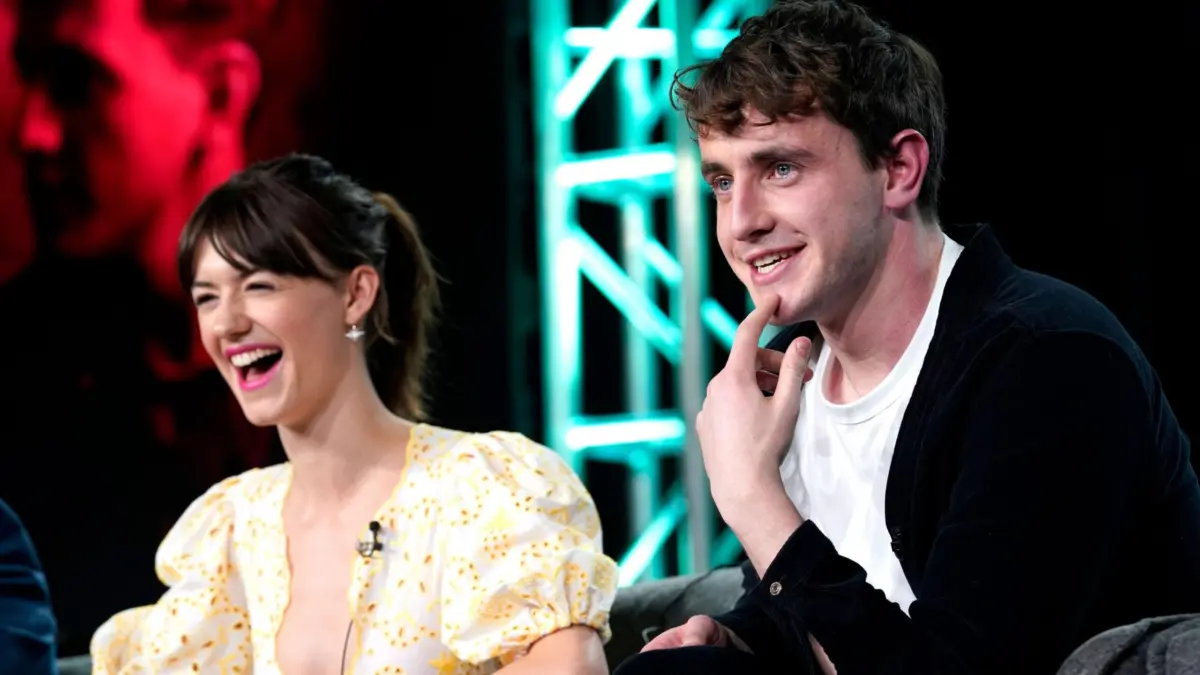
Recently, Hollywood trades and publications like Page Six linked Mescal to the coveted, heavily guarded role of James Bond, reporting that the Irish actor is reportedly on the audition list for upcoming screen tests. When questioned about whether her close friend is genuinely in the running to become 007, Edgar-Jones plays it coy while expressing unmitigated admiration for his range.
"I don’t know, but I think there’s nothing Paul can’t do," she remarks with a smile. "So I would be there. Wow, that’s cool."
Despite their separate trajectories in Hollywood, the mutual support between Edgar-Jones and Mescal remains a testament to the grounding nature of their early shared success. Their ability to navigate the labyrinth of international fame—while continuing to tackle challenging, character-driven material like Sense and Sensibility—highlights an era of young actors who refuse to be pigeonholed by their past successes.

Future Outlook
As Sense and Sensibility prepares to land in UK cinemas on September 25, anticipation reaches a fever pitch. For Daisy Edgar-Jones, the film represents more than just another prestigious addition to her filmography; it is an exploration of personal growth mirrored through art. Just as Elinor learns to embrace a wilder, more passionate side of her personality, Edgar-Jones acknowledges that stepping into Austen’s world has permanently altered her own approach to vulnerability.
Looking forward, the actress’s ability to seamlessly bridge blockbuster spectacle with nuanced period drama signals a long and versatile career. Whether she is dissecting the intricacies of 19th-century sisterhood or speculating on the future of cinematic spies, Edgar-Jones remains one of British cinema’s most compelling and grounded talents. Sense and Sensibility promises to remind audiences why, two centuries on, we continue to see our own beating hearts reflected in Jane Austen’s timeless pages.