Executive Overview
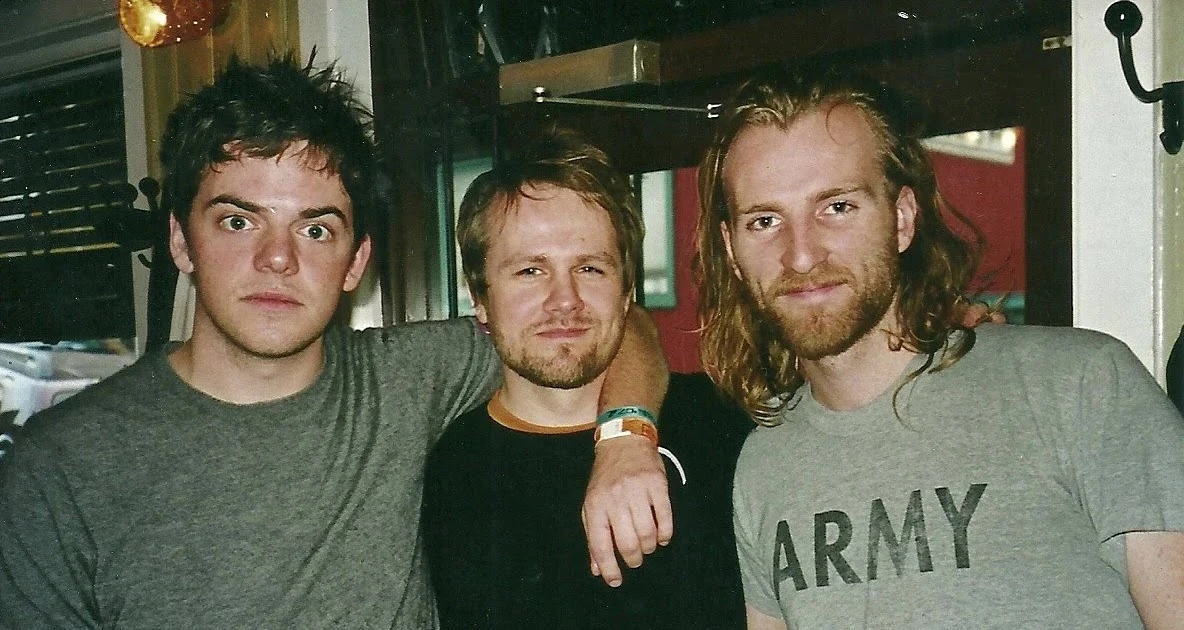
In the contemporary landscape of independent music, record labels are frequently viewed as transient entities—ephemeral imprints that rise and fall with the shifting tides of digital distribution algorithms and streaming economy shifts. Yet, defying the fragile economics of modern music production, the Icelandic record label and artistic collective Bedroom Community is celebrating its landmark 20th anniversary. Founded in Reykjavík in 2006 by visionary Icelandic composer and producer Valgeir Sigurðsson, American composer Nico Muhly, and Australian-Icelandic producer Ben Frost, the collective fundamentally reimagined how contemporary music could be conceived, recorded, produced, and disseminated to a global audience.
What began as an insular, highly collaborative sanctuary for adventurous sound-makers has evolved into an institutional pillar of the international avant-garde. Bedroom Community was never merely a commercial enterprise designed to release product; it was—and remains—a laboratory for sonic alchemy. By deliberately dissolving the rigid boundaries separating classical composition from electronic sound design, acoustic tradition from cutting-edge studio technology, and the hallowed acoustics of the concert hall from the intimate, lo-fi isolation of the bedroom, the collective birthed a distinct aesthetic lineage.
Over the past two decades, the imprint has nurtured, produced, and platformed an extraordinary roster of boundary-pushing artists, including Daníel Bjarnason, Sam Amidon, Lyra Pramuk, Nadia Sirota, Manchester Collective, aYia, Emily Hall, Liam Byrne, 404.zero, James McVinnie, Sam Slater, Gabriella Smith, Isabelle Lewis, and Daniel Pioro. As Bedroom Community enters its third decade, this retrospective examines the foundational genesis of the collective, the artistic milestones that defined its trajectory, the philosophy behind its enduring independence, and the forward-looking vision sustaining its cultural relevance in a rapidly changing industry.
Detailed Chronology: From Reykjavík Genesis to Global Collective
The Crucible of the North: Pre-2006 Roots
To understand the birth of Bedroom Community, one must examine the unique cultural and physical topography of Reykjavík at the turn of the millennium. Long before it became a mandatory stop on the global tourist itinerary, Iceland’s capital possessed an insular, highly concentrated creative ecosystem. Artists, musicians, and filmmakers frequently collaborated across disciplines out of sheer necessity and geographic isolation.
Valgeir Sigurðsson was already an indispensable architect of this burgeoning scene. Having spent eight formative years serving as the studio right-hand, engineer, and programmer to Iceland’s preeminent art-pop icon, Björk, Sigurðsson developed an encyclopedic understanding of acoustic space, avant-garde production techniques, and high-level studio infrastructure. His credits during this period included work on landmark records like Vespertine and the Dancer in the Dark soundtrack (Selmasongs), where he witnessed firsthand how electronic programming could seamlessly interlock with sweeping orchestral arrangements.
Simultaneously, thousands of miles away in Australia, producer Ben Frost was operating under vastly different conditions. Reflecting on those formative years, Frost famously described spending "unholy amounts of time alone in a bedroom in Australia making highly questionable music." Armed with little more than a laptop, a pair of headphones, an unquenchable exploratory spirit, and an obsessive appetite for sonic experimentation, Frost’s early isolation forged an aggressive, textural approach to electronic music. When Frost crossed paths with Sigurðsson in the year 2000, a crucial intellectual and creative partnership was struck—one that would prioritize process over genre limitations.
Meanwhile, a young American composer named Nico Muhly—fresh from studying composition at Juilliard under instruction from giants like John Corigliano and Christopher Rouse, and working closely with Philip Glass—found himself drawn into Iceland’s gravitational pull. Muhly’s fluency in sacred choral traditions, American minimalism, and contemporary classical orchestration introduced an acoustic lyricism that balanced Frost’s harsh electronic abrasions and Sigurðsson’s pristine studio spatialization.
2006–2008: Opening the Room and the Arrival of Speaks Volumes
By 2006, the trio realized that existing traditional record labels were fundamentally ill-equipped to house their wildly divergent yet aesthetically complementary projects. Traditional classical labels found Frost’s distorted guitar feedback and industrial drones too transgressive; electronic labels often lacked the patience for Muhly’s meticulously scored string arrangements. The solution was self-determination: they founded Bedroom Community, establishing a physical and conceptual headquarters at Greenhouse Studios in Reykjavík.
The label’s operational baptism came swiftly with the release of what insiders refer to as "the record that opened the room": Nico Muhly’s debut album, Speaks Volumes. Consisting of seven distinct pieces produced and mixed by Valgeir Sigurðsson, the record was a masterclass in micro-dynamics. It utilized close-miked strings, acoustic piano, subtle processing, and, crucially, "charged silence." Speaks Volumes did not merely bridge the gap between classical composition and indie-electronic production; it obliterated the gap entirely, proving that an album could possess the intellectual rigor of a contemporary chamber music recital alongside the intimate, visceral punch of modern electronica.
2008–2015: Expansion, Collaboration, and Cross-Pollination
Buoyed by the critical success of Speaks Volumes, Bedroom Community rapidly expanded its mandate. The collective functioned as a tight-knit family of mutual admirers and frequent collaborators, where producers frequently swapped roles as arrangers, performers, and mixing engineers on each other’s records.
During this era, Ben Frost released landmark solo statements such as Theory of Machines (2007) and By the Throat (2009), pushing the limits of post-industrial minimalism and acoustic violence. Simultaneously, the label expanded its footprint outward, welcoming visionary artists who shared its ethos of uncompromised exploration:
- Daníel Bjarnason: Merged classical orchestral conducting with contemporary cinematic textures, releasing monumental works like Processions.
- Sam Amidon: Deconstructed traditional American folk songs, recontextualizing historical Appalachian murder ballads and spirituals through contemporary, left-field chamber arrangements.
- Nadia Sirota: The virtuosic violist who became an indispensable ambassador for contemporary composition, releasing albums that commissioned works specifically tailored to her expressive tone.
2015–Present: Generational Renewal and Transmedia Exploration
As the collective entered its second decade, the founding members actively sought to mentor and platform a new generation of sonic experimentalists. The roster diversified significantly, incorporating boundary-pushing vocal artists, multi-media installation creators, and avant-garde instrumentalists.
Vocalist and composer Lyra Pramuk joined the fold, utilizing her voice as a singular digital orchestra to forge "future folk" music rooted in queer community and choral traditions. Russian interdisciplinary duo 404.zero brought immersive audio-visual brutalism to the label, while classical organist James McVinnie reinterpreted historic pipe organs through contemporary minimalist lenses. This era cemented Bedroom Community’s status not as a nostalgic heritage brand, but as a continuously evolving nexus for contemporary art.

Supporting Context & Metrics: The Mechanics of an Independent Collective
To truly appreciate the longevity of Bedroom Community, one must analyze the structural mechanics that allowed an artisanal record label to survive two decades of seismic industry shifts—from the twilight of the CD era through the illegal download boom, the ascent of streaming, and the post-pandemic economic landscape.
| Metric / Dimension | Bedroom Community Profile |
|---|---|
| Year of Foundation | 2006 |
| Founding Location | Reykjavík, Iceland |
| Founding Trio | Valgeir Sigurðsson, Nico Muhly, Ben Frost |
| Primary Production Hub | Greenhouse Studios (Reykjavík) |
| Core Aesthetic Philosophy | Eradication of genre boundaries between classical, electronic, and ambient music; artist-led production. |
| Estimated Catalogue Size | 50+ major releases, spanning solo albums, film scores, and collaborative collections. |
| Global Touring Footprint | Specialized ensemble tours, including the "Valgeir Sigurðsson/Ben Frost/Nico Muhly" multi-artist revues across Europe, North America, and Asia. |
The Studio as an Instrument: Greenhouse Studios
Unlike major label pop factories where production is heavily siloed—songwriters in one room, vocal producers in another, mixing and mastering outsourced across continents—Bedroom Community operates on an ethos of holistic incubation. Greenhouse Studios in Reykjavík served as the physical epicenter of this philosophy.
The studio’s acoustic treatment, vintage analog gear selection, and proximity to Iceland’s austere landscape profoundly shaped the "Bedroom Community sound." Reverb tails are treated as compositional instruments; the natural acoustic resonance of wooden floors and concrete walls is left audible in the final mixes. This commitment to physical space stands in stark contrast to the hyper-compressed, sterile digital environments that dominated commercial music production in the late 2000s and 2010s.
Official Statements & Archival Reflections
The psychological and creative underpinnings of the collective are best understood through the reflections of its architects. As documented in archival label statements and anniversary retrospectives, the genesis of Bedroom Community was explicitly rooted in a rejection of industry categorization.
Reflecting on his early years of creative isolation and the fortuitous collision with Valgeir Sigurðsson, Ben Frost noted:
"I spent unholy amounts of time alone in a bedroom in Australia making highly questionable music when I met Valgeir in the year 2000… We were searching for a way to make music that didn’t ask for permission to cross borders. We didn’t care whether we were playing to classical snobs or techno heads; we just wanted to build rooms where sound could behave honestly."
In discussions surrounding the foundational ideology of the label, Valgeir Sigurðsson has consistently emphasized that Bedroom Community was established as an antidote to corporate homogenization. The label operates on a cooperative model where the artists retain creative autonomy and participate directly in the infrastructure of their releases.
Nico Muhly, whose Speaks Volumes established the label’s sonic blueprint, has frequently highlighted the collaborative friction that fuels the collective:
"Working within Bedroom Community means abandoning the illusion of the solitary genius. Every record released under this roof is contaminated—in the best possible way—by the ears, instruments, and critiques of everyone else in the building. It’s an ongoing conversation disguised as an album catalogue."
Future Outlook: The Next Unknown
As Bedroom Community commemorates its 20th anniversary, the collective faces a music industry fundamentally transformed from the one it entered in 2006. The physical CD market has all but vanished, replaced by an algorithmic streaming economy that frequently penalizes long-form, patient, and challenging instrumental music. Furthermore, the global rise of artificial intelligence in audio generation poses existential questions for human-crafted avant-garde composition.
Yet, it is precisely in this climate of uncertainty that Bedroom Community’s mission remains vital. The label’s future outlook—aptly hinted at in its ongoing archival initiatives and recent releases titled From the First Record to the Next Unknown—points toward continued diversification and fearlessness.
Key Pillars of the Next Decade:
- Interdisciplinary Expansion: Continuing to bridge contemporary classical music with immersive spatial audio, visual art installations, and live performance art, exemplified by recent collaborations with electronic producers and modern dance choreographers.
- Mentorship and Global Residencies: Expanding Greenhouse Studios’ ethos beyond Iceland, fostering international composer workshops and cross-cultural exchanges that empower younger, marginalized voices in electronic and acoustic composition.
- Archival Preservation and Physical Collectibles: Doubling down on high-audiophile vinyl pressings, deluxe score booklets, and physical artifacts that elevate music listening from a passive digital stream into a tactile, ritualistic experience.
Conclusion
Two decades on, Bedroom Community stands as a testament to the power of uncompromised artistic vision, radical collaboration, and geographic serendipity. From a laptop in an Australian bedroom and a studio in Reykjavík, its founders didn’t just build a record label—they constructed a enduring cultural home for the homeless sounds of the 21st century. As they look toward the "next unknown," Bedroom Community remains a vital beacon for anyone who believes that music should challenge, comfort, and, above all, explore.